
UN Warns Over Escalating Israeli Attacks on West Bank
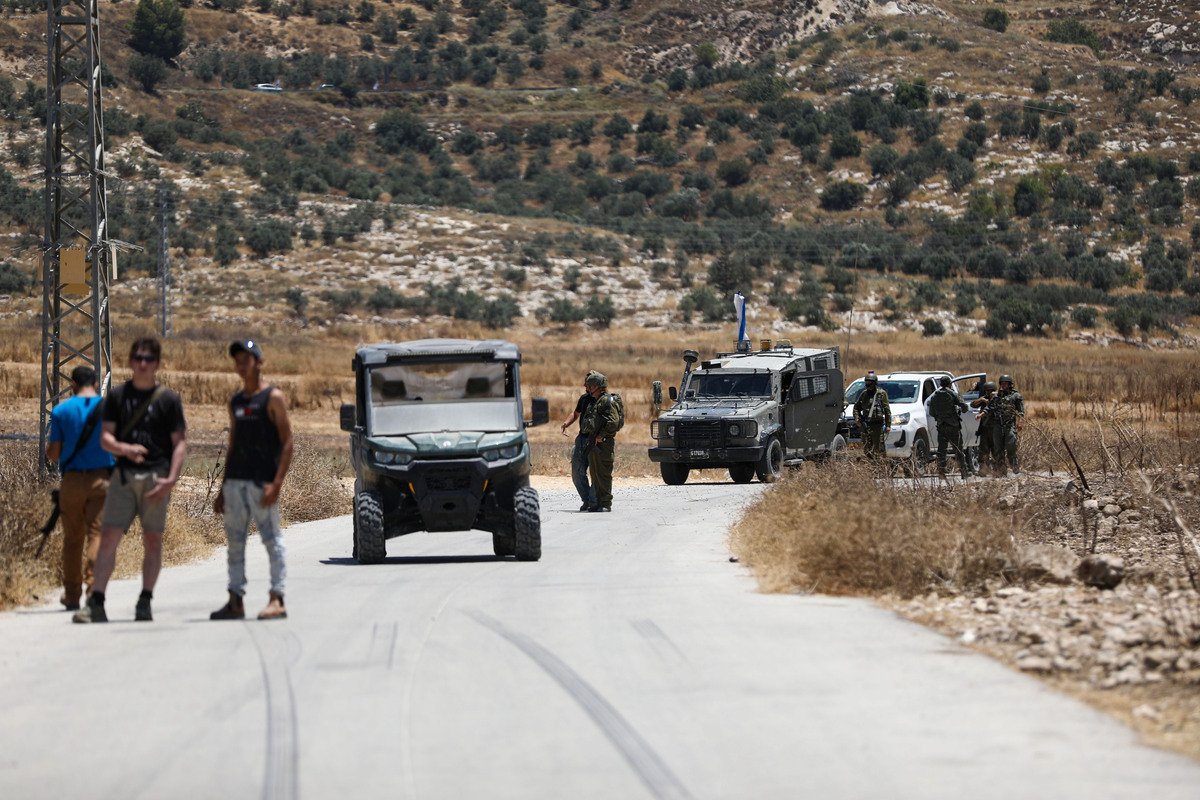
The UN Warning The United Nations on Monday issued a direct warning against the escalating Israeli settler attacks on Palestinians in the occupied West Bank. UN spokesperson Stephane Dujarric stated that the organization is warning against these attacks and stressed that the Palestinian population faces assaults by settlers with a frequency that seems unprecedented.
The UN Warning
The United Nations on Monday issued a direct warning against the escalating Israeli settler attacks on Palestinians in the occupied West Bank. UN spokesperson Stephane Dujarric stated that the organization is warning against these attacks and stressed that the Palestinian population faces assaults by settlers with a frequency that seems unprecedented. Official Palestinian figures indicate that attacks by the Israeli army and settlers since October 2023 have killed thousands of Palestinians and displaced many more from their homes and lands.
This warning arrives amid repeated incidents that disrupt daily routines in villages across the West Bank. Residents report that such violence restricts movement, damages property, and creates an atmosphere of constant threat. The UN statement highlights how these patterns affect communities already living under occupation, where access to farmland and basic services remains limited.
The Deir Jarir Killings
In the village of Deir Jarir near Ramallah, Israeli settlers, soldiers, and police conducted a joint raid on Sunday night. Soldiers shot dead Ahmad Abu Mukh, aged 26, and Odeh Rimawi. A third person was wounded and taken to hospital for treatment. B'Tselem documented the events, including footage from an ambulance camera that captured the moment Abu Mukh was shot in the lower abdomen before he later died of his wounds.
The raid also involved the theft of dozens of sheep from the village. Palestinian residents in Deir Jarir describe how such operations interrupt herding and farming activities that form the backbone of local livelihoods. The presence of military forces alongside settlers during the incident underscores the coordinated nature of these actions in the occupied territory.
B'Tselem's Ethnic Cleansing Accusation
Israeli rights group B'Tselem stated that the killings in Deir Jarir represent an example of how Israel encourages ethnic cleansing against Palestinians. B'Tselem Executive Director Yuli Novak explained that settlers invade and loot Palestinian land while the army and police accompany them and shoot Palestinians who try to protect their homes and property. She noted that the international community continues to grant Israel impunity, allowing these assaults to continue.
The organization emphasized that Palestinians in the West Bank face systematic Israeli violence on a daily basis. Those responsible for the attacks enjoy near-total impunity, which enables further incidents. This pattern directly affects families in places like Deir Jarir, where loss of livestock and land threatens economic stability and generational ties to the area.
Under international law, ethnic cleansing lacks a standalone treaty definition yet aligns closely with prohibitions on forcible population transfer in Article 49 of the Fourth Geneva Convention and constitutes a crime against humanity when systematic, as outlined in the Rome Statute of the International Criminal Court. Acts involving intimidation, property destruction, and displacement to alter demographic realities fall under these frameworks, with precedents from the International Criminal Tribunal for the former Yugoslavia emphasizing intent to render areas uninhabitable for targeted groups. B'Tselem, established in 1989 by Israeli human rights advocates, has compiled field documentation of military and settler conduct in the West Bank and Gaza for over three decades, relying on eyewitness accounts, video evidence, and legal analysis to challenge official narratives.
The organization previously applied comparable terminology in reports on East Jerusalem evictions and Area C demolitions, notably in 2021 and 2022 publications describing coordinated efforts to fragment Palestinian presence through administrative measures and violence. These statements built on earlier critiques of settlement policies that echoed warnings from UN rapporteurs regarding potential forcible transfers. B'Tselem's recent invocation of ethnic cleansing thus reflects an escalation in rhetoric calibrated to patterns of impunity, where investigations into settler actions rarely yield prosecutions despite extensive evidence gathered over multiple years.
Such language also situates the Deir Jarir events within a continuum of accountability failures, referencing Israel's non-cooperation with International Court of Justice proceedings on occupation-related obligations. Analysts note that B'Tselem's methodology prioritizes primary sources to counter claims of isolated incidents, highlighting instead structural incentives that sustain displacement.
Settlement Expansion Data
About 750,000 settlers live in 141 illegal settlements and 224 outposts across the occupied West Bank, including occupied East Jerusalem. These settlements serve as bases for repeated attacks aimed at forcibly displacing Palestinians from their villages and agricultural lands. The presence of these structures fragments Palestinian communities and restricts access to resources essential for daily survival.
Settlers carry out actions that include vandalizing homes and razing farmland. Such activities prevent farmers from reaching their fields and contribute to the displacement of Palestinian families. In the occupied West Bank, these expansions alter the landscape and undermine traditional ways of life tied to the land.
Settlement growth accelerated markedly after the 1993 Oslo Accords, rising from roughly 250,000 residents in the early 1990s to the current figure through successive Israeli governments approving new housing units and infrastructure. This trajectory persisted despite interim agreements designating much of the West Bank as Areas A and B under Palestinian civil control, with construction concentrated in Area C, which comprises 60 percent of the territory and remains under full Israeli administration. Data from Israeli planning authorities show that outpost regularization often follows initial unauthorized establishment, converting hilltop encampments into permanent neighborhoods connected by bypass roads.
The Fourth Geneva Convention's Article 49(6) explicitly bars an occupying power from transferring its civilian population into occupied territory, a provision reaffirmed in multiple UN Security Council resolutions and advisory opinions by the International Court of Justice. Israeli settlements are therefore deemed illegal under international humanitarian law by the overwhelming majority of states and legal experts, irrespective of domestic Israeli court rulings that distinguish between authorized settlements and outposts. This legal status underpins arguments that expansion entrenches control rather than serving temporary security needs.
Outposts expand Palestinian land loss through incremental tactics such as agricultural encroachment, fencing, and water diversion, gradually isolating villages and converting privately owned plots into de facto settler domains. Historical records indicate that many outposts established since the 1990s later receive retroactive approval, perpetuating a cycle where initial violations become faits accomplis that reshape territorial contiguity.
The Broader Context of Violence Since October 2023
Since October 2023, the Israeli army and settlers have intensified attacks on Palestinians throughout the occupied West Bank. B'Tselem reported that around 1,092 Palestinians have been killed in these attacks, including at least 242 children and teenagers. The violence encompasses home demolitions, destruction of farmland, and barriers that block access to essential areas.
Palestinian communities experience these events as part of ongoing pressure that affects education, healthcare, and economic activities. Villages near Ramallah and other regions report increased incidents that force families to adapt their movements and livelihoods under constant threat. The scale of killings and displacements since October 2023 marks a sharp escalation in the frequency and impact of these operations.
Home demolitions in the West Bank have surged since October 2023, with OCHA documenting over 1,200 structures razed in the first year, often justified under administrative or punitive measures that leave families without recourse. Agricultural destruction includes the uprooting of olive groves and vineyards, alongside settler-initiated arson and grazing incursions that target seasonal harvests critical to rural economies. Movement restrictions have intensified through additional checkpoints, earth mounds, and gated roads, fragmenting access to markets, schools, and medical facilities in ways that compound pre-existing permit regimes.
These measures carry severe economic consequences, including sharp declines in agricultural output and livestock holdings that sustain thousands of households. Reports from the World Bank and UN agencies estimate losses in the hundreds of millions of dollars, with unemployment in affected governorates climbing above 30 percent as farmers abandon fields due to security threats. Humanitarian organizations such as the International Committee of the Red Cross and Médecins Sans Frontières have recorded increased cases of trauma-related health issues and barriers to emergency care, underscoring how cumulative restrictions erode community resilience.
Agency assessments further highlight that displacement figures exceed 2,000 individuals in vulnerable herding communities alone, driven by repeated raids rather than single events. This pattern aligns with long-term monitoring by groups tracking Area C pressures, where violence functions as an accelerant to preexisting administrative displacement mechanisms.
International Inaction and Impunity
B'Tselem highlighted that the international community grants Israel impunity, which permits the assaults to persist without consequence. This lack of accountability allows settlers and forces to operate with minimal restraint in the occupied West Bank. The result is a cycle where attacks on Palestinians continue unchecked, affecting entire communities over extended periods.
Palestinians observe that this impunity extends to incidents involving theft of property and lethal force during raids. Without external intervention, the pattern of violence documented in places like Deir Jarir repeats across the territory. The absence of meaningful repercussions reinforces the conditions that enable further displacement and loss.
What This Means for Palestinians
Palestinians warn that these attacks pave the way for formally annexing the West Bank, which would undermine the possibility of establishing a Palestinian state as stipulated in UN resolutions. The combination of killings, property theft, and settlement growth disrupts family structures and local economies in villages throughout the occupied territory.
Daily life for residents involves navigating restrictions on movement and protecting remaining land and livestock. The deaths of individuals such as Ahmad Abu Mukh and Odeh Rimawi illustrate the human cost borne by communities striving to maintain their presence. Continued violence since October 2023 has already displaced many, leaving lasting effects on social and economic fabric in the West Bank.
The documented patterns point to a systematic effort that targets Palestinian homes and livelihoods. Families in affected areas face ongoing challenges in preserving their connection to the land amid expanding settlements and unchecked raids. This reality shapes the lived experience of occupation for thousands across the region.
Israeli annexation proposals, advanced in legislation and ministerial statements since 2019, gain practical momentum from settlement expansion that creates irreversible facts on the ground. These plans, which envision extending sovereignty over major blocs, directly conflict with UN resolutions endorsing a two-state outcome based on 1967 lines with negotiated swaps. The resulting territorial fragmentation—marked by settlement corridors and restricted zones—renders a viable, contiguous Palestinian state increasingly implausible according to mapping analyses from organizations like Peace Now.
Daily existence under occupation involves routine navigation of more than 500 checkpoints and barriers that extend travel times dramatically, alongside ongoing land confiscations justified through military orders or absentee property laws. Access to water resources remains heavily skewed, with Palestinian per capita consumption far below Israeli settler levels due to extraction priorities and infrastructure controls. Families contend with generational land ties severed by these dynamics, forcing adaptations such as reliance on distant wage labor or international aid.
The cumulative effect threatens social cohesion as younger residents emigrate and traditional livelihoods erode. This reality reinforces arguments that settlement-driven changes preempt political negotiations, locking communities into a status of permanent uncertainty rather than temporary occupation.
By Fatima Al-Rashid, Staff Writer
This article was produced with AI-assisted research and editorial support. Reporting is based on sources cited in the article.
What's Your Reaction?
 Like
0
Like
0
 Dislike
0
Dislike
0
 Love
0
Love
0
 Funny
0
Funny
0
 Wow
0
Wow
0
 Sad
0
Sad
0
 Angry
0
Angry
0

Gulf/MENA Correspondent at Global1.News. Based in Doha, covering Gulf politics, energy markets, diplomacy, and development across the Middle East and North Africa. Tracks the economic transformation of the Gulf states.












Comments (0)