
Israel Dairy Crisis Spreads From Cottage to White Cheese
Shoppers across Israel are confronting empty dairy shelves in supermarkets from Tel Aviv to the periphery, where once-reliable staples like cottage cheese and white cheese have vanished from refrigerated cases. The shortages, rooted in a prolonged technical failure at Tnuva’s automated warehouse, have forced families to scramble for substitutes while exposing deep vulnerabilities in the nation’s concentrated food-supply infrastructure.
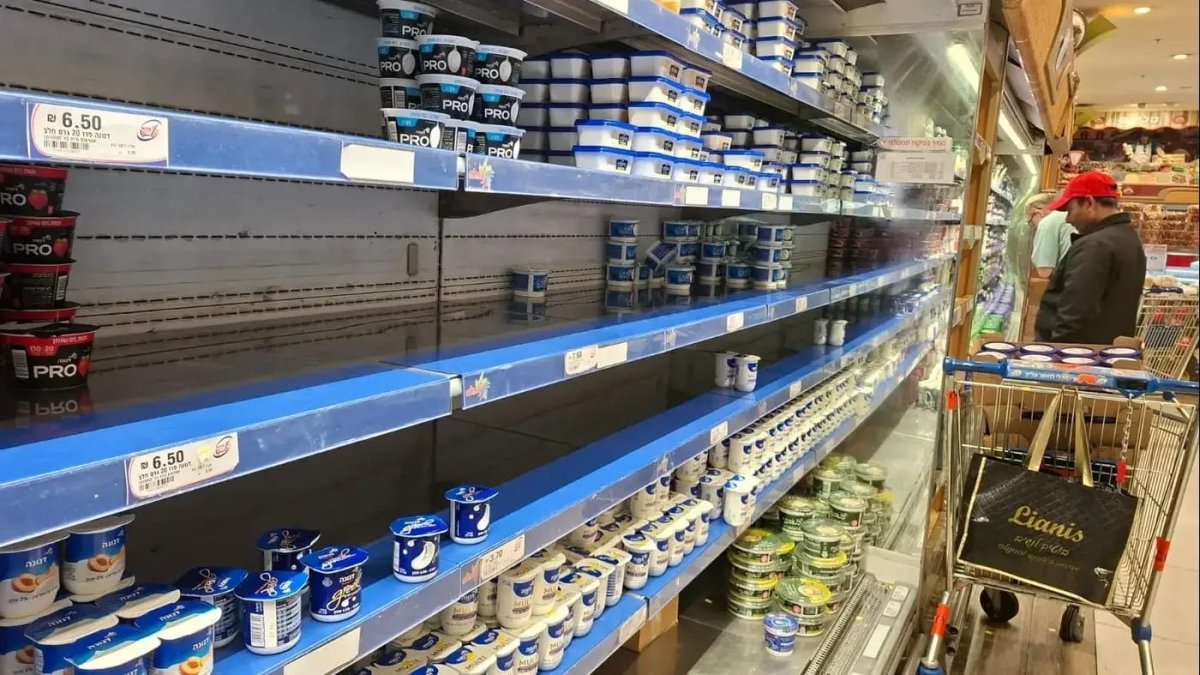
Shoppers across Israel are confronting empty dairy shelves in supermarkets from Tel Aviv to the periphery, where once-reliable staples like cottage cheese and white cheese have vanished from refrigerated cases. The shortages, rooted in a prolonged technical failure at Tnuva’s automated warehouse, have forced families to scramble for substitutes while exposing deep vulnerabilities in the nation’s concentrated food-supply infrastructure. This disruption, now stretching beyond basic cottage cheese into higher-priced white cheese varieties, underscores how a single point of failure can ripple nationwide.
Cottage Cheese Crisis Expands to White Cheese as Tnuva Supply Falters
Tel Aviv, Israel — The dairy supply crisis that began with cottage cheese shortages has now spread to white cheese varieties, leaving consumers across the country struggling to find basic dairy staples amid ongoing logistical failures at major production facilities. Retailers and households alike are feeling the strain as Tnuva’s distribution bottlenecks persist, prompting urgent calls for regulatory intervention. The situation highlights both the resilience and fragility of Israel’s automated dairy networks under current conditions.
Empty Dairy Shelves Signal Growing Supply Strain
In recent days, shoppers across Israel have encountered bare sections in supermarket dairy aisles where cottage cheese and white cheese once sat in familiar plastic tubs. Retail chains have attempted to fill the gaps with alternatives such as labneh and sour cream, yet the absence of staple items continues to draw attention to vulnerabilities in the country's food distribution networks.
Consumer Reports Highlight Widespread Shortages
Frustrated buyers visiting multiple branches in their neighborhoods describe finding no white cheese at all, including varieties priced up to NIS 15 that fall outside price controls. Accounts shared with local media indicate that the problem extends beyond basic cottage cheese to higher-fat and low-fat options alike, leaving households without reliable access to everyday products.
Shoppers visiting branches of Shufersal, Rami Levy, and Victory in neighborhoods from Petah Tikva to Tel Aviv report identical scenes: empty dairy refrigerators where white cheese priced at NIS 9 for 5% fat, NIS 12 for 9% fat, and up to NIS 15 for smooth low-fat varieties once sat. One frustrated consumer told Walla, “I was at branches of three different chains we have in the neighborhood, and not a single one of them had even one tub of white cheese. And I am not talking about price-controlled cheese, but 9% white cheese, 3%, even smooth and low-fat cheeses and creams that reach a price of NIS 15, you cannot find. Someone here has gone crazy. How did we get to a state where you cannot give a child a sandwich with white cheese, and nobody cares.”
The emotional toll on families is immediate. Parents accustomed to packing school lunches with affordable dairy now face higher costs or substitute products, while the Ministry of Economy’s target-price mechanism for basic cottage cheese offers no protection for the higher-fat and specialty items now missing. Peripheral towns receive only one tub per delivery after retailers order ten crates and obtain barely half a crate, amplifying hardship in areas already distant from central distribution hubs.
Shortage Spreads From Cottage Cheese to White Cheese
Market observers note that the white cheese shortfall has grown directly from ongoing disruptions in cottage cheese supply. Retailers report receiving only fractions of ordered volumes, with some peripheral locations limited to a single tub per delivery. This ripple effect has intensified pressure on related dairy categories as demand shifts to available substitutes.
Technical Failure at Alon Tavor Facility
The origin of the disruption traces to a computer malfunction in the automated warehouse at Tnuva's production plant in Alon Tavor. While the production line itself continues to operate and package cottage cheese, the system responsible for moving pallets to distribution trucks has failed to dispatch large portions of finished goods, leaving ready inventory stranded inside the facility.
The automated warehouse at Tnuva’s Alon Tavor plant, supplied and maintained by Dematic, uses robotic cranes and conveyor logic to move finished pallets from packaging lines to outbound trucks. A computer malfunction that began more than two months ago has left large volumes of packaged cottage cheese stranded inside the facility even though the production lines themselves continue to operate at normal speed.
Partial manual overrides attempted by Tnuva staff have cleared only limited quantities, insufficient to meet retailer orders that normally total thousands of crates daily. The prolonged outage highlights how a single point of failure in highly automated logistics can halt distribution across the entire country despite intact manufacturing capacity.
Prolonged Warehouse Disruptions Over Two Months
Problems with the automated warehouse system have persisted for more than two months. The technology manages internal pallet movement and loading onto trucks, and its ongoing issues have prevented a return to normal supply volumes despite partial manual interventions by Tnuva staff.
Remote Support From Dematic Proves Insufficient
Technicians from Dematic, the company that operates the automated warehouse system, have provided assistance through phone calls and video conferences. Tnuva employees have supplemented this with manual operation of certain components, yet these measures remain limited and have not restored full dispatch capacity at the Alon Tavor site.
Dematic technicians have offered only remote guidance via video calls and phone support since the malfunction began. When a scheduled maintenance team arrived in Israel to service the Osem plant, the same personnel refused to visit the Tnuva site, citing “different team, different skills.” The current security situation has further prevented any on-site dispatch of foreign specialists, leaving Tnuva employees to operate complex warehouse controls manually with limited success.
This reliance on overseas expertise exposes Israel’s food supply chain to external constraints that other sectors, such as high-tech manufacturing, have also encountered during periods of heightened regional tension. Without physical access for Dematic engineers, the backlog of finished goods continues to grow, forcing retailers to ration stock and consumers to absorb the resulting shortages.
Security Situation Prevents On-Site Technician Visits
Dematic has declined to send personnel to Israel because of the current security environment. Given the high degree of automation at the dairy, bypassing the warehouse controls manually is not feasible, further constraining efforts to clear the backlog of packaged products awaiting distribution.
Industry Rejects Claims of Deliberate Shortage
Speculation has surfaced that Tnuva might benefit from reduced cottage cheese availability to boost sales of other items. Industry representatives have dismissed these suggestions outright, emphasizing that every unsold tub represents lost revenue and that the company has no incentive to withhold supply from the market.
Industry representatives have firmly rejected suggestions that Tnuva deliberately reduced cottage cheese availability to shift demand toward higher-margin products. “What interest could Tnuva have in not selling cottage cheese?” one executive asked, noting that every unsold tub represents direct revenue loss. Instead, they point to panic buying: when cottage cheese disappears, households switch to white cheese and begin hoarding, creating an “escalating tailspin that must be stopped.”
Calls have intensified for the Ministry of Agriculture and Ministry of Economy to open import quotas immediately. “If there is no choice, then please, open quotas and start importing,” retailers and consumer advocates argue, warning that continued reliance on domestic automated facilities without backup capacity leaves the market vulnerable to prolonged disruptions.
Tnuva and Strauss Maintain White Cheese Output
As Israel's largest producer of white cheese, Tnuva states that its white cheese lines are running normally and have increased output where possible. Strauss, which holds roughly 30 percent of the white cheese market, similarly reports steady production and enhanced supply efforts to address heightened demand.
Israeli Dairy Market Faces Structural Pressures
The episode underscores how concentrated production and automated logistics create single points of failure within Israel's dairy sector. With Tnuva dominating cottage cheese output and both major players involved in white cheese, any interruption at a key facility quickly affects nationwide availability and forces retailers to ration limited stock.
Tnuva remains Israel’s dominant cottage cheese producer and the largest manufacturer of white cheese, while Strauss holds approximately 30 percent of the white cheese market. This concentration means any prolonged interruption at Alon Tavor quickly translates into nationwide shortages, even as both companies report steady white cheese output and attempts to increase volumes in response to surging demand.
The episode reveals the limits of the existing target-price mechanism, which covers only basic cottage cheese and leaves higher-fat and specialty items exposed to supply shocks. Consumer advocates and some Knesset members now question whether current import quotas and regulatory frameworks provide adequate food-security buffers when automated logistics and foreign technical support become unavailable due to security conditions.
Supply Chain Resilience Tested by External Factors
Reliance on foreign technical expertise for sophisticated warehouse systems exposes domestic food chains to external constraints, including travel limitations tied to regional security conditions. This dynamic illustrates the broader challenge of maintaining consistent product flow when critical support cannot reach Israeli sites promptly.
Regional Disparities Amplify Consumer Hardship
Deliveries to outlying areas have been hit especially hard, with some locations receiving minimal allocations. Such uneven distribution highlights how disruptions at central facilities can compound existing differences in access between central Israel and peripheral communities.
Outlook for Resolution Remains Cautious
Efforts to stabilize the automated systems continue through remote channels, yet full restoration of normal dispatch rates has not occurred. Market participants continue to monitor whether increased white cheese production from Tnuva and Strauss can offset the cottage cheese shortfall in the coming weeks.
By Hannah Berg, Staff WriterThis article was produced with AI-assisted research and editorial support. Reporting is based on sources cited in the article.
What's Your Reaction?
 Like
0
Like
0
 Dislike
0
Dislike
0
 Love
0
Love
0
 Funny
0
Funny
0
 Wow
0
Wow
0
 Sad
0
Sad
0
 Angry
0
Angry
0

Israel Correspondent at Global1.News. Based in Tel Aviv, covering Israeli politics, security, technology, and society. Provides balanced, deeply-sourced reporting on one of the most closely-watched regions in the world.














Comments (0)