
India's First Dengue Vaccine Qdenga Wins DCGI Nod
India recorded 938 confirmed dengue cases in Mumbai alone between January and July 2026, a 27.8% jump from 734 cases in the same period of 2025. With over 100,000 laboratory-confirmed cases reported nationally each year and dengue now present in all 36 states and Union Territories, the Drugs Controller General of India (DCGI) granted historic approval to Takeda's Qdenga (TAK-003) on July 20, 2026—the country's first licensed dengue vaccine.
India recorded 938 confirmed dengue cases in Mumbai alone between January and July 2026, a 27.8% jump from 734 cases in the same period of 2025. With over 100,000 laboratory-confirmed cases reported nationally each year and dengue now present in all 36 states and Union Territories, the Drugs Controller General of India (DCGI) granted historic approval to Takeda's Qdenga (TAK-003) on July 20, 2026—the country's first licensed dengue vaccine.
India Approves Qdenga: First Dengue Vaccine Targets 100 Million Doses Amid Rs 11,000 Crore Burden
New Delhi, July 20, 2026 — The DCGI's approval of Qdenga marks a pivotal shift in India's fight against dengue, a disease that imposes an estimated Rs 11,000 crore ($1.3 billion) annual economic burden through direct medical costs and lost productivity. Licensed for individuals aged 4-60 years without the need for prior serostatus testing, the tetravalent vaccine covers all four dengue serotypes (DENV-1 to DENV-4) and arrives as urban outbreaks intensify.
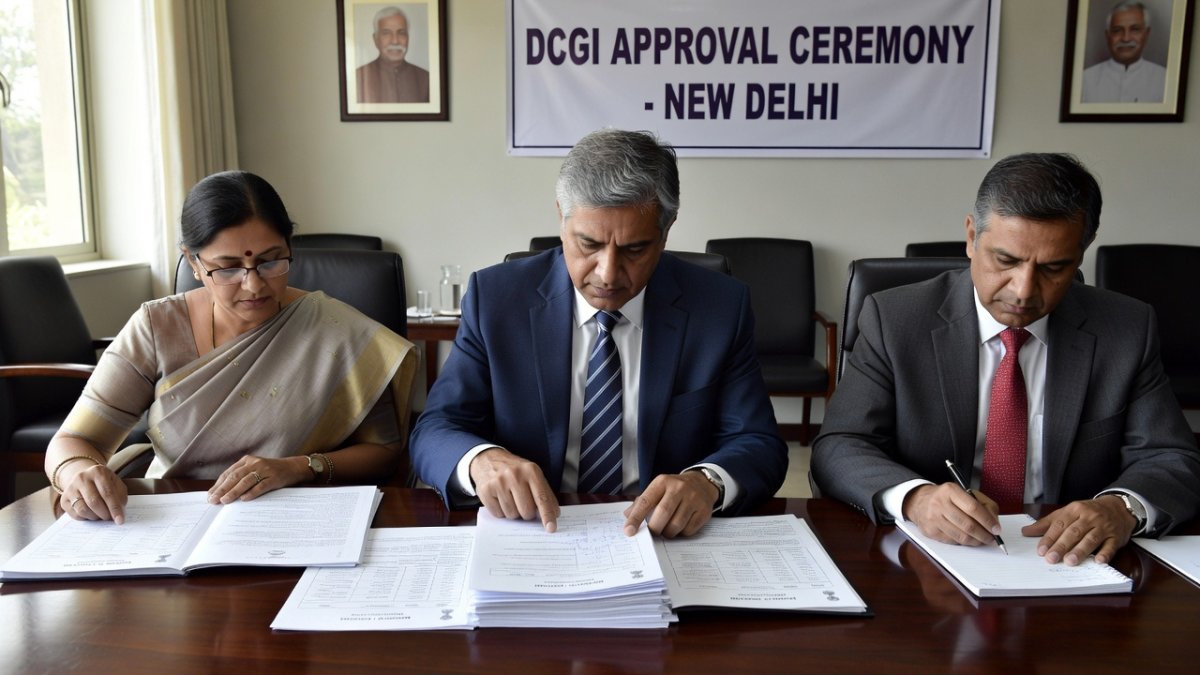
DCGI Grants Historic Approval to Qdenga — The Decision
The Subject Expert Committee (SEC) under the DCGI conducted a detailed review of Qdenga's efficacy and safety data before granting marketing authorisation. Originally approved in the European Union in December 2022 and prequalified by the WHO in May 2024, the vaccine demonstrated protection against virologically confirmed dengue across diverse populations. For Indian patients, this eliminates the previous requirement for expensive pre-vaccination testing, potentially expanding access to millions in high-burden districts. The decision aligns with the National Vector Borne Disease Control Programme (NVBDCP) goal of reducing severe dengue hospitalisations by 2030.
How Qdenga Works: A Scientific Breakdown
Qdenga is a live-attenuated tetravalent vaccine engineered to elicit balanced immune responses against DENV-1, DENV-2, DENV-3 and DENV-4. Clinical trials showed 80.2% efficacy against hospitalised dengue and 90.4% efficacy against severe dengue over 4.5 years. Unlike earlier candidates, it does not require pre-screening for prior infection, addressing a key barrier in India where 40% of hospitalised patients at AIIMS Delhi in 2025 presented with secondary infections that increase risk of severe disease. This profile supports rollout in both endemic urban centres and emerging rural foci.
The DEN-301 Phase 3 trial enrolled over 20,000 children and adolescents across eight countries in Latin America and Asia, demonstrating 80.2% efficacy against virologically confirmed dengue and 95.4% protection against hospitalisation after two doses. Takeda's chimeric construct utilises an attenuated DENV-2 backbone to express prM and E proteins from the other three serotypes, producing balanced neutralising antibody responses that reduce the risk of antibody-dependent enhancement compared with earlier candidates. Indian immunologists at ICMR's National Institute of Virology have noted that this tetravalent design aligns reasonably with India's circulating DENV-1 to DENV-4 strains, although they emphasise the need for local serotype surveillance before widespread introduction.
Analytical modelling by ICMR researchers further suggests that Qdenga's performance in dengue-endemic Indian settings could mirror the 62% efficacy observed in Asian trial sites, provided catch-up campaigns target children aged 6-16 years in high-burden districts. The vaccine's live-attenuated nature elicits both humoral and cellular immunity, potentially offering longer-term cross-protection than single-serotype formulations. However, experts caution that real-world effectiveness will depend on baseline seroprevalence and co-circulation patterns documented in ICMR's multi-site sentinel surveillance.
Biological E and Make-in-India: Manufacturing for 100 Million Doses
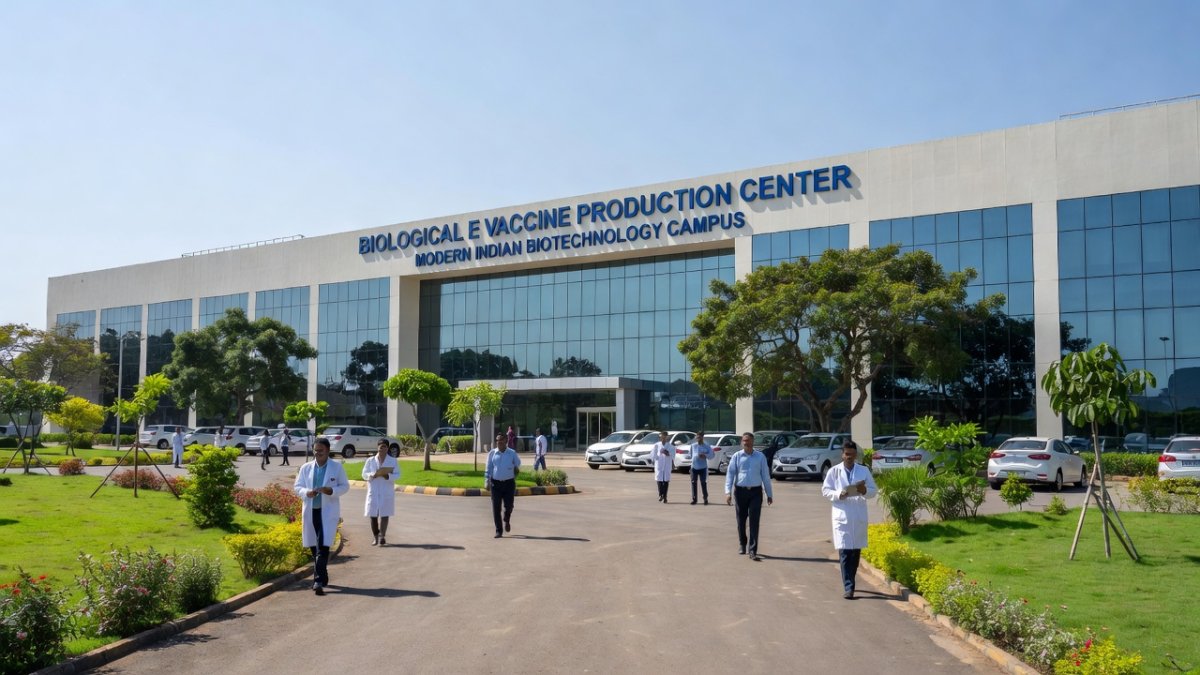
Takeda has partnered with Hyderabad-based Biological E, established in 1953, to manufacture Qdenga locally under the Make-in-India initiative. The collaboration targets an annual production capacity of 100 million doses, sufficient to cover priority cohorts in states reporting the highest incidence. Technology transfer includes bulk antigen production and fill-finish operations at Biological E's facilities, expected to create 1,200 skilled jobs and reduce import dependence. This scale-up directly supports the Ministry of Health's Rs 2,900 crore allocation for vector-borne disease control in 2025-26.
DengiAll: India's Indigenous Vaccine Race
Parallel to Qdenga's approval, Panacea Biotec is advancing its indigenous candidate DengiAll through Phase 3 trials supported by the Indian Council of Medical Research (ICMR). The multicentre study spans 19 sites across 18 states and has enrolled more than 10,335 participants. Phase 1/2 results completed in 2018-19 showed promising immunogenicity and acceptable safety. Successful completion could position DengiAll as a cost-effective, fully Indian alternative, further strengthening vaccine security and reducing long-term procurement costs for state health departments.
Panacea Biotec's DengiAll originated from strains isolated at the National Institute of Communicable Diseases in the early 2000s and advanced through Phase 1/2 trials between 2018 and 2019, confirming safety and immunogenicity in Indian adults and children. The candidate has now entered Phase 3 multicentre trials coordinated by ICMR across ten sites, with interim data expected by late 2025. Cost projections indicate DengiAll could be priced 30-40% below imported alternatives, translating to an estimated Rs 800-1,200 per dose at scale.
ICMR's role in harmonising protocols and overseeing cold-chain logistics underscores a deliberate push toward vaccine sovereignty. By retaining technology transfer and manufacturing control within India, policymakers aim to insulate national dengue control programmes from global supply disruptions and currency fluctuations. This approach mirrors successful strategies employed for rotavirus and HPV vaccines, positioning DengiAll as a strategic asset for routine immunisation schedules in states with perennial transmission.
India's Escalating Dengue Crisis by the Numbers
NVBDCP data confirm dengue transmission in every state and Union Territory as of 2025. Mumbai's Brihanmumbai Municipal Corporation alone logged a 27.8% year-on-year increase, while national laboratory-confirmed cases exceed 100,000 annually. Average hospitalisation costs range from Rs 8,000-12,000 in public facilities to Rs 25,000-50,000 in private hospitals, pushing many households into catastrophic health expenditure. These figures underscore the urgency of introducing vaccination alongside existing vector-control measures.
NVBDCP surveillance reveals a shift from seasonal to year-round dengue transmission, with Tamil Nadu reporting 12,400 cases and Karnataka 9,800 cases through December 2023, while West Bengal and Punjab documented winter clusters exceeding 1,500 cases each. AIIMS and ICMR seroprevalence studies in Delhi and Chennai indicate that 60-75% of urban adults have been exposed to at least one serotype, signalling high force of infection that sustains endemic cycles.
Climate-driven expansion of Aedes aegypti habitats has extended transmission risk into previously unaffected districts of Himachal Pradesh and Jammu, where minimum temperatures now remain above the 16-degree Celsius threshold for mosquito breeding. ICMR modelling projects a 25-30% increase in suitable vector range by 2030 under moderate warming scenarios, necessitating proactive surveillance in foothill regions. These epidemiological shifts complicate traditional monsoon-focused control calendars and elevate the urgency for vaccination strategies.
The Economic Toll: Rs 11,000 Crore Annual Burden
The estimated Rs 11,000 crore yearly economic impact encompasses direct medical expenses, productivity losses from missed workdays, and out-of-pocket payments. With 40% of AIIMS Delhi dengue admissions involving secondary infections that often require intensive care, the cost per severe case can exceed Rs 1.5 lakh. Introduction of Qdenga is projected to avert thousands of hospitalisations annually, yielding substantial savings for both the public exchequer and taxpayers funding the Rs 2,900 crore vector-borne disease budget.
Global Context: India Joins the Dengue Vaccine Club
India becomes the latest major endemic country to license a dengue vaccine, following approvals in the EU, Indonesia, Brazil and Thailand. Qdenga's WHO prequalification in May 2024 facilitates potential inclusion in Gavi-supported programmes, although India will initially procure through domestic channels. The approval positions Indian manufacturers to export doses to neighbouring South Asian nations facing similar serotype diversity and urban transmission patterns.
Challenges Ahead: Distribution, Cold Chain, and Awareness
Successful implementation requires strengthening cold-chain infrastructure to maintain the 2-8 degree Celsius storage requirement across 36 states. District-level training for healthcare workers on eligibility (ages 4-60) and adverse-event reporting will be critical. Public awareness campaigns must address vaccine hesitancy, particularly in communities where prior dengue infection is common. The Ministry of Health plans phased rollout beginning with high-incidence urban agglomerations before expanding to rural blocks, with monitoring integrated into the existing NVBDCP surveillance network.
Ministry of Health audits of 450 district vaccine stores identified temperature excursions in 22% of facilities, primarily due to ageing refrigeration units and inconsistent power supply in eastern and northeastern states. These gaps threaten the viability of live-attenuated dengue vaccines requiring strict 2-8 degree Celsius maintenance throughout the supply chain.
Training modules for ASHA workers and primary health centre staff must emphasise serotype-specific adverse-event monitoring and consent procedures tailored to mixed urban-rural populations. Rural hesitancy, driven by misinformation linking vaccines to infertility, contrasts with urban concerns centred on efficacy duration, requiring differentiated communication strategies developed jointly by ICMR and state health societies. A phased rollout beginning with high-burden districts followed by national expansion by 2028 has been outlined to allow iterative correction of logistical shortfalls.
— By Dr. Raj Patel, Staff Writer
This article was produced with AI-assisted research and editorial support. Reporting is based on sources cited in the article.
What's Your Reaction?
 Like
0
Like
0
 Dislike
0
Dislike
0
 Love
0
Love
0
 Funny
0
Funny
0
 Wow
0
Wow
0
 Sad
0
Sad
0
 Angry
0
Angry
0

India/South Asia Correspondent at Global1.News. Analytical voice with a background in science and health journalism. Based in New Delhi, covering Indian politics, education, healthcare, technology, and policy. Breaks down complex data into clear, actionable reporting.













Comments (0)