
House of Commons Breaks for Summer After Passing 24 Bills
Parliament Wraps Early Amid Legislative Push In a recent CBC News Power & Politics report, Government House Leader Steven MacKinnon outlined the final items cleared from the Liberal to-do list before the summer break. The House of Commons rose one day ahead of schedule on Thursday after MPs unanimously approved a motion to advance multiple bills. This move allowed 24 pieces of
Parliament Wraps Early Amid Legislative Push
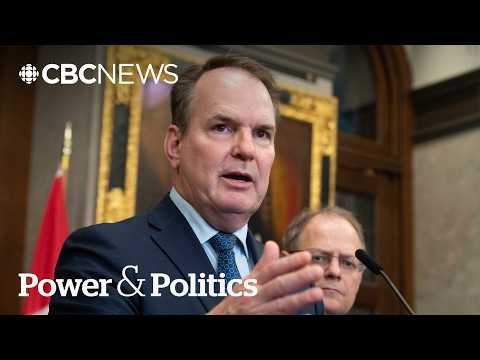
In a recent CBC News Power & Politics report, Government House Leader Steven MacKinnon outlined the final items cleared from the Liberal to-do list before the summer break. The House of Commons rose one day ahead of schedule on Thursday after MPs unanimously approved a motion to advance multiple bills. This move allowed 24 pieces of legislation to pass during the sitting, including 19 government bills, three Conservative private members' bills and two from the Senate.
The early adjournment on Parliament Hill reflects the minority Liberal government's strategy under Prime Minister Mark Carney to secure key priorities before the break. MacKinnon highlighted achievements in public safety, housing and criminal law reform during the interview. These steps connect directly to federal-provincial dynamics, as several measures affect provincial justice systems and housing authorities across the country.
Combating Hate Through Bill C-9
Bill C-9 introduces new criminal offences for intimidating individuals outside religious or cultural institutions. It defines hatred in Canadian criminal law for the first time and makes promoting hate through symbols a criminal offence. Prime Minister Carney tied the legislation to the sharp rise in hate crimes targeting Jewish Canadians following the October 7 attack, with such incidents more than doubling between 2018 and 2024 according to Statistics Canada data.
This measure strengthens protections aligned with Canadian values of multiculturalism and inclusion. It builds on the Truth and Reconciliation framework by addressing community safety for all groups. The bill's passage demonstrates how federal legislation can respond to documented increases in offences while respecting Charter considerations in the House of Commons.
MacKinnon noted during the Power & Politics discussion that the changes fill gaps in existing law. Provincial police forces, including the RCMP in many jurisdictions, will now have clearer tools to investigate these incidents. The legislation also supports ongoing federal efforts to track and reduce hate through coordinated national strategies.
Bail Reform and Public Safety Measures in Bill C-14
Bill C-14 tightens bail rules for offences including auto theft, extortion, break-and-enter involving violence, organized crime car thefts and human trafficking. It introduces new reverse onus provisions that shift the burden to the accused in certain cases. The changes respond to high-profile violent crimes committed by individuals released on bail in recent years.
These reforms matter for Canadian communities facing rising property crime and organized criminal activity. Provincial justice ministers have pressed Ottawa for stronger bail conditions, highlighting jurisdictional tensions between federal Criminal Code amendments and provincial court administration. The bill aims to reduce repeat offending while maintaining judicial discretion.
Public safety remains a core federal responsibility, and this legislation directly addresses concerns raised by municipal police services in major centres such as Toronto, Vancouver and Montreal. By targeting specific violent and property crimes, the government seeks to restore public confidence in the justice system ahead of the fall sitting.
Coercive Control and Deepfake Protections in Bill C-16
Bill C-16 prohibits coercive conduct in intimate partner relationships and treats murders driven by control, hate or sexual violence as first-degree offences. It defines femicide for the first time in federal law and expands non-consensual intimate image provisions to cover deepfakes and nearly nude images. The updates follow public controversy over artificial intelligence tools generating such content.
The legislation connects to broader Canadian efforts to address gender-based violence through federal-provincial health and justice partnerships. It builds on medicare principles by recognizing the health impacts of intimate partner abuse. Critics in the opposition have questioned implementation timelines, yet the bill passed with support across party lines on Thursday.
MacKinnon emphasized that these provisions modernize the Criminal Code to reflect technological changes. The measures will require training for RCMP officers and provincial police, illustrating how federal law influences daily policing across Canada. The changes also support federal commitments to reduce violence against women and girls.
Housing and Economic Legislation Through Bills C-20 and C-30
Bill C-20 transforms the federal affordable housing agency into a Crown corporation with powers to own, develop, transfer and finance property. It can assume rights previously held by the Canada Lands Company. This structural change aims to accelerate construction amid the ongoing housing affordability crisis affecting major urban centres.
Bill C-30 implements mini-budget measures including a permanent fuel excise tax break, reduced Canada Pension Plan contributions starting in 2027, an extended repayment grace period under the Home Buyers' Plan and a permanent capital-gains exemption for employee-owned trusts. These steps address cost-of-living pressures tied to Bank of Canada interest rate decisions and energy sector realities.
The housing reforms carry implications for federal-provincial relations, as provinces manage land-use planning while Ottawa provides financing tools. The economic provisions offer targeted relief to workers and first-time buyers, reflecting Liberal priorities on labour market stability and home ownership. MacKinnon described these as foundational for the fall agenda.
Surveillance Powers and Privacy Debates Around Bill C-22
Bill C-22 expands police digital surveillance authorities and passed the House on Thursday, now awaiting Senate review. It includes provisions for metadata retention limited to six months following amendments, down from an original one-year proposal. Critics argue the changes risk infringing on privacy rights and Charter protections.
The legislation responds to law enforcement needs in investigating organized crime and online threats, yet it raises questions about oversight in a digital age. Federal officials maintain the measures include safeguards, while privacy advocates call for stronger judicial review mechanisms. The bill's progress highlights ongoing tensions between public safety and civil liberties in Canadian parliamentary debate.
MacKinnon told Power & Politics that the government balanced these concerns through committee amendments. The outcome will affect how provincial police and the RCMP access digital evidence, with potential impacts on cases involving cross-border crime and national security.
Opposition Bills, Senate Measures and Fall Outlook
Three Conservative private members' bills also advanced: Bailey's Law designating intimate partner murder as first-degree, a registry for corporate tax writeoffs over two million dollars, and medals for organ and tissue donors. Senate bills criminalizing forced sterilization with a maximum 14-year sentence and designating April as Arab Heritage Month completed the list of 24 passed measures.
Conservative MPs argued the session fell short on economic growth and border security priorities. MacKinnon countered that the volume of legislation demonstrated effective minority Parliament management. The opposition's critique underscores partisan divides heading into the fall sitting on Parliament Hill.
Looking ahead, MacKinnon identified pharmacare expansion, further housing acceleration and climate-related energy policies as key fall items. These connect to federal commitments on emissions targets, clean energy transitions in the oil sands and pipelines, and Indigenous relations through UNDRIP implementation. The early summer break provides time for preparation, yet the compressed timeline leaves limited room for additional debate before October.
The session's results illustrate how federal legislation shapes daily realities for Canadians, from community safety in diverse neighbourhoods to housing costs in overheated markets. With 24 bills cleared, the government enters the break with momentum, though opposition pressure and Senate review of Bill C-22 will test that progress in the months ahead.
By Alex Thompson, Staff Writer
This article was produced with AI-assisted research and editorial support. Reporting is based on sources cited in the article.
What's Your Reaction?
 Like
0
Like
0
 Dislike
0
Dislike
0
 Love
0
Love
0
 Funny
0
Funny
0
 Wow
0
Wow
0
 Sad
0
Sad
0
 Angry
0
Angry
0

Canada Correspondent at Global1.News. Based in Toronto, covering Canadian politics, energy, trade, and US-Canada relations. Provides the Canadian perspective on North American and global affairs.















Comments (0)