
Shopify CEO Endorses Giving Wealthy Canadians More Votes
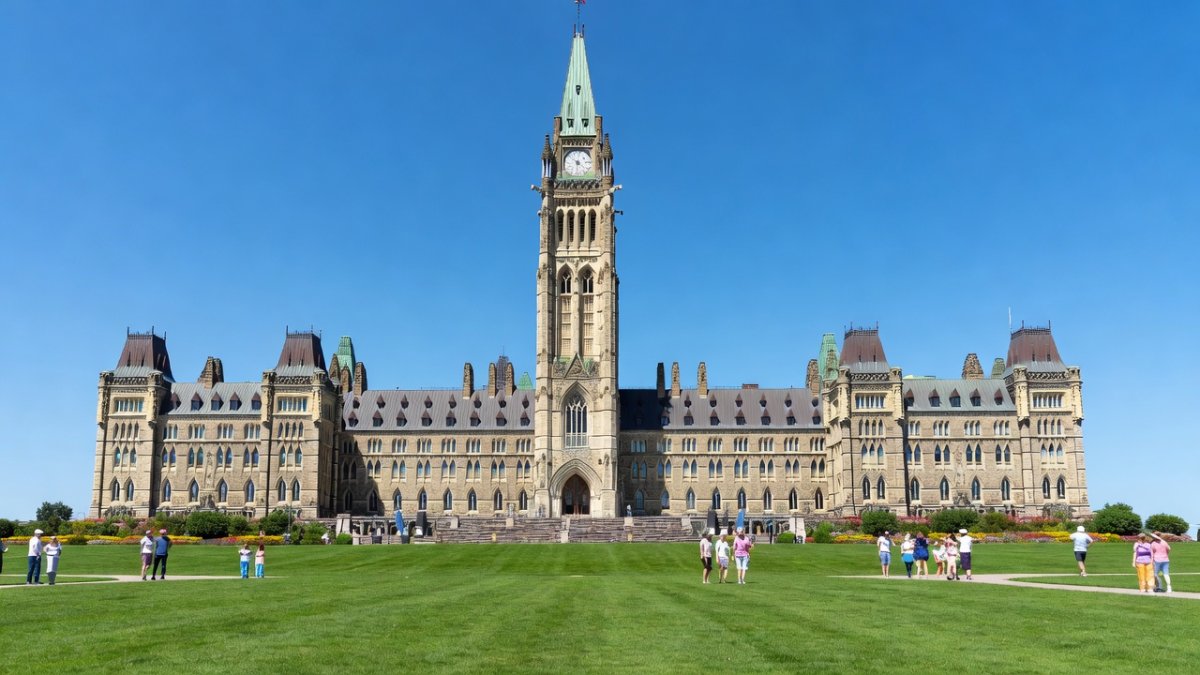
A recent CBC News video has spotlighted explosive comments from Shopify CEO Tobi Lutke, igniting fierce debate across Canada about who truly deserves a voice in federal elections. The footage captures the Ottawa executive's blunt dismissal of pensioners as dependents, thrusting a radical tiered voting proposal into the national spotlight and raising alarms over constitutional rights. As backlash mounts on Parliament Hill, the story reveals deep tensions between corporate infl
A recent CBC News video has spotlighted explosive comments from Shopify CEO Tobi Lutke, igniting fierce debate across Canada about who truly deserves a voice in federal elections. The footage captures the Ottawa executive's blunt dismissal of pensioners as dependents, thrusting a radical tiered voting proposal into the national spotlight and raising alarms over constitutional rights. As backlash mounts on Parliament Hill, the story reveals deep tensions between corporate influence and democratic equality.
A Canadian CEO's Controversial Push for Tiered Voting
Ottawa, Ontario — Article continues.
Tobi Lutke's Original Comments on X
Tobi Lutke, the German-Canadian chief executive of Ottawa-based Shopify, posted on X on July 25 and labelled pensioners as dependents who should not vote in Canadian elections. The post came from the account of the Ottawa resident who leads the e-commerce company founded in the national capital. Lutke has not retracted the statement in recent days despite widespread attention on Parliament Hill.
The July 25 post specifically targeted pensioners and framed them as non-contributors to the federal tax system. Ottawa-based observers noted that the timing coincided with ongoing debates in the House of Commons about retirement security programmes. Lutke, who holds dual German and Canadian citizenship, made the remarks while residing in Canada.
Details of the Tiered Voting System Proposed
Former Shopify executive Eric Thor outlined a tiered voting structure on X that would assign zero votes to Canadians paying no income tax and grant up to five votes to those paying $500,000 in income tax. The proposal directly linked voting power to tax contributions rather than citizenship. Lutke endorsed the plan in a follow-up post on the same platform.
Under the structure described by Eric Thor, individuals with zero income tax liability would receive no ballots in federal elections. Canadians paying the highest amounts would receive multiple ballots, creating a weighted system. The endorsement by Tobi Lutke occurred publicly on X and has remained active without deletion or clarification from the Shopify chief executive.

Implications for Section 3 of the Canadian Charter
Section 3 of the Canadian Charter of Rights and Freedoms guarantees every Canadian citizen the right to vote in federal and provincial elections regardless of income or tax status. The tiered system endorsed by Tobi Lutke would directly contradict this constitutional protection by stripping voting rights from pensioners and low-income citizens. Legal experts in Ottawa have pointed to the Charter's explicit language that protects universal suffrage.
The Canadian Constitution, through the Charter, establishes voting as a fundamental right not subject to income thresholds. Any implementation of the proposal would require amendments to the Charter itself, a process that demands support from Parliament and multiple provincial legislatures. The July 25 comments by Lutke have prompted immediate references to these protections in federal political circles.
Reactions from Canadian Political Figures
Members of Parliament from multiple parties have condemned the tiered voting idea in statements issued from Parliament Hill this week. Opposition critics highlighted the proposal as incompatible with the principles of the Canadian Constitution and the Charter of Rights and Freedoms. Government spokespeople described the comments as out of step with Canadian democratic traditions.
Labour organisations across Canada, including those representing federal public servants, issued statements rejecting any link between tax payments and voting eligibility. The backlash has extended to provincial legislatures where premiers have reaffirmed commitment to one-person, one-vote systems. No major federal party has expressed support for the structure proposed by Eric Thor and endorsed by Tobi Lutke.
Context of Corporate Voting Power at Shopify
Tobi Lutke currently controls 40 percent of the voting power at Shopify through the company's dual-class share structure. This arrangement allows the Ottawa-based chief executive to maintain significant influence over corporate decisions despite holding a minority of economic shares. The contrast between Lutke's corporate voting weight and his public comments on citizen voting has drawn attention from Canadian business analysts.
Shopify, headquartered in Ottawa, operates under Canadian corporate law that permits such share structures. Lutke's 40 percent voting stake has remained stable through recent years and has not faced shareholder challenges tied to the July 25 posts. The company's governance model differs sharply from the one-person, one-vote principle enshrined in the Canadian Charter for political elections.
Public Backlash and Social Media Response
Canadian users on X have organised widespread criticism of the tiered voting proposal in the days following the July 25 posts. Hashtags referencing the Charter of Rights and Freedoms have trended nationally, with many posts highlighting the exclusion of pensioners. Advocacy groups in Toronto, Vancouver, and Montreal have scheduled public forums to discuss the implications.
Media outlets across Canada, including CBC News, have covered the story extensively since the original posts appeared. The backlash has included calls for Shopify to clarify its position on democratic participation. Tobi Lutke has not issued additional statements addressing the volume of negative responses received in recent days.
Income Brackets and Administrative Reality
Eric Thor's proposal assigns zero votes to any Canadian paying no federal income tax, one vote to those paying up to $50,000, two votes for payments between $50,000 and $150,000, three votes for $150,000 to $300,000, four votes for $300,000 to $500,000, and five votes for anyone remitting more than $500,000 annually. In practice, this structure would require the Canada Revenue Agency to certify tax contributions before each election, creating a new administrative layer that links voter eligibility directly to income filings. Low-income workers, students, and many pensioners would receive no ballot, while high earners could cast multiple votes in the same riding.
Historical and Ethical Dimensions
Historical parallels reveal uncomfortable echoes. Ancient Greek timocracy restricted political power to property owners, much as this plan ties influence to tax payments. South Africa's apartheid regime used similar income and education tests to disenfranchise the Black majority. Canada itself maintained property qualifications for some provincial elections until the early twentieth century, requirements that were gradually dismantled to achieve universal adult suffrage.
The practical implications for elections would be profound. Ridings with large numbers of high-income residents could see their effective voting power multiply, shifting seat totals toward urban financial centres and away from rural or lower-income regions. Opposition parties have already warned that such a system would entrench economic inequality into the electoral map itself.
Campaign Finance and Democratic Equality
The proposal arrives amid growing Canadian concern over concentrated wealth and political influence. Tobi Lutke's endorsement highlights how a small number of technology executives already wield outsized power through dual-class share structures and personal platforms. Linking votes to tax payments would formalise the very dynamic critics have long warned against, turning economic contribution into a formal measure of democratic worth.
Canada's current campaign finance rules prohibit corporate and union donations at the federal level and impose strict contribution limits, yet lobbying expenditures and third-party advertising continue to shape policy debates. The United States experience after Citizens United demonstrates how unlimited spending can distort electoral competition; a Canadian system that multiplies votes by income would represent an even more direct transfer of political power to the wealthy.
Ethically, the idea challenges the principle that every citizen possesses equal moral standing regardless of earnings. Labour organisations and civil society groups have rejected the premise that pensioners or low-income workers are mere dependents, arguing instead that unpaid care work, community contributions, and past tax payments all form part of the social contract. Normalising income-based voting would erode the universalist foundation that has defined Canadian democracy since the mid-twentieth century.
What This Means for Canadian Democracy
The endorsement of a tax-based voting system by a prominent Canadian technology executive raises questions about the future of universal suffrage protected under Section 3 of the Charter. Federal elections scheduled in coming years would face direct challenges if any political party attempted to adopt elements of the proposal advanced by Eric Thor. Canadian voters have historically rejected similar ideas in constitutional discussions dating back to the patriation of the Constitution in 1982.
Parliament Hill observers note that the comments arrive at a time when federal parties are preparing platforms on electoral reform and retirement benefits. The proposal would disproportionately affect seniors who rely on pension income and pay lower taxes, a demographic that participates actively in Canadian elections. The absence of any retraction by Tobi Lutke has kept the issue alive in national discourse.
Canadian constitutional scholars emphasise that altering voting rights requires broad consensus across Parliament and the provinces, not unilateral corporate endorsements. The July 25 posts have therefore served as a reminder of the protections contained in the Charter of Rights and Freedoms. Discussions on this topic continue in federal committees and among civil society organisations nationwide.
By Alex Thompson, Staff WriterThis article was produced with AI-assisted research and editorial support. Reporting is based on sources cited in the article.
What's Your Reaction?
 Like
0
Like
0
 Dislike
0
Dislike
0
 Love
0
Love
0
 Funny
0
Funny
0
 Wow
0
Wow
0
 Sad
0
Sad
0
 Angry
0
Angry
0

Canada Correspondent at Global1.News. Based in Toronto, covering Canadian politics, energy, trade, and US-Canada relations. Provides the Canadian perspective on North American and global affairs.














Comments (0)