
Vance Warns of US Military Strikes on Mexican Cartels
Trump Escalates Rhetoric at G7 Summit President Donald Trump addressed reporters at the G7 Summit in France on June 17 and repeated earlier warnings about Mexican cartels. He described the groups as a direct threat to American communities and said past cooperation had not produced enough results. The remarks followed his January 2025 inauguration and built on months of similar
Trump Escalates Rhetoric at G7 Summit
President Donald Trump addressed reporters at the G7 Summit in France on June 17 and repeated earlier warnings about Mexican cartels. He described the groups as a direct threat to American communities and said past cooperation had not produced enough results. The remarks followed his January 2025 inauguration and built on months of similar statements directed at Mexico.
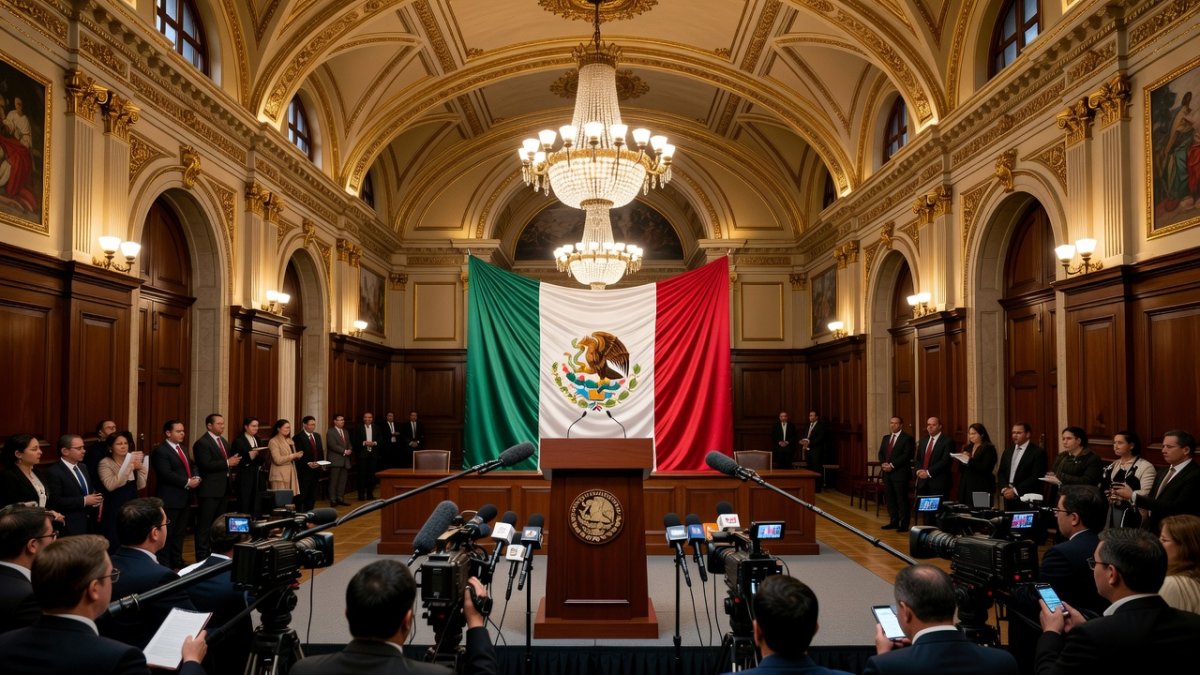
President Claudia Sheinbaum addresses the nation from Palacio Nacional. (Global 1 News)
Members of Morena in the Congreso de la Unión condemned the comments as interference in domestic affairs. Opposition lawmakers from PAN and PRI called for measured responses that protect trade ties while rejecting any foreign military role. The exchanges highlighted divisions inside Mexican politics over how to handle growing US pressure.
Rural families in Sinaloa and Michoacán listened to the news with particular concern. Campesinos who grow legal crops near known trafficking routes fear renewed violence if enforcement intensifies. Many recall earlier periods when federal operations disrupted daily life without reducing extortion demands on their ejidos.
Local teachers in these states noted that students often miss school when tensions rise along highways. Parents worry that any new surge in confrontations could affect the small businesses that serve agricultural workers. Community leaders stress that most residents simply seek stable conditions for planting and harvest seasons.
Sheinbaum Responds from Palacio Nacional
President Claudia Sheinbaum addressed the issue during her morning mañanera press conference at Palacio Nacional. She stated that any unilateral action would cross a clear red line for Mexican sovereignty. The response came one day after the G7 remarks and aimed to reassure both domestic audiences and international partners.
Sheinbaum highlighted a 46 percent reduction in homicides since the start of her term. She also pointed to more than 50,000 arrests tied to organized crime networks. These figures were presented as evidence that Mexican institutions are making steady progress without external intervention.
Security Secretary Omar García Harfuch stood beside her and described ongoing coordination with US agencies on intelligence sharing. He referenced the work of Defense Secretary Ricardo Trevilla Trejo and Navy Secretary Raymundo Pedro Morales Ángeles in strengthening border controls. The officials emphasized that Mexican forces lead all operations inside the country.
Students and teachers gathered around televisions in Mexico City public schools followed the exchange closely. Many families in working-class colonias expressed relief that the administration rejected foreign military involvement. Community organizers noted that the message reinforced trust in national institutions built during the AMLO years.
Sheinbaum closed by inviting continued dialogue through established diplomatic channels. She stressed that Mexico remains open to joint efforts against fentanyl flows while insisting on mutual respect. The tone balanced firmness with an invitation for practical cooperation.
What This Means for Mexican Families and Communities
Indigenous comunidades in Guerrero and Oaxaca worry that heightened rhetoric could affect their already fragile economies. Farmers who transport goods to regional markets face added checkpoints and delays when security alerts increase. Extortion payments demanded by local groups remain a daily burden that outside military action would not resolve.
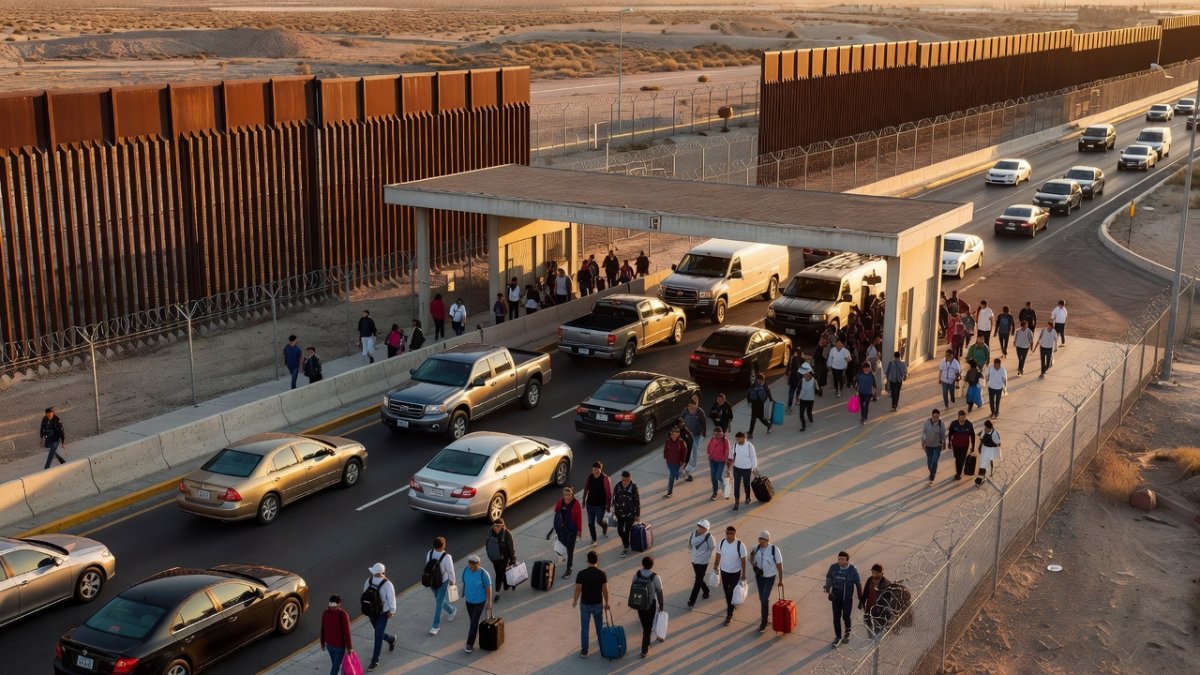
The San Ysidro border crossing, busiest land port on the US-Mexico border. (Global 1 News)
Migrant workers preparing for seasonal travel to northern fields expressed nervousness about possible disruptions at border crossings. Many send remittances that support entire villages and fear any escalation could reduce job opportunities in maquiladoras. Small business owners in Tijuana and Ciudad Juárez report slower foot traffic whenever US statements dominate local news.
Owners of tortillerías and taquerías in border colonias describe how families adjust spending when uncertainty grows. These modest enterprises employ neighbors and provide gathering places that strengthen community ties. Residents emphasize that stability, not confrontation, allows daily life to continue without fear.
Community health workers in rural areas note rising stress levels among parents who must decide whether to keep children home during periods of tension. Local leaders continue to advocate for investment in education and legal employment as the most effective long-term response to organized crime influence.
Sovereignty Under Pressure — Recent Incidents
Reports of a CIA-linked operation in Chihuahua earlier this year prompted formal protests from the Secretaría de Relaciones Exteriores. Mexican officials stated that the activity occurred without proper coordination and violated established agreements. The incident added to existing concerns about intelligence activities on Mexican soil.
Charges filed against a Sinaloa state official drew sharp reactions across party lines in the Congreso de la Unión. Morena legislators defended state autonomy while opposition members called for transparent investigations. The case illustrated how US legal actions can quickly become domestic political issues.
Guardia Nacional units increased patrols near key crossing points in response to the diplomatic notes. Community watch groups in affected municipalities reported more frequent interactions with federal forces. Residents stressed that these operations must remain focused on protecting civilians rather than creating new tensions.
Local journalists covering the border documented how families adjust routines around increased security presence. Many expressed hope that diplomatic channels would prevent further unilateral moves that could affect daily commerce and travel.
The Path Forward — Cooperation or Confrontation?
DEA and FBI personnel continue to participate in joint task forces with Mexican counterparts under existing frameworks. These efforts focus on disrupting fentanyl precursor shipments before they reach production sites. Guardia Nacional daily operations along major highways provide the operational backbone for such work.
Community organizations in Michoacán and Sinaloa promote education and job training programs as alternatives to involvement with trafficking networks. Successful violence-reduction initiatives in several municipalities have shown that sustained local investment yields measurable drops in extortion cases. Families participate actively when programs address root economic pressures.
Small business associations along the border advocate for predictable trade rules that support maquiladora employment. They note that steady cross-border commerce reduces the appeal of illicit activities for young workers. Leaders from these groups regularly meet with federal officials to share on-the-ground perspectives.
Sheinbaum administration representatives have signaled willingness to expand vetted information-sharing channels. Such steps build on AMLO-era security reforms while maintaining clear limits on foreign operational roles inside Mexico.
What to Watch For
Upcoming congressional hearings in both countries will examine the scope of the foreign terrorist organization designations. Observers expect detailed testimony on how intelligence sharing currently functions and where gaps remain. Border communities plan to track any changes in daily enforcement patterns.
Sheinbaum is scheduled to hold follow-up calls with US counterparts in the coming weeks. These conversations will likely focus on expanding joint operations against precursor chemicals while reiterating sovereignty boundaries. Rural organizations intend to monitor outcomes for effects on agricultural transport.
Residents in Ciudad Juárez and Tijuana continue to document incidents and share updates through local networks. Their accounts provide real-time perspective on whether rhetoric translates into visible shifts along the border. Families remain focused on maintaining routines that support children and local economies.
Tags: US Mexico relations, cartel designations, Sheinbaum administration, border communities, sovereignty concerns, fentanyl trafficking, rural Mexico, Guardia Nacional
By Rosa Martinez, Staff Writer
This article was produced with AI-assisted research and editorial support. Reporting is based on sources cited in the article.
What's Your Reaction?
 Like
0
Like
0
 Dislike
0
Dislike
0
 Love
0
Love
0
 Funny
0
Funny
0
 Wow
0
Wow
0
 Sad
0
Sad
0
 Angry
0
Angry
0
Latin America/Andes Correspondent at Global1.News. Based in Bogota, covering politics, environment, energy, and social movements across the Andean region. Passionate about environmental journalism and communities protecting their land.











Comments (0)