
Trump Takes Mail Voting Fight to the Supreme Court — Here's What's at Stake for Your Ballot
President Trump asks the Supreme Court to allow his mail-in voting executive order to take effect ahead of the 2026 midterms. A federal appeals court blocked the order in 23 states, and now SCOTUS must decide whether to step in.
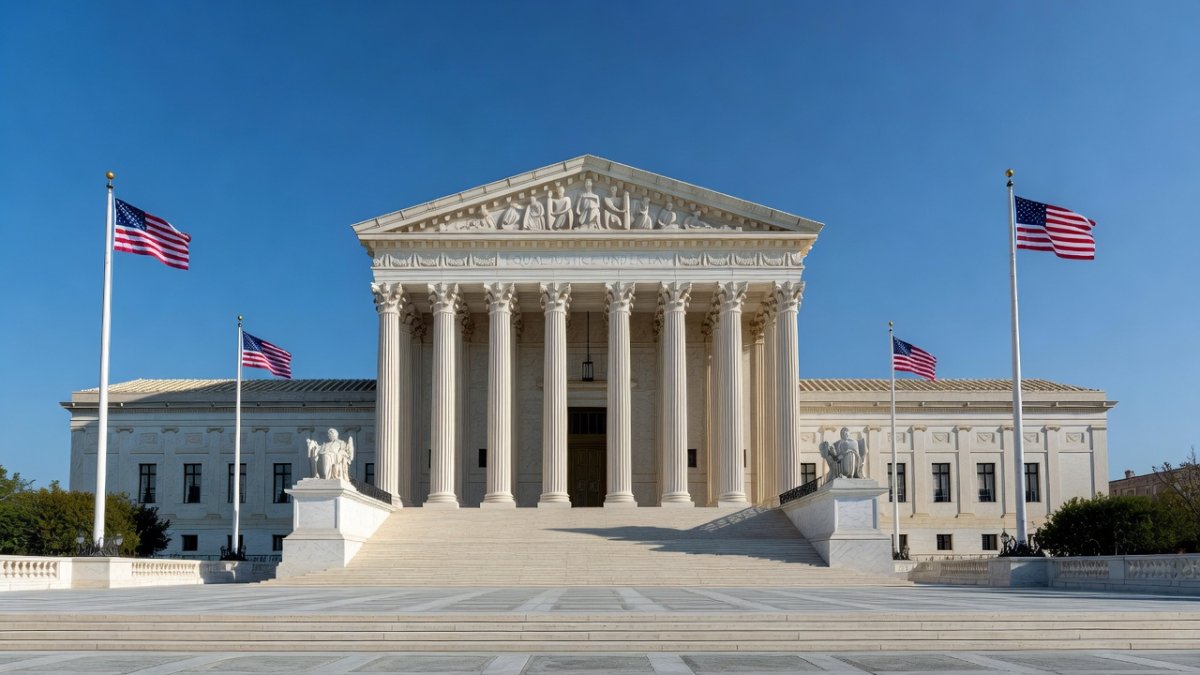
Trump Takes Mail Voting Fight to the Supreme Court — Here's What's at Stake for Your Ballot
Folks, if you thought the battle over how we vote was settled, think again. Because right now, President Donald Trump is taking his fight against mail-in voting all the way to the highest court in the land — and what the Supreme Court decides could change how millions of Americans cast their ballots this November.
On July 27, the Trump administration filed an emergency appeal with the U.S. Supreme Court, asking the justices to allow enforcement of a sweeping executive order targeting mail-in voting while legal challenges play out in lower courts. This isn't some procedural footnote — this is a full-on election-year showdown with the midterms just months away.
Trump's Supreme Court Hail Mary on Mail Ballots
Washington, D.C. — July 29, 2026 — Let me break down exactly what happened, because the timeline here matters.
Back in March, President Trump signed an executive order aimed at restricting mail-in voting nationwide. The order directed the United States Postal Service to only deliver mail ballots to voters whose names appear on lists provided by individual states — a significant departure from how absentee and mail voting has worked for years.
Almost immediately, voting rights organizations and Democratic-led states sued, arguing the order was an unconstitutional power grab that would disenfranchise millions. And they won — at least for now. On July 25, a federal appeals court blocked key provisions of the order across 23 states, ruling that the administration likely overstepped its authority. Two days later, the Department of Justice fired back, filing an emergency appeal with the Supreme Court asking the justices to step in.
As CNN reported, the appeal "set up a major elections clash" at the Supreme Court. The New York Times called it a "significant test of the court's willingness to allow changes to voting procedures on the eve of a federal election." And the stakes? Nothing less than how your ballot gets counted this fall.
What the Executive Order Actually Does
Let's get specific about what this order would change, because the details matter — and they're more sweeping than most people realize.
The executive order, signed in March 2026, does several things at once. First, it requires the USPS to verify that every mail ballot recipient's name matches a state-provided voter list before delivering the ballot. If your name isn't on that list — even if you're a registered voter who's been casting mail ballots for years — the Postal Service is instructed not to deliver your ballot.
Second, the order tightens rules around ballot collection, restricting so-called "ballot harvesting" where third parties collect and deliver completed mail ballots. Third-party ballot collection has been a flashpoint in election battles for years, with Republicans arguing it opens the door to fraud and Democrats countering that it's a legitimate way for elderly, disabled, and rural voters to participate.
Third, the order requires states to implement stricter signature verification standards for mail ballots, potentially requiring notarization or witness signatures — requirements that voting rights advocates say disproportionately impact minority and low-income voters.
According to reporting from Reuters, the order represents "the most aggressive federal action targeting mail-in voting in American history." And it's not hard to see why: we're talking about rules that could affect tens of millions of mail ballots in a midterm election year.
The Court Battle: What Happened in the Lower Courts
Before we get to the Supreme Court drama, let's talk about how we got here — because the lower court rulings paint a pretty damning picture of the administration's legal arguments.
After the order was signed, a coalition of voting rights organizations — including the League of Women Voters, the NAACP Legal Defense Fund, and the American Civil Liberties Union — filed lawsuits arguing the order violated federal election law and the Constitution. Specifically, they argued that the Constitution gives states — not the president — the power to set election rules, and that Trump's order amounted to an executive overreach that Congress never authorized.
A federal district court agreed, issuing a preliminary injunction blocking the order's key provisions. The Trump administration appealed, and on July 25, the U.S. Court of Appeals for the First Circuit upheld the injunction in a ruling that covered 23 states — including all six New England states plus the 17 other states that had joined the lawsuit.
The appeals court ruling was blistering. According to SCOTUSblog's coverage, the court found that the administration "failed to demonstrate a likelihood of success on the merits" — legal speak for "you're probably going to lose this case, so we're not letting you change voting rules while you figure that out."
But here's where it gets interesting: the ruling only covers 23 states. That leaves 27 states where the order could theoretically still be enforced — although many of those states already have their own mail voting laws that may conflict with the federal order. The legal landscape is a mess, and that's exactly why this is heading to the Supreme Court.
The Emergency Appeal: What Trump Is Asking SCOTUS to Do
So what, exactly, is the Trump administration asking the Supreme Court to do? Let me walk you through the legal mechanics because — I promise — understanding this means understanding how close we are to a major voting rights shakeup.
On July 27, the Department of Justice filed an emergency application with the Supreme Court — technically called an "application for a stay pending appeal." This is essentially a request for the Supreme Court to put the lower court's injunction on hold while the full appeal plays out. If the Supreme Court grants the stay, the executive order would go back into effect in those 23 states while the legal fight continues.
The administration's argument, as reported by USA Today and CNBC, is that the lower court overstepped by blocking a presidential order that deals with "the integrity of federal elections." The DOJ argues that the president has broad authority over federal property and personnel — including the Postal Service — and that requiring USPS to verify ballot recipients against state lists is a reasonable exercise of that authority.
Voting rights groups counter that the order is a thinly veiled attempt to suppress the vote, pointing to Trump's long history of attacking mail-in voting. And they have a powerful argument on their side: since the Constitution assigns states the power to set the "times, places, and manner" of elections, any federal effort to override state election rules requires explicit congressional authorization — which this executive order doesn't have.
The Guardian's reporting noted that legal experts are divided on how the Supreme Court might rule, calling it "a test of the conservative majority's commitment to states' rights versus its deference to executive authority." Translation: this case could expose some fascinating fault lines on the current court.
What's at Stake for the 2026 Midterms
Let's zoom out and talk about what this actually means for voters — because at the end of the day, that's what matters.
The 2026 midterm elections are just months away. In the 2024 presidential election, more than 50 million Americans voted by mail — roughly a third of all ballots cast. In some states, like California, Oregon, Washington, Colorado, and Utah, mail voting is the primary way people vote. A disruptive change to mail voting procedures weeks before an election is the kind of thing that election administrators have nightmares about.
If the Supreme Court sides with Trump and allows the order to take effect, state election officials in 23 states would have to scramble to comply with new federal requirements. Voters who have been casting mail ballots for years might suddenly find their ballots undeliverable because their names aren't on a newly-required state list. Signature verification standards would tighten overnight.
And here's the thing that really gets me: this isn't happening in a vacuum. We've seen a coordinated push across Republican-led states to restrict mail voting, tighten voter ID laws, and limit ballot access since 2020. Trump's executive order is the federal hammer to go along with all those state-level nails.
The Democracy Docket — a voting rights legal organization — described the emergency appeal as "the first time that the Trump DOJ has asked the Supreme Court to weigh in on one of Trump's anti-voting executive orders." It's a test case. If the administration wins here, you can bet there will be more orders to follow.
Legal Analysis: Can Trump Actually Win This?
Let me give you my read on the legal landscape here — and I'm going to be straight with you about what the experts are saying.
The Supreme Court's conservative majority has been, in recent years, skeptical of broad federal executive power when it conflicts with state authority. Just look at the major questions doctrine cases, the EPA rulings, the student loan forgiveness decision — this Court has shown a willingness to slap down executive actions that Congress hasn't clearly authorized.
That cuts against Trump's argument here. The Constitution's Elections Clause gives states — not the president — the primary role in setting election rules. Congress can override state election laws under the Elections Clause, but it has to do so through legislation, not by leaving it to the president to figure out.
On the other hand, the Court's conservative justices have also been sympathetic to arguments about election integrity and voter fraud — even though actual evidence of widespread mail-in voter fraud remains virtually nonexistent. Multiple studies, including a comprehensive analysis by the Brennan Center for Justice, have found that mail-in voter fraud is extraordinarily rare, occurring at rates well below 0.01% of ballots cast.
SCOTUSblog's analysis suggests the Court could take one of several paths: it could grant the stay (allowing the order to take effect), deny the stay (keeping the injunction in place), or — and this is the most interesting option — it could fast-track the full appeal for oral argument, essentially skipping the stay decision and going straight to the merits.
If the Court fast-tracks the case, we could see oral arguments as early as September or October, with a decision coming weeks before the November midterms. That's the nightmare scenario for election administrators: a major voting rights ruling dropped into the middle of an election season.
Reactions From Both Sides
Unsurprisingly, the emergency appeal has drawn fierce reactions from both sides of the aisle.
Trump, speaking to reporters after the filing, called the lower court ruling "a radical decision by activist judges" and said he was confident the Supreme Court would "restore faith in our elections." His campaign has been hammering the mail-in voting theme for months, arguing — without evidence — that mail ballots are a major source of fraud.
On the other side, voting rights advocates aren't mincing words. The president of the League of Women Voters called the order "a brazen attempt to suppress the vote and disenfranchise millions of Americans." The NAACP Legal Defense Fund said the administration is "using the machinery of the federal government to make it harder for people of color to vote."
The Democratic National Committee issued a statement calling the emergency appeal "a desperate act from a president who knows he can't win on a fair playing field." Democratic state attorneys general from the 23 affected states are preparing their responses, expected to be filed with the Supreme Court in the coming days.
And Republican election officials? They're split. Some, particularly in states that have already tightened their own voting laws, are supportive of the federal effort. Others — especially secretaries of state in swing states — are privately concerned about the chaos of changing rules mid-cycle.
What Happens Next: The Timeline
Here's what to watch for in the coming days and weeks.
The Supreme Court will first ask the plaintiffs — the voting rights groups and Democratic states that challenged the order — to file their response to the emergency appeal. That typically happens within a week or two. After that, the Court can act at any time. Some emergency applications are decided in days; others take weeks.
If the Court denies the stay, the injunction stays in place, and the case continues through normal appellate channels — likely heading back to the Supreme Court for a full hearing on the merits sometime next year. If the Court grants the stay, the order goes into effect in 23 states immediately, and we're looking at a chaotic scramble to implement new voting rules just months before Election Day.
And then there's the wildcard option: the Court could call for full briefing and oral argument on the merits, bypassing the stay question entirely. That would push a final decision to the fall — right in the middle of campaign season.
Election administrators across the country are watching this case like hawks. The National Association of Secretaries of State has already begun contingency planning, according to reports, preparing for "multiple scenarios" depending on how SCOTUS rules.
Whatever happens, one thing is clear: the fight over how Americans vote isn't letting up. And this Supreme Court showdown could define the 2026 midterms before a single ballot is cast.
The Bottom Line
Folks, here's where I land on this. Whether you support mail voting or you're skeptical of it, what's happening right now should concern you. An executive order that could change how tens of millions of people vote — implemented potentially just weeks before an election — is not the way a functioning democracy should operate.
This shouldn't be happening through executive fiat. If Congress wants to change mail voting laws, that's their job. If states want to tighten their rules, that's their prerogative under the Constitution. But a president unilaterally ordering the Postal Service to withhold ballots from voters? That's the kind of power play that should make you uncomfortable no matter which side you're on.
The Supreme Court will have its say — and soon. In the meantime, here's what you can do: check your voter registration status today. If you vote by mail, make sure your state's rules haven't changed. And pay attention to what the Court does, because this isn't some inside-the-Beltway procedural drama — it's about whether your vote counts.
Stay informed. Stay registered. And for heaven's sake, show up in November.
By Jessica Ali, Staff Writer
This article was produced with AI-assisted research and editorial support. Reporting is based on sources cited in the article.
What's Your Reaction?
 Like
0
Like
0
 Dislike
0
Dislike
0
 Love
0
Love
0
 Funny
0
Funny
0
 Wow
0
Wow
0
 Sad
0
Sad
0
 Angry
0
Angry
0

Editor-in-Chief at Global1.News. Atlanta-based journalist who cuts through the BS and tells it like it is. Lead anchor, host, and the voice you hear when the spin stops and the truth starts.












Comments (0)