
Saskatchewan FireSmart Grant Criticized Over $40,000 Cap
Saskatchewan's $40,000 FireSmart Grant Called 'Drop in the Bucket' by Fire Chief as Wildfire Season Approaches When Jim Arnold looks at the forest surrounding Candle Lake, Sask., he sees more than 2,700 properties that his volunteer fire department is expected to protect — and a provincial grant program he says falls woefully short of what communities actually need. The fire ch
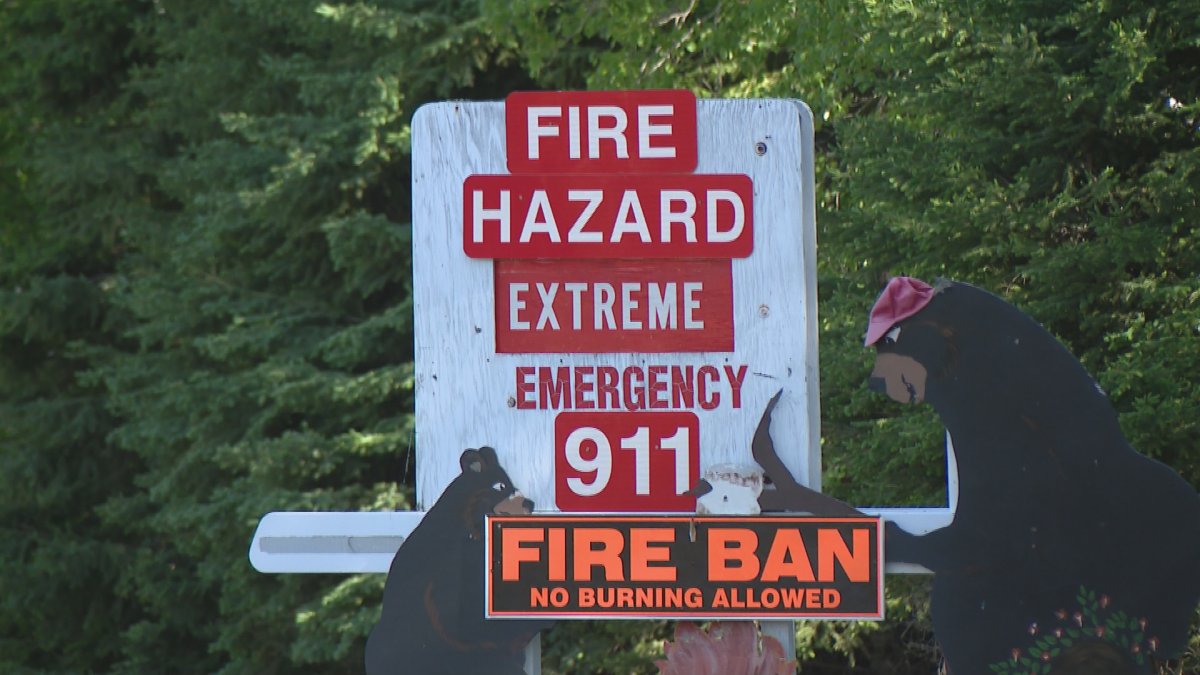
Saskatchewan's $40,000 FireSmart Grant Called 'Drop in the Bucket' by Fire Chief as Wildfire Season Approaches
When Jim Arnold looks at the forest surrounding Candle Lake, Sask., he sees more than 2,700 properties that his volunteer fire department is expected to protect — and a provincial grant program he says falls woefully short of what communities actually need. The fire chief of this village, located more than two hours northeast of Saskatoon, is one of several community leaders raising concerns about the Saskatchewan Public Safety Agency's new FireSmart Grant Program, which offers $40,000 to help communities obtain a FireSmart designation.
"$40,000 is a drop in the bucket," Arnold told Global News in an interview following the program's announcement. His community spent $140,000 on FireSmart mitigation efforts during the last fire season and has yet to be reimbursed by the SPSA. The protection process required three days of work, involved 20 fire department members, and drew on outside resources from both the village and the province's search and rescue team.
The MNP Review Highlights Critical Gaps in Prevention Planning
The independent MNP review of the 2025 wildfire season identified significant gaps in Saskatchewan's prevention strategies, revealing that targets under the 2017 Prairie Resilience framework were not grounded in scientific analysis. Officials could not determine how the goal of treating 2,400 hectares by 2028 was originally established, raising questions about whether current efforts align with the scale of risk facing forested regions. This lack of evidence-based targets has left many communities vulnerable as wildfire seasons grow more intense.
FireSmart initiatives form just one element of the 11 actions announced by the Saskatchewan Public Safety Agency in response to these findings. While the $40,000 grants aim to support local mitigation, the review underscores that broader systemic changes are required to address prevention shortfalls. Communities like Candle Lake have already demonstrated the financial burden, spending far beyond the grant amount on vegetation management and community assessments.
Northern Saskatchewan faces unique challenges due to its dense boreal forests and limited access routes, which complicate rapid response during peak fire periods. The 2025 season, marked by over 500 wildfires and 2.9 million hectares burned, exposed how inadequate planning amplifies evacuation pressures on isolated populations. Rural residents often rely on volunteer departments that stretch thin when multiple incidents occur simultaneously.
Analysis of the MNP findings suggests that without revised targets informed by current climate data, Saskatchewan risks repeating the patterns seen in other Canadian provinces where prevention lagged behind escalating threats. The second-worst season on record displaced more than 10,000 people, highlighting the human cost of these gaps. Enhanced focus on proactive measures could reduce both property losses and emergency expenditures in future years.
Impacts on Northern and Rural Communities Demand Urgent Attention
Northern and rural communities in Saskatchewan bear the brunt of wildfire seasons, with limited infrastructure and volunteer-based fire services struggling to implement large-scale mitigation. In Candle Lake, the $140,000 expenditure on FireSmart work illustrates how even modest grants fail to offset costs for communities protecting thousands of properties. These areas often lack the tax base to sustain ongoing efforts without provincial support.
The destruction of 400 homes in 2025, as noted by Denare Beach officials, demonstrates the direct consequences when mitigation calls go unanswered. Rural residents face prolonged evacuations that disrupt livelihoods, particularly in regions dependent on tourism and resource industries. Rebuilding efforts strain local economies already pressured by insurance gaps and supply chain delays common in remote locations.
Broader Canadian wildfire management challenges reveal similar patterns, where northern communities in provinces like Alberta and British Columbia have advocated for increased federal involvement to supplement provincial resources. Saskatchewan's situation emphasises the need for coordinated strategies that account for geographic isolation and seasonal workforce limitations in rural fire departments.
Practical implications include prioritising vegetation clearing around critical infrastructure such as power lines and access roads, which can prevent fire spread into populated zones. Homeowners in these areas must also consider long-term maintenance of defensible space, though financial assistance remains inconsistent across municipalities.
Without targeted investments scaled to community size, rural populations will continue experiencing disproportionate impacts from wildfires that originate in surrounding crown land. The upcoming meeting between Forest Saskatchewan and provincial ministries on June 30 offers an opportunity to address these disparities through collaborative planning.
Clarifying Provincial and Federal Roles in Wildfire Defence
Wildfire management in Canada operates under a shared framework where provinces hold primary responsibility for prevention and suppression, yet federal support becomes essential during major events exceeding local capacity. Saskatchewan's response to the MNP review through the Saskatchewan Public Safety Agency highlights provincial efforts, but questions persist about whether current funding models adequately reflect the national scale of the threat.
Minister Michael Weger has indicated that the 11 initiatives can be implemented quickly, including the FireSmart grants already distributed retroactively to communities such as Wadin Bay. However, federal programs for disaster mitigation could provide additional resources for large-scale projects that exceed provincial budgets, particularly in northern regions where crown land management intersects with community safety.
Provincial-federal coordination has proven vital in past Canadian wildfire responses, with joint task forces aiding evacuation logistics and resource sharing. For Saskatchewan, aligning the Prairie Resilience framework revisions with national climate adaptation strategies could strengthen long-term resilience against increasingly severe fire behaviour influenced by drought and temperature trends.
Rural communities often navigate complex jurisdictional boundaries when seeking reimbursement or technical assistance, leading to delays that hinder timely mitigation. Clearer delineation of responsibilities would enable faster deployment of funds and expertise to areas like Denare Beach, where local leaders have called for expanded prevention beyond the current grant structure.
Homeowners benefit when both levels of government promote consistent standards for FireSmart practices, reducing confusion over eligible expenses and assessment criteria. This collaborative approach could also facilitate knowledge transfer from provinces with more established wildfire defence programs.
Evaluating the Full Suite of SPSA Initiatives Beyond Grants
The Saskatchewan Public Safety Agency's 11 initiatives extend past the FireSmart Grant Program to include enhanced communication protocols, simplified procurement processes, and mandatory post-incident reviews. These measures aim to address operational shortcomings identified in the 2025 season, yet the absence of specific timelines leaves communities uncertain about implementation schedules.
Improved communication could prove particularly valuable for northern residents who rely on timely alerts during rapid fire growth. Simplified procurement would allow volunteer departments to acquire equipment without bureaucratic hurdles that previously delayed critical purchases. Post-incident reviews offer opportunities to refine tactics based on lessons from the more than 500 fires that burned across the province.
Connecting these actions to wider Canadian challenges reveals that many jurisdictions struggle with similar coordination issues during multi-incident seasons. Saskatchewan's approach could serve as a model if timelines are established and progress is publicly tracked, ensuring accountability for rural and remote areas most affected by evacuations exceeding 10,000 people.
Minister Weger's assurance of swift rollout suggests political will exists to accelerate these changes ahead of the next fire season. However, sustained funding commitments remain essential to prevent these initiatives from becoming one-time responses rather than embedded practices within the provincial wildfire management system.
Local leaders welcome the expanded scope but emphasise that mitigation funding must increase to match the documented needs of communities protecting extensive forested interfaces. Without this balance, operational improvements alone may not prevent future property losses on the scale seen in 2025.
Practical Considerations for Homeowners Seeking FireSmart Compliance
Homeowners in fire-prone Saskatchewan regions must navigate practical steps to achieve FireSmart designations, beginning with vegetation management within 30 metres of structures to create defensible space. This includes removing dead trees, trimming branches, and selecting fire-resistant landscaping materials that reduce ember ignition risks during wind-driven events.
The $40,000 grant provides initial support for community-wide assessments, yet individual property owners often bear additional costs for structural upgrades such as installing metal roofs or ember-resistant vents. In rural settings like Candle Lake, these expenses accumulate quickly when properties are scattered across large areas with limited contractor availability.
Broader analysis of Canadian wildfire trends indicates that homeowner education programs yield measurable reductions in losses when combined with municipal enforcement of standards. Saskatchewan could enhance outcomes by offering tiered incentives that reward proactive residents, particularly in northern communities where seasonal access limits construction windows.
Provincial responsibilities include providing clear guidelines and technical workshops, while federal contributions might support larger-scale education campaigns modelled on successful programs elsewhere in the country. Practical barriers such as supply shortages for approved building materials further complicate compliance for remote homeowners.
Long-term maintenance of FireSmart measures requires ongoing commitment, as regrowth and seasonal debris can quickly undermine initial efforts. Communities that organise regular clean-up events have reported better participation rates, fostering a culture of shared responsibility that complements government grants.
Future Outlook Requires Strengthened Prevention Commitments
Forest Saskatchewan CEO Carl Neggers has stressed the necessity for increased prevention investment, with the June 30 meeting with ministries representing a critical juncture for revising targets that the MNP review found lacking scientific foundation. Scaling efforts beyond the current 2,400-hectare goal will demand substantial resource reallocation to match the realities of the 2025 season.
Northern and rural communities stand to gain most from these discussions, as expanded mitigation reduces reliance on reactive suppression that strains volunteer departments. Provincial-federal partnerships could unlock additional funding streams, ensuring that initiatives like enhanced communication and post-incident reviews translate into tangible risk reduction.
Practical homeowner considerations will remain central, with clearer pathways to reimbursement and technical support needed to encourage widespread adoption of FireSmart practices. The retroactive grant to Wadin Bay sets a positive precedent, yet broader application across affected regions is required to address the 400 homes lost in 2025.
Canada's collective experience with escalating wildfire seasons underscores that prevention must evolve alongside changing environmental conditions. Saskatchewan's response to the MNP findings positions the province to lead in adaptive management if commitments are matched with adequate funding and measurable timelines.
Ultimately, sustained collaboration among all stakeholders offers the best path forward for protecting lives, properties, and ecosystems in fire-vulnerable areas. Continued advocacy from local leaders will be essential to ensure that the 11 initiatives deliver lasting improvements rather than temporary relief.
By Alex Thompson, Staff Writer
This article was produced with AI-assisted research and editorial support. Reporting is based on sources cited in the article.
What's Your Reaction?
 Like
0
Like
0
 Dislike
0
Dislike
0
 Love
0
Love
0
 Funny
0
Funny
0
 Wow
0
Wow
0
 Sad
0
Sad
0
 Angry
0
Angry
0

Canada Correspondent at Global1.News. Based in Toronto, covering Canadian politics, energy, trade, and US-Canada relations. Provides the Canadian perspective on North American and global affairs.















Comments (0)