
Over 100 Israeli Occupiers Attack Sinjil Near Ramallah: Mayor
Israeli Attack on Sinjil Outskirts More than 100 Israeli occupiers launched an assault on the outskirts of Sinjil, north of Ramallah in the central occupied West Bank, on Friday. Local officials reported that the group opened fire toward residents and activists while setting fire to agricultural crops. The attack disrupted daily life in a community already strained by ongoing restrictions on movement and access to farmland.
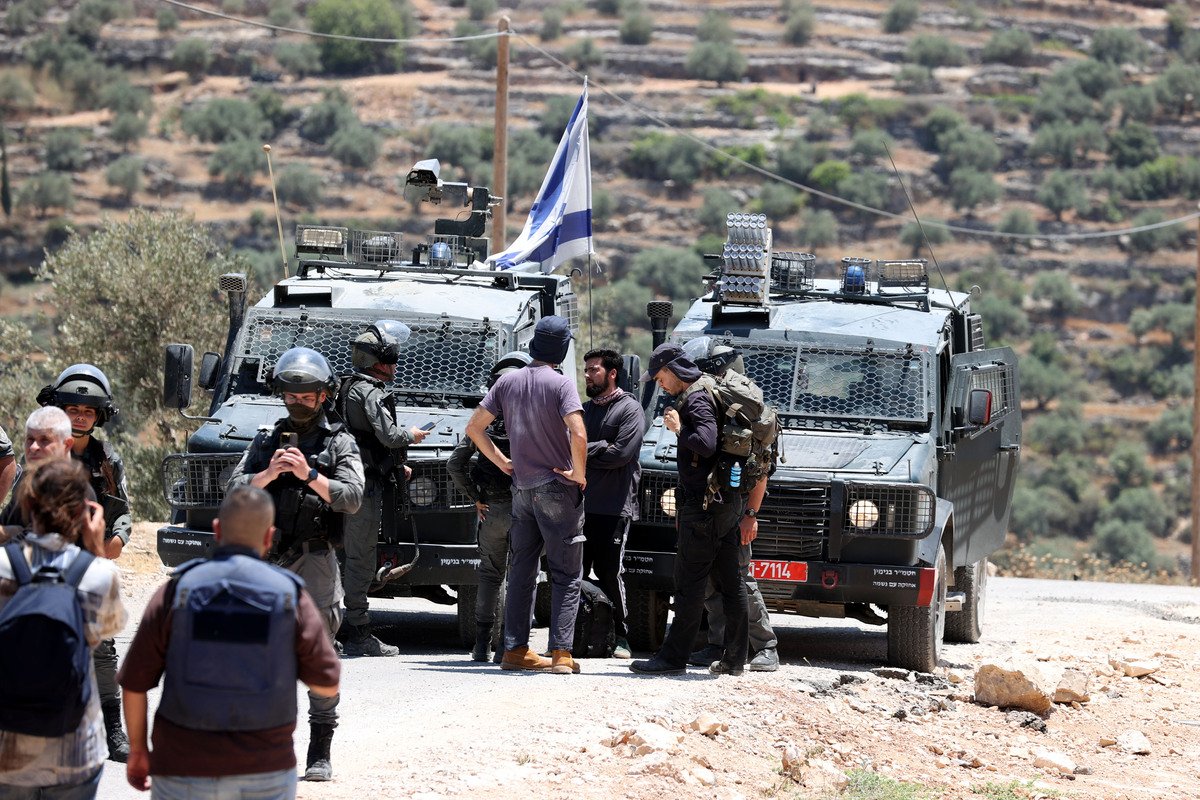
Israeli Attack on Sinjil Outskirts
More than 100 Israeli occupiers launched an assault on the outskirts of Sinjil, north of Ramallah in the central occupied West Bank, on Friday. Local officials reported that the group opened fire toward residents and activists while setting fire to agricultural crops. The attack disrupted daily life in a community already strained by ongoing restrictions on movement and access to farmland.
Account from Sinjil Mayor Moataz Tawafsheh
Sinjil Mayor Moataz Tawafsheh described how the occupiers attempted to advance into the town itself. Residents and popular guard committees confronted the group to block further incursions and protect the population. Tawafsheh noted that Israeli army forces simultaneously tightened the siege on Sinjil by closing its entrances during the attack. He characterized the incident as part of a continuing pattern of occupier terrorism against the town and emphasized that guard committees remain active to prevent storming of residential areas.
Incidents in Jerusalem and Deir Jarir
In a separate development reported by the Palestinian news agency WAFA, Israeli occupation forces shot a Palestinian young man and arrested another in Jerusalem. The same report stated that forces stormed the entrance to Deir Jarir village, northeast of Ramallah. No further details on arrests or casualties were provided in that account, yet the actions added to the pattern of operations affecting Palestinian communities near Ramallah.
Escalation Across the Occupied West Bank
Israeli occupiers also destroyed a water network and stole two water tanks in the village of Al-Minya, southeast of Bethlehem, according to WAFA. These incidents occurred alongside the Sinjil events and illustrate how attacks extend across multiple districts. The occupied West Bank has seen such operations intensify since October 2023, affecting access to essential resources and daily routines in rural areas.
Statistics on Occupier Attacks in 2026
A July 6 report by the Palestinian Colonization and Wall Resistance Commission documented 3,488 attacks carried out by occupiers during the first half of 2026. The attacks included raids on Palestinian villages, arson attacks on homes, shootings, land seizures, and the establishment of settlement outposts. These figures reflect coordinated actions that target both populated centers and agricultural land throughout the occupied West Bank.
The 3,488 attacks recorded in the first half of 2026 reflect a marked continuation of the escalation that began after October 2023. With multiple incidents occurring daily across the West Bank, the pace indicates that settler-initiated actions have become a persistent feature rather than episodic events, encompassing raids, arson, shootings, land seizures, and outpost construction as part of the same pattern.
These figures tie directly to the presence of approximately 750,000 settlers distributed across 141 settlements and 224 outposts. The establishment of new outposts functions as a primary mechanism for extending control over land, often following or coinciding with raids and seizures that clear areas for further expansion while the existing settlement infrastructure provides logistical support.
Human Impact on Palestinian Communities
Official Palestinian figures record that attacks since October 2023 have killed 1,181 Palestinians, injured nearly 13,000 others, and led to the arrest of around 24,000 Palestinians. In Sinjil and similar villages, the destruction of crops and water infrastructure directly affects local economies reliant on agriculture. Families face repeated disruptions to movement, schooling, and access to markets, compounding the effects of closed entrances and sieges.
Destruction of crops and water infrastructure in villages such as Sinjil compounds the effects of the 1,181 deaths, nearly 13,000 injuries, and roughly 24,000 arrests recorded since October 2023. Agricultural communities lose immediate income and long-term viability when irrigation networks and fields are damaged, forcing reliance on external aid and reducing the capacity to sustain local economies.
Closed entrances and sieges further isolate residents, limiting movement to markets, medical facilities, and schools. In this environment, communities have formed popular guard committees and local networks to monitor approaches and coordinate basic protection, serving as immediate responses to repeated incursions while highlighting the displacement pressures that arise when farmland becomes unusable.
Broader Context of Occupation and Settlements
Around 750,000 occupiers live in 141 illegal settlements and 224 settlement outposts across the occupied West Bank, including about 250,000 in occupied East Jerusalem. The presence of these settlements and the associated attacks shape the lived reality for Palestinian residents, limiting expansion of villages and restricting use of surrounding land. Popular guard committees in places like Sinjil continue efforts to safeguard communities amid these conditions.
The 750,000 settlers living in 141 illegal settlements and 224 outposts, including 250,000 in occupied East Jerusalem, operate within a framework the source describes as unlawful. Settlement infrastructure such as outposts, connecting roads, and fencing divides Palestinian areas into fragmented zones, restricting contiguous access and reinforcing separation between communities.
Israeli military forces are shown coordinating with or enabling these actions through the broader pattern of raids and outpost support documented since October 2023. This integration turns individual incidents into a systemic process that advances territorial control while the scale of settler presence sustains the infrastructure required for ongoing expansion.
By Fatima Al-Rashid, Staff WriterThis article was produced with AI-assisted research and editorial support. Reporting is based on sources cited in the article.
What's Your Reaction?
 Like
0
Like
0
 Dislike
0
Dislike
0
 Love
0
Love
0
 Funny
0
Funny
0
 Wow
0
Wow
0
 Sad
0
Sad
0
 Angry
0
Angry
0

Gulf/MENA Correspondent at Global1.News. Based in Doha, covering Gulf politics, energy markets, diplomacy, and development across the Middle East and North Africa. Tracks the economic transformation of the Gulf states.













Comments (0)