
Hero Wakes From Vegetative State, Stirs India Rehab Debate
A Chinese woman's seven-year devotion to her husband — including an unconventional daily ritual of biting his toes to stimulate his nerves — has helped him emerge from a prolonged vegetative state, with the 45-year-old former art teacher's persistence now sparking debate among neurologists about the role of family-based sensory stimulation in disorders of consciousness. Zhao Ji
A Chinese woman's seven-year devotion to her husband — including an unconventional daily ritual of biting his toes to stimulate his nerves — has helped him emerge from a prolonged vegetative state, with the 45-year-old former art teacher's persistence now sparking debate among neurologists about the role of family-based sensory stimulation in disorders of consciousness. Zhao Jinqian, a waterproofing worker from Henan province who suffered catastrophic brain damage after a six-metre fall while rescuing a trapped child in October 2019, is now able to understand conversations, raise his hand, stand briefly, and has spoken his first words since the accident. His case, widely reported by SCMP, Asianet, and NDTV, carries urgent lessons for India's overburdened neuro-rehabilitation system.
Chinese Hero's Recovery From Prolonged Vegetative State Stirs Debate on India's Neuro-Rehab Gaps
New Delhi, Delhi – July 9, 2026 — Zhao Jinqian's gradual emergence from a nearly seven-year vegetative state, triggered by his wife Song Mei's persistent sensory stimulation routine, has prompted Indian neurologists to examine how unstructured family caregiving compares with formal clinical protocols. According to reports from the South China Morning Post and Asianet Newsable, Song Mei's daily practice of biting her husband's toes after accidentally noticing a physical response has become a focal point for discussions on caregiver-driven rehabilitation techniques.
The Rescue That Changed Everything
In October 2019, Zhao Jinqian climbed onto a warehouse roof in Henan province to rescue a trapped three-year-old child. He fell approximately six metres while holding the toddler, using his own body to shield the child from the impact. The child escaped unharmed, but Zhao suffered severe traumatic brain injuries and multiple fractures after landing head-first. Doctors at the treating hospital described his survival as remarkable but warned that his chances of regaining consciousness were vanishingly small, according to reports. The rescued child's father later raised 45,000 yuan (approximately US$6,600) to contribute towards Zhao's treatment, despite his own financial struggles. Zhao and Song Mei have two children together.
The Unconventional Stimulus That Showed Results
Song Mei, a former kindergarten art teacher, quit her job to become her husband's full-time caregiver. She cleaned him, massaged his body, talked to him daily, and sold her paintings online to support the family. According to her account published by Asianet Newsable, doctors advised stimulating Zhao's fingers and toes to encourage nerve recovery. One day, she accidentally bit one of his toes and noticed a physical response. Encouraged, she began covering his foot with a food bag and gently biting his toes every day — a routine she maintained for years while surviving on fewer than four hours of sleep per night. In 2024, Zhao slowly began opening his eyes. Although he could not yet move or speak, his responsiveness to external stimulation steadily improved. By late June 2026, Zhao was able to understand conversations, raise his hand on command, and stand briefly with assistance. The most emotional moment came on June 30, when he turned toward his wife from his hospital bed and softly whispered, "Song Mei, I love you."
What the Neuroscience Says About Prolonged Vegetative State Recovery
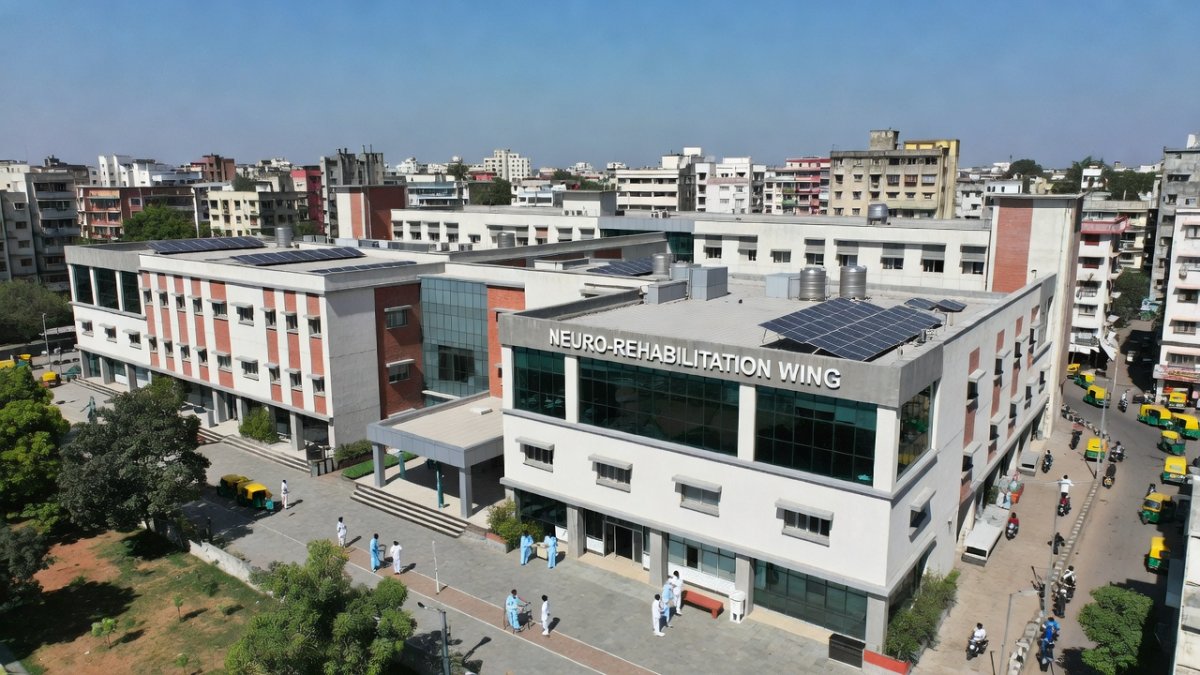
Recovery from a vegetative state lasting more than 12 months — termed a permanent vegetative state in many clinical guidelines — is considered exceedingly rare but not impossible. Zhao's case, with a timeline of nearly seven years before his first words, challenges conventional assumptions about irreversibility. Neurologists point to repeated tactile input as a potential mechanism for gradually reactivating thalamocortical circuits, the neural pathways responsible for consciousness and awareness. However, the exact neurological basis for Zhao's recovery remains undocumented in peer-reviewed literature, and experts caution against generalising from a single case. Indian institutions such as AIIMS Delhi and NIMHANS Bengaluru encounter similar cases where families experiment with home-based sensory techniques when formal neuro-rehabilitation is inaccessible or unaffordable. The ethical question, doctors say, is not whether toe-biting works, but why families are forced to improvise without clinical guidance.
India's Traumatic Brain Injury Burden: A Data Picture
India accounts for an estimated 1.5 to 2 million traumatic brain injury cases annually, according to data cited by the Indian Council of Medical Research (ICMR), with road traffic accidents in Uttar Pradesh, Maharashtra, Tamil Nadu, and Karnataka responsible for the majority of severe injuries. NIMHANS and AIIMS operate advanced neuro-intensive care units, but the country has fewer than 50 dedicated neuro-rehabilitation centres for a population exceeding 140 crore. Most patients in tier-2 cities such as Patna, Indore, Guwahati, and Coimbatore are discharged after acute stabilisation, shifting the entire care burden onto families. A NIMHANS study on caregiver health found that primary caregivers of severe TBI patients average fewer than five hours of sleep per night, with elevated rates of depression and hypertension — figures that mirror Song Mei's own experience of chronic sleep deprivation and financial strain.
The Caregiver Gap: Family Devotion Without Systemic Support
India's medical culture has historically relied on joint-family caregiving, but rapid urbanisation and nuclear family structures have eroded this support base. Unlike China, where community-based support networks for catastrophic injury cases are emerging through social media fundraising and local government subsidies, India's formal neuro-rehabilitation infrastructure remains concentrated in fewer than a dozen metropolitan centres. The National Health Mission's non-communicable disease programme does not include a dedicated stream for neuro-rehabilitation or caregiver support services. Families in smaller cities frequently exhaust personal savings within the first year of care, then rely on whatever improvised methods they can sustain. Song Mei's story — from toe-biting to art sales to four-hour sleep cycles — is recognisable to countless Indian caregivers who navigate the same terrain alone.
The Bottom Line
Zhao Jinqian's recovery after nearly seven years in a vegetative state demonstrates that prolonged disorders of consciousness are not always permanent when consistent, personalised sensory input is maintained by a devoted caregiver. For India, the case underscores a systemic gap: families are already doing the work of neuro-rehabilitation without the infrastructure, training, or financial support that could improve outcomes and reduce caregiver burnout. Expanding structured neuro-rehabilitation capacity to tier-2 and tier-3 hospitals, establishing caregiver respite programmes, and integrating family-based stimulation protocols into clinical guidelines are steps that could transform isolated acts of devotion into reproducible pathways for recovery. Until then, the quiet endurance of spouses like Song Mei will remain both the inspiration and the measure of what Indian healthcare still owes its most vulnerable patients and the families who care for them.
— By Dr. Raj Patel, Staff Writer
This article was produced with AI-assisted research and editorial support. Reporting is based on sources cited in the article.
What's Your Reaction?
 Like
0
Like
0
 Dislike
0
Dislike
0
 Love
0
Love
0
 Funny
0
Funny
0
 Wow
0
Wow
0
 Sad
0
Sad
0
 Angry
0
Angry
0

India/South Asia Correspondent at Global1.News. Analytical voice with a background in science and health journalism. Based in New Delhi, covering Indian politics, education, healthcare, technology, and policy. Breaks down complex data into clear, actionable reporting.














Comments (0)