
Super El Niño 2026: Latin America Braces for Climate Catastrophe
The warning could not be more urgent. The World Meteorological Organization has confirmed that a super El Niño is taking shape over the tropical Pacific, carrying the potential to become the strongest climate event in recorded history. For Latin America — a continent already bearing the scars of drought, deforestation, and extreme weather — this developing phenomenon threatens to push ecosystems, food systems, and communities past the point of no return. From the Amazon...
The warning could not be more urgent. The World Meteorological Organization has confirmed that a super El Niño is taking shape over the tropical Pacific, carrying the potential to become the strongest climate event in recorded history. For Latin America — a continent already bearing the scars of drought, deforestation, and extreme weather — this developing phenomenon threatens to push ecosystems, food systems, and communities past the point of no return. From the Amazon basin to the La Plata watershed, the stakes could not be higher.
Super El Niño 2026: Latin America Braces for Climate Catastrophe
Brasília, Brazil – July 25, 2026 —
The Gathering Storm — A Super El Niño Takes Shape Over Latin America
The World Meteorological Organization has issued its starkest alert yet: a super El Niño is developing rapidly with a 90 percent likelihood of strengthening through late 2026 and into 2027. Mid-July 2026 already shows Niño 3.4 anomalies at +2.1 to +2.2°C, firmly in super El Niño territory. The ECMWF SEAS5 ensemble mean forecast projects Niño 3.4 reaching an alarming +3.9°C by December 2026. NOAA places the chance of El Niño continuing into spring 2027 at nearly 100 percent, with an 80 percent probability it qualifies as very strong at or above +2.0°C and a 50 percent chance it ranks among the top three strongest events on record at or above +3.0°C.
Subsurface ocean heat content sits at record levels, averaging +2.6°C overall with localized spikes to +8.6°C. These figures could allow the event to rival or surpass the devastating 1997-98 and 2015-16 episodes. UN relief chief Tom Fletcher warns this El Niño could prove even worse than previous strong events. UN Secretary-General António Guterres cited the WMO update on the 90 percent likelihood, while the organization coordinates enhanced early warning systems globally. Background ocean warming has already pushed absolute sea surface temperatures to unprecedented levels around 29.3°C in Niño regions, boosting global temperatures and altering hurricane and monsoon patterns simultaneously with 2026 heatwaves striking Europe and Asia.
The Amazon's Tipping Point — Drought, Fire and a Forest Under Siege
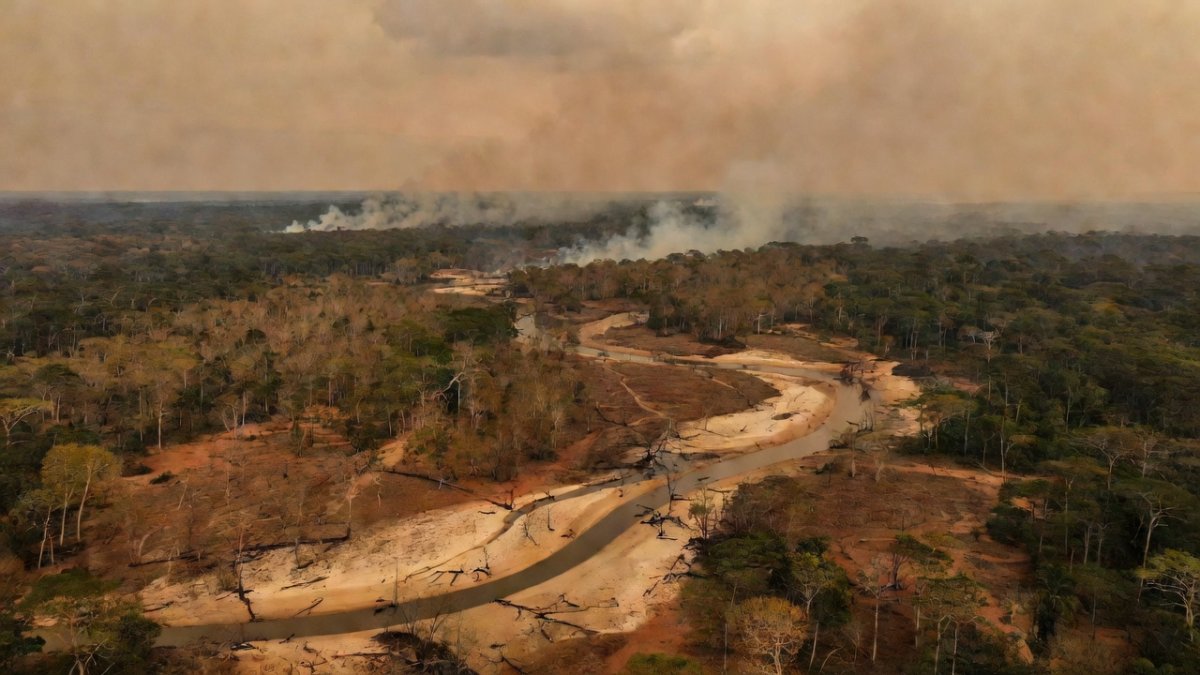
Climatologist Carlos Nobre warns that global warming is intensifying El Niño effects, potentially driving up to 77 percent Amazon loss under severe scenarios. A PNAS study reveals that 53.7 percent of intact forest areas hit by the 2023-24 drought may not recover even seven years later. The Amazon has already shifted from carbon sink toward net emitter due to drying, fires, and deforestation. Brazil’s government mobilized a record R$1 billion fire management budget, 28 percent higher than 2025 and five times 2019 levels, deploying over 4,400 federal brigadistas, a 26 percent increase, with focus on high-risk zones including southern Amazonas and the Gurupi Biological Reserve.
Cattle ranching drives roughly 80 percent of Amazon deforestation. Brazil’s Amazon burned area dropped about 80 percent in 2025, reaching the lowest levels since 1985, yet these hard-won gains stand at immediate risk from the incoming super El Niño. IBAMA enforcement teams and the Amazon Fund’s R$4 billion remain available, yet the scale of the threat demands urgent scaling. INPE and INMET data underscore how rapidly drying conditions could reverse recent progress, pushing the biome closer to irreversible tipping points that would release centuries of stored carbon and accelerate global warming further.
Harvest at Risk — El Niño's Grip on Latin American Agriculture
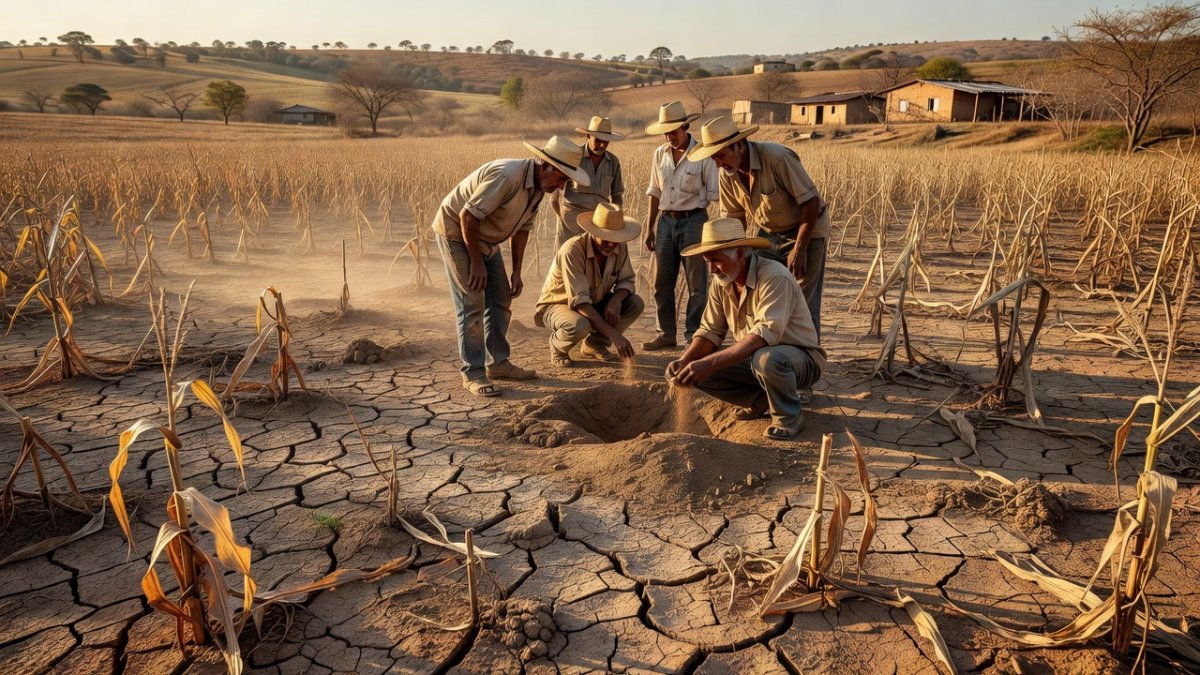
Brazil’s coffee harvest faces a projected 15 to 20 percent reduction from heat and irregular rainfall. Soy and corn planting faces delays across southern Brazil, Argentina, and Uruguay due to excessive rainfall, while northern Brazil experiences drought stress on pastures and reduced irrigation capacity. FAO Brasil highlights mounting food security risks across multiple channels, warning of potential global ripple effects on food supply chains, prices, and inflation. The La Plata Basin spanning southern Brazil, Uruguay, Argentina, and Paraguay confronts elevated flood risks that could destroy crops just as northern regions parch.
Embrapa and Conab models show how these dual extremes will disrupt planting calendars and yields simultaneously. Pasture degradation in the north threatens livestock production, while southern flooding may wash away topsoil and delay harvests for months. These shocks arrive as global temperatures already climb, amplifying price volatility. Latin American farmers, already navigating rising input costs, now face the prospect of consecutive lost seasons that could push millions deeper into poverty and force greater reliance on imports at inflated prices.
A Continent Divided — Floods Here, Droughts There
Northern Brazil, Colombia, Venezuela, and Central America face drier conditions, heightened drought, and wildfire risk. Colombia’s extended dry season threatens the Amazon arc of deforestation in Putumayo, Guaviare, and Caquetá, plus Orinoquía and Andean ecosystems. Peru and Ecuador coastal areas confront flood risk, heavy rains, and reduced anchovy fisheries monitored by IMARPE and SENAMHI Peru. Chile has seen a strong subtropical jet linked to increased storm activity, prompting catastrophe declarations in Atacama and Coquimbo regions. Argentina, Paraguay, Uruguay, and southern Brazil brace for heavy precipitation, flood risks, and rising storm frequency.
Mexico and Central America, tracked by CONAGUA, endure mounting drought pressure and water scarcity. These sharply contrasting impacts across the continent illustrate El Niño’s classic dipole pattern now supercharged by background warming. ICMBio protected areas and national meteorological services are racing to update alerts, yet the speed and intensity of changes threaten to overwhelm existing infrastructure and emergency response capacities in multiple nations simultaneously.
Voices from the Ground — Indigenous Communities on the Frontline
Drought isolates remote indigenous communities by rendering rivers unnavigable, cutting off access to markets and medical care. Loss of fish, game, and forest products drives acute food insecurity. Smoke from wildfires triggers widespread respiratory illness. Over 400 indigenous communities already suffer from deforestation driven by cattle ranching, and traditional fire management practices are undermined by ongoing land loss. IPAM researchers document how these pressures compound existing vulnerabilities, leaving elders and children especially exposed.
The super El Niño threatens to accelerate displacement and cultural erosion as ancestral territories become uninhabitable. Early warning systems coordinated by the WMO must incorporate indigenous knowledge to be effective, yet funding gaps persist. Communities that have stewarded the forest for millennia now confront the prospect of losing both their homes and their ability to maintain traditional livelihoods, a human rights crisis unfolding in real time across the Amazon basin and beyond.
Counting the Cost — Economic Fallout and Policy Response
Institutions including WMO, NOAA, ECMWF, INPE, INMET, IBAMA, ICMBio, SENAMHI Peru, IMARPE Peru, CONAGUA Mexico, FAO Brasil, IPAM, Embrapa, Conab, and the Fundo Amazônia are mobilizing data and resources. The 2025-2026 ICJ and IACtHR climate rulings create an accountability framework that could shape future litigation and compensation claims. Record fire budgets and brigadista deployments represent progress, yet the economic toll from lost harvests, flooded infrastructure, and health costs will likely run into tens of billions of dollars across the region.
Global supply chain disruptions threaten inflation spikes far beyond Latin America. Policy responses must integrate enhanced early warnings with long-term adaptation funding. Without rapid scaling of these efforts, the super El Niño could erase years of development gains and push additional millions into poverty, underscoring the urgent need for coordinated regional action backed by international support.
The Bottom Line — What Comes Next for Latin America
The 2026 super El Niño arrives against a backdrop of record ocean heat and simultaneous global heatwaves, amplifying every impact. From Amazon tipping points to agricultural collapse and indigenous displacement, the data paint a continent under siege. Strengthened early warning systems and record Brazilian fire budgets offer glimmers of preparedness, yet the scale of projected anomalies demands far greater ambition. Latin America stands at a crossroads where decisive action today can limit tomorrow’s suffering.
By Elena Vasquez, Staff Writer
This article was produced with AI-assisted research and editorial support. Reporting is based on sources cited in the article.
What's Your Reaction?
 Like
0
Like
0
 Dislike
0
Dislike
0
 Love
0
Love
0
 Funny
0
Funny
0
 Wow
0
Wow
0
 Sad
0
Sad
0
 Angry
0
Angry
0

Latin America Correspondent at Global1.News. Based in Mexico City, covering politics, economics, energy, and culture across the region. Brings an on-the-ground perspective to stories spanning from the Rio Grande to Patagonia.














Comments (0)