
Amazon Fires Plummet to Record Low in 2025 Data
The Amazon rainforest saw a record low of 3.1 million hectares burned in 2025, down from 15.8 million in 2024, according to MapBiomas data. The decline offers President Lula a potential political boost ahead of October's election but masks persistent threats from climate cycles, oil exploration approval, and the tension between conservation and economic development across Latin America.
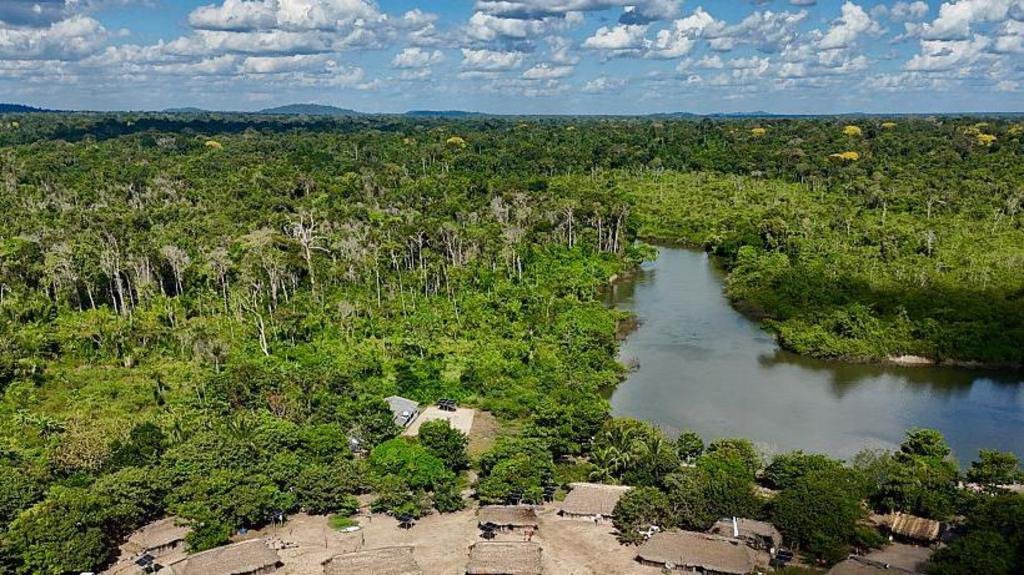
Brazil's Amazon experienced a dramatic decline in fires during 2025, with burned areas falling to 3.1 million hectares per MapBiomas data—the smallest total since tracking began in 1985 and a steep drop from the 15.8 million hectares scorched in 2024. This shift, driven partly by La Niña weather patterns, offers measurable hope for the rainforest while underscoring persistent risks from climate cycles, policy gaps, and economic pressures. The outcome carries major implications for biodiversity, indigenous communities, and South America's broader climate and agricultural systems.
Amazon Fires Plummet to Record Low in 2025 Data
Brasília, Brazil — Article continues...
The MapBiomas report released this week documents a dramatic reduction in burned areas across Brazil's Amazon in 2025, with 3.1 million hectares affected compared to the record 15.8 million hectares in 2024. This marks the smallest burned area since MapBiomas began tracking data in 1985. Vera Arruda, researcher at the Amazon Environmental Research Institute and MapBiomas coordinator, described the figures as significant evidence that burned areas can be reduced through targeted measures. The decline extends beyond the Amazon to the entire country, where 12.7 million hectares burned in 2025 versus 30 million in 2024. These numbers provide concrete data points for policymakers in Brasília and state capitals like Manaus and Belém as they assess enforcement strategies.
Weather Patterns Drive Temporary Relief from Extreme Fires
Cooler La Niña conditions contributed to fewer fires last year after the intense El Niño-driven drought of 2024, which the Copernicus Climate Change Service linked to both climate extremes and human activity. MapBiomas analysts note that this shift helped ease the unprecedented fires seen across the rainforest. However, the group warns that a return of El Niño patterns could prolong dry seasons and heighten fire risks in coming months. Such oscillations directly affect agricultural cycles in states like Pará and Rondônia, where smallholder farmers and indigenous communities depend on predictable rainfall for crops and river transport. Across Latin America, similar weather dynamics influence fire seasons in Bolivia's Chiquitano forest and Colombia's eastern plains, underscoring shared vulnerabilities in the region's climate system.
The Copernicus Climate Change Service data reveals that 2024's El Niño phase produced the most severe drought in the Amazon in over four decades, with temperatures 1.5 degrees Celsius above average across the basin and rainfall deficits reaching 40 percent in key southern and eastern zones. This extreme dryness turned leaf litter and understory vegetation into tinder, enabling fires to spread rapidly even in normally moist primary forest. In contrast, the 2025 La Niña brought cooler Atlantic sea-surface temperatures and more consistent moisture, cutting fire incidence sharply. Yet these oscillations are not neutral; they interact with decades of forest fragmentation that leave edges more vulnerable to ignition. Brazilian scientists have tracked this pattern since the 1980s, noting that each strong El Niño now produces larger burned scars than the last because degraded forests lose their natural humidity buffer. The result is a lengthening fire season that no longer respects traditional wet-dry boundaries.
Indigenous territories illustrate the human cost most clearly. In the Yanomami Indigenous Territory, 2024 fires destroyed hunting grounds and contaminated streams already stressed by illegal mining, forcing families to travel farther for clean water and game. The Kayapó lands in southern Pará saw similar encroachment, with flames crossing from cattle ranches into protected forest during the peak drought months. These communities practice controlled burns for agriculture and trail maintenance, but the scale of escaped fires from neighboring properties overwhelmed traditional knowledge. La Niña's relief arrived unevenly: while western Amazonas received steadier rains, eastern Pará and northern Mato Grosso remained drier longer, showing how the same climate pattern can spare one region while punishing another. Climate change amplifies every phase of this cycle, turning what were once manageable seasonal fires into landscape-level events that threaten both biodiversity and the cultural survival of forest peoples.
Lula's Re-election Prospects Gain from Environmental Gains
President Luiz Inácio Lula da Silva made protecting the Amazon a central pledge during his campaign four years ago, and the 2025 MapBiomas data arrives as a potential boost ahead of October's vote. The reduction contrasts sharply with the acceleration of deforestation under Jair Bolsonaro, when tree loss in the Amazon rose 75 percent within three years of his term. Lula's administration has emphasized enforcement against illegal clearing, yet the latest figures do not yet confirm a permanent downward trend, according to Arruda. Voters in Amazonian municipalities will weigh these results against persistent challenges like illegal mining and land speculation that continue to threaten local economies and biodiversity hotspots.
Recent polling in Pará, Amazonas, and Mato Grosso shows environmental performance now ranks among the top three voter concerns ahead of October's election, particularly among urban voters in Manaus and Belém who endured months of smoke in 2024. In Pará, where ranching and mining interests remain powerful, Lula's enforcement push has won cautious approval from smallholder farmers who suffered crop losses during the worst fires, yet it has drawn sharp criticism from larger landowners who view restrictions as economic sabotage. Amazonas state, with its larger Indigenous and riverine populations, registers stronger support for the administration's conservation stance, though residents still cite illegal mining and lack of basic services as daily priorities. These regional differences mean the MapBiomas numbers offer Lula a narrative advantage in national media, but translating that into votes requires addressing the economic anxieties that Bolsonaro once exploited successfully.
Across Latin America, similar tensions have tested progressive leaders. Colombia's Gustavo Petro has struggled to advance his "total peace" agenda while confronting armed groups tied to deforestation, and Chile's Gabriel Boric faced protests from mining regions when he tried to tighten environmental rules. Lula's situation is distinct because Brazil's Amazon contains both the world's largest tropical forest and some of its most valuable mineral and agricultural frontiers. The 2025 fire reduction gives him concrete evidence that enforcement works, yet it also highlights the political tightrope: any perception that conservation harms local economies can quickly erode support in swing municipalities. Voters will ultimately judge whether the drop in burned area signals a durable new model or merely a temporary pause before the next drought cycle returns.
Oil Exploration Approval Creates Tension with Zero-Deforestation Goal
Lula's commitment to zero deforestation, stated on his first day in office in January 2023, faces direct scrutiny following government approval of oil exploration at the mouth of the Amazon River. Environmental activists argue this decision undermines the pledge by introducing new risks of spills and habitat disruption in sensitive coastal zones near Amapá state. The tension highlights broader debates in Latin America over balancing resource extraction with forest protection, as seen in Ecuador's Yasuní region and Peru's northern Amazon concessions. While the burned-area decline offers positive momentum, critics in civil society organizations point out that sustained prevention requires consistent policy alignment rather than isolated wins.
The Foz do Amazonas basin approval allows Petrobras to drill exploratory wells roughly 500 kilometers offshore from Amapá, an area long considered too ecologically sensitive for industrial activity. Environmental impact studies submitted by the state company acknowledge risks of spills reaching mangroves and coral reefs that serve as nurseries for species migrating into the Amazon estuary. Legal challenges from the Federal Public Ministry and several NGOs argue that the licensing process bypassed adequate consultation with Amapá's coastal communities and ignored the zero-deforestation commitment Lula announced on his first day in office. The decision also revives memories of the 2019 Brumadinho tailings disaster, reinforcing skepticism that regulatory agencies can prevent accidents in such remote marine conditions.
Ecuador's 2023 referendum rejecting further drilling in Yasuní National Park offers a contrasting path, showing that voters in resource-dependent countries can choose conservation when given a direct voice. Yet Brazil's economic realities differ: Petrobras remains a major employer and revenue source, and northern states like Amapá face chronic underdevelopment. The same tension appears in Peru's northern Amazon concessions and Guyana's emerging offshore fields, where governments weigh short-term fiscal gains against long-term climate commitments. Critics argue that approving new fossil-fuel infrastructure while celebrating fire reductions creates a contradictory message that weakens Brazil's credibility in international climate negotiations and carbon markets. Sustained prevention, they insist, demands policy coherence rather than isolated environmental wins.
Regional Implications for Latin America's Climate and Economy
The Amazon's health influences rainfall patterns that support agriculture from São Paulo's coffee plantations to Argentina's grain belts, making the 2025 fire reduction relevant far beyond Brazil's borders. Healthy rainforests absorb substantial carbon dioxide, and the smaller burned area last year helps maintain this function amid rising global temperatures. MapBiomas data shows the drop partly reflects a rebound from 2024 extremes, but Arruda stresses that prevention efforts must continue without scaling back. Indigenous territories in the Brazilian Amazon, which often record lower fire rates due to traditional management, offer models that neighboring countries like Guyana and Suriname have begun studying for cross-border cooperation. These connections tie directly to daily realities for millions across the region who face shifting weather, food prices, and migration pressures linked to forest loss.
The Amazon functions as South America's "flying rivers" system, recycling moisture that falls as rain across the continent's agricultural heartlands. Reduced fire activity in 2025 helped preserve this moisture pump, which normally delivers rainfall to Brazil's Center-West soybean belt and São Paulo's coffee regions. When the system weakens, as it did in 2024, farmers in Mato Grosso and Goiás face delayed planting and lower yields, while downstream hydroelectric reservoirs receive less water. The Pantanal and Cerrado biomes depend on the same atmospheric circulation; their wetlands and savannas dry faster when Amazon fires inject smoke and heat that disrupt regional weather patterns. Protecting the rainforest therefore delivers direct economic benefits to farmers and energy producers far from the basin itself.
Carbon markets are beginning to price these connections. Brazilian states with lower deforestation and fire rates are positioning themselves to sell verified emission reductions, yet buyers demand proof that gains are permanent rather than weather-driven. The 2025 numbers provide a positive signal, but analysts note that a single strong El Niño could erase much of the progress. Indigenous territories continue to demonstrate lower fire incidence through traditional management, offering scalable models for neighboring countries. Guyana and Suriname have already begun technical exchanges with Brazilian Indigenous organizations, recognizing that cross-border cooperation is essential for maintaining the flying rivers and the agricultural stability they support across the continent.
Historical Contrast and Path Forward
Bolsonaro's policies prioritized expanded farming and mining in the Amazon as poverty-reduction tools, leading to accelerated clearing that environmental groups documented through satellite monitoring. Lula's reversal efforts have produced measurable results in 2025, yet the oil exploration approval illustrates ongoing conflicts between development priorities and conservation. Vera Arruda's assessment that the 31 percent drop below historical averages remains positive but not conclusive applies equally to regional efforts. Sustained investment in monitoring by groups like MapBiomas and enforcement by federal agencies will determine whether this year's gains translate into lasting protection for the rainforest and the communities it sustains.
By Elena Vasquez, Staff Writer
This article was produced with AI-assisted research and editorial support. Reporting is based on sources cited in the article.
What's Your Reaction?
 Like
0
Like
0
 Dislike
0
Dislike
0
 Love
0
Love
0
 Funny
0
Funny
0
 Wow
0
Wow
0
 Sad
0
Sad
0
 Angry
0
Angry
0

Latin America Correspondent at Global1.News. Based in Mexico City, covering politics, economics, energy, and culture across the region. Brings an on-the-ground perspective to stories spanning from the Rio Grande to Patagonia.















Comments (0)