
Brazil's Amazon Sees Sharp Decline in Burned Area in 2025
The Amazon rainforest, often called the lungs of the planet, has shown a striking turnaround in 2025 with burned areas dropping to levels unseen since systematic records began four decades ago. This decline comes after the devastating fires of 2024 that scorched record expanses and threatened communities from the riverbanks of Pará to the remote settlements in Amazonas state.
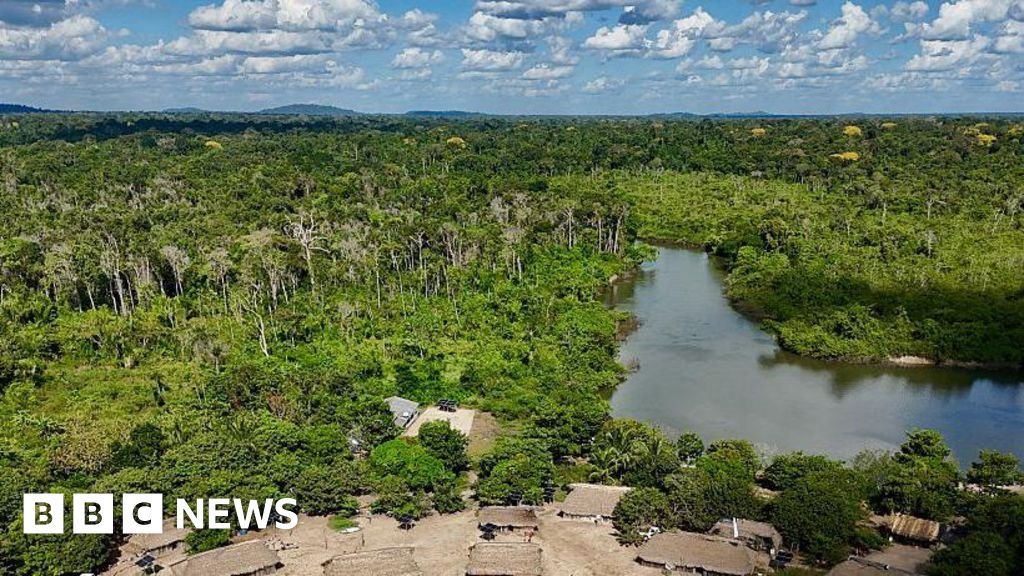
Brasilia, Brazil — The latest data from MapBiomas reveals how targeted enforcement and favorable conditions combined to slash fire damage across the world's largest tropical rainforest last year, marking the smallest burned area since the monitoring group started tracking in 1985.
MapBiomas Data Reveals Historic Low in Amazon Burns
The MapBiomas report documents that 3.1 million hectares of Brazil's Amazon burned in 2025. This figure stands in sharp contrast to the 15.8 million hectares consumed during the record-breaking fires of 2024. The reduction represents the lowest burned area recorded in the Amazon since MapBiomas began its satellite-based monitoring in 1985. Such numbers carry weight for states like Acre and Rondônia, where fire seasons directly affect local economies built around cattle ranching and soy production.
These hectares burned last year covered an expanse smaller than any previous year in the dataset. The drop signals that coordinated efforts between federal agencies and state environmental bodies can produce measurable results when aligned with natural weather cycles. Communities along the Madeira River and in the Tapajós basin felt the difference as smoke plumes that once blanketed cities like Manaus became far less frequent.
Building on these regional impacts, the 2024 fires tore through Pará with particular fury, where smallholder families in the Tapajós basin watched their cassava plots and rubber trails vanish under smoke that lingered for weeks, forcing children indoors and spiking respiratory cases in Santarém hospitals. Amazonas state saw entire riverine communities lose access to clean water as ash choked the Negro and Solimões tributaries, while Mato Grosso’s soy frontier expanded into scorched cerradão, displacing jaguar corridors and leaving ranch hands without seasonal work once the flames passed. These losses were not abstract; they translated into lost school days, higher medical bills, and deepened food insecurity for families already living on the edge of the forest frontier.
MapBiomas Fire Monitor relies on a constellation of Landsat and Sentinel satellites that capture daily thermal anomalies at 30-meter resolution, cross-checked against MODIS active-fire data and validated by field teams on the ground. This layered approach distinguishes between agricultural burns and uncontrolled wildfires, allowing analysts to map not only extent but also fire intensity and post-burn recovery. The 2025 figure of 3.1 million hectares therefore reflects genuine suppression rather than undercounting, a methodological rigor that lends credibility to the historic low.
Even the catastrophic 2007 season, when 30.7 million hectares burned across Brazil, pales beside the concentrated Amazon losses of 2024; that earlier peak was driven by drought and widespread pasture renewal, yet 2025’s drop below the 1985–2023 average signals that enforcement can bend the curve when weather cooperates. The contrast underscores how quickly gains can erode without sustained vigilance.
Researcher Vera Arruda Highlights Significance and Limits
Vera Arruda, a researcher at the Amazon Environmental Research Institute known as IPAM and coordinator at MapBiomas, described the 2025 figures as significant. She noted that the numbers demonstrate it is possible to reduce the burned area in the country. Arruda pointed to a 31 percent drop compared to the historical average, driven primarily by the lowest number of fires recorded in the Amazon in 41 years.
She added that while the news is positive, it does not yet allow conclusions that this marks an established trend or justification to scale back prevention efforts. Her assessment carries particular resonance in regions where indigenous territories border expanding agricultural frontiers. Local leaders in places like the Xingu Indigenous Park have long argued that sustained funding for fire brigades and monitoring remains essential even in calmer years.
Lula's Re-election Campaign Gains Momentum from Results
Protecting the Amazon formed one of the central pledges President Luiz Inácio Lula da Silva made during his campaign four years ago. The 2025 burned-area decline provides concrete evidence that his administration's approach has delivered results ahead of the October vote. Lula's team can point to reduced fire activity as validation of policies that increased enforcement by agencies such as the Brazilian Institute of Environment and Renewable Natural Resources.
Voters in northern states will weigh these environmental gains against economic pressures that still drive land clearing. Lula's first-day promise in 2023 to achieve zero deforestation in the Amazon now carries updated data showing progress on the fire front. This performance could strengthen his position in a contest where environmental credibility matters to both domestic supporters and international partners.
Connecting these policy outcomes to operational details, IBAMA’s 2025 operations included real-time satellite alerts that triggered rapid-response teams to embargo properties caught igniting new clearings, resulting in over 2,400 fines totaling R$1.2 billion and the seizure of heavy machinery used for illegal logging roads. These actions, paired with joint operations alongside state police in Pará and Rondônia, disrupted the supply chains that previously funneled cheap timber and cattle into export markets. The measurable decline in burned area owes as much to this targeted deterrence as to rainfall.
Norway’s Amazon Fund released an additional US$50 million tranche after reviewing the MapBiomas numbers, while EU negotiators cited the fire reduction as a positive signal in stalled Mercosur trade talks, though they still demand verifiable traceability for beef and soy. German and French ministers publicly praised the turnaround, yet privately warned that any reversal would trigger renewed calls for import restrictions. Such international leverage now hinges on Brazil’s ability to sustain enforcement beyond the current La Niña window.
Domestically the data has sharpened divides: agribusiness federations in Mato Grosso argue that stricter rules threaten jobs in a sector already squeezed by global commodity prices, while environmental coalitions in Brasília point to indigenous territories that burned far less as proof that protection and production can coexist. The political fault line remains raw, with ruralista lawmakers pushing bills to loosen licensing even as city dwellers in Manaus and Belém celebrate cleaner skies.
Bolsonaro Legacy Comparison Shows Clear Shift
When Jair Bolsonaro held office, deforestation in the Amazon rose sharply, with the amount of trees cut down increasing by 75 percent three years into his term. His administration promoted expanded farming and mining as paths to reduce poverty in the region, a stance that drew accusations from environmental groups of lax oversight. The contrast with current figures underscores how policy direction influences fire incidence across states such as Mato Grosso and Pará.
Lula's return to office reversed several of those earlier approaches through renewed federal monitoring and international cooperation. The 2025 data illustrates the difference in outcomes when enforcement priorities change at the national level. Rural communities that experienced both periods now see fewer days lost to smoke and health impacts from widespread burning.
La Niña Conditions Drive Relief While El Niño Poses Future Risk
The decline in 2025 partly reflects an easing after the unprecedented fires of 2024, aided by cooler La Niña conditions rather than the warmer El Niño pattern. MapBiomas analysts note that these natural weather variations played a key role in limiting fire spread across the basin. Yet the same report warns that the return of El Niño could extend the dry season and raise the risk of renewed forest fires in coming years.
Residents in the Amazon region understand these cycles intimately, as El Niño years often bring prolonged droughts that turn cleared land into tinder. The current respite gives authorities time to strengthen prevention, but it also highlights the need for strategies that do not rely solely on favorable weather. Agencies in Brasilia continue to track forecasts that could shape 2026 fire seasons.
Linking these weather patterns to measurable effects, La Niña’s strengthened trade winds in 2025 pushed the intertropical convergence zone southward, delivering 30–40 percent above-average rainfall across the central Amazon basin from March through July. This moisture suppressed the usual August–October fire window, particularly in the arc of deforestation where soils retained humidity longer than in El Niño years. Regions such as the upper Xingu and Madeira basins saw the sharpest relief, with river levels remaining high enough to block many access routes used by arsonists.
Climate models from INPE and the Hadley Centre project that 2026–2027 could bring a neutral-to-weak El Niño phase, potentially drying the southern Amazon again and raising fire risk by 25 percent relative to 2025. IPCC AR6 scenarios warn that each additional 0.5 °C of global warming lengthens the dry season by roughly five days per decade, amplifying the very conditions that fueled 2024’s record burns. Without deeper emissions cuts, the 2025 reprieve may prove an outlier rather than a new baseline.
These atmospheric shifts are not isolated; they interact with local land-use change, where pasture expansion reduces evapotranspiration and further weakens rainfall recycling. The 2025 data therefore offers both hope and a cautionary map of how quickly the system can tip back toward crisis.
Brazil-Wide Burned Area Figures Show Broader Improvement
Across all of Brazil, burned areas totaled around 12.7 million hectares in 2025 compared with 30 million hectares in 2024. The previous national high occurred in 2007 when 30.7 million hectares burned. The 2025 reduction demonstrates that the Amazon improvement formed part of a countrywide pattern rather than an isolated regional event.
States outside the Amazon, including those in the Cerrado savanna belt, also recorded lower fire activity. This nationwide trend supports arguments that federal coordination with state civil police and environmental secretariats can produce results when resources reach the ground. Daily life in cities from São Paulo to Porto Velho benefits when air quality improves and agricultural losses from uncontrolled fires decrease.
Oil Exploration Controversy Tests Lula's Environmental Commitments
While the burned-area data supports Lula's protection pledges, his administration's approval of oil exploration at the mouth of the Amazon River has drawn widespread criticism from activists. They argue the decision contradicts the goal of zero deforestation and risks new pressures on coastal ecosystems near Belém. Environmental groups have highlighted how such projects could undermine the very gains shown in the MapBiomas report.
The controversy echoes broader debates across Latin America about balancing resource extraction with forest conservation. Local organizations in Amapá and Pará continue to press for stricter safeguards even as the burned-area numbers improve. Lula's team maintains that regulated development can coexist with protection, yet the tension remains a flashpoint ahead of the election.
Future Outlook for Amazon Resilience and Regional Stability
Tropical rainforests like the Amazon absorb vast quantities of carbon dioxide when healthy, helping regulate global temperatures for populations far beyond Brazil's borders. The 2025 decline shows that reversing decades of clearance for agriculture and logging remains possible with consistent policy. Yet scientists warn that climate change itself can create conditions for larger fires, requiring ongoing vigilance from agencies and communities alike.
Standing Amazon forest generates an estimated US$2.5 billion annually in carbon-credit revenue and ecosystem services such as water regulation for downstream agriculture, while burned or cleared land yields short-term soy or cattle profits that rarely exceed US$800 per hectare after five years once soil fertility collapses. Indigenous territories that maintained traditional fire-management mosaics in 2025 demonstrated both lower burn rates and stronger community economies tied to Brazil-nut harvesting and ecotourism, proving that intact forest carries measurable long-term value.
Colombia’s Amazonian departments and Peru’s Madre de Dios region have already requested technical exchanges with MapBiomas and IBAMA to adapt satellite-alert systems and community brigades. Ecuador’s Yasuní communities are studying Brazil’s embargo protocols as a model for protecting buffer zones around oil concessions. These cross-border lessons could prevent the fire surges that previously spilled across national boundaries during drought years.
The path forward requires locking enforcement budgets into multi-year legislation, expanding indigenous land titling, and tying rural credit to zero-deforestation clauses. Without these structural changes, the 2025 numbers risk becoming a footnote rather than the start of a durable recovery.
For Latin America, the Amazon's stability affects rainfall patterns that support farming from the Andes to the Atlantic coast. The current data offers a foundation for expanded cooperation with neighboring countries facing similar fire challenges. Sustained investment in monitoring and enforcement will determine whether 2025 marks the start of a lasting downward trend or merely a temporary reprieve.
By Elena Vasquez, Staff Writer
This article was produced with AI-assisted research and editorial support. Reporting is based on sources cited in the article.
What's Your Reaction?
 Like
0
Like
0
 Dislike
0
Dislike
0
 Love
0
Love
0
 Funny
0
Funny
0
 Wow
0
Wow
0
 Sad
0
Sad
0
 Angry
0
Angry
0

Latin America Correspondent at Global1.News. Based in Mexico City, covering politics, economics, energy, and culture across the region. Brings an on-the-ground perspective to stories spanning from the Rio Grande to Patagonia.













Comments (0)