
US Strikes Iran, Tehran Retaliates Against Gulf States — Strait of Hormuz Crisis Explodes
The Headline The United States just dropped the hammer on Iran in a two-day barrage that lit up more than 80 military sites from the Persian Gulf to the Arabian Sea. Bushehr, Chabahar, Bandar Abbas, Jask, and Iranshahr airport took direct hits while American warplanes and missiles tore through air defenses and naval facilities. This is not a warning shot. This is the opening ch
The Headline
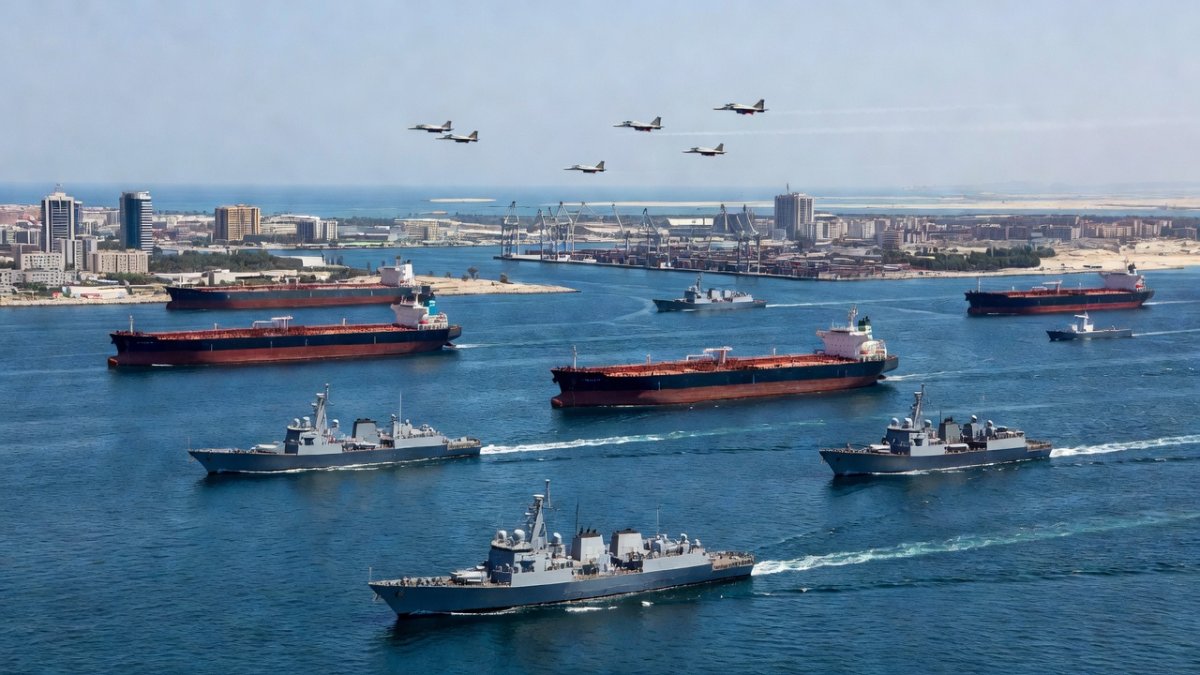
The United States just dropped the hammer on Iran in a two-day barrage that lit up more than 80 military sites from the Persian Gulf to the Arabian Sea. Bushehr, Chabahar, Bandar Abbas, Jask, and Iranshahr airport took direct hits while American warplanes and missiles tore through air defenses and naval facilities. This is not a warning shot. This is the opening chapter of a new and far more dangerous chapter in the Middle East.
President Trump declared the ceasefire finished the moment three commercial vessels were struck inside the Strait of Hormuz. Within hours the first American planes were airborne. Centcom confirmed the strikes were designed to degrade Iran’s ability to threaten shipping lanes that carry roughly one-fifth of the world’s oil. The numbers coming out of Tehran are grim: at least 14 dead and 78 wounded according to Al Jazeera and Reuters on-the-ground reporting.
Meanwhile Iran is burying its late Supreme Leader Ayatollah Ali Khamenei in Mashhad today while simultaneously launching drone and missile salvos at Bahrain, Kuwait, and Qatar. Air-raid sirens are screaming across the Gulf. The Fifth Fleet sits in Bahrain and Al Udeid Air Base in Qatar both lie inside the blast radius. This is breaking right now and the situation is moving faster than any briefing room can keep up with.
What the US Hit and Why
American forces struck naval bases, missile storage sites, air-defense radars, and runways across five key Iranian locations. Bushehr’s naval infrastructure and Chabahar’s port facilities were primary targets because both have been used to stage fast-attack boats and anti-ship missiles aimed at the Strait. Bandar Abbas, home to Iran’s main naval headquarters in the south, took repeated hits that left runways cratered and fuel depots burning.
Centcom spokesmen told ABC News the goal was simple: remove Iran’s capacity to close or harass the Strait of Hormuz after three vessels were attacked last week. The reimposition of full oil sanctions had already been announced; the strikes were the enforcement mechanism. Jask and Iranshahr airport were hit to cut off potential dispersal routes for Iranian aircraft and drones.
Fourteen Iranian personnel were killed and seventy-eight wounded across the two nights of strikes, according to casualty figures compiled by Reuters and Al Jazeera from Iranian state media and hospital sources. Those numbers are expected to rise once damage assessments are complete. No American losses have been reported.
The operation was not a one-off raid. It was a deliberate campaign to degrade command nodes, missile magazines, and naval repair yards that Iran has spent years hardening. The message from Washington is unmistakable: attacks on commercial shipping will be met with direct force, not statements.
Iran's Response: Retaliation Reaches the Gulf
Iran answered with waves of drones and ballistic missiles aimed at Bahrain, Kuwait, and Qatar. Air-raid sirens sounded across all three countries as incoming projectiles triggered defensive intercepts. One person in Kuwait was injured by falling debris from an intercepted missile, according to local health officials cited by AP.
The Fifth Fleet headquarters in Bahrain and the massive Al Udeid Air Base in Qatar both sit inside the threatened zone. Iranian state television showed footage of launches from western Iran and claimed the attacks were calibrated responses to American aggression. The reality on the ground is that any escalation now directly threatens American service members and Gulf allies in equal measure.
Retaliatory strikes of this scale are not symbolic. They represent Iran’s attempt to raise the cost for the United States and its partners until Washington backs down. The timing, coming on the same day as Khamenei’s funeral, is clearly designed to fuse national mourning with national defiance.
Regional governments are now in emergency posture. Evacuation protocols for non-essential personnel at American bases have been activated. The Gulf states that once hoped to stay on the sidelines are now squarely inside the conflict zone.
The Oil Shockwave
Oil prices surged immediately after the first American strikes were confirmed. Brent crude jumped more than eight dollars a barrel in early trading as traders priced in the risk that the Strait of Hormuz could be partially or fully closed. Twenty percent of global oil supply moves through that narrow waterway every day.
Any sustained disruption would hit American drivers at the pump within days. Refineries on the Gulf Coast and in Asia would face feedstock shortages, and the ripple effects would spread to jet fuel, diesel, and heating oil. The economic damage would not stay contained to energy markets.
Markets are already pricing in the worst-case scenario of a prolonged closure. Shipping companies have begun rerouting tankers around the Cape of Good Hope, adding weeks to voyages and spiking freight costs. The global economy, still recovering from previous shocks, is staring at another inflationary spike delivered straight from the Strait.
Khamenei's Final Journey — A Nation in Mourning and Rage
Ayatollah Ali Khamenei, killed on February 28, is being laid to rest in Mashhad today. Thousands of mourners filled the streets of Tehran in the hours before the funeral procession, waving flags and chanting against the United States. The timing of the American strikes on the eve of the burial has turned grief into open fury.
Iran’s new leadership faces immediate pressure to respond forcefully. The funeral is not merely a religious event; it is a political moment that will shape how the regime justifies further escalation. State media is already framing the American operation as an attack on the entire nation during its period of mourning.
The combination of national loss and fresh American bombs has created a volatile atmosphere inside Iran. Hardliners who once operated in Khamenei’s shadow now have both motive and public sentiment to push for wider confrontation. The funeral in Mashhad is therefore both a farewell and a mobilization.
NATO at the Crossroads
While the Gulf burns, NATO leaders are gathered in Ankara for a previously scheduled summit that has suddenly become the most important alliance meeting in years. The United States is asking partners to condemn Iranian attacks on Gulf states and to consider additional measures to protect shipping.
European members are wary. They remember how quickly regional crises can spiral and are reluctant to commit forces that could be drawn into direct combat with Iran. Turkey, hosting the summit, is walking a careful line between its NATO obligations and its own complicated relationship with Tehran.
The alliance can provide intelligence, logistics, and perhaps naval assets for escort missions, but no one in Ankara is talking about ground troops or a broader war. The gap between American expectations and European appetite for risk is already visible in the first closed-door sessions.
The Escalation Spiral — Where This Leads
The most immediate danger is further Iranian attacks on shipping or on American and allied bases in the region. If another vessel is struck or if casualties mount at Al Udeid or the Fifth Fleet headquarters, the pressure on Washington to expand the target list will be enormous.
Worst-case scenarios include Iranian attempts to mine the Strait or to launch larger missile barrages that overwhelm defenses. Either move would trigger additional American strikes and could pull in other regional actors. The risk of miscalculation is extremely high.
Diplomatic off-ramps exist but are narrowing by the hour. Back-channel talks through Oman or Switzerland would need to produce a verifiable pause in attacks on shipping. Without that, the cycle of strike and counter-strike will continue until one side decides the costs have become unacceptable.
The Bottom Line
This is not a regional sideshow anymore. The decisions made in the next seventy-two hours will determine whether the Strait of Hormuz remains a commercial artery or becomes a war zone that reshapes the global economy. Every driver filling a tank, every airline booking a flight, and every business watching freight costs will feel the consequences.
Stay with Global 1 News for continuous updates from the region. Check our verified sources, follow the live briefings from Centcom, and keep your information straight from the ground rather than the noise. The situation is moving fast. We will be here until it stops.
By Jessica Ali, Lead Anchor — Global 1 NewsThis article was produced with AI-assisted research and editorial support. Reporting is based on sources cited in the article.
What's Your Reaction?
 Like
0
Like
0
 Dislike
0
Dislike
0
 Love
0
Love
0
 Funny
0
Funny
0
 Wow
0
Wow
0
 Sad
0
Sad
0
 Angry
0
Angry
0

Editor-in-Chief at Global1.News. Atlanta-based journalist who cuts through the BS and tells it like it is. Lead anchor, host, and the voice you hear when the spin stops and the truth starts.











Comments (0)