
Ebal Settlement Heightens Pressures on Nablus in West Bank
Israeli settlers establish Ebal settlement on Mount Ebal above Nablus on July 16, 2026, with 10 mobile homes and plans for 600 families, amid 102 recent West Bank approvals and international law violations.
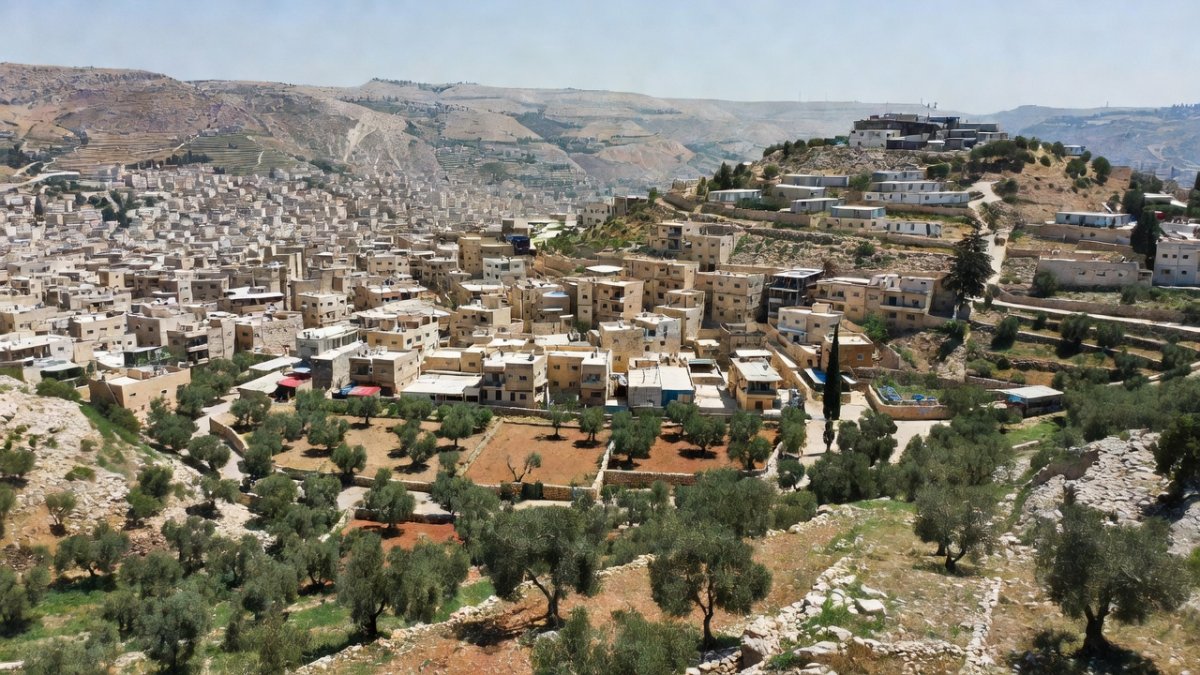
The arrival of the first Israeli families on Mount Ebal above Nablus marks more than the installation of mobile homes; it signals the acceleration of a settlement project that directly constrains Palestinian access to land, air, and daily movement in one of the West Bank most historic cities. For residents below, the new outpost transforms a familiar peak into a site of surveillance and separation, compounding decades of restrictions that have already narrowed horizons and livelihoods. This development, unfolding under an Israeli government that has approved over one hundred new settlements since taking office, raises urgent questions about the future of coexistence in the northern West Bank.
Ebal Settlement on Mount Nablus Deepens West Bank Displacement
Nablus, Occupied West Bank — July 17, 2026 — The establishment of the Ebal settlement introduces another layer of territorial change in an area already marked by decades of restrictions on Palestinian movement and land access.
Arrival of the First Residents at Ebal
The Samaria Regional Council announced the move of the initial families on July 16, 2026. Approximately 10 mobile homes were installed at the location, accompanied by a newly paved access road lined with Israeli flags. Council head Yossi Dagan stated that the settlement is projected to house 600 families in its eventual completed form.
These early structures represent the concrete beginning of a community named after the mountain itself. The placement on elevated terrain provides commanding views toward Nablus, altering the visual and physical landscape that Palestinian residents have navigated for generations.
Regional geography places the peak in direct proximity to Nablus, making its development a visible marker of changing control over high ground that influences daily horizons for thousands of residents below.

Effects on Daily Life for Nablus Residents
Ghassan Daghlas, governor of the Nablus region, noted that Palestinians previously relied on Mount Ebal for recreation and access to fresh air. The new settlement interrupts those uses, adding to existing constraints on open spaces around the city.
The establishment of the Ebal settlement on the mountain overlooking Nablus has intensified settler violence across the surrounding hills, with documented attacks on Palestinian farmers attempting to harvest olives and tend fields. These incidents, often involving masked assailants wielding stones, firearms, and dogs, have forced many families to abandon traditional agricultural routines, resulting in lost livelihoods and heightened food insecurity for communities already strained by movement restrictions.
Drawing from the Hebron precedent, where settlements have carved the city into fragmented enclaves under constant surveillance, Ebal strategic mountaintop position creates a similar pattern of spatial control. Residents below report feeling perpetually observed, with the settlement infrastructure enabling rapid incursions that disrupt daily commutes, school access, and medical emergencies, compounding psychological pressure through the visible assertion of dominance over the valley.
This fragmentation echoes broader patterns of dispossession, where the settlement location not only overlooks but symbolically and practically hems in Nablus, eroding the city cohesion and residents sense of safety in their own homeland. Nablus lies at the heart of the northern West Bank, where communities maintain agricultural ties and family networks that stretch across surrounding hills. Local accounts describe how families once gathered on the slopes during warmer months; with the settlement now active, those gatherings face additional barriers, shifting patterns of leisure and social connection that have defined life in the area.
International Legal Framework and Settlement Status
All Israeli settlements in the occupied West Bank stand in violation of international law, as affirmed by the International Court of Justice ruling in July 2024. The Ebal project joins this established category of developments deemed unlawful under the framework governing occupied territories.
The International Court of Justice July 2024 advisory opinion, particularly paragraphs 263-279, underscores Israel obligation to cease all settlement activity in the Occupied Palestinian Territory, declaring such measures a violation of international law and requiring the dismantlement of existing outposts. This ruling reinforces the illegality of projects like Ebal, framing them as obstacles to Palestinian self-determination rather than mere administrative expansions.
UN Security Council Resolution 2334 (2016) explicitly reaffirms that settlements have no legal validity and constitute a flagrant violation of international law, calling for their cessation. In parallel, ICC Prosecutor Karim Khan has signaled ongoing investigations into settlement-related crimes, including potential war crimes tied to land appropriation and violence, signaling increasing international scrutiny of Israeli policies in the West Bank.
These frameworks collectively highlight the systemic nature of settlement expansion, urging accountability mechanisms that address both immediate construction and its long-term demographic impacts on Palestinian communities. Legal experts emphasize that such constructions contribute to a system of control that fragments Palestinian land continuity, while Palestinian authorities continue to document how these sites affect access to resources and future planning for urban expansion in cities like Nablus.
Scale of Recent Approvals Under Netanyahu Government
Since the current Israeli government took office, Peace Now has recorded the approval of 102 new settlements across the West Bank. The Ebal initiative forms part of this accelerated pace of authorizations.
Peace Now data reveals that the Netanyahu government has advanced approvals for 102 settlements since taking office, marking an unprecedented acceleration compared to previous administrations that averaged only two to three new settlements annually. This surge includes a mix of entirely new outposts and the retroactive legalization of unauthorized structures, effectively normalizing what were once considered illegal under Israeli law itself.
Breakdowns show roughly 60 percent involve new settlement nuclei, while the remainder focus on formalizing existing outposts, often accompanied by substantial budget allocations exceeding hundreds of millions of shekels for infrastructure, security, and housing incentives. Such funding prioritizes rapid entrenchment, diverting resources from social services and deepening economic disparities within Israeli society.
Yossi Dagan projections for 600 families at the site align with broader trends of planned growth in the Samaria region. Analysts note that each approval adds to the network of roads and housing that reshape movement corridors, often limiting Palestinian development options in adjacent valleys and towns.
European Discussions on Trade and Accountability Measures
EU foreign ministers recently convened to consider trade restrictions targeting products originating from West Bank settlements. Discussions revealed divisions among member states on the scope and timing of any such measures.
Ireland, during its EU presidency, has actively pushed for coordinated European action against settlement expansion, advocating targeted measures such as labeling requirements and restrictions on trade with entities operating in occupied territories. These efforts seek to leverage the EU economic weight to enforce compliance with international law, though they face resistance from member states wary of straining relations with Israel.
Germany consistent opposition has blocked unanimity on stronger accountability steps, preserving the status quo despite the clear legal basis provided by Article 2 of the EU-Israel Association Agreement, which conditions cooperation on respect for human rights. Palestinian Authority officials have welcomed Ireland initiative while criticizing the EU internal divisions as enabling continued violations.
These debates underscore the tension between economic interests and legal obligations, with Palestinian voices emphasizing that meaningful trade accountability could deter further settlement growth and affirm the international community commitment to a just resolution. Proponents argue that economic tools could address the ongoing expansion documented by monitoring organizations, while the debate occurs against the backdrop of the July 2024 ICJ ruling.
Cultural and Geographic Context of Mount Ebal
Mount Ebal ranks among the highest peaks in the West Bank, offering panoramic sightlines that have long held significance for surrounding communities. Its elevation has supported both practical uses and symbolic connections to the landscape.
Palestinian residents of Nablus describe the mountain as integral to local identity, with trails and viewpoints woven into collective memory. The installation of settlement infrastructure on this terrain intersects with these longstanding associations, prompting renewed attention to preservation of open spaces.
Regional geography places the peak in direct proximity to Nablus, making its development a visible marker of changing control over high ground that influences daily horizons for thousands of residents below.
By Fatima Al-Rashid, Staff Writer
This article was produced with AI-assisted research and editorial support. Reporting is based on sources cited in the article.
What's Your Reaction?
 Like
0
Like
0
 Dislike
0
Dislike
0
 Love
0
Love
0
 Funny
0
Funny
0
 Wow
0
Wow
0
 Sad
0
Sad
0
 Angry
0
Angry
0

Gulf/MENA Correspondent at Global1.News. Based in Doha, covering Gulf politics, energy markets, diplomacy, and development across the Middle East and North Africa. Tracks the economic transformation of the Gulf states.













Comments (0)