
Xi Jinping's Pyongyang Visit: Recalibrating Northeast Asian Alignments
Xi Jinping's Pyongyang Visit: Recalibrating Northeast Asian Alignments The Diplomatic Timing of Xi's Pyongyang Trip Chinese President Xi Jinping is scheduled to visit North Korea from 8 to 9 June at the invitation of Kim Jong Un, marking his first trip to Pyongyang in nearly seven years. The last such visit occurred in 2019. This engagement follows closely on Xi's recent meetin
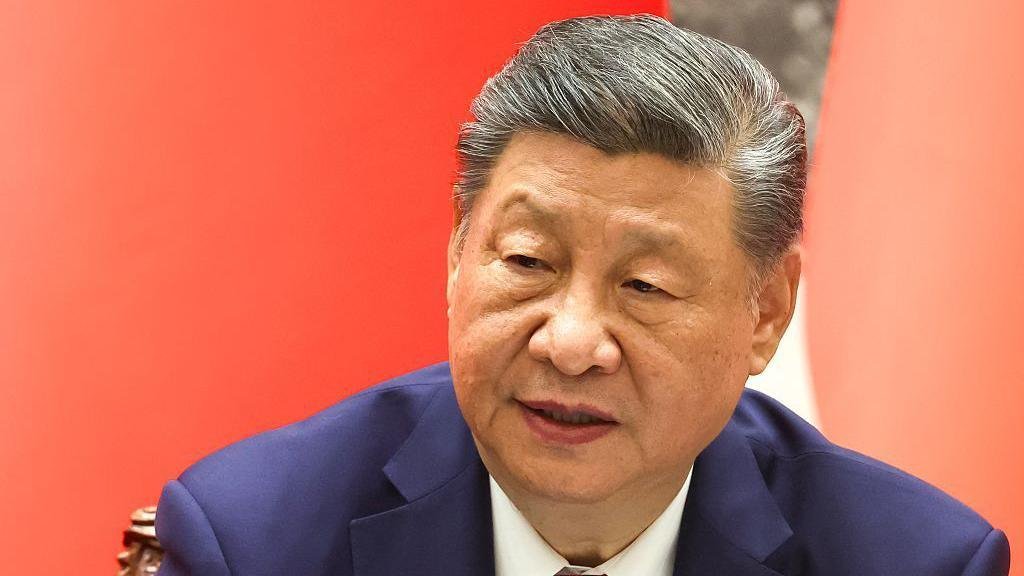
The Diplomatic Timing of Xi's Pyongyang Trip
Chinese President Xi Jinping is scheduled to visit North Korea from 8 to 9 June at the invitation of Kim Jong Un, marking his first trip to Pyongyang in nearly seven years. The last such visit occurred in 2019. This engagement follows closely on Xi's recent meetings in Beijing with US President Donald Trump and Russian President Vladimir Putin, two powers whose policies directly shape Pyongyang's external options.
The timing underscores Beijing's interest in maintaining structured dialogue with a neighbour that shares a 1,400-kilometre border. Both sides have highlighted the visit through state media, signalling its importance for bilateral coordination at a moment when multiple external actors are engaging the Korean Peninsula.
China's Enduring Role as North Korea's Primary Partner
China remains North Korea's largest trading partner and a central political interlocutor despite the latter's exposure to sweeping international sanctions tied to its nuclear programme and human rights record. The two countries are also linked by a mutual defence pact, the only such agreement China maintains with any state, which marks its 65th anniversary this year and commits each side to support the other if attacked.
For Pyongyang, this relationship supplies essential economic and diplomatic breathing room. Kim Jong Un is expected to seek expanded cross-border trade and increased Chinese tourism to support newly constructed beach and ski resorts. These requests align with North Korea's efforts to project resilience after navigating the pandemic and aligning with Russia in the Ukraine conflict.
Navigating the Kim-Putin Relationship
Despite Beijing's parallel ties with both Pyongyang and Moscow, Xi has shown caution toward the deepening contacts between Kim and Putin. North Korea's improved international profile, achieved partly through its wartime support for Russia, creates new variables in regional diplomacy that China must manage.
Yet the structural reality persists: Beijing continues to serve as the principal economic lifeline for North Korea. Any expansion of land-border commerce or tourism flows would reinforce this position while giving Pyongyang additional resources without requiring concessions to Washington or Seoul.
Nuclear Ambitions and Beijing's Evolving Stance
Kim Jong Un has continued to display North Korea's nuclear and missile capabilities, recently stating that weapons-grade nuclear materials production capacity has more than doubled over the past five years during a tour of a new facility. Pyongyang has made clear it will not abandon these programmes or engage in talks that require concessions to the United States or South Korea.
Beijing has long advocated denuclearisation of the Korean Peninsula, yet its public emphasis on this goal has moderated in recent years. During the recent Trump-Xi meeting, the two leaders reportedly reaffirmed a shared objective of denuclearising North Korea according to a White House fact sheet. When questioned at a subsequent press briefing, however, a Chinese foreign ministry spokesperson referred only to continuity and consistency in China's position, without directly confirming any new joint commitment.
Prospects for Mediation with Seoul and Washington
Seoul has expressed hope that Xi's visit could encourage Pyongyang to reopen channels with both South Korea and the United States. South Korea's unification minister Chung Dong-young indicated that discussions on resuming US-North Korea talks may occur. Since December 2024, Kim has declared an end to reunification efforts, labelled South Koreans a sworn enemy, and severed all communication lines with Seoul, rendering earlier overtures from the South ineffective.
Any mediating role would test the limits of China's influence. While economic leverage exists, Pyongyang's recent diplomatic and military posture suggests limited appetite for immediate dialogue that might constrain its nuclear trajectory.
Strategic Implications for Regional Stability
From Beijing's perspective, the visit serves multiple objectives: reinforcing a long-standing alliance, monitoring the Russia-North Korea axis, and preserving influence over peninsula developments amid US engagement. The mutual defence treaty and shared border provide tangible instruments that other external actors lack.
Second-order effects extend beyond the two Koreas. Expanded Chinese economic engagement could ease pressure on North Korea's sanctions-constrained economy, potentially reducing incentives for further missile tests while simultaneously complicating coordinated sanctions enforcement. For ASEAN and the Global South, the episode illustrates how major powers continue to balance economic lifelines against non-proliferation goals, shaping patterns of alignment that may influence future multilateral initiatives on the peninsula.
Ultimately, the June meetings will clarify whether incremental economic cooperation can coexist with Pyongyang's nuclear trajectory and whether Beijing's calibrated approach yields measurable movement toward broader dialogue.
By Prof. Marcus Chen, Staff WriterThis article was produced with AI-assisted research and editorial support. Reporting is based on sources cited in the article.
What's Your Reaction?
 Like
0
Like
0
 Dislike
0
Dislike
0
 Love
0
Love
0
 Funny
0
Funny
0
 Wow
0
Wow
0
 Sad
0
Sad
0
 Angry
0
Angry
0

World Politics Analyst at Global1.News. Based in Beijing, covering US-China relations, global trade, and geopolitical strategy. Brings deep analytical perspective to the power dynamics shaping international affairs.















Comments (0)