
US-Iran Hormuz Conflict Escalates After Jordan Strike
The Strait of Hormuz as the strategic flashpoint The current round of fighting centers on Iran's efforts to control access through the Strait of Hormuz. Roughly one-fifth of global oil and natural gas trade normally passes through this narrow waterway at the entrance to the Persian Gulf. The Trump administration responded to the killing of American troops in Jordan by imposing a naval blockade and conducting strikes aimed at loosening Tehran's grip on the passage.
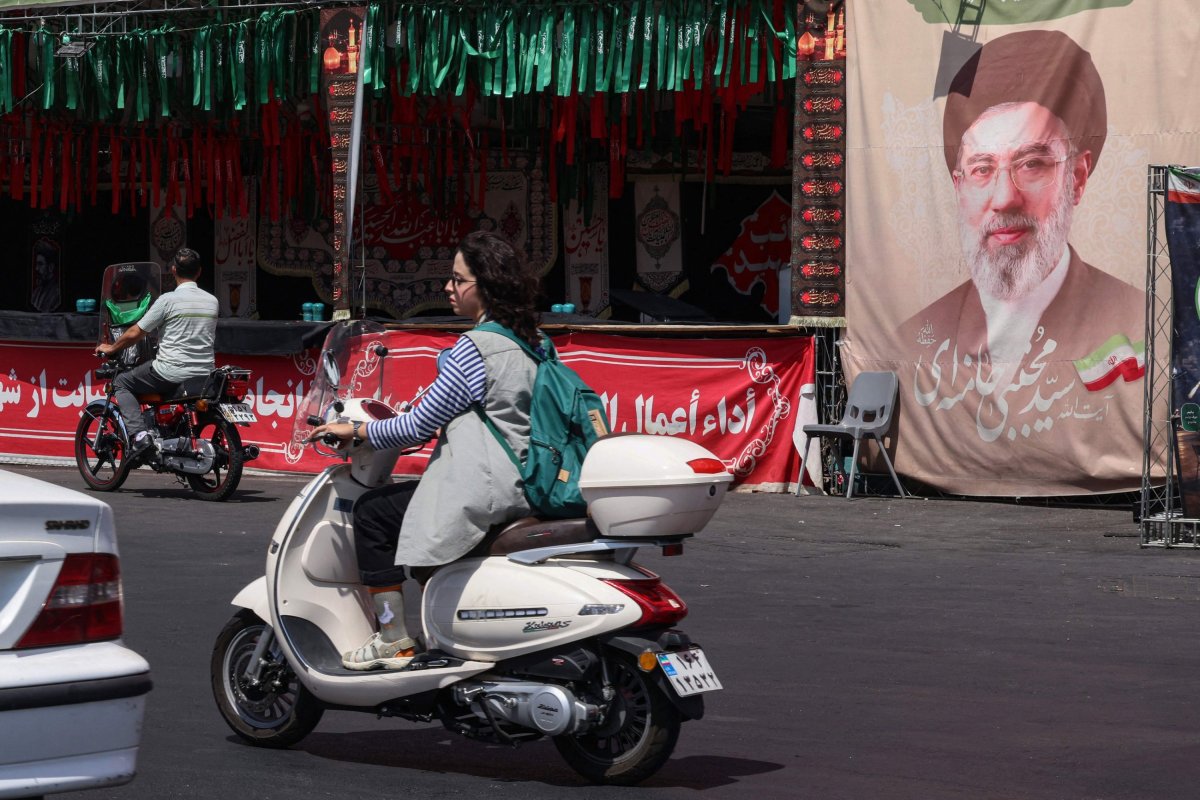
The US-Iran conflict over the Strait of Hormuz has entered its eighth day as American airstrikes on Iranian Revolutionary Guard targets expand across the Gulf region. With Kuwaiti desalination plants under attack, Iranian threats against UAE airports, and Gulf states activating air defenses, what began as a localized incident in Jordan has widened into the most significant direct military confrontation between Washington and Tehran in decades.
US-Iran Hormuz Conflict Escalates After Jordan Strike
Beirut, Lebanon — July 20, 2026 — The following analysis examines the strategic calculus behind the expanding conflict, its implications for Gulf state security, and what this means for energy markets and regional stability.
The Strait of Hormuz as the strategic flashpoint
The current round of fighting centers on Iran's efforts to control access through the Strait of Hormuz. Roughly one-fifth of global oil and natural gas trade normally passes through this narrow waterway at the entrance to the Persian Gulf. The Trump administration responded to the killing of American troops in Jordan by imposing a naval blockade and conducting strikes aimed at loosening Tehran's grip on the passage.
Iran's approach to the Strait echoes patterns seen during the 1980s Tanker War, when Tehran mined waters and targeted vessels to pressure adversaries amid the Iran-Iraq conflict, drawing in broader international naval involvement. Today, with the Trump administration enforcing a blockade, the economic stakes extend far beyond immediate Gulf producers to Asian importers like China and India, whose energy security hinges on uninterrupted flows. Governments in Riyadh and Abu Dhabi have coordinated with Washington on contingency routing, underscoring how Hormuz remains a persistent lever in Tehran's regional strategy.
Broader Middle East dynamics reveal that control over this chokepoint amplifies Iran's influence across the Levant and Arabian Peninsula, where proxy networks can exploit any prolonged disruption to challenge US-aligned governments. Officials from the GCC have repeatedly highlighted these vulnerabilities in joint statements, linking Hormuz tensions to wider security pacts that now face renewed tests.
Gulf state vulnerability to Iranian strikes
Kuwait has faced repeated attacks on its power and desalination facilities, with a plant hit for the second time in two days. Because 90 percent of the country's drinking water comes from desalination, these strikes directly threaten civilian life in the small Gulf monarchy. Bahrain has activated air defenses against incoming Iranian drones and missiles, while the UAE has received explicit threats against airports in Dubai and Abu Dhabi as well as the ports of Fujairah and Jebel Ali. The UAE Foreign Ministry has called for maximum restraint to prevent further dangerous repercussions.
Kuwait's desalination crisis stands out due to its near-total reliance on facilities like the Doha East and West plants, which Iranian strikes have already forced into partial shutdowns according to reports from the Kuwaiti Ministry of Electricity and Water. In comparison, Saudi Arabia maintains greater redundancy through inland reserves and multiple coastal sites, while Bahrain's smaller scale leaves it similarly exposed but bolstered by GCC mutual aid protocols. The Bahraini government's activation of air defenses reflects close coordination with the US Fifth Fleet, illustrating how water security intersects with alliance commitments across the Gulf.
These vulnerabilities tie into wider regional dynamics, where Iranian pressure on Sunni Gulf monarchies risks exacerbating sectarian divides that resonate in Lebanon and Iraq, potentially drawing in non-state actors aligned with Tehran. The UAE Foreign Ministry's restraint appeals echo earlier diplomatic efforts by the Arab League to contain such escalations.
Iran's retaliation strategy and proxy network
Tehran has chosen to target infrastructure in Kuwait rather than strike Israel or the UAE directly in this phase. The semiofficial Fars news agency, viewed as close to the Revolutionary Guard, issued evacuation warnings for UAE facilities. Iranian authorities report at least 50 killed and 517 wounded in the latest American strikes, figures that Iranian leaders are using to justify continued pressure on Gulf states. While the story does not detail fresh proxy operations, Iran's established networks remain available for potential escalation beyond direct missile and drone attacks.
Iran's calculus prioritizes Kuwait as a softer target to signal resolve without immediately provoking full GCC unity or direct Israeli involvement, allowing Tehran to test US responses while preserving options for proxy activation through groups in Iraq and Yemen. The Fars agency's warnings against UAE facilities serve as psychological pressure, mirroring tactics used in prior standoffs to deter deeper Emirati alignment with Washington. This approach avoids overextension amid domestic economic strains reported by Iranian state media.
Connecting to broader dynamics, such selective targeting sustains Iran's leverage in the Levant, where Hezbollah and other networks could exploit any widening conflict to shift focus from the Gulf. Officials from the Iranian Foreign Ministry have framed these moves as defensive responses to US aggression in statements to international bodies.
US military campaign and its stated objectives
The United States conducted airstrikes on Revolutionary Guard targets including bridges, electrical facilities, coastal surveillance sites, air defenses, maritime capabilities, and missile and drone storage locations across Iran. The stated goal is to compel Tehran to ease its hold on the Strait of Hormuz. The campaign also includes a renewed naval blockade. These actions follow the deaths of two American service members in Jordan, with one missing and four hospitalized, bringing total US casualties since the conflict began to 16 killed and more than 430 wounded.
The Trump administration's posture emphasizes maximum pressure through direct strikes on IRGC assets, differing from earlier confrontations like the 2020 Soleimani response by incorporating sustained naval elements and GCC coordination. Military objectives focus on degrading Iran's conventional capabilities around the Strait while avoiding full-scale invasion, as outlined in Pentagon briefings. This builds on prior US operations but incorporates lessons from proxy escalations in Syria and Iraq.
In the wider Middle East context, these actions reinforce US security partnerships with Gulf states, though they risk alienating neutral actors in the Levant and complicating diplomatic channels with Oman and Qatar. The Department of Defense has cited specific IRGC sites to justify proportionality under international norms.
Escalation risks and regional alliance dynamics
The GCC Secretary-General Jasem Mohamed al-Budaiwi has accused Iran of war crimes for strikes on civilian infrastructure. Reports indicate that both Saudi Arabia and the UAE have carried out retaliatory airstrikes against targets in Tehran. These moves reflect deepening coordination among Gulf Arab states in response to Iranian actions. From a Lebanese vantage point, such alignment among Sunni-majority Gulf governments risks sharpening sectarian fault lines that have long affected stability across the Levant and Arabian Peninsula.
Energy market implications
Any sustained disruption at the Strait of Hormuz immediately affects global energy supplies. The blockade and infrastructure attacks have already introduced uncertainty into markets that rely on steady flows from Gulf producers. OPEC+ members, including Saudi Arabia, face pressure to manage output amid the fighting, while consumer nations watch for price spikes that could follow further damage to Kuwaiti facilities or expanded threats to UAE ports.
The nuclear dimension at Darkhovin
Iran's atomic energy agency stated that US strikes hit a construction site for a planned nuclear power plant in southwestern Iran. Satellite imagery from July 9 showed earth clearing but minimal actual construction at the Darkhovin site, with no radiological material known to be present. Targeting even an incomplete facility raises questions about whether Washington seeks to degrade Iran's future nuclear infrastructure alongside its conventional military capabilities.
Regional implications and outlook
The conflict's expansion to an eighth day illustrates how a localized incident in Jordan has widened into direct confrontation between the United States and Iran with immediate effects on Kuwait, Bahrain, and the UAE. Gulf states' heavy dependence on desalination and maritime trade creates clear points of leverage for Tehran. At the same time, the involvement of Saudi Arabia and the UAE in retaliatory actions suggests a more unified Arab response than seen in previous rounds of tension. For Lebanon and other regional actors, the risk lies in secondary effects on trade routes, refugee flows, and the potential for renewed proxy activity. Continued strikes on civilian infrastructure could further isolate Iran diplomatically while testing the limits of US willingness to sustain operations near the Strait of Hormuz.
By Malik Hassan, Staff Writer
This article was produced with AI-assisted research and editorial support. Reporting is based on sources cited in the article.
What's Your Reaction?
 Like
0
Like
0
 Dislike
0
Dislike
0
 Love
0
Love
0
 Funny
0
Funny
0
 Wow
0
Wow
0
 Sad
0
Sad
0
 Angry
0
Angry
0

Middle East Correspondent at Global1.News. Based in Beirut, covering politics, conflict, energy, and society across the Middle East. Brings context and depth to a region often reduced to headlines.













Comments (0)