
Rubio's ICC Campaign: Dismantling International Justice 'Brick by Brick'
In a recent BBC News report, The Global Story examined Secretary of State Marco Rubio's unprecedented campaign to dismantle the International Criminal Court — a tribunal born from the ashes of the twentieth century's worst atrocities, now facing the full weight of American diplomatic and economic power.
In a recent BBC News report, The Global Story examined Secretary of State Marco Rubio's unprecedented campaign to dismantle the International Criminal Court — a tribunal born from the ashes of the twentieth century's worst atrocities, now facing the full weight of American diplomatic and economic power.
Rubio's ICC Campaign: Dismantling International Justice 'Brick by Brick'
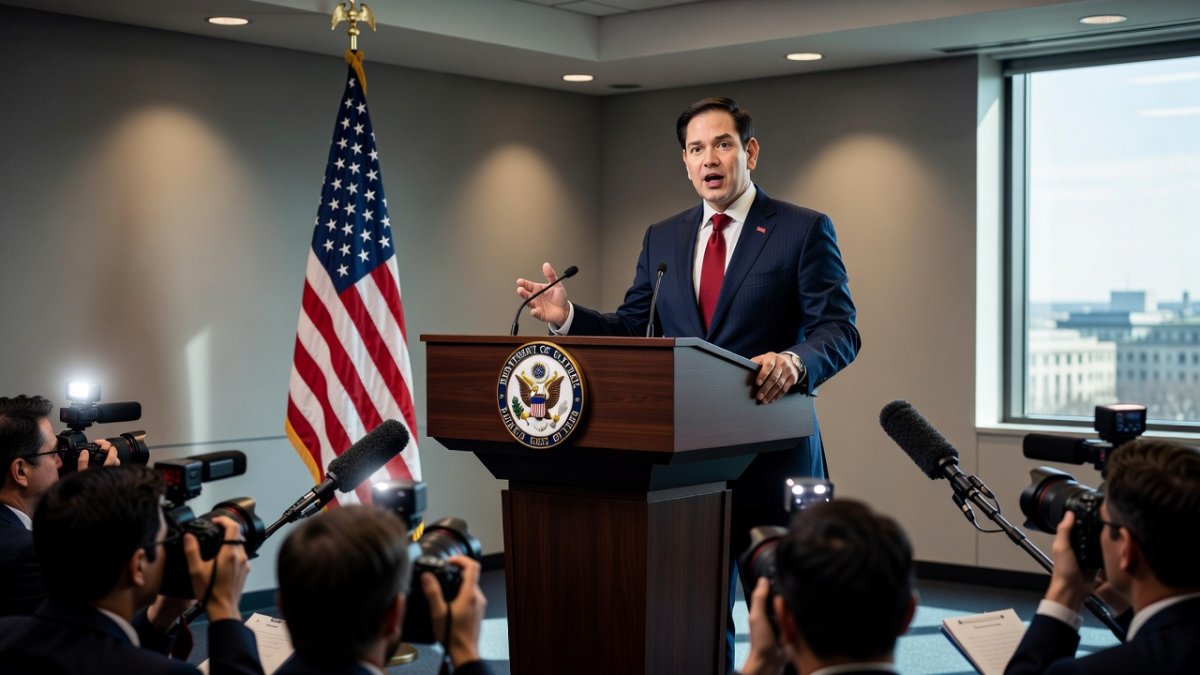
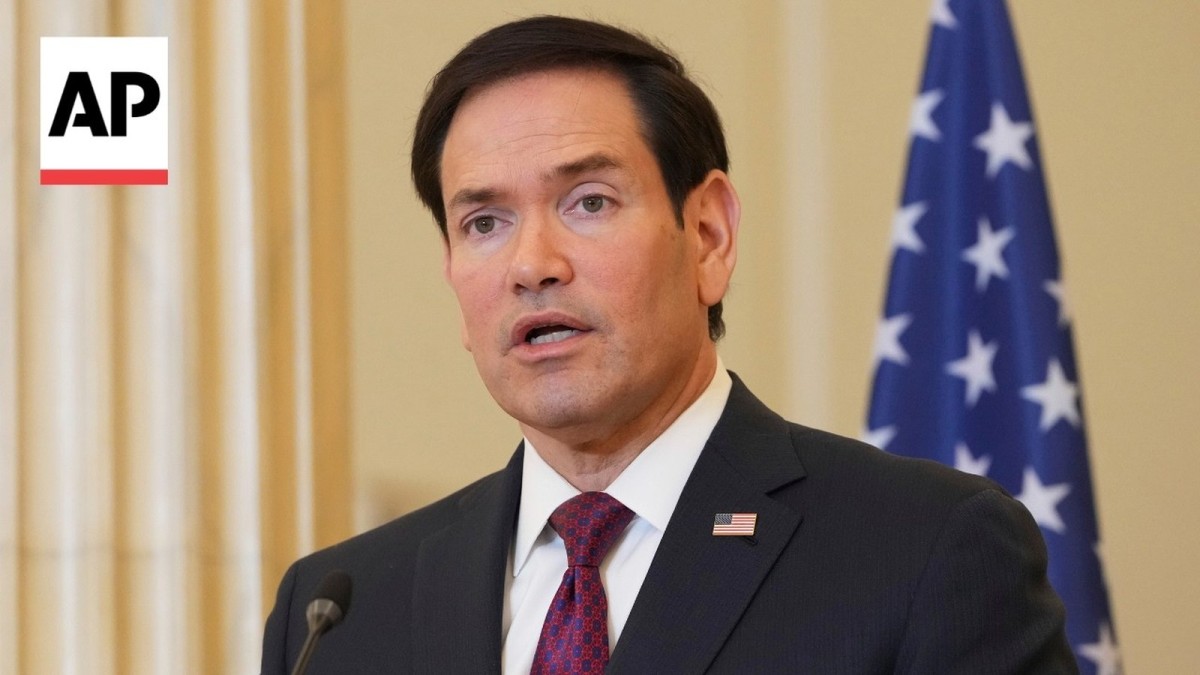
Washington, DC – This week — US Secretary of State Marco Rubio launched a sweeping diplomatic campaign against the International Criminal Court on Monday, vowing in a Wall Street Journal op-ed to dismantle the Hague-based tribunal "brick by brick, if necessary," in what analysts describe as the most aggressive executive branch assault on international criminal justice in American history.
Rubio's Diplomatic Offensive
Secretary of State Marco Rubio's declaration, published in the Wall Street Journal on July 13, represents a significant escalation in the Trump administration's long-running confrontation with the International Criminal Court. In the op-ed, Rubio argued that the ICC poses an existential threat to American sovereignty, claiming the tribunal seeks to prosecute US border patrol agents, military personnel, and elected leaders before foreign judges.
"If we stand idle, all of them will be at the mercy of foreign judges, thousands of miles away — facing the constant risk of prosecution and even imprisonment for the so-called 'crime' of defending their own country," Rubio warned in a companion video posted to social media platform X.
The State Department's plan involves a coordinated diplomatic effort to pressure nations that are party to the Rome Statute to withdraw from the treaty or publicly reject the court's authority. Officials have outlined a range of measures, including targeted sanctions, travel bans, and visa revocations directed at ICC officials and at governments that continue to cooperate with the court. A senior US official told CNN that nations refusing to reject the ICC's "false authority" while relying on US assistance are likely to come under increased scrutiny. This approach builds on existing sanctions regimes and aims to isolate the court financially and diplomatically by cutting off support from key allies.
Implementation would require coordination across multiple agencies, with the Treasury Department expected to play a central role in designating individuals and entities. Rubio has emphasized that the campaign will proceed incrementally, beginning with diplomatic démarches and escalating to economic measures where necessary. European capitals have already received formal communications urging them to reassess their commitments to the ICC, according to State Department sources.
The ICC's Mandate and the Limits of Jurisdiction
The International Criminal Court, headquartered in The Hague, was established by the Rome Statute in 2002 to prosecute genocide, war crimes, and crimes against humanity. One hundred and twenty-five countries are states parties to the treaty — but critically, the United States is not among them. Nor is Russia, which withdrew its signature from the Rome Statute in 2016. The court only exercises jurisdiction over states that have ratified the treaty or over situations referred by the UN Security Council.
The ICC has not opened investigations into crimes committed on US soil, and its authority does not extend to non-party states absent a Security Council referral. Kenneth Roth, former executive director of Human Rights Watch, called Rubio's campaign a mischaracterization, stating that Rubio is dressing up his quest for impunity for American war crimes under the label of national sovereignty. Roth further noted that the court's limited reach makes the administration's portrayal of an overreaching tribunal inaccurate.
ICC officials have maintained that the court operates strictly within the bounds of the Rome Statute and respects the principle of complementarity, deferring to national courts when they are willing and able to prosecute. This framework has been repeatedly affirmed in public statements from the court's presidency.
The Netanyahu Arrest Warrants and the Gaza Trigger
The immediate trigger for Rubio's campaign is widely understood to be the ICC's issuance of arrest warrants for Israeli Prime Minister Benjamin Netanyahu and Defense Minister Yoav Gallant in connection with the court's war crimes investigation into Israel's conduct in Palestine. The court's office of the prosecutor, led by Karim Khan, opened the investigation after Palestine, which has consented to the ICC's jurisdiction there, referred the situation.
Trump issued an executive order early in his second term sanctioning 11 ICC officials, including Chief Prosecutor Karim Khan, his two deputies, and six judges. The sanctions regime expanded through 2025 to include Francesca Albanese, the UN special rapporteur, and three Palestinian human rights groups. These measures have restricted the ability of sanctioned individuals to access international banking systems and travel to certain countries.
The political dynamics surrounding the Israel-ICC relationship have intensified pressure on the court, with the Trump administration framing the warrants as politically motivated. Netanyahu and Gallant remain subject to the warrants, which the ICC has described as based on evidence of alleged crimes committed during operations in Gaza.

Selective Multilateralism: The Hypocrisy Question
Perhaps the most striking contradiction in the Trump administration's campaign against the ICC is its selective embrace of the court's jurisdiction. When the ICC opened an investigation into Russian war crimes committed in Ukraine — which is a signatory to the Rome Statute — the United States welcomed the probe. The same administration now opposes ICC action concerning Israel and the deprioritized investigation into US service member activity in Afghanistan that was opened in 2020.
Raed Jarrar, Dawn's advocacy director, stated that it is not the ICC that Rubio is dismantling brick by brick but the rules-based international order. A former senior US government sanctions official, speaking anonymously, observed that the campaign gives the sense of a pre-emptive effort against any action the ICC might be considering vis-a-vis Venezuela. This selective approach has drawn criticism from human rights organizations that argue consistency is essential for the credibility of international justice mechanisms.
European allies have expressed concern that undermining the ICC could weaken accountability efforts in multiple conflict zones, including those where US interests align with the court's work.
The sustained US pressure has taken a measurable toll on ICC staff morale, with reports of heightened anxiety among investigators and legal teams concerned about personal sanctions and restricted movement. Despite these challenges, the court demonstrated resilience during the first Trump administration's 2020 sanctions, maintaining core operations through diversified funding from European states parties and internal reallocations that preserved ongoing investigations without interruption.
Russia's Perspective on the US Campaign
From Moscow's vantage point, the Trump administration's campaign against the ICC presents a moment of strategic irony. Russia withdrew its signature from the Rome Statute in 2016 after the ICC classified Russia's annexation of Crimea as an armed conflict — and the Kremlin has consistently dismissed the court as a tool of Western political interests. The current US effort reinforces the Russian view that multilateral institutions are applied selectively by major powers.
Kremlin officials have noted that the United States, like Russia, has never ratified the Rome Statute, creating a shared position of non-participation. This alignment allows Moscow to portray the Rubio campaign as evidence that powerful states will protect their own from external scrutiny while using the court against adversaries. For Russian diplomacy, the development reduces pressure on accountability questions related to Ukraine while highlighting perceived double standards in Western policy.
The Kremlin's strategic calculus centers on exploiting the US campaign to erode the ICC's legitimacy precisely as it faces scrutiny over Ukraine, thereby shielding Russian actions from broader international accountability mechanisms. This development weakens global war crimes enforcement frameworks that could otherwise constrain Moscow's operations, allowing Russia to dismiss future ICC efforts as inherently politicized. Chinese foreign policy observers have highlighted the evident double standard, noting that both Beijing and Washington remain outside the Rome Statute yet selectively endorse the court when it targets rivals, further illustrating how major powers manipulate multilateral justice institutions to advance narrow geopolitical interests without reciprocal obligations.
Analysis — What Comes Next
Rubio's campaign comes at a precarious moment for the International Criminal Court. The institution, already strained by US sanctions on its top prosecutor and judges, now faces a coordinated diplomatic effort to reduce its membership and legitimacy. Representative Ilhan Omar introduced a resolution in the House calling for the US to join the ICC, though passage remains unlikely under current congressional leadership.
The Venezuela angle, highlighted by the anonymous sanctions official, suggests the administration may seek to preempt future ICC scrutiny of US interests in Latin America. Risks to the rules-based international order include diminished cooperation on war crimes documentation in Ukraine, Gaza, Sudan, and other active conflicts. Whether the ICC can survive this campaign depends on the willingness of the 125 states parties to maintain financial and political support despite US pressure.
Analysts suggest the long-term effect may be a more fragmented system of accountability, with regional mechanisms filling gaps left by a weakened Hague court.
Practical effects on active ICC investigations could include reduced evidence-sharing from states wary of US retaliation, particularly affecting probes into Ukraine, Sudan and Darfur, and Myanmar where documentation relies on international cooperation. European states parties are positioned to sustain the court's funding and operational capacity through increased contributions and diplomatic coordination that offsets American economic leverage. While a mass exodus from the Rome Statute appears unlikely given the treaty's entrenched support among 125 members, targeted withdrawals by a handful of vulnerable states could still erode the court's jurisdictional reach and signal broader fragmentation in the international legal architecture.
By Irina Volkov, Staff Writer
This article was produced with AI-assisted research and editorial support. Reporting is based on sources cited in the article.
What's Your Reaction?
 Like
0
Like
0
 Dislike
0
Dislike
0
 Love
0
Love
0
 Funny
0
Funny
0
 Wow
0
Wow
0
 Sad
0
Sad
0
 Angry
0
Angry
0
Russia/Eastern Europe Correspondent at Global1.News. Covering Russian politics, energy, security, and the shifting dynamics of the post-Soviet space. Provides clear-eyed analysis on one of the world's most opaque regions.









Comments (0)