
British Steel Nationalisation Tests UK-China Relations Under Burnham
The United Kingdom's abrupt nationalisation of British Steel has provoked an unusually direct rebuke from Beijing, exposing the limits of economic engagement just as Andy Burnham prepares to enter Downing Street. China's Ministry of Commerce condemned the seizure of operational control from Jingye Group as a violation of treaty commitments, while London cites urgent public-interest protections for strategic steelmaking capacity.
British Steel Nationalisation Tests UK-China Relations Under Burnham
London, United Kingdom — Article continues...
The Nationalisation Decision
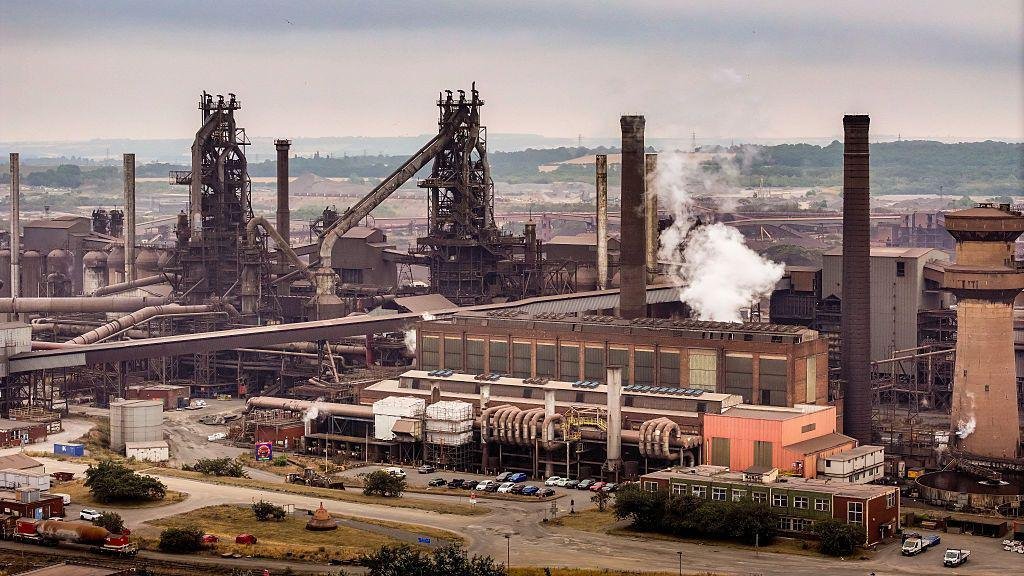
The United Kingdom government has taken the step of bringing British Steel into public ownership, citing the need to protect employment at the Scunthorpe site and preserve domestic capacity for virgin steel production. This move follows the acquisition of operational control last year while ownership remained with China's Jingye Group. The decision reflects a public interest test passed by new legislation in Parliament, allowing the state to intervene when strategic industrial assets face collapse. In the broader Chinese strategic context, such actions intersect with Beijing's emphasis on securing overseas industrial footholds as part of its Dual Circulation strategy, which seeks to balance domestic resilience with selective international engagement.
China's Commerce Ministry Response
China's Ministry of Commerce (MOFCOM) issued a direct statement expressing firm opposition and strong dissatisfaction with the nationalisation. Officials argued that the action infringed upon Jingye Group's legitimate rights and undermined the investment climate for Chinese enterprises in Britain. The ministry highlighted Jingye's prior contributions to the UK economy while calling for London to honour existing treaty commitments. This measured yet pointed response aligns with Beijing's foreign policy doctrine of defending overseas Chinese commercial interests without immediate escalation, consistent with patterns observed in earlier disputes involving NDRC-guided outbound investment reviews.
The Bilateral Investment Treaty Implications
The 1986 China-UK Bilateral Investment Treaty remains the operative legal framework governing such disputes. MOFCOM explicitly urged Britain to fulfil its obligations under this agreement, which provides for fair and equitable treatment of investments and mechanisms for dispute resolution. The treaty's continued relevance underscores the challenge of applying Cold War-era investment protections to contemporary national security claims. The 1986 China-UK Bilateral Investment Treaty contains core provisions on national treatment, most-favoured-nation status, and protection against expropriation without prompt, adequate, and effective compensation. Its arbitration clause permits investors to initiate proceedings under UNCITRAL rules once domestic remedies are exhausted, a mechanism now activated by Jingye Group’s claim. Beijing will likely argue that the abrupt transfer of operational control violates the treaty’s fair and equitable treatment standard, which requires transparency, due process, and protection of legitimate expectations formed at the time of investment.
Precedent from Hinkley Point C and the Huawei exclusion demonstrates how successive UK administrations have subordinated treaty commitments to national-security exceptions. In both cases, political risk premia rose sharply for subsequent Chinese infrastructure bids. For Jingye, the fair and equitable treatment clause offers a route to argue that the state failed to maintain a stable regulatory environment after encouraging the 2019 acquisition. Should arbitration proceed, the tribunal may examine whether the £1.3 million daily loss figure justified zero compensation, thereby clarifying the boundary between permissible industrial policy and compensable interference with foreign-owned assets. For Beijing, adherence to such instruments supports its broader objective of building reliable multilateral rules that facilitate technological and industrial partnerships, even as Western capitals increasingly layer security exceptions onto older treaties.
The Incoming Burnham Government's Strategic Choices
Prime Minister-designate Andy Burnham assumes office facing immediate pressure to calibrate relations with China against domestic industrial priorities. Andy Burnham’s record reveals a pragmatic yet conditional approach to China, favouring trade ties while insisting on labour and environmental safeguards. As a former cabinet minister under Gordon Brown, he supported deepened engagement during the Blair-Brown era of strategic partnership; however, his current emphasis on domestic industrial sovereignty signals a departure from that period’s relatively unconditional openness. Labour’s internal coalition now includes trade unions protective of steel employment, compelling Burnham to balance constituency pressures against Treasury warnings about capital flight. The government has emphasised that it values ties with the world's second-largest economy and remains open to Chinese investment, yet the steel intervention signals a willingness to prioritise public interest tests. Burnham's administration must weigh potential economic gains from renewed engagement against risks of alienating a key trading partner. This calculus mirrors wider European debates over economic security, where governments seek to retain access to Chinese markets while ring-fencing critical supply chains in line with evolving EU and G7 coordination.
Unlike the Blair government’s willingness to court sovereign wealth and infrastructure capital with minimal political conditionality, Burnham’s administration confronts a parliamentary consensus that treats steel as a strategic asset. The nationalisation therefore functions as both domestic signalling and a test of Beijing’s tolerance for incremental de-risking. Should compensation talks stall, the government risks accelerating Chinese portfolio reallocation away from UK manufacturing, undermining fiscal targets for green industrial investment that Labour has pledged to deliver through selective foreign participation.
The Economic Cost and Industrial Context
British Steel's Scunthorpe operations have incurred substantial daily losses, with the National Audit Office previously estimating costs around £1.3 million per day during periods of state support. The plant directly employs approximately 2,700 workers and sustains thousands more positions in the supply chain. The £1.3 million daily operating loss at Scunthorpe illustrates the structural uncompetitiveness of UK primary steelmaking under current energy prices and carbon costs. Maintaining the plant through public ownership transfers these losses to taxpayers while preserving a narrow technological capability in virgin steel production. Closure would deepen reliance on imported semi-finished products, exposing downstream sectors such as automotive and construction to supply disruptions and price volatility already evident in post-pandemic commodity cycles. The broader supply-chain multiplier, estimated at three to four additional jobs per direct employee, amplifies the political cost of any transition plan that fails to retain capacity. The UK remains a net importer of steel, sourcing primarily from the European Union, United States, China and India. Losing domestic virgin steel capacity would leave Britain as the sole G7 member without such capability. These figures illustrate the tension between short-term fiscal burdens and long-term strategic autonomy, a dilemma familiar to Chinese planners managing state-owned enterprises under the 14th Five-Year Plan's industrial upgrading targets.
Comparative G7 practice underscores the dilemma. US Section 232 tariffs and the EU’s Carbon Border Adjustment Mechanism both shield domestic producers through trade defence instruments rather than outright nationalisation. Britain’s choice of ownership transfer therefore represents a more intrusive intervention that may invite WTO scrutiny while offering limited long-term competitiveness gains. This episode feeds into wider Western deindustrialisation debates, where governments confront the trade-off between preserving legacy heavy industry and reallocating capital toward higher-value, lower-carbon sectors demanded by net-zero trajectories.
The Precedent for UK-China Investment Relations
This episode establishes a significant precedent for how future Chinese investments in UK strategic sectors may be treated. By invoking national security to justify ownership transfer, London has signalled that economic openness carries conditional limits. Chinese firms considering acquisitions in infrastructure, manufacturing or technology will likely factor heightened political risk into their decisions. From Beijing's perspective, the case tests the durability of its investment diplomacy, which aims to expand regional influence through commercial channels while avoiding direct confrontation with established powers.
Compensation Negotiations
Jingye Group is pursuing compensation following the nationalisation. UK ministers have indicated that an independent valuer will be appointed in the autumn to assess any amount due, with the possibility that compensation could be determined as nil. Negotiations prior to the move reportedly failed to produce an agreement representing value for taxpayers. The process will unfold under the shadow of the Bilateral Investment Treaty, potentially opening avenues for international arbitration if bilateral talks stall. Such outcomes will influence how Chinese investors calculate exit risks in Western jurisdictions going forward.
The Broader Implications for Chinese Investment in Western Markets
The British Steel case carries ramifications beyond bilateral ties, affecting Chinese capital flows into Europe and North America. Western national-security regimes have converged on stricter ex-ante screening: CFIUS expanded by FIRRMA, Australia’s Foreign Investment Review Board, and the EU’s Foreign Subsidies Regulation now subject Chinese acquisitions to heightened political-economy tests. The British Steel precedent adds a post-investment intervention tool, signalling that even completed transactions remain reversible when strategic assets face distress. For the existing stock of roughly £50 billion in UK Chinese FDI, this raises exit-risk premia and may prompt portfolio rebalancing toward jurisdictions with clearer grandfathering provisions. It highlights second-order effects for ASEAN economies that serve as alternative production bases and for Global South partners seeking Chinese investment without similar political overlays. Beijing's response will likely emphasise diplomatic channels and legal recourse rather than retaliation, preserving space for future cooperation in areas aligned with its technological self-sufficiency goals. Western governments, meanwhile, must manage the trade-off between protecting industrial sovereignty and maintaining the openness that has historically attracted Chinese capital. The chilling effect is likely to be most pronounced in critical minerals processing, advanced manufacturing, and energy infrastructure, sectors already under informal moratorium. Beijing’s calibrated response through diplomatic and arbitral channels rather than retaliatory measures preserves negotiating space, yet it also accelerates China’s pivot toward ASEAN and Global South destinations where political overlays remain lighter. Over time, the episode contributes to a bifurcated investment landscape in which Chinese capital faces segmented access: tolerated in non-strategic consumer sectors but systematically ring-fenced from foundational industrial capacity across the Atlantic alliance. The episode ultimately illustrates how national security considerations are reshaping the parameters of economic interdependence in an era of renewed great-power competition.
By Prof. Marcus Chen, Staff Writer
This article was produced with AI-assisted research and editorial support. Reporting is based on sources cited in the article.
What's Your Reaction?
 Like
0
Like
0
 Dislike
0
Dislike
0
 Love
0
Love
0
 Funny
0
Funny
0
 Wow
0
Wow
0
 Sad
0
Sad
0
 Angry
0
Angry
0

World Politics Analyst at Global1.News. Based in Beijing, covering US-China relations, global trade, and geopolitical strategy. Brings deep analytical perspective to the power dynamics shaping international affairs.















Comments (0)