
US Judge Orders Release of Wisconsin Mosque Leader Detained by ICE
US Judge Orders Release of Wisconsin Mosque Leader Detained by ICE Background of the Detention and Legal Challenge A federal judge in Indiana ordered the release of Salah Sarsour, president of Wisconsin's largest mosque, after determining that immigration authorities failed to counter claims of retaliation tied to his advocacy for Palestinian rights. Sarsour, a Palestinian-born
Background of the Detention and Legal Challenge
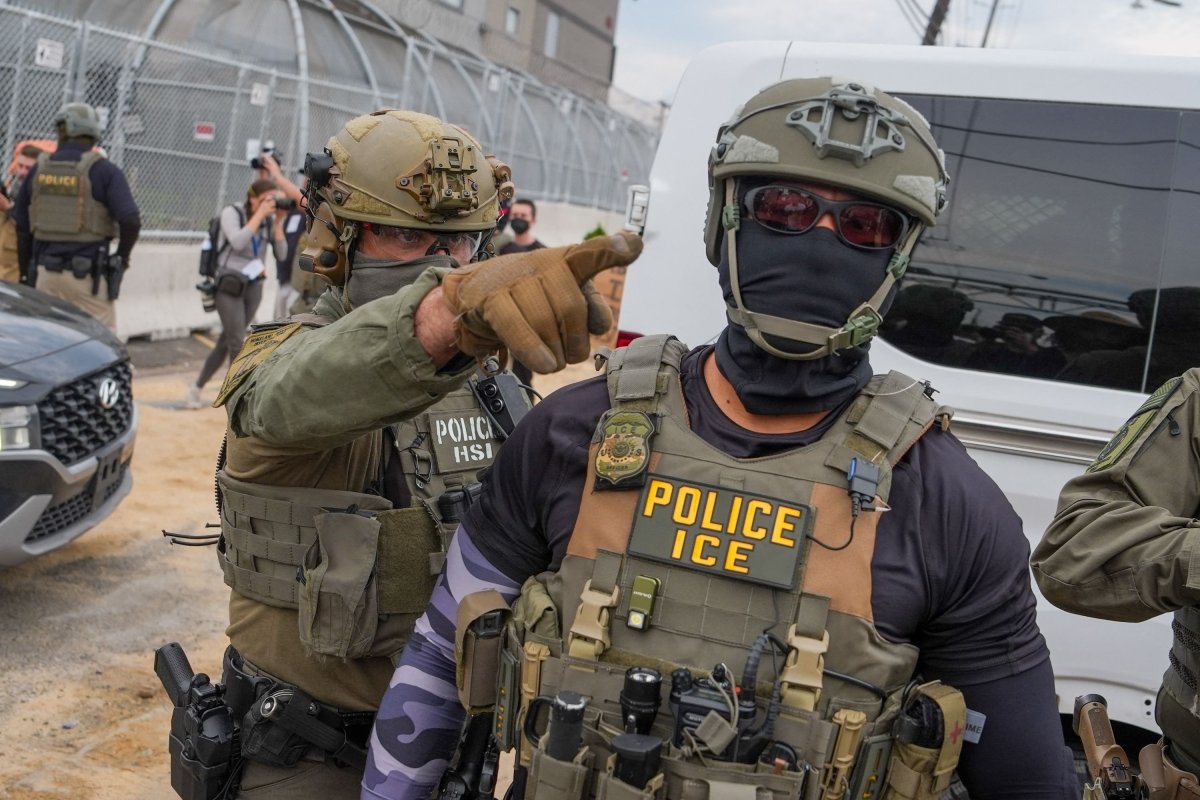
A federal judge in Indiana ordered the release of Salah Sarsour, president of Wisconsin's largest mosque, after determining that immigration authorities failed to counter claims of retaliation tied to his advocacy for Palestinian rights. Sarsour, a Palestinian-born legal permanent resident, had been held by U.S. Immigration and Customs Enforcement since March 30. The decision came after 80 days of detention and highlighted tensions between national security claims and constitutional protections for non-citizens.
Judge's Reasoning and Constitutional Analysis
U.S. District Judge James Patrick Hanlon ruled that the government provided insufficient evidence to refute allegations of targeting based on protected speech. Hanlon noted that the mere citation of foreign policy concerns does not override First Amendment guarantees. He emphasized that individuals who enter the United States lawfully receive the same constitutional protections afforded to those within U.S. borders. The ruling rejected arguments that non-citizens lack equivalent speech rights and pointed out that authorities had known about Sarsour's past Israeli court convictions for more than two decades without prior action.
Health Conditions and Detention Environment
Sarsour's medical situation played a central role in the release order. The longtime Milwaukee resident suffers from Type 2 diabetes and lost more than 30 pounds during his time in custody. Attorneys reported that blood sugar monitoring occurred only once a month, raising risks of serious complications. Hanlon cited these health factors alongside Sarsour's family connections, including a spouse, six children, and nine grandchildren who are all U.S. citizens, as additional reasons supporting release pending further immigration proceedings.
Implications for Palestinian Advocacy in the United States
The case illustrates growing pressures on Palestinian-American voices amid heightened scrutiny of criticism directed at Israeli policies. Sarsour's attorneys framed the detention as an attempt to silence dissent rather than address genuine security threats. This development could embolden other advocates while simultaneously prompting Arab-American organizations to reassess their public activities. In the broader Middle East context, such incidents risk reinforcing narratives in Arab capitals that U.S. institutions apply uneven standards when Palestinian issues arise, potentially complicating efforts at people-to-people engagement tied to the Abraham Accords.
First Amendment Protections for Non-Citizens
Hanlon's rejection of the government's position that lawful permanent residents enjoy fewer speech protections carries wider significance. The decision aligns with longstanding judicial recognition that constitutional rights extend to all persons within U.S. territory. Legal observers note that if similar targeting claims succeed in other districts, immigration enforcement agencies may face increased litigation over selective enforcement. This could slow deportation proceedings involving long-term residents and force clearer documentation of security-based rationales rather than reliance on foreign relations assertions alone.
Effects on Arab-American Communities and US Immigration Policy
Within Arab-American circles, the outcome is viewed as both a relief and a warning. Community leaders in states with sizable Palestinian populations, such as Wisconsin, Michigan, and Illinois, have expressed concern that advocacy on Gaza or the West Bank could trigger immigration consequences. The episode also intersects with ongoing debates over medical care standards in detention facilities, as parallel lawsuits in at least 33 states allege neglect. Policymakers in Washington may now confront renewed calls to clarify how past foreign convictions factor into removal decisions after decades of uneventful residency.
Strategic Ramifications for US-Middle East Relations
From a regional perspective, the ruling arrives at a sensitive moment in Israeli-Palestinian dynamics. Gulf states pursuing economic diversification under frameworks such as Saudi Vision 2030 continue to weigh normalization steps against domestic sentiment on Palestinian issues. Any perception that the United States tolerates selective enforcement against Palestinian advocates risks undercutting diplomatic messaging about shared democratic values. Iranian-aligned networks may exploit the story to portray Washington as inconsistent, while Israeli officials have already signaled disagreement with the discrimination claims advanced by Sarsour's legal team.
Outlook for Future Cases and Regional Stability
Sarsour's release allows his immigration case to proceed without continued detention, yet the underlying removal proceedings remain active. The episode underscores how individual enforcement actions can generate second-order effects on alliance management and public diplomacy across the Middle East. As Arab-American communities monitor similar cases, U.S. officials will likely face pressure to demonstrate that immigration decisions rest on individualized security assessments rather than political expression. The balance between border control priorities and constitutional safeguards will continue to shape both domestic cohesion and Washington's leverage in regional negotiations.
By Malik Hassan, Staff Writer
This article was produced with AI-assisted research and editorial support. Reporting is based on sources cited in the article.
What's Your Reaction?
 Like
0
Like
0
 Dislike
0
Dislike
0
 Love
0
Love
0
 Funny
0
Funny
0
 Wow
0
Wow
0
 Sad
0
Sad
0
 Angry
0
Angry
0

Middle East Correspondent at Global1.News. Based in Beirut, covering politics, conflict, energy, and society across the Middle East. Brings context and depth to a region often reduced to headlines.












Comments (0)