
JD Vance Warns Israel: US-Iran Deal Triggers 60-Day Nuclear Talks
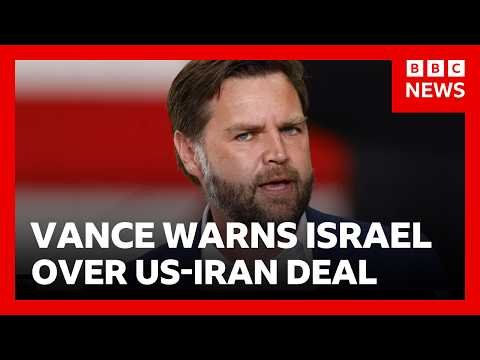
In a recent BBC News report, US Vice-President JD Vance delivered a blunt warning to Israel over its opposition to the emerging US-Iran peace deal, telling members of Benjamin Netanyahu's cabinet to "wake up and smell the reality." JD Vance Warns Israel: 'You Can't Just Kill Your Way Out' — Inside the US-Iran Peace Deal and the Fracturing of the Washington-Jerusalem Axis Washin
In a recent BBC News report, US Vice-President JD Vance delivered a blunt warning to Israel over its opposition to the emerging US-Iran peace deal, telling members of Benjamin Netanyahu's cabinet to "wake up and smell the reality."
JD Vance Warns Israel: 'You Can't Just Kill Your Way Out' — Inside the US-Iran Peace Deal and the Fracturing of the Washington-Jerusalem Axis
Washington, DC – 19 June 2026 — US Vice-President JD Vance has delivered an extraordinary public rebuke of the Israeli government's opposition to the US-Iran peace deal, warning Benjamin Netanyahu's cabinet that they cannot rely on Washington as a permanent backstop for military escalation in the Middle East. In a White House press briefing and a subsequent interview with the New York Times, Vance accused members of the Israeli war cabinet of failing to offer a realistic alternative to the diplomatic path chosen by Washington and Tehran.
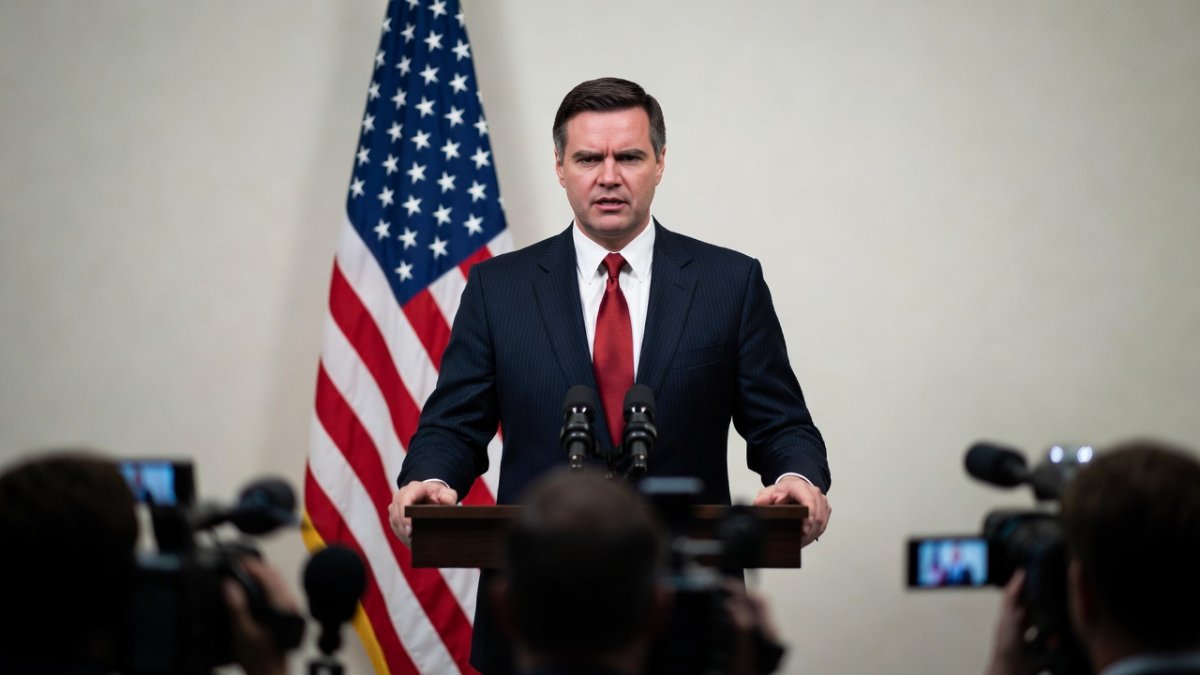
The Vice-President's Rebuke: 'Wake Up and Smell the Reality'
In a heated exchange with reporters on Thursday, Vance castigated members of Prime Minister Benjamin Netanyahu's cabinet for what he described as a disconnect from geopolitical realities. "If I was in the cabinet of the Israeli government, I might not be attacking the only powerful ally that I have anywhere left in the entire world," the vice-president told reporters at the White House.
The comments marked the sharpest public criticism of Israel by a senior Trump administration official since the outbreak of the Iran war in late February. Vance singled out Israel's national security minister Itamar Ben Gvir and finance minister Bezalel Smotrich — both far-right figures in Netanyahu's governing coalition — as the primary critics of the deal. "I guess my response to them would be — what is your exact proposal? You're a country of nine million people. You can't just kill your way out of solving every single national security problem that you have," Vance told the New York Times in an interview published Thursday.
The vice-president's language reflected a growing frustration within the White House that Israel's continued military operations against Iranian-backed Hezbollah in southern Lebanon could destabilise the fragile ceasefire framework negotiated at the G7 summit in Evian-les-Bains, France. Vance's remarks went significantly further than anything President Donald Trump has said publicly about Israel's opposition to the deal. This tension highlights how the Trump administration is recalibrating its approach to longstanding alliances amid shifting priorities in the region.
The Deal: A 14-Point Memorandum of Understanding
The US-Iran agreement, formally titled a Memorandum of Understanding (MoU), was signed remotely by both President Trump and Iranian President Masoud Pezeshkian earlier this week following days of intense back-channel diplomacy mediated by Pakistan. The document contains 14 core points that lay out a framework for ending the regional war that erupted after the 28 February US-Israeli strikes on Iran, which killed Ayatollah Ali Khamenei and sparked a devastating six-month conflict.
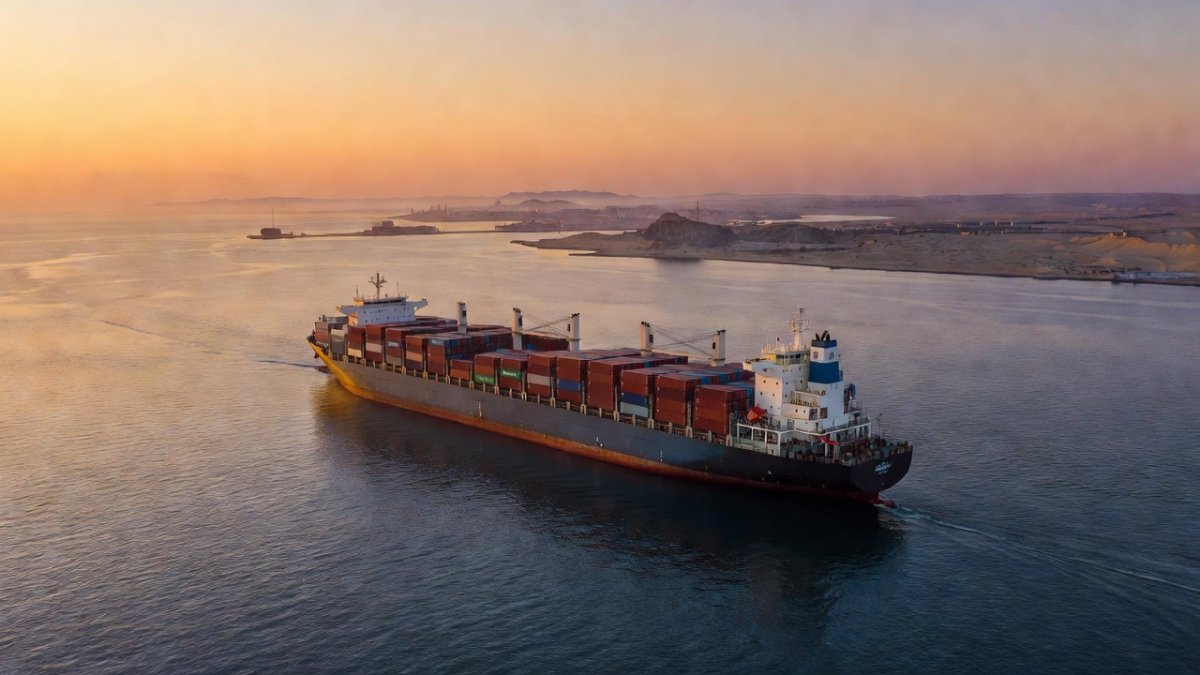
Key provisions of the MoU include the immediate reopening of the Strait of Hormuz — the vital maritime chokepoint through which roughly 20 per cent of the world's oil passes — as well as a commitment that Iran shall never possess a nuclear weapon. The deal also establishes a $300 billion (£227 billion) fund for the "reconstruction and economic development" of Iran, though Vance and Trump have both insisted that not "10 cents" of American taxpayer money will go toward it.
The agreement binds both parties to achieving a final comprehensive deal within a maximum of 60 days, a timeline that can be extended with mutual consent. The US has already lifted its naval blockade of Iranian ports, with US Central Command confirming the move on social media "in accordance with the President's direction." Some American vessels will remain "in the general area," the command said. These steps underscore the administration's emphasis on rapid de-escalation to stabilize global energy flows and prevent further economic disruption worldwide.
Iran's Response: Khamenei Speaks
Iran's Supreme Leader Mojtaba Khamenei — who assumed office in March following the killing of his father — has publicly acknowledged the deal for the first time. In a written statement, Khamenei said he had initially held a "different view" on negotiating with Washington but allowed the agreement to proceed after assurances from President Pezeshkian that he would "protect the rights of the Iranian nation."
Khamenei claimed that Trump had made the agreement "out of desperation, used all kinds of leverage" to bring it about. He confirmed that "in-person negotiations in the future" between Tehran and Washington would take place but stressed that this "will not mean acceptance of the enemy's position." This marks the supreme leader's first formal response to the deal since its announcement, and analysts suggest it reflects the delicate internal balancing act within Iran's complex power structure between the moderate Pezeshkian administration and the hardline security establishment.
The Iranian parliamentary speaker and key negotiator Mohammad Bagher Ghalibaf has struck an even more hawkish tone, telling state media that his distrust of the US remains. He warned that Iran's "finger is on the trigger" and that Tehran would not hesitate to respond with force if Washington failed to honour its commitments. From Tehran's viewpoint, the deal represents a pragmatic pause rather than a full surrender of strategic interests.
Political Fallout in Washington: Vance as the 'Fall Guy'?
The domestic political calculus surrounding the Iran deal has proved as volatile as the diplomatic front. Vice-President Vance has emerged as the administration's primary public defender of the agreement — a role that has placed him at odds with elements of his own party and raised questions about whether Trump has deliberately positioned him as a potential scapegoat.
When asked directly whether Trump had made him the "fall guy" for an agreement broadly unpopular with Republican hawks in Washington, Vance brushed aside the suggestion, saying "I think the president was joking." This referred to Trump's comment the previous day that he might blame the vice-president if the deal collapses — a remark that veteran Republican strategists interpreted as a deliberate distancing manoeuvre.
"It's classic Trump to throw JD under the bus," one longtime Republican operative and critic of the president told the BBC, speaking on condition of anonymity. Republican Senator Bill Cassidy of Louisiana has described the agreement as the "worst foreign policy blunder in decades," arguing that "Iran's nuclear ambitions were not curbed, and they have learned that threatening the Strait of Hormuz works." The intra-party divide cuts deep: anti-interventionist MAGA supporters who opposed the Iran war from the start sit on one side, while conservative Iran hawks who believe the White House has capitulated to Tehran occupy the other.
Russia, China, and the Geopolitical Chessboard
The US-Iran deal has not gone unnoticed in Moscow and Beijing. Trump publicly praised Russian President Vladimir Putin and Chinese President Xi Jinping for their roles in facilitating the diplomatic breakthrough — a remarkable acknowledgment given that both Russia and China provided political cover for Iran throughout the conflict, including at the United Nations Security Council.
For Moscow, the end of hostilities in the Persian Gulf represents a double-edged sword. On one hand, a de-escalation of US military engagement in the Middle East could reduce pressure on Russia's own strategic flanks, particularly as the war in Ukraine continues to drain Kremlin resources. On the other, a successful US-brokered peace deal that includes a $300 billion reconstruction fund for Iran — effectively locking Tehran into a Washington-facilitated economic recovery — could pull Iran closer to the American orbit at Russia's expense. Iran has been one of Moscow's most important military technology partners, particularly in the drone and electronic warfare domains.
Beijing's calculus is similarly complex. China is Iran's largest oil customer and has maintained deep economic ties with Tehran throughout the war, continuing to purchase Iranian crude through grey-market channels despite US sanctions. A reopening of the Strait of Hormuz and the normalisation of Iranian oil exports under the deal's framework would benefit Chinese energy security — but it would also reduce Iran's dependency on China as a sanctions-busting lifeline. Analysts suggest this could shift the balance of power in the Persian Gulf in ways that neither Moscow nor Beijing fully controls, affecting broader global stability through energy price fluctuations and alliance realignments.
Israeli Domestic Reactions and Security Concerns
From Israel's perspective, the deal raises profound security questions that extend beyond immediate military operations. Prime Minister Benjamin Netanyahu's coalition faces internal pressure from figures like Itamar Ben Gvir and Bezalel Smotrich, who argue that any accommodation with Iran risks emboldening proxy groups across the region. Israeli officials have privately conveyed to US counterparts that the absence of ironclad guarantees on missile development and proxy funding leaves Jerusalem vulnerable to future threats.
Critics within Israel point to the six-month conflict's toll, including losses in southern Lebanon, as evidence that diplomatic overtures alone cannot substitute for robust deterrence. This stance contrasts with the US emphasis on economic reconstruction and phased negotiations, illustrating the widening gap in threat perceptions between the two allies.
Impact on Global Energy Markets and Kremlin Dynamics
The reopening of the Strait of Hormuz carries immediate implications for worldwide energy supplies and pricing. With 20 per cent of global oil transit at stake, the deal could ease inflationary pressures that have persisted since the conflict began. Energy analysts note that stable flows benefit European and Asian economies alike, though they also diminish Russia's leverage as an alternative supplier during its ongoing Ukraine campaign.
Kremlin power structures may face new strains if Iran pivots toward Western economic integration. Moscow has relied on Tehran for asymmetric capabilities in multiple theatres, and any dilution of that partnership could force adjustments in Russian strategic planning. These shifts underscore how Middle Eastern diplomacy reverberates through Eurasian power balances.
What Comes Next: The 60-Day Window
The most critical phase of the agreement lies ahead. The 60-day negotiation period will require both sides to resolve the most contentious issues left deliberately vague in the MoU — most notably the future of Iran's nuclear programme, the status of Iranian ballistic missile capabilities, and the question of Iranian-backed proxy forces across the region, including Hezbollah in Lebanon, the Houthis in Yemen, and various militias in Iraq and Syria.
Trump has insisted publicly that a final deal must include the complete dismantling of Iran's nuclear infrastructure, while Iranian officials have signalled that enrichment for civilian purposes is a red line. Vice-President Vance stated on Thursday that the MoU already requires Iran to "destroy its stockpile of enriched uranium" and demonstrate it will not fund proxy groups in the region — conditions that Iran's hardline parliamentary leadership has not explicitly confirmed it will accept.
The White House announced that Vance will not travel to Switzerland for the signing ceremony, at least for now, and that a formal ceremony had been cancelled because the deal was already signed remotely. US and Iranian representatives are still expected to meet in Switzerland for further technical talks. Washington and Tehran remain deeply divided on fundamental questions, and the 60-day timeline — however extendable — imposes a discipline on both capitals that neither has demonstrated during six months of open warfare. Whether this framework holds will determine not only the future of US-Iran relations but the broader shape of Middle Eastern geopolitics for years to come. Perspectives from GOP critics, Iranian hardliners, and Israeli security officials all converge on the need for verifiable enforcement mechanisms to prevent renewed escalation.
By Irina Volkov, Staff Writer
This article was produced with AI-assisted research and editorial support. Reporting is based on sources cited in the article.
What's Your Reaction?
 Like
0
Like
0
 Dislike
0
Dislike
0
 Love
0
Love
0
 Funny
0
Funny
0
 Wow
0
Wow
0
 Sad
0
Sad
0
 Angry
0
Angry
0

Russia/Eastern Europe Correspondent at Global1.News. Covering Russian politics, energy, security, and the shifting dynamics of the post-Soviet space. Provides clear-eyed analysis on one of the world's most opaque regions.










Comments (0)