
US-Saudi Nuclear Deal: Risk or Strategic Partnership?
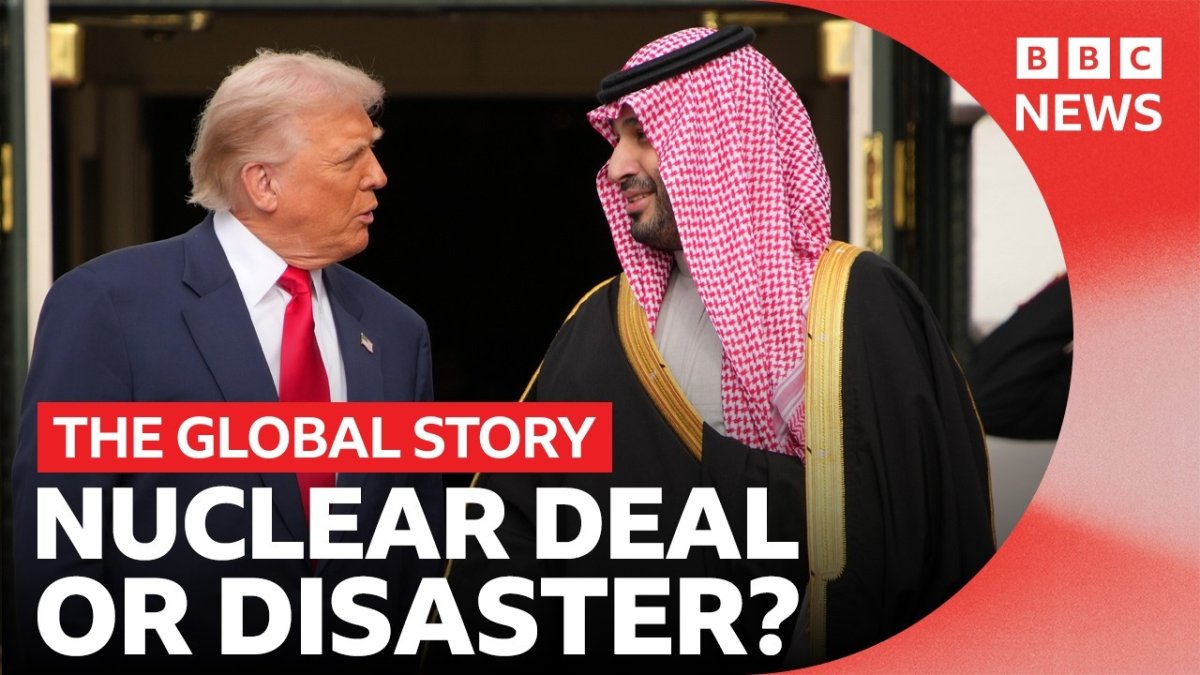
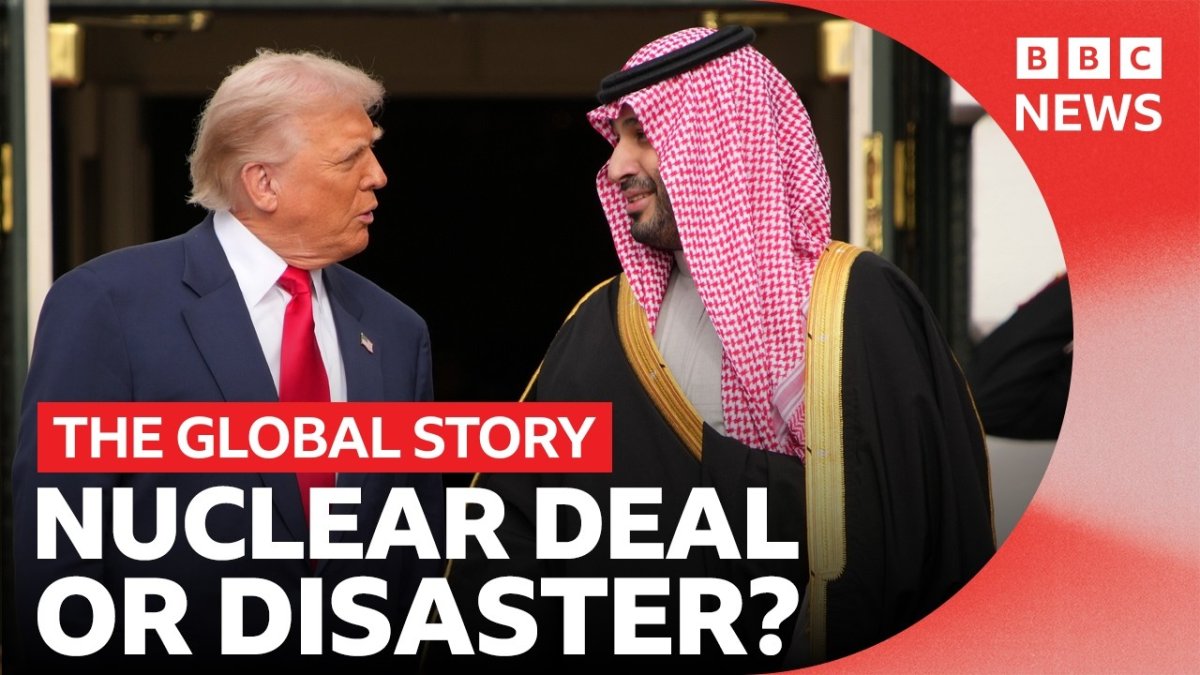
In a recent BBC News report, The Global Story examined the sweeping implications of the United States' landmark civilian nuclear cooperation agreement with Saudi Arabia — a deal that critics warn could trigger a nuclear arms race across the Middle East even as Washington simultaneously bombs Iran over its nuclear program.
In a recent BBC News report, The Global Story examined the sweeping implications of the United States' landmark civilian nuclear cooperation agreement with Saudi Arabia — a deal that critics warn could trigger a nuclear arms race across the Middle East even as Washington simultaneously bombs Iran over its nuclear program.
US-Saudi Nuclear Deal: A New Era of Proliferation Risk or Strategic Partnership?
London – 28 July 2026 — The United States and Saudi Arabia have signed what analysts are calling the most consequential nuclear cooperation agreement in decades, a 30-year, multi-billion-dollar pact that grants the Gulf kingdom the right to enrich uranium on its own soil — a provision that critics warn could trigger a nuclear arms race across the Middle East.
The Deal: What Was Signed and Why It Matters
The agreement, officially designated a "123 Agreement" under Section 123 of the US Atomic Energy Act, establishes the legal framework for American companies to participate in what the US Energy Department described as a "decades-long, multi-billion-dollar partnership." Alongside the civilian nuclear cooperation pact, Washington and Riyadh signed a separate bilateral safeguards agreement that the administration insists upholds "the highest standards of nuclear safety and nonproliferation."
The deal was signed by US Energy Secretary Chris Wright and Saudi Energy Minister Prince Abdulaziz bin Salman, with Wright declaring that "thanks to President Trump, the American nuclear renaissance is underway." The agreement provides what the Energy Department called "great access" for US firms to the Saudi nuclear energy programme, with Westinghouse Electric Company — builder of the AP1000 reactor design — expected to be a primary beneficiary.
According to the Trump administration, the deal clears the way for a comprehensive nuclear energy programme in the kingdom, including the potential construction of multiple nuclear power plants capable of generating thousands of megawatts of electricity. Experts have cautioned the BBC, however, that it could take at least a decade for Saudi Arabia to bring a nuclear power plant online, given the regulatory hurdles, construction timelines, and workforce development required.
Industry analysts project that the agreement could generate up to 50,000 direct and indirect jobs in the United States over the next fifteen years, primarily through supply-chain contracts for reactor components, fuel fabrication, and training programmes. Saudi planners have already begun preliminary site assessments near the Red Sea coast, where cooling water access and grid connectivity would support large-scale generation. The $17.5 billion financing package tied to Westinghouse reactors is expected to be disbursed in tranches linked to regulatory milestones, reducing upfront fiscal pressure on Riyadh while locking in long-term American technological involvement.
The Uranium Enrichment Question: Red Line Crossed
The most controversial element of the agreement — and the one that has drawn the sharpest criticism from nonproliferation experts and lawmakers alike — is the provision that could allow Saudi Arabia to enrich uranium on its own soil.
According to a person familiar with the matter who spoke to the Associated Press on condition of anonymity, the framework paves the way for the building of a uranium enrichment facility in Saudi Arabia after a joint US-Saudi study. This would represent a significant departure from previous US nuclear cooperation agreements, most notably the 2009 deal with the United Arab Emirates, which explicitly forswore enrichment and reprocessing rights — a commitment that nonproliferation experts have long held up as the "gold standard" for civilian nuclear partnerships.
Equally concerning to critics is the revelation that the agreement does not include the International Atomic Energy Agency's Additional Protocol, which would allow for more intensive monitoring, unannounced inspections, and verification of nuclear facilities. Without this protocol, the international community will have less visibility into Saudi Arabia's nuclear activities — a gap that proliferation experts warn could be exploited down the line.
US Energy Secretary Chris Wright defended the terms during briefings this week, stating that the joint study would determine any enrichment path while maintaining strict controls. Westinghouse CEO Dan Sumner confirmed that the company stands ready to supply AP1000 reactors under the $17.5 billion loan package, noting that American technology would anchor the programme. Saudi officials, including Crown Prince Mohammed bin Salman, have long signalled interest in a full fuel cycle, viewing enrichment as essential for energy independence. Nonproliferation analysts note that allowing domestic enrichment marks a clear shift from earlier US policy, potentially opening pathways for future expansion beyond civilian use. European Union diplomats have expressed quiet concern that the precedent could weaken global standards, while Israeli officials have privately urged tighter restrictions. The absence of the Additional Protocol further limits IAEA access, raising questions about long-term transparency even as the 30-year agreement moves forward.
Technical experts caution that even a modest enrichment capability at 5 percent uranium-235, once established, could be reconfigured within months to produce weapons-grade material if political decisions shift. Historical precedents from other states show that civilian enrichment programmes have occasionally served as latent proliferation hedges, particularly when regional security threats intensify. The joint study provision, while presented as a safeguard, leaves open the possibility that enrichment infrastructure could be sited near existing industrial zones with limited external oversight.
Congressional Opposition and Domestic Debate
Rep. John Garamendi, a Democrat from California, described the agreement as a "consequential mistake" during hearings last week, arguing that it risks undermining decades of nonproliferation efforts. Lawmakers have 90 days to review the pact, though administration officials assess that opponents lack the votes needed to block it. Secretary of State Marco Rubio countered criticism by declaring that "the US is not going to reach any agreement that leads to the risk of proliferation," emphasising safeguards built into the bilateral framework.
Democratic lawmakers have highlighted the contrast with the UAE's stricter commitments, while some Republicans have welcomed the commercial opportunities for US firms. The deal's timing, following the recent Saudi-Pakistan mutual defence pact, has added layers to the debate, with Pakistan's past nuclear offers to Riyadh now under renewed scrutiny. Congressional staffers indicate that hearings will focus on monitoring gaps and the potential for technology diversion. Public statements from both parties reflect broader divisions over Middle East strategy, with little expectation of a successful override attempt.
Geopolitical Dimensions: Russia, China, and the New Middle East
China had pursued a comparable nuclear arrangement with Saudi Arabia before the US agreement advanced, positioning American firms to capture market share previously targeted by Beijing. Russia's Rosatom has already secured contracts for nuclear plants in Egypt and Turkey, giving Moscow established footholds in regional energy projects that could now face competition from the US-Saudi framework. Kremlin sources indicate that Russian officials view the deal as an attempt to reassert Western influence in Gulf energy markets at a time when post-Soviet dynamics continue to shape alliances.
The recent Saudi-Pakistan mutual defence pact adds another dimension, as Pakistan has previously signalled willingness to extend nuclear-related support. EU analysts have noted that the transactional approach described by BBC State Department correspondent Tom Bateman aligns with a shift away from multilateral preconditions, including the dropped demand for Saudi-Israel normalisation. Crown Prince Mohammed bin Salman has prioritised rapid energy diversification, a stance that intersects with both Russian and Chinese interests in the broader region. This development could pressure Rosatom's existing projects while prompting Beijing to seek alternative partnerships elsewhere in the Middle East.
The Iran Paradox: Bombing One Nation, Enabling Another
The agreement unfolds against the backdrop of US and Israeli military operations targeting Iran's nuclear facilities, creating a stark contrast in Washington's approach to regional proliferation risks. BBC Security Correspondent Frank Gardner observed that Saudi Arabia is unlikely to pursue a nuclear weapon at present, yet Riyadh would likely move quickly if Iran acquired one, potentially acquiring capabilities through its defence ties with Pakistan. This dynamic underscores the administration's calculation that civilian nuclear cooperation can serve as both an economic lever and a strategic hedge.
Israeli perspectives emphasise the need for robust verification to prevent any future Saudi programme from mirroring Iran's trajectory. Iranian state media have condemned the deal as evidence of selective US policy, while EU officials have called for consistent application of nonproliferation norms across the region. The Biden administration had advanced similar talks by summer 2023 before the October 7 attacks halted progress, illustrating how shifting conflict lines continue to influence nuclear diplomacy.
Analysis and Implications: A Dangerous Precedent
Alexander Bollfrass of the International Institute for Strategic Studies characterised the framework as "a revolutionary new approach" to nonproliferation policy, suggesting that the administration has prioritised commercial access and bilateral leverage over traditional multilateral constraints. This interpretation aligns with the transactional emphasis noted by Tom Bateman, where self-interest drives partnerships rather than fixed alliance structures. Analysts suggest this signals a broader recalibration that could erode the gold standard established with the UAE, particularly if other nations seek similar enrichment provisions.
The absence of the Additional Protocol and the conditional path to domestic enrichment represent departures that Russia and China may exploit in their own regional engagements. For Moscow, the deal tests its ability to maintain influence through Rosatom amid growing US commercial presence. Crown Prince Mohammed bin Salman’s government gains a concrete pathway to nuclear power, yet the monitoring gaps leave room for future uncertainty. Observers indicate that the precedent could reshape expectations for future 123 agreements, with implications extending well beyond the Gulf.
By Irina Volkov, Staff Writer
This article was produced with AI-assisted research and editorial support. Reporting is based on sources cited in the article.
What's Your Reaction?
 Like
0
Like
0
 Dislike
0
Dislike
0
 Love
0
Love
0
 Funny
0
Funny
0
 Wow
0
Wow
0
 Sad
0
Sad
0
 Angry
0
Angry
0

Russia/Eastern Europe Correspondent at Global1.News. Covering Russian politics, energy, security, and the shifting dynamics of the post-Soviet space. Provides clear-eyed analysis on one of the world's most opaque regions.










Comments (0)