
Trump: Iran Retains 21-22% Missiles After US Strikes
The United States and Iran remain locked in a strategic confrontation that has reshaped the military and energy landscape of the Middle East. President Donald Trump's recent assessment that Iran retains only 21-22 percent of its pre-conflict missile inventory offers a rare window into the effectiveness of sustained American strikes — and the limits of military degradation again
The United States and Iran remain locked in a strategic confrontation that has reshaped the military and energy landscape of the Middle East. President Donald Trump's recent assessment that Iran retains only 21-22 percent of its pre-conflict missile inventory offers a rare window into the effectiveness of sustained American strikes — and the limits of military degradation against a determined adversary with significant retaliatory options remaining.
Trump: Iran Retains 21-22% of Missile Capacity After US Strikes — What This Means for Gulf Security and Regional Stability
Beirut, Lebanon – June 6, 2026 — US President Donald Trump stated on NBC News' Meet the Press with Kristen Welker that Iran has approximately 21-22 percent of its missiles remaining, describing the figure as "a lot of missiles, but it's not what it was when we first attacked." The assessment, reported by The Jerusalem Post and Al Arabiya English, provides the first official US quantification of the degradation inflicted on Iran's ballistic missile arsenal during the ongoing campaign of American strikes against Iranian military and nuclear infrastructure.
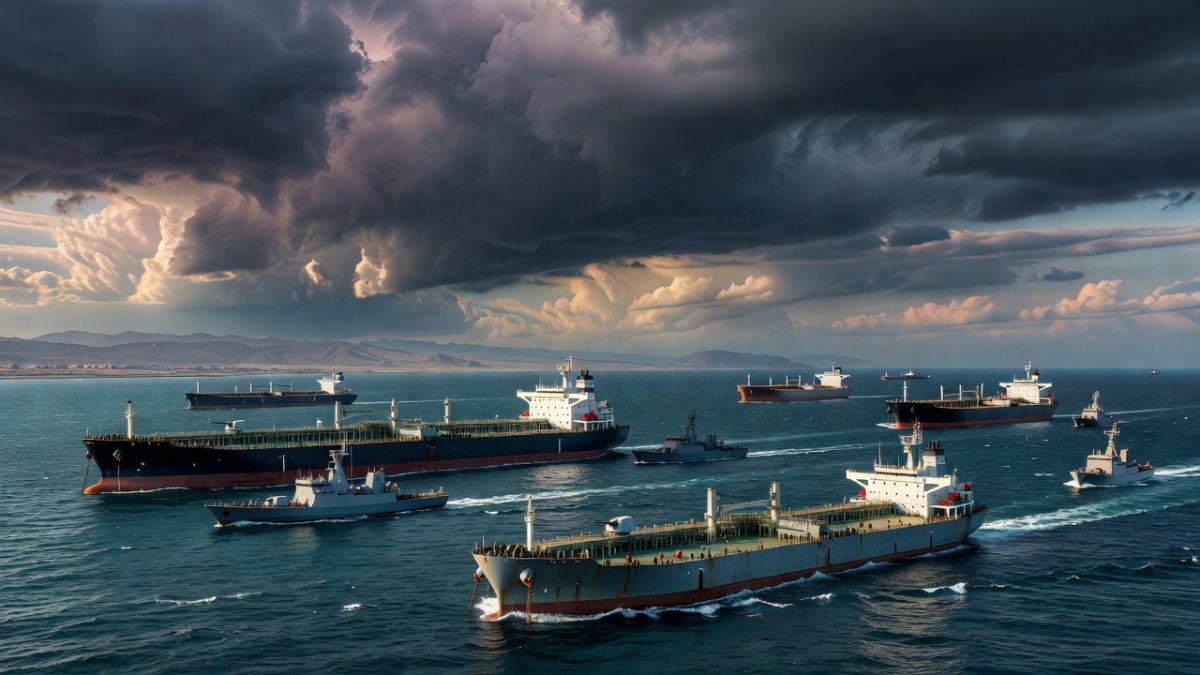
Strategic Significance of the Missile Inventory Assessment
Iran's ballistic missile program has been the cornerstone of its defence doctrine and regional power projection for over three decades. Unlike its conventional ground forces, which suffered from decades of sanctions and technological isolation, Iran's missile corps developed into a sophisticated network capable of striking targets across the Middle East. The Islamic Revolutionary Guard Corps (IRGC) Aerospace Force oversees a diverse arsenal that includes the Shahab-3, Emad, Khorramshahr, and the newer Kheibar Shekan solid-fuel missiles, alongside cruise missiles and one-way attack drones.
Trump's 21-22 percent figure implies that roughly 78-79 percent of Iran's pre-strike missile inventory has been destroyed or rendered inoperable. This represents one of the most extensive degradations of a nation's strategic missile capability since the 1991 Gulf War dismantling of Iraq's Scud forces. However, the remaining stockpile — though significantly reduced — still represents a material threat, particularly if concentrated on high-value targets such as Israeli population centres, Gulf energy infrastructure, or US military bases in the region.
US Strike Campaign: Scope and Effectiveness
The American military campaign against Iran has involved multiple waves of strikes targeting missile launchers, radar installations, weapons production facilities, and elements of Iran's nuclear enrichment programme. The Pentagon has employed long-range bombers launched from Diego Garcia, carrier-based aircraft from the USS Dwight D. Eisenhower and USS Harry S. Truman carrier strike groups, and submarine-launched Tomahawk cruise missiles. Iranian air defence systems — largely Russian-made S-300s and domestically produced Bavar-373s — have been unable to prevent sustained penetration of Iranian airspace.
US Central Command (CENTCOM) has reported the destruction of over 200 missile launchers, multiple underground missile storage facilities, and at least six nuclear-related sites, including enrichment centrifuges at Natanz and Fordow. Iran's ability to launch mass salvos — the "swarm" tactic it used in the April 2025 strikes against Israel — has been effectively curtailed. The Islamic Republic has shifted to dispersed, mobile launcher operations and smaller-scale strikes to preserve its remaining inventory.
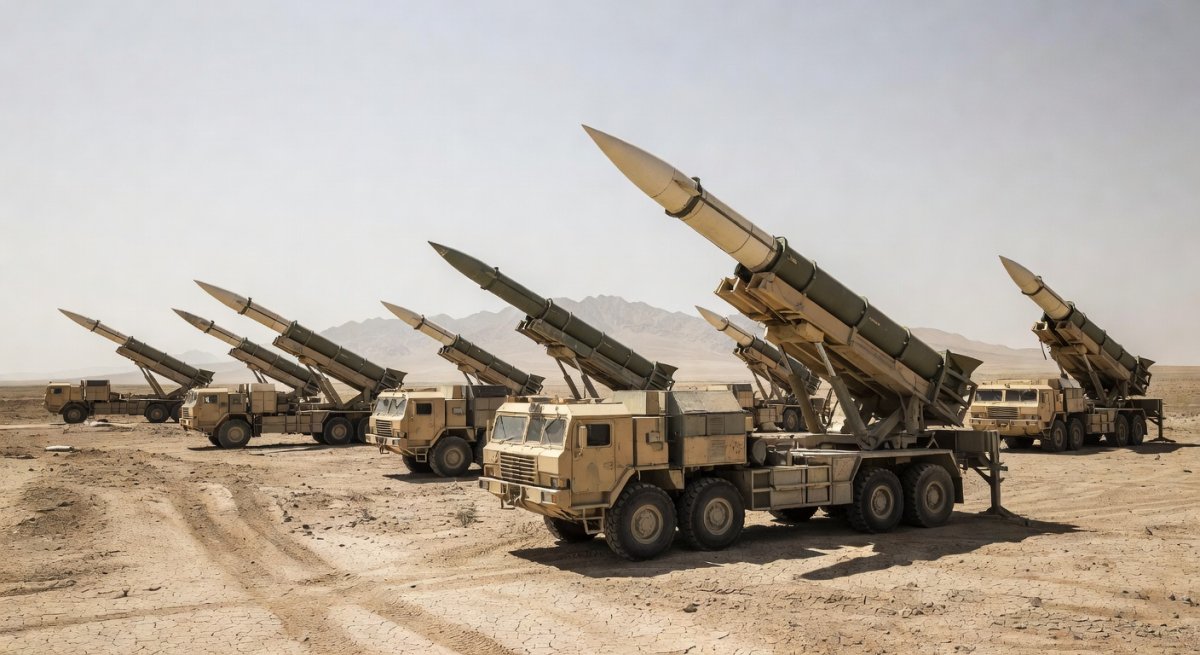
Iran's Retaliatory Calculus and the Strait of Hormuz
Tehran has responded with targeted missile and drone attacks against US forces in Iraq, Syria, and the Gulf, as well as against Israeli positions. The Strait of Hormuz — through which roughly 20 million barrels of oil pass daily, representing about 20-25 percent of global consumption — has become the central flashpoint. Iran has threatened to disrupt tanker traffic, deployed fast-attack craft, and conducted exercises demonstrating its ability to lay naval mines.
According to the US Energy Information Administration, a sustained closure of the Strait of Hormuz would push global oil prices above $150 per barrel, triggering recessionary pressures in Europe, Asia, and the United States. Gulf Cooperation Council states — Saudi Arabia, the UAE, Qatar, Kuwait, Bahrain, and Oman — have activated alternative export routes, including Saudi Arabia's East-West pipeline (Petroline) and the UAE's Habshan-Fujairah pipeline, but these provide only limited redundancy.
Gulf Arab States: Between Security Guarantees and Diplomatic Hedging
The Gulf monarchies find themselves in a precarious position. Saudi Arabia's Vision 2030 — the economic diversification plan championed by Crown Prince Mohammed bin Salman — depends on regional stability to attract foreign investment and develop non-oil sectors including tourism, technology, and logistics. The UAE under President Mohamed bin Zayed has similarly pursued a strategy of hedging, maintaining its US security partnership while deepening economic and diplomatic engagement with both China and Russia.
Riyadh and Abu Dhabi have quietly expanded their domestic defence industries — Saudi Arabian Military Industries (SAMI) and EDGE Group in the UAE — to reduce long-term dependency on American arms. Qatar, hosting the largest US airbase in the region at Al Udeid, continues to serve as a diplomatic backchannel, maintaining lines of communication with Tehran even as it hosts American combat operations against Iran.
Oman, historically a trusted intermediary between Washington and Tehran, has proposed new mediation efforts, but the current intensity of hostilities limits the scope for diplomatic breakthroughs. The GCC's internal unity has been tested, with Kuwait and Bahrain expressing greater support for the US campaign while Qatar and Oman push for de-escalation.
Iranian Defence Doctrine: Asymmetric Warfare and Nuclear Thresholds
Iran's military strategy has always relied on asymmetric capabilities — missiles, drones, proxy networks, and the threats to maritime chokepoints — to offset the conventional superiority of the United States and its allies. The depletion of its missile inventory forces a fundamental reassessment in Tehran. Supreme Leader Ayatollah Ali Khamenei and the IRGC leadership face a strategic dilemma: accelerate nuclear enrichment to achieve a weaponised deterrent, or pursue a diplomatic settlement that would require concessions on the missile programme itself.
International Atomic Energy Agency (IAEA) inspectors have confirmed that Iran's stockpile of enriched uranium remains at approximately 60 percent purity — below weapons-grade but technically weeks away from 90 percent enrichment. Israeli intelligence assessments suggest that Iran has not yet made a political decision to weaponise, but the strategic pressure from the missile depletion could alter that calculus. The US has stated that any Iranian move toward weaponisation would trigger additional strikes.
Israeli and Turkish Strategic Calculations
Israel has welcomed the degradation of Iran's missile capacity as a strategic gain that reduces the immediate threat to its population centres and critical infrastructure. Prime Minister Benjamin Netanyahu's government has coordinated intelligence sharing with the United States and provided targeting data on Iranian missile sites. However, Israeli defence officials remain concerned that Iran could transfer remaining missile assets to Hezbollah in Lebanon or Shia militias in Iraq, creating a decentralised threat that is harder to eliminate.
Turkey, under President Recep Tayyip Erdoğan, has adopted a carefully neutral stance. Ankara maintains economic ties with Tehran — including energy imports and bilateral trade exceeding $7 billion annually — while also fulfilling its NATO obligations. Turkish foreign policy seeks to preserve influence in northern Iraq and Syria, where Iranian-backed Shia militias operate alongside Turkish-backed Sunni factions. The conflict has opened space for Turkey to position itself as a potential mediator, though its NATO membership complicates any overt outreach to Tehran.
Great Power Dynamics: Russia, China, and the Global Energy Chessboard
Russia and China have offered rhetorical support for Iran's position while avoiding direct military involvement. Moscow, preoccupied with its own war effort in Ukraine, has provided diplomatic cover at the UN Security Council but has limited capacity to materially assist Tehran. Beijing's primary concern is energy security: China imports roughly 1.5 million barrels of crude oil per day from Iran, much of it via ship-to-ship transfers that evade US sanctions. Sustained conflict in the Gulf threatens those supply lines, pushing Chinese diplomats to quietly urge restraint on all sides.
Europe has been largely sidelined. The EU's inability to present a unified response has frustrated Gulf capitals and weakened transatlantic coordination. European economies — particularly Germany, Italy, and France — face the dual pressure of energy price increases and potential refugee flows if the conflict expands. The US campaign has strained NATO cohesion, with several member states declining requests to contribute to maritime security patrols in the Gulf.
Regional Implications and the Road Ahead
Trump's quantification of Iran's missile depletion provides an important baseline for understanding the military balance in the Gulf. While the United States has achieved significant tactical success in degrading Iran's missile capability, the strategic question remains whether this military pressure can translate into a sustainable diplomatic outcome. Iran retains the ability to cause significant disruption through its remaining missiles, its proxy network — including Hezbollah, Hamas, the Houthis, and Iraqi Shia militias — and its capacity to threaten the Strait of Hormuz.
For Gulf states, the immediate priority is managing volatility while continuing economic diversification. For Israel, the window of reduced missile threat creates both opportunity and risk. For Iran, the path forward involves difficult choices between nuclear escalation, proxy warfare, and diplomatic engagement. The interplay of these dynamics will determine whether the current campaign leads to a more stable regional order or a deeper cycle of escalation.
What is clear is that the Middle East has entered a new phase of strategic competition — one in which missile inventories, air defence networks, and maritime chokepoints matter as much as diplomacy. The coming months will test whether military degradation can produce political leverage, or whether the region remains trapped in a cycle of strike and counter-strike that serves no one's long-term interests.
By Malik Hassan, Staff Writer
This article was produced with AI-assisted research and editorial support. Reporting is based on sources cited in the article.
What's Your Reaction?
 Like
0
Like
0
 Dislike
0
Dislike
0
 Love
0
Love
0
 Funny
0
Funny
0
 Wow
0
Wow
0
 Sad
0
Sad
0
 Angry
0
Angry
0

Middle East Correspondent at Global1.News. Based in Beirut, covering politics, conflict, energy, and society across the Middle East. Brings context and depth to a region often reduced to headlines.










Comments (0)