
The Doctor Giving Life Back to Yazidi Women Survivors of Islamic State Captivity
Shireen's Story: Her Capture, Enslavement, and Liberation Shireen was preparing for a high school examination inside her family home in Sinjar on 3 August 2014 when Islamic State militants forced their way inside. At nineteen she was taken from her relatives and transported to Tal Afar, where she was sold as a sex slave to an IS fighter. Three months later she was resold in Mos
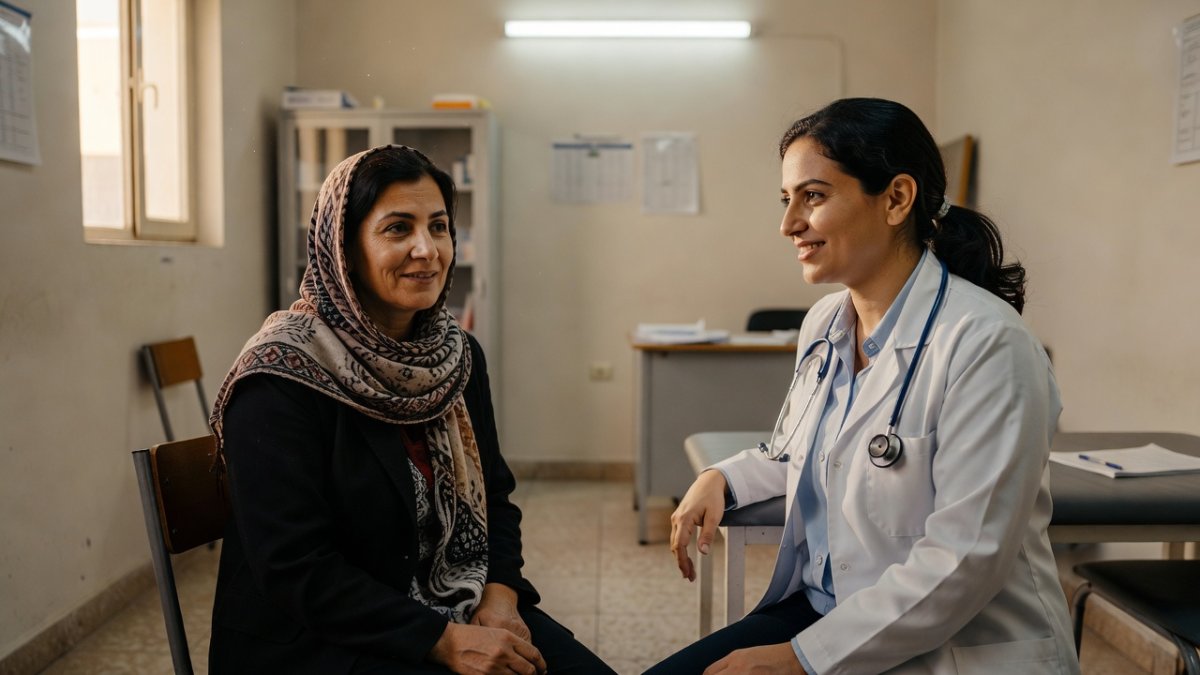
Shireen's Story: Her Capture, Enslavement, and Liberation
Shireen was preparing for a high school examination inside her family home in Sinjar on 3 August 2014 when Islamic State militants forced their way inside. At nineteen she was taken from her relatives and transported to Tal Afar, where she was sold as a sex slave to an IS fighter. Three months later she was resold in Mosul to a man named Abu Omar, who already maintained two Iraqi wives. The transaction placed her in a household where daily routines were dictated by the captor and enforced by armed guards at every entrance.
Abu Omar told Shireen he loved her. She later explained to interviewers that such words carried no meaning when accompanied by repeated sexual violence. The other wives, although housed separately, joined together on visits to beat her. Shireen was forbidden to step outside even into the garden for fresh air. Two additional Yazidi girls, aged six and ten, were later brought to the same residence; the younger child was assigned cleaning tasks while Shireen continued to face nightly assaults that she could not prevent.
IS fighters instructed Shireen that her community's reverence for Melek Tawwus marked her as an unbeliever. She was compelled to recite Islamic prayers under threat. For more than two years the only permitted activities were cooking, washing dishes, and cleaning. Any attempt to resist the routine resulted in further punishment. The isolation severed her from news of her family; her uncle and several friends were confirmed killed, while her father and one sister remain unaccounted for since the initial raid.
Iraqi forces liberated Shireen during the 2016 offensive to retake Mosul. Upon release she experienced persistent depression and nightmares that interrupted sleep for months. Physical freedom did not immediately restore a sense of safety or routine. She sought medical attention at the Duhok Survivors' Centre, where the initial examination quickly expanded into sustained conversation.
Dr Nagham Nawzat listened without interruption and affirmed Shireen's endurance. Shireen later stated that the physician's recognition of her bravery marked a turning point. Without that combination of clinical care and direct acknowledgment, she has said, she doubts she would have found the will to continue rebuilding her life.
Dr Nawzat's Background and the Scale of Her Work at Duhok Survivors' Centre
Nagham Nawzat was born in Mosul in 1976 to a Yazidi family. From an early age she expressed interest in medicine and in the particular health concerns of women. She completed her medical degree at Mosul's Medical College in 2002 and specialised in gynaecology. Her decision to focus on reproductive health reflected both professional training and an awareness of vulnerabilities that women in her community faced long before 2014.
When IS seized large portions of northern Iraq in 2014, Nawzat was already established in her field. The following year she joined the Duhok Survivors' Centre as a volunteer physician. The facility, supported by the United Nations Population Fund, operates as Iraq's only centre dedicated exclusively to survivors of gender-based violence. It provides gynaecological examinations, psychological counselling, and referrals for longer-term support within the Kurdistan Region.
By July 2018 the Kurdistan Regional Government's Kidnapped Affairs department had recorded 2,023 liberated Yazidi women. Nawzat has provided direct care to more than half of that number, an estimated 1,200 individuals. Her consultations combine physical assessment with extended listening sessions that allow survivors to describe experiences at their own pace. This dual approach addresses both immediate medical needs and the psychological aftermath of prolonged captivity.
The centre's location in Duhok places it within reach of families who have resettled in the Kurdish region after displacement from Sinjar and surrounding districts. Staff coordinate with local authorities to ensure documentation of injuries and testimonies remains confidential yet available for any future legal proceedings. Nawzat's presence as a Yazidi physician from Mosul offers survivors an immediate point of cultural recognition that state hospitals often lack.
In March 2016, then-US Secretary of State John Kerry presented Nawzat with the International Women of Courage Award. The recognition highlighted both her clinical work and her sustained advocacy against gender-based violence. Colleagues note that the award did not alter her daily schedule; she continued seeing patients at the same measured pace, integrating new resources into existing routines rather than expanding publicity around her role.
The Yazidi Genocide: Historical Context, UN Designation, and the Toll of 12,000 Killed or Kidnapped
The Yazidi community maintains a distinct religious tradition centred on belief in Yasdan and seven emanated angels, with particular reverence for Melek Tawwus. This identity has long marked the group as a minority within Iraq's religious landscape. In August 2014, IS forces launched a coordinated assault on Sinjar and surrounding areas, targeting Yazidi villages with systematic killings, abductions, and destruction of religious sites.
The United Nations has characterised these events as an ongoing genocide. At least 12,000 Yazidis were killed or kidnapped during the initial offensive and subsequent months. Mass graves continue to be uncovered in the Sinjar region, while thousands of women and girls remain missing. The scale of the assault reflected a deliberate policy aimed at erasing Yazidi presence from their ancestral lands.
Survivors who reached the Kurdistan Region or refugee camps in neighbouring countries carried accounts of forced conversions, sexual enslavement, and separation of families. These testimonies align with patterns documented by international observers. The UN designation underscores that the violence was not incidental to territorial conquest but constituted a targeted campaign against a protected group.
Local authorities in the Kurdistan Region established registration processes for liberated individuals, yet many families still await news of missing relatives. The absence of comprehensive forensic identification for remains recovered from mass graves prolongs uncertainty. Nawzat and her colleagues at the Duhok centre encounter these unresolved losses daily in the course of their consultations.
International recognition of the genocide has prompted some legal proceedings outside Iraq, yet domestic accountability mechanisms remain limited. Yazidi representatives continue to press for formal acknowledgment within Iraqi law and for resources to support community reconstruction in Sinjar. The medical records compiled at centres such as Duhok form one component of the broader evidentiary base required for any sustained justice process.
Gender-Based Violence as a Weapon of War: Yazidi Women's Experience and Broader Regional Patterns
IS forces institutionalised sexual slavery as a method of subjugation, assigning monetary values to captured women and circulating them among fighters. Shireen's account of repeated sales, household labour, and physical punishment illustrates the systematic nature of this control. Similar patterns appear in testimonies from hundreds of other survivors treated at the Duhok centre.
Such violence is not unique to one conflict. Across the Middle East, armed groups have deployed sexual violence to terrorise communities, fracture social bonds, and assert dominance over territory. In the occupied Palestinian territories, women have likewise documented assaults, arbitrary detention, and restrictions on movement that compound existing vulnerabilities. These experiences share structural features even when the political contexts differ.
Medical documentation collected by gynaecologists and counsellors provides concrete evidence of injuries sustained under captivity. At the Duhok centre, Nawzat records physical findings alongside narrative accounts. This dual record serves both immediate health needs and potential future accountability efforts. Palestinian health workers operating under occupation have developed comparable practices to preserve evidence of violence despite restricted access to facilities.
The psychological consequences extend beyond the individual survivor. Families and entire communities absorb the effects of prolonged separation and trauma. Reintegration requires sustained access to counselling, reproductive health services, and economic support. Centres that combine these services, such as the one in Duhok, demonstrate that specialised care can mitigate some long-term harm when adequately resourced.
Regional patterns of gender-based violence in conflict underscore the necessity of protecting civilian populations, particularly women and girls, from targeted abuse. International conventions exist, yet enforcement remains inconsistent. Nawzat's work illustrates one practical response: consistent clinical attention paired with recognition of survivors' agency.
Medical Professionals as Witnesses and Healers: How Clinical Documentation Serves Justice
Physicians who treat survivors of sexual violence occupy a dual position as healers and potential witnesses. Nawzat's examinations produce medical records that detail injuries, pregnancies, and other health consequences. These documents can corroborate individual testimonies in legal settings, even when years pass before proceedings advance.
The Duhok Survivors' Centre maintains protocols that protect confidentiality while preserving the option for survivors to authorise release of records. This balance respects patient autonomy and supports any future pursuit of accountability. Similar documentation practices have been adopted by health workers in other conflict zones where formal justice mechanisms are delayed or absent.
Training in trauma-informed care enables staff to conduct examinations without re-traumatising patients. Nawzat's approach integrates physical assessment with open-ended conversation, allowing survivors to determine the pace of disclosure. The resulting notes therefore reflect both clinical findings and the survivor's own framing of events.
International recognition, including the award presented to Nawzat, has drawn attention to the role of medical professionals in conflict settings. Yet the daily work remains focused on individual patients rather than public advocacy. Colleagues describe a steady accumulation of records that may prove significant if international or domestic courts eventually examine the full scope of IS crimes.
Coordination with organisations such as the United Nations Population Fund ensures that the centre's methods align with established standards for evidence collection in gender-based violence cases. This alignment increases the potential utility of records while maintaining the primary commitment to patient welfare.
The Limits of Liberation: What Happens After Release, Ongoing Needs
Release from captivity marks the beginning of a prolonged recovery process rather than its conclusion. Shireen returned to a community that had itself been shattered; many relatives remained missing, and social networks required rebuilding. Depression and sleep disturbances persisted long after physical freedom was restored.
Access to specialised care at the Duhok centre provided an initial point of stability. However, the centre's resources are finite, and demand continues as additional women are liberated. Follow-up appointments, medication for mental health conditions, and support for economic reintegration all require sustained funding and coordination with regional authorities.
Many survivors face decisions about whether to remain in the Kurdistan Region or attempt return to Sinjar. Security concerns, destroyed infrastructure, and unresolved questions about missing family members complicate these choices. Medical staff at the centre often serve as trusted advisors during such deliberations.
Children born during captivity present additional complexities. Questions of legal status, citizenship, and community acceptance require sensitive handling. Nawzat and her colleagues address immediate health needs while referring families to legal and social services equipped for longer-term support.
The absence of comprehensive national programmes for survivor reintegration places the burden on local facilities and international partners. The Duhok centre demonstrates what targeted intervention can achieve, yet it also reveals gaps that only broader policy responses can fill.
Conclusion: Resilience, Professional Care as Resistance, and the Road Ahead
Shireen's statement that she would not be here today without Dr Nawzat's support captures the tangible difference that consistent medical and emotional care can make. Across more than 1,200 similar cases, Nawzat has combined clinical skill with recognition of each survivor's endurance. This approach treats professional attention itself as a form of resistance against the erasure attempted by IS.
The Yazidi genocide continues to shape daily life in northern Iraq. Mass graves, missing persons, and the psychological aftermath require responses that extend beyond any single clinic. Yet the existence of a specialised facility staffed by a Yazidi physician offers one concrete site where survivors can begin to reclaim agency over their bodies and narratives.
Connections between the Yazidi experience and other instances of gender-based violence in conflict, including those documented in occupied Palestinian territories, highlight shared vulnerabilities and the need for cross-regional learning. Medical documentation practices developed in one setting can inform work in another when adapted to local conditions.
Future progress depends on sustained funding for centres such as the one in Duhok, continued training for health workers, and political will to pursue accountability. The records compiled by Nawzat and her colleagues form part of the evidentiary foundation that any justice process will require.
Resilience among survivors manifests not only in individual recovery but also in the collective insistence on remembrance and reconstruction. Professional care that respects dignity while preserving evidence contributes to that insistence. The road ahead remains long, yet each documented case and each supported recovery marks a measurable step forward.
By Fatima Al-Rashid, Staff WriterThis article was produced with AI-assisted research and editorial support. Reporting is based on sources cited in the article.
What's Your Reaction?
 Like
0
Like
0
 Dislike
0
Dislike
0
 Love
0
Love
0
 Funny
0
Funny
0
 Wow
0
Wow
0
 Sad
0
Sad
0
 Angry
0
Angry
0
Middle East Correspondent at Global1.News. Based in Beirut, covering politics, conflict, energy, and society across the Middle East. Brings context and depth to a region often reduced to headlines.










Comments (0)