
Japan and India Forge $12 Billion Technology Partnership in AI and Semiconductors
Japan and India have taken a major step forward in technology cooperation during the July 2-3, 2026 summit in New Delhi. The agreements focus on semiconductors, artificial intelligence, critical minerals, and resilient supply chains, backed by substantial Japanese investment commitments. **Japan, India Deepen Tech Ties With $12 Billion Investment Pledge** **Tokyo, Japan - July
**Japan, India Deepen Tech Ties With $12 Billion Investment Pledge** **Tokyo, Japan - July 3, 2026**
Japan-India Summit: A Technology-Driven Partnership
Japanese Prime Minister Takaichi Sanae held summit talks with Indian Prime Minister Narendra Modi in New Delhi on July 2, 2026. This marked Takaichi’s first visit to India since becoming prime minister. The two leaders identified three focus areas for the partnership: strategic partnership, economic security cooperation, and innovation and investment.
Approximately $12 billion in Japanese investments were announced to launch new businesses in India. Over 150 Japanese firms committed $12.5 billion in investment during an economic forum attended by representatives from more than 150 Japanese companies. Around 130 cooperation documents were exchanged between Japanese and Indian firms.
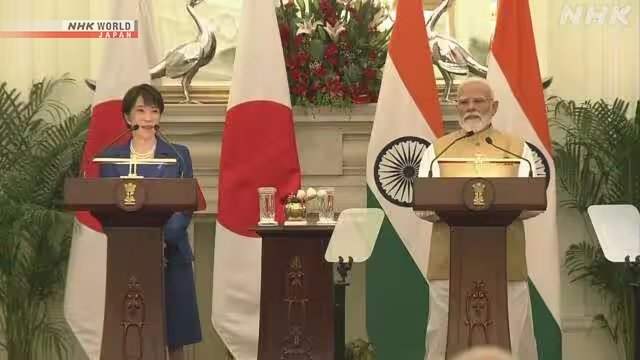
The long-term target is to expand investment from Japan to India to about 10 trillion yen ($62 billion) over 10 years and to double the number of Japanese companies operating in India. Joint outcome documents addressed economic security and artificial intelligence.
Semiconductor and Critical Minerals Cooperation
Semiconductors, rare earths and critical minerals, and resilient supply chains formed central topics of discussion. The two countries agreed to promote cooperation in semiconductors and critical minerals. Japan and India signed pacts on metals and energy cooperation that directly support these supply-chain objectives.
These steps align with Japan’s broader semiconductor strategy, which seeks to secure stable access to advanced chips and the materials required for their production. Critical minerals agreements aim to reduce dependence on single-source suppliers and strengthen diversified sourcing routes across the Indo-Pacific region.
Artificial Intelligence and Digital Innovation
Japan and India signed a pact on AI cooperation. The agreement covers joint research, talent development, and responsible AI deployment across sectors including healthcare and advanced manufacturing. Additional accords addressed clean energy and defense technology applications that incorporate digital components.
The digital economy elements of the partnership emphasize data governance frameworks and cross-border technology standards. These build on existing bilateral mechanisms while introducing new working groups focused on AI ethics and semiconductor design collaboration.
Economic Security and Japan's Strategic Calculus
Economic security cooperation received dedicated attention through joint outcome documents. The focus on resilient supply chains reflects Japan’s policy priority of reducing vulnerabilities in critical technology inputs. METI has long highlighted the need for diversified mineral and semiconductor sourcing, and the India agreements provide concrete avenues to advance that goal.
By linking investment targets with technology-specific pacts, Japan seeks to embed economic security considerations into its corporate expansion in India. This approach supports both immediate business opportunities and longer-term strategic resilience.
Implications for the Asia Pacific Technology Landscape
The summit outcomes carry regional significance for technology supply chains. Strengthened Japan-India ties in semiconductors and critical minerals offer an alternative pathway that complements existing alliances. The emphasis on AI governance also contributes to emerging regional norms on responsible technology use.
For Japanese firms, the doubling target for company presence in India creates new opportunities in digital services, advanced manufacturing, and clean energy technology deployment. These developments intersect with Japan’s Green Transformation (GX) objectives by supporting low-carbon technology transfer.
Expert Perspectives
Analysts note that the $12.5 billion in firm-level commitments provide an immediate foundation for the 10-trillion-yen decade-long goal. The exchange of 130 cooperation documents signals broad private-sector engagement across multiple technology domains.
Observers also highlight the symbolic weight of the first Takaichi-Modi meeting in establishing personal rapport between the leaders on technology issues. The joint statements on economic security and AI are viewed as frameworks that will require follow-up mechanisms to translate into operational projects.
What to Watch For
Implementation timelines for the semiconductor and critical minerals pacts will be closely monitored. Specific project announcements under the AI cooperation agreement are expected in the coming months. Progress toward the 10-trillion-yen investment target and the doubling of Japanese company presence in India will serve as key performance indicators.
Further details on how the three focus areas—strategic partnership, economic security cooperation, and innovation and investment—will be coordinated across ministries and agencies are anticipated in subsequent bilateral meetings.
The technology elements of the July 2026 summit position Japan and India to leverage each other’s strengths in semiconductors, AI, and critical minerals. As Prime Minister Takaichi stated, “Japan and India will leverage each other's strengths to become both strong and prosperous.” Prime Minister Modi added that “In the next 10 years we will expand investment from Japan to India to about 10 trillion yen.” These commitments set a clear direction for sustained technology collaboration with measurable milestones ahead.
By Kenji Tanaka, Staff WriterThis article was produced with AI-assisted research and editorial support. Reporting is based on sources cited in the article.
What's Your Reaction?
 Like
0
Like
0
 Dislike
0
Dislike
0
 Love
0
Love
0
 Funny
0
Funny
0
 Wow
0
Wow
0
 Sad
0
Sad
0
 Angry
0
Angry
0

Japan Correspondent at Global1.News. Tokyo-based voice covering Japanese politics, technology, economy, and culture. Tracks the intersection of tradition and innovation in one of the world's most dynamic societies.














Comments (0)