
AI and Agentic AI Are Reshaping Healthcare in 2026: What Patients and Providers Need to Know
AI and Agentic AI Are Reshaping Healthcare in 2026: What Patients and Providers Need to Know Artificial intelligence has moved from experimental pilots to core infrastructure in hospitals and clinics worldwide. In 2026, agentic AI — systems that can observe, plan, and autonomously execute multi-step tasks — is accelerating this transformation. Unlike earlier AI tools that mainl

AI and Agentic AI Are Reshaping Healthcare in 2026: What Patients and Providers Need to Know
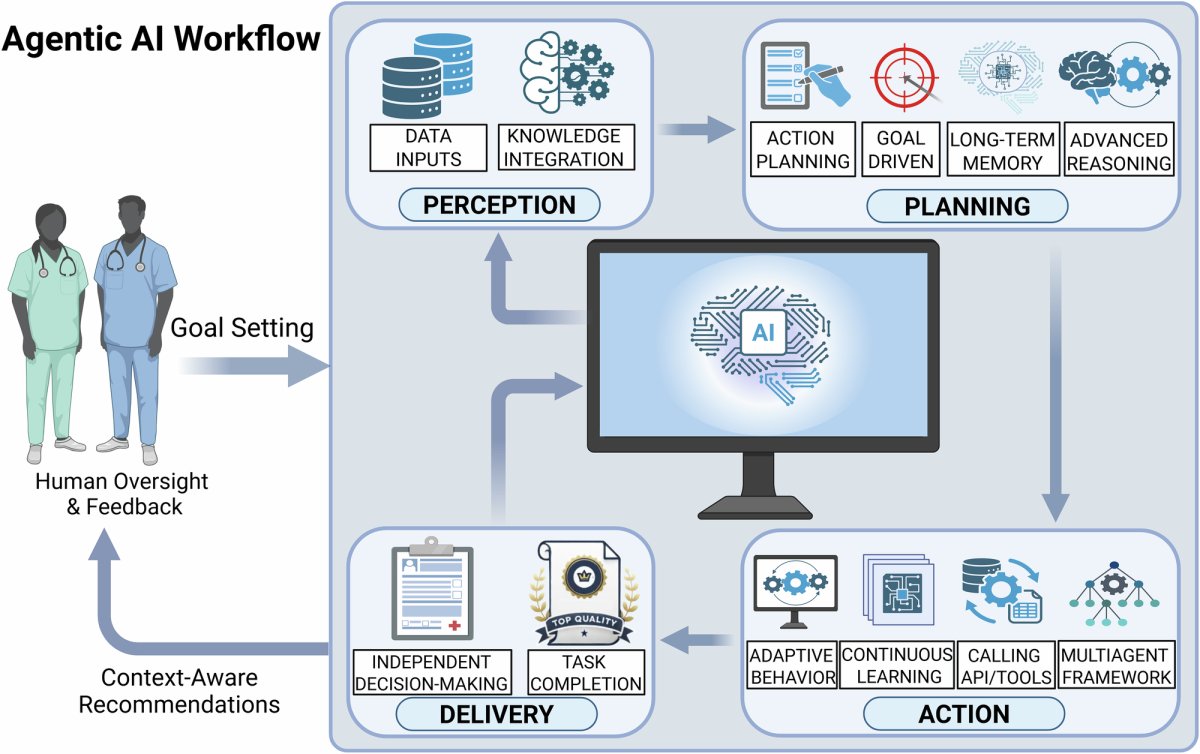
Artificial intelligence has moved from experimental pilots to core infrastructure in hospitals and clinics worldwide. In 2026, agentic AI — systems that can observe, plan, and autonomously execute multi-step tasks — is accelerating this transformation.
Unlike earlier AI tools that mainly analyze data or respond to prompts, agentic AI acts more like a digital colleague. It can handle routine administrative work, surface personalized insights at the point of care, and support complex clinical decisions while keeping humans firmly in control.
These advances are addressing some of healthcare’s biggest challenges: clinician burnout, diagnostic delays, administrative overload, and the need for truly individualized treatment. At the same time, important questions remain around accuracy, bias, job impacts, and accountability.
Here’s what real-world deployments in 2026 show — and what patients and providers should understand.
What Makes Agentic AI Different?
Traditional AI excels at pattern recognition (e.g., spotting tumors in scans). Agentic AI goes further by breaking down goals, pulling information from multiple systems (EHRs, guidelines, lab results), executing routine actions, and only escalating to humans when judgment is required.
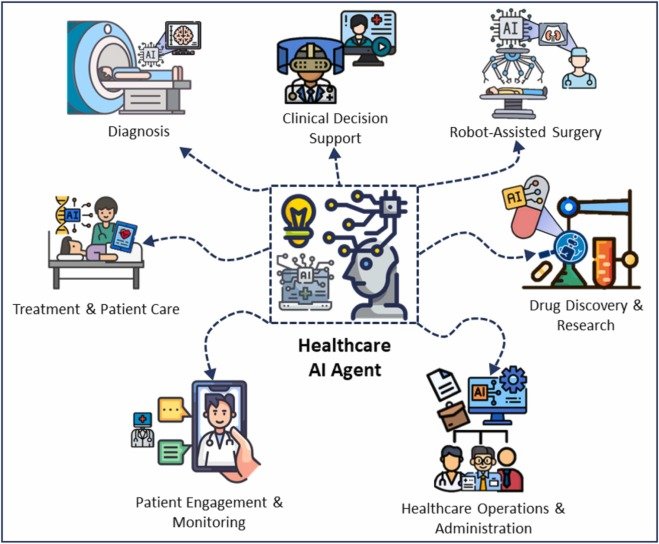
This evolution is already visible across diagnostics, administrative workflows, clinical decision support, and personalized care planning.
Real-World Adoption Examples in 2026
Major health systems are deploying these tools in production:
- MUSC Health now uses AI agents to complete 40% of prior authorizations without human involvement, significantly reducing manual workload. Source: Deloitte
- Stanford Health Care piloted agentic systems that bring personalized real-world evidence directly into the EHR at the point of care.
- Sentara Health scaled virtual nursing capabilities (ambient documentation, remote consultation, and care management) using agentic AI.
- Humana deployed an agentic AI tool that summarizes member calls, anticipates needs, and guides support staff with relevant information in real time.
- Johns Hopkins implemented the TREWS AI system for early sepsis detection. Patients became 20% less likely to die from sepsis because warning signs were caught roughly six hours earlier.
- Aidoc received FDA clearance for a foundation model AI that triages 14 critical findings in a single abdominal CT scan with 97% mean sensitivity and 98% mean specificity.
Ambient AI scribes (Abridge, Microsoft Dragon Copilot) are now enterprise-wide at systems like Northwell Health and UPMC. Physicians report saving 2–3 hours per day on documentation and measurable reductions in burnout.
Oncology tumor boards at institutions such as Oxford University Hospitals use Microsoft-integrated agents to summarize charts, determine cancer staging, and draft guideline-compliant treatment plans.
Key Benefits Emerging in 2026
- Faster and more consistent diagnostics — AI imaging tools detect subtle findings (lung nodules, brain bleeds, breast cancer risk) with high accuracy and speed. Early warning systems for sepsis and patient deterioration are already improving survival rates.
- Reduced administrative burden — Automation of prior authorization, documentation, scheduling, and claims appeals is freeing clinicians to focus on patients.
- Smarter clinical decision support — Agentic systems synthesize a patient’s full history, latest guidelines, and real-world evidence to present ranked options for clinicians.
- Greater personalization — Integration of genomic data, wearables, and longitudinal records helps tailor prevention and treatment to the individual.
- Better scalability — Virtual nursing agents and 24/7 support tools help health systems manage growing demand without proportional staff increases.
Risks and Challenges
Despite the progress, serious issues require attention:
Hallucinations and fabrications AI models can generate confident but incorrect information or fabricate citations. Studies have shown a sharp rise in fake references in biomedical papers as AI use in research increased. In clinical settings, this risk demands rigorous human verification.
Bias and health disparities Models trained on historical data can perpetuate or worsen existing inequities. Some systems have underdiagnosed conditions in certain racial or ethnic groups or relied on outdated race-based assumptions. Continuous auditing across demographic groups is essential.
Job impacts Administrative and some analytical roles (medical coding, initial radiology screening, prior authorization) face automation pressure. However, patient-facing roles remain difficult to fully automate. New positions in AI oversight, health informatics, and clinical AI coordination are emerging.
Liability, privacy, and over-reliance Questions remain about responsibility when AI contributes to an error, how patient data is protected across vendors, and the danger of clinicians over-trusting outputs.
Regulatory landscape States are actively passing laws requiring transparency, human review for adverse decisions, and patient disclosure. Federal guidance (FDA clearances, CMS rules) continues to evolve.
What Patients Should Know
- AI is already part of many aspects of care — from imaging analysis and prior authorization to symptom checkers. Ask your provider: “Is AI being used in my care, and is there human oversight?”
- Reputable systems are designed as augmented intelligence — they support, not replace, clinical judgment. Final decisions about your diagnosis or treatment should involve a qualified clinician.
- Many jurisdictions now require disclosure when AI influences coverage or care decisions. You have the right to request human review.
- Your data powers many of these tools. Understand how your information is used and protected under privacy laws (HIPAA in the U.S., or equivalent regulations elsewhere).
- Not all AI tools are equally validated. FDA-cleared or rigorously tested systems have stronger evidence behind them.
What Healthcare Providers and Systems Should Know
- Human oversight is non-negotiable for decisions affecting diagnosis, treatment, or access to care. “Human-in-the-loop” design is both best practice and increasingly required by regulators.
- Governance frameworks are maturing. The Joint Commission and Coalition for Health AI (CHAI) released comprehensive guidance in 2025. Aligning with these or similar standards is recommended.
- Audit for bias regularly. Performance must be monitored across different demographic groups.
- Start with high-ROI, lower-risk use cases such as ambient documentation, prior authorization automation, and imaging triage.
- Invest in workforce training. Helping clinicians and staff work effectively alongside AI agents is critical for successful adoption.
- Maintain clear documentation and disclosure policies to protect patients and institutions.

Global Relevance and the Road Ahead
These developments have implications far beyond the United States. Health systems across Asia-Pacific — including the Philippines — are rapidly expanding digital infrastructure, telehealth, and AI adoption to address workforce shortages and improve access in both urban and rural areas. The same principles of human oversight, bias mitigation, and transparency apply globally.
Looking forward, agentic AI is expected to further compress drug development timelines, enable more proactive care models, and help manage workforce challenges. Success will depend less on raw technological capability and more on building trust, ensuring transparency, and integrating these tools thoughtfully into real clinical workflows.
Key Takeaways
- Agentic AI is already delivering measurable improvements in diagnostics, administrative efficiency, and clinical decision support at leading health systems in 2026.
- Benefits include faster care, reduced clinician burnout, and better patient outcomes — but only when paired with strong human oversight.
- Risks around hallucinations, bias, and accountability require ongoing vigilance, auditing, and regulatory compliance.
- Both patients and providers benefit from asking questions, demanding transparency, and staying informed as these tools continue to evolve.
Healthcare’s AI transformation is happening now. Organizations and individuals who approach it thoughtfully — with eyes open to both the promise and the pitfalls — will be best positioned to deliver safer, more efficient, and more equitable care.
Disclaimer: This article is for informational and educational purposes only and does not constitute medical, legal, or professional advice. Always consult qualified healthcare professionals for personal medical decisions. AI tools should be used under appropriate clinical oversight and in compliance with applicable regulations.
References & Further Reading
- Deloitte: Health care leans into agentic AI
- BCG: How AI Agents and Tech Will Transform Health Care in 2026
- Additional sources on real-world deployments, FDA clearances, and bias research are linked inline or available upon request.
This article was produced with AI-assisted research and editorial support. Reporting is based on sources cited in the article.
What's Your Reaction?
 Like
1
Like
1
 Dislike
0
Dislike
0
 Love
0
Love
0
 Funny
0
Funny
0
 Wow
0
Wow
0
 Sad
0
Sad
0
 Angry
0
Angry
0

Publisher of Global1.News. Automation architect, systems builder, and the guy making sure the truth gets published.















Comments (0)