
Brazil Drought 2026: Cantareira Hits 39.87% Alert Level
Brazil is facing its most severe drought in over 90 years, with the Cantareira System — the primary water lifeline for São Paulo's 22 million residents — entering an official "alert" phase at just 39.87% useful volume. As Amazon rivers drop at alarming rates and hydropower plants struggle to operate, the crisis underscores how climate change, deforestation, and infrastructure s
Brazil is facing its most severe drought in over 90 years, with the Cantareira System — the primary water lifeline for São Paulo's 22 million residents — entering an official "alert" phase at just 39.87% useful volume. As Amazon rivers drop at alarming rates and hydropower plants struggle to operate, the crisis underscores how climate change, deforestation, and infrastructure strain are converging across Latin America's largest economy.
Brazil's Worst Drought in 90 Years: Cantareira Hits 39.87% Alert as Amazon Rivers Collapse
São Paulo, Brazil — July 7, 2026 —
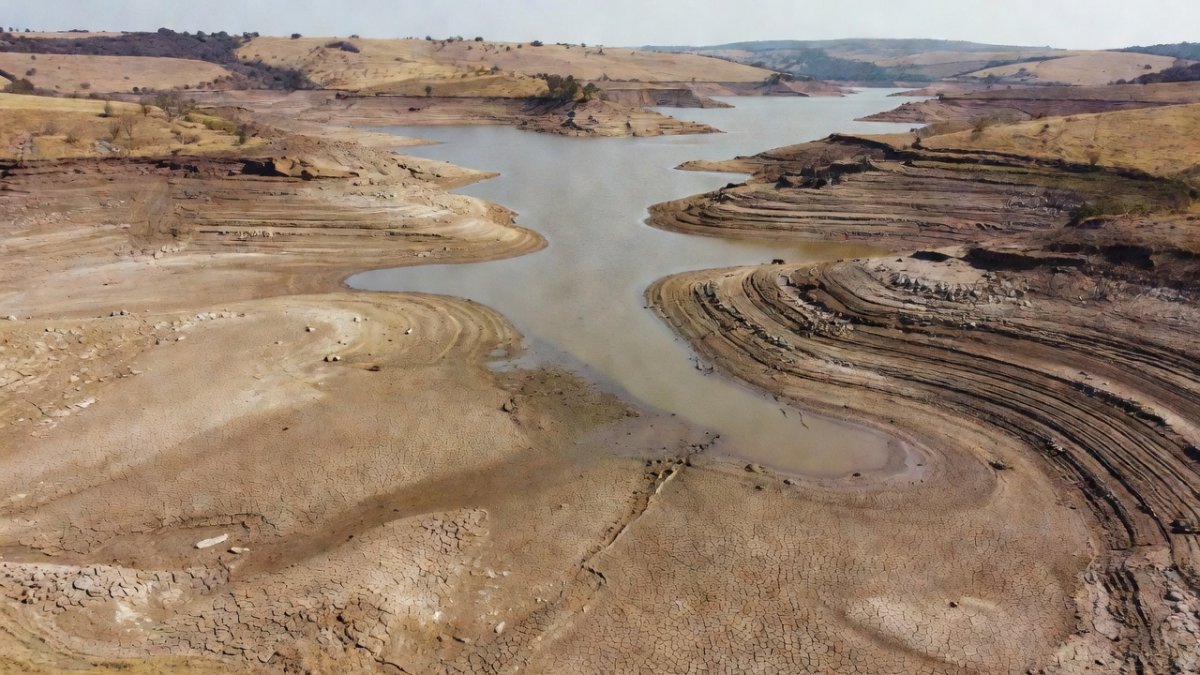
Intro: Cantareira System Triggers Official Alert at 39.87% Useful Volume
The Cantareira System, São Paulo’s primary water lifeline, entered the official “alert” phase at the end of June 2026 with just 39.87% useful volume. This marks a sharp decline from 40.52% recorded in May 2026 and represents the lowest levels seen in a decade. For the 22 million residents of Greater São Paulo who rely on Cantareira for roughly half their supply, the alert signals mandatory restrictions and heightened vulnerability. The drop follows an already alarming March 2026 reading near 37%, pushing the system to historic lows not witnessed since the devastating 2014-2015 water crisis. State utility Sabesp, recently privatized, now operates under mandatory reductions in water withdrawal. The Agência Nacional de Águas has authorized temporary increases in capture from the Paraíba do Sul River basin to supplement dwindling stocks. These measures underscore the severity of Brazil’s worst drought in over 90 years, where extreme heatwaves and shifting rainfall patterns converge to threaten daily water access across Latin America’s largest metropolis.
The Reservoir Crisis: Comparing 2026 Lows to the 2014-2015 Catastrophe
Reservoir data reveals a deepening crisis across São Paulo state. While Guarapiranga and Alto Tietê showed modest improvement from summer rains, Cantareira ended the season at its lowest point in ten years. The 39.87% alert threshold triggers coordinated withdrawal cuts by Sabesp, directly affecting millions. This situation echoes the 2014-2015 crisis yet arrives amid stronger climate pressures. NASA Earth data already documents declining groundwater aquifers in Brazil’s key agricultural regions, compounding surface shortages. The Paraíba do Sul authorization provides temporary relief but cannot offset the structural deficit. With other reservoirs unable to fully compensate, authorities face difficult allocation choices between urban consumption, agriculture, and industry. The privatization of Sabesp adds political tension, as critics argue profit motives may influence drought response speed. Data from the end of June 2026 confirms the trajectory: continued decline without substantial rainfall will push the system below critical operational thresholds, risking rationing that could last months and disrupt the daily lives of 22 million people.
Amazon Rivers at Risk: Rapid Drops in Solimões and Rio Negro Forecasts
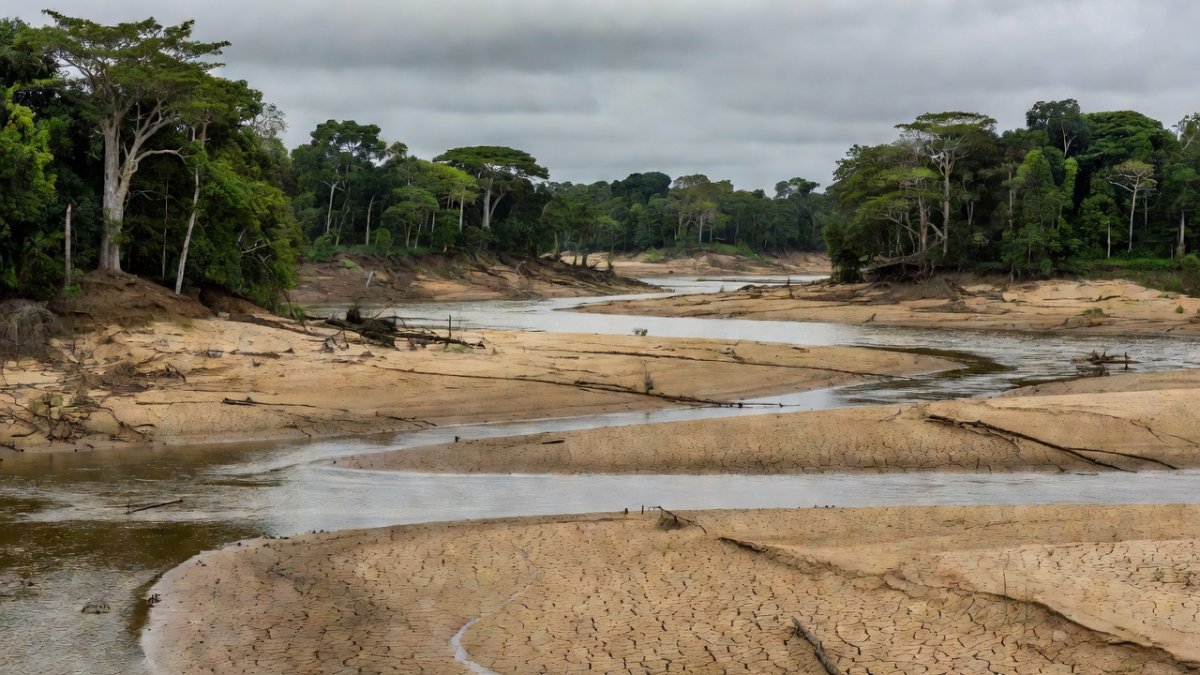
Far from São Paulo, the Amazon basin faces parallel collapse. The Rio Solimões at Tabatinga plunged from 7.20 meters on July 1 to 7.04 meters on July 3, 2026, according to Serviço Geológico do Brasil monitoring. The SGB/CPRM now warns that the Rio Negro could reach historic low levels before year-end. Smoke from returning fires already blankets Manaus, signaling the early onset of the dry season crisis. Low flows on the Rio Madeira have forced downstream dams, including Santo Antônio and Jirau hydropower plants, to curtail operations. Scientists note that a strengthening El Niño in the second half of 2026 could persist into 2027, historically suppressing Amazon rainfall while paradoxically increasing rain in southern Brazil. These river declines directly threaten navigation, fisheries, and indigenous communities. The rapid three-day drop on the Solimões illustrates how quickly conditions can deteriorate, leaving little time for adaptation. With groundwater aquifers also shrinking, the combined surface and subsurface stress creates a regional emergency that extends far beyond urban reservoirs.
Hydropower Crunch: 60% Dependency Meets Thermal Plant Reliance
Brazil’s electricity matrix remains approximately 60% hydro-dependent, making the drought an immediate energy security threat. Several dams have already been taken offline due to insufficient water, forcing the Operador Nacional do Sistema Elétrico to intensify reservoir monitoring. Reduced hydro output compels greater reliance on costlier thermal plants, driving up energy prices for consumers and industries alike. Government auctions increasingly favor new gas-fired capacity to mitigate hydro variability, yet this shift raises long-term emissions concerns. The Rio Madeira low flows exemplify the problem: Santo Antônio and Jirau plants cannot generate at full capacity, tightening supply across the national grid. With El Niño projected to strengthen through 2027, planners anticipate prolonged stress on the hydro fleet. The combination of low reservoir levels in the southeast and Amazon river declines creates simultaneous pressure points. Higher thermal generation costs ultimately pass to households and businesses, illustrating how water scarcity translates directly into economic strain across Latin America’s largest economy.
Government Response: Marina Silva’s War Room and Privatization Debate
The Ministério do Meio Ambiente under Marina Silva convened a “war room” early in 2026 to coordinate drought and fire response. Record numbers of brigadistas have been hired, additional helicopters deployed, and funding expanded through the Fundo Amazônia. These measures reduced burned area in 2025, yet officials acknowledge 2026 will prove more challenging. Political debate intensifies around the crisis roots. Critics link the emergency to climate change, alleged mismanagement, and the recent privatization of Sabesp. Opposition politicians blame the governor’s environmental stance for weakening preparedness. The ANA’s exceptional Paraíba do Sul authorization reflects urgent improvisation, while Sabesp’s mandatory withdrawal reductions test the privatized utility’s operational capacity. Despite expanded brigadista deployment, returning smoke over Manaus shows firefighting resources remain stretched. The war room approach signals federal recognition of the multi-dimensional threat, yet underlying governance tensions continue to shape public discourse on whether current policies adequately protect Brazil’s water and energy security.
The Climate Driver: El Niño and Deforestation Feedback Loop
Extreme heatwaves driving this drought would be virtually impossible without climate change. Amazon deforestation reduces the forest’s ability to generate rainfall through “flying rivers,” creating a dangerous feedback loop. NASA data confirms declining groundwater in agricultural zones, while 2023-2024 El Niño drought already produced measurable shifts in forest emissions. Scientists now link ocean temperature anomalies to a potentially strong El Niño for 2026-2027, which historically cuts Amazon precipitation. The rapid Solimões drop and Rio Negro forecast reflect these altered dynamics. Deforestation compounds El Niño effects by diminishing moisture recycling, further stressing reservoirs like Cantareira. This interplay between global climate patterns and local land-use change accelerates the crisis beyond historical precedents. With the drought already the worst in over 90 years, continued forest loss risks locking Brazil into more frequent and severe water emergencies, threatening both urban supply and hydropower stability across the continent.
What This Means for Latin America: Regional Comparisons and Shared Risks
Brazil’s drought reverberates across Latin America. Andean glaciers continue retreating, reducing dry-season flows for downstream nations, while the Pantanal faces intensified fire risk from similar climate patterns. NASA groundwater declines in Brazilian agricultural regions mirror aquifer stress reported in neighboring countries. The 60% hydro dependency crisis offers a cautionary model for nations reliant on mountain and river systems. El Niño’s dual effect—drying the Amazon while increasing southern rainfall—highlights uneven regional impacts that complicate coordinated response. Low Rio Madeira flows affecting Santo Antônio and Jirau dams demonstrate how one basin’s shortage cascades into energy markets serving multiple countries. Expanded firefighting efforts in Brazil provide lessons, yet the scale of 2026 challenges suggests shared vulnerability. From São Paulo’s 22 million residents to Amazonian communities and Andean valleys, the data points to interconnected water, energy, and climate risks that demand regional cooperation beyond national borders.
The Bottom Line
Brazil’s 2026 drought, anchored by the Cantareira 39.87% alert and Amazon river collapses, exposes the convergence of climate change, deforestation, and infrastructure strain. With El Niño strengthening, thermal plant reliance rising, and political debates over Sabesp privatization continuing, the crisis threatens water for 22 million and electricity for the nation. Every data point—from the Solimões drop to groundwater declines—signals that without aggressive mitigation, Latin America faces escalating water and energy insecurity in the years ahead. By Elena Vasquez, Staff Writer
This article was produced with AI-assisted research and editorial support. Reporting is based on sources cited in the article.
What's Your Reaction?
 Like
0
Like
0
 Dislike
0
Dislike
0
 Love
0
Love
0
 Funny
0
Funny
0
 Wow
0
Wow
0
 Sad
0
Sad
0
 Angry
0
Angry
0

Latin America Correspondent at Global1.News. Based in Mexico City, covering politics, economics, energy, and culture across the region. Brings an on-the-ground perspective to stories spanning from the Rio Grande to Patagonia.














Comments (0)