
Trump at G7: Iran Deal Signed, Netanyahu Blasted, and the World Shifts
The G7 Stage in Évian Sets the Scene for Trump's High-Stakes Gambles Évian-les-Bains, France, June 16, 2026. The lakeside resort that usually hosts spa tourists and mineral water bottling tours turned into a fortress of global power plays today as Donald Trump dominated the G7 summit with three moves that upended expectations on Iran, Israel, and Ukraine. Forget the polite phot
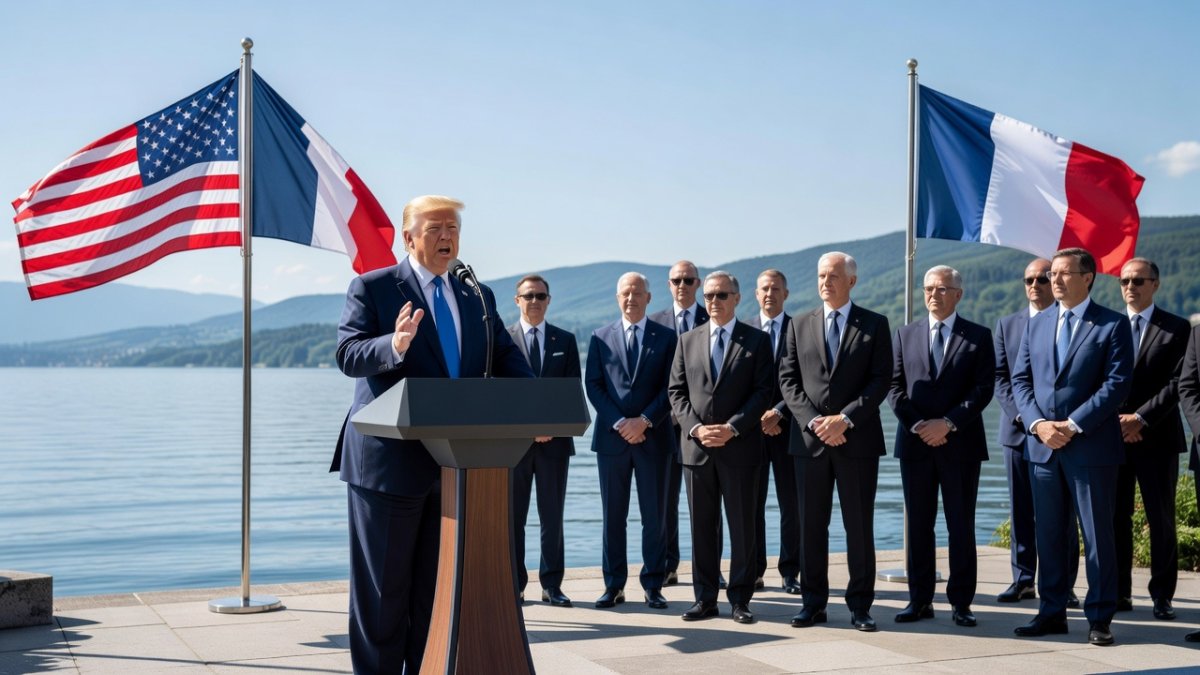
The G7 Stage in Évian Sets the Scene for Trump's High-Stakes Gambles
Évian-les-Bains, France, June 16, 2026. The lakeside resort that usually hosts spa tourists and mineral water bottling tours turned into a fortress of global power plays today as Donald Trump dominated the G7 summit with three moves that upended expectations on Iran, Israel, and Ukraine. Forget the polite photo ops and scripted communiqués. This was Trump doing what he does best: forcing the room to react to his timeline, not the other way around. As an Atlanta news anchor who's watched too many presidents talk tough and deliver mush, I have to say this summit felt different. The man who once called the Iran deal a disaster just signed an interim version electronically, then turned around and dressed down Benjamin Netanyahu in public. Add a blunt message to Russia via Volodymyr Zelenskyy, and you've got the kind of day that makes cable news producers cancel their dinner plans.
The electronic signing of the US-Iran interim peace deal happened in a secure side room at the Évian conference center around 2:15 p.m. local time. No grand ceremony, just Trump and Iranian Foreign Minister Abbas Araghchi confirming signatures on tablets linked through encrypted channels. The deal freezes Iran's uranium enrichment at current levels for 120 days, opens limited IAEA inspections at three sites, and lifts some secondary sanctions on oil exports in exchange for verifiable steps. Critics will call it weak, and they're not entirely wrong. But let's cut through the noise: this is the first direct US-Iran agreement since the JCPOA collapse, and it came together faster than anyone predicted because Trump apparently decided sanctions alone weren't delivering the leverage he wanted.
US-Iran Deal Lands Electronically While Hormuz Options Stay on the Table
France and Germany wasted no time signaling they would back a naval mission in the Strait of Hormuz if the interim deal holds past the first 30 days. French President Emmanuel Macron told reporters the European powers are prepared to contribute frigates and surveillance assets to keep shipping lanes open, provided Iran demonstrates compliance on enrichment caps. German Chancellor Olaf Scholz echoed the point in a joint statement that managed to sound both supportive and cautious, the usual European two-step. For Atlanta families paying $4.19 a gallon at the pump last week, this matters. Hormuz chokepoint stability directly hits gas prices and supply chains that run through Georgia ports. Trump knows this. He mentioned energy costs twice in his post-signing remarks, framing the deal as a win for American drivers rather than some abstract foreign policy trophy.
Iranian Foreign Minister Araghchi used the moment to draw a hard line on Lebanon. In a statement released through Iran's mission in Geneva, he warned that Israel's ongoing military presence in southern Lebanon violates the spirit of the new interim agreement. The language was careful but pointed: any expansion of Israeli operations risks triggering Iranian responses that could unravel the 120-day freeze. This is classic Iranian positioning. They sign one thing, then immediately tie it to another theater. Trump didn't bite on the Lebanon question during his own briefing, but the tension was obvious. The deal is narrow by design, yet the region refuses to stay narrow.
Trump Slams Netanyahu Over Beirut Strike and Lebanon Invasion
The sharpest moment came when Trump publicly criticized Netanyahu over the "vicious" Beirut strike last week and said he was "not happy" with Israel's Lebanon invasion. Standing at a joint appearance with Macron, Trump called the strike that killed dozens of civilians "disproportionate and poorly timed." He added that the broader ground operation in Lebanon was complicating the new Iran arrangement. This is not the Trump of 2019 who moved the embassy to Jerusalem and green-lit Golan recognition. This is a version willing to distance himself from Netanyahu when it serves the larger play. Whether that play is genuine de-escalation or just leverage for future arms sales remains to be seen.
Israeli officials are already pushing back hard. A senior aide to Netanyahu told reporters in Jerusalem that Trump's comments were "disappointing and disconnected from the reality on the ground." The Beirut strike, they insist, targeted Hezbollah command infrastructure after repeated rocket attacks on northern Israel. Trump's willingness to criticize anyway shows he is prioritizing the Iran channel over the traditional US-Israel alignment on Lebanon operations. For viewers in Georgia who remember the 2006 war and the 2024 escalations, this feels like another chapter in a conflict that never quite ends. Trump betting he can manage both the Iran freeze and Israeli frustration at once is the kind of high-wire act that either cements his legacy or blows up in everyone's face.
Trump-Zelenskyy Meeting Delivers Blunt Message to Russia
The third major development unfolded in a 45-minute bilateral with Zelenskyy. Trump reportedly told the Ukrainian president that Russia needs to "make a deal" and that prolonged fighting only benefits Beijing and Tehran. No specific territorial concessions were floated publicly, but the tone was unmistakably transactional. Trump has long argued that endless aid without a path to negotiation is bad business. Today he made that case directly to Zelenskyy's face while European leaders listened through interpreters. The Ukrainian leader emerged looking grim but not surprised. He knows Trump's preference for quick exits from quagmires.
European reaction split along predictable lines. Macron and Scholz emphasized continued support for Ukraine's defensive capabilities even as they welcomed any diplomatic opening. Polish and Baltic leaders were quieter, clearly worried that Trump's pressure on Zelenskyy could translate into reduced US security guarantees. For an American audience, the calculation is simpler: how many more billions in weapons packages before someone forces a negotiation that sticks? Trump appears ready to find out. He floated the idea of a trilateral framework involving the US, Ukraine, and Russia within 60 days, though details remain thin. The man who ended the Afghanistan withdrawal on his watch is now signaling he wants the Ukraine file closed on his terms too.
Global Ripples and Domestic Politics Collide
Back home, reactions are already pouring in along partisan lines. Senate Democrats called the Iran interim deal reckless and lacking congressional oversight. House Republicans praised the direct engagement while quietly worrying about Netanyahu's political fallout. Georgia's own congressional delegation split, with some members highlighting potential energy price relief and others warning that any deal with Tehran risks repeating past mistakes. The Atlanta business community, always sensitive to shipping costs through Savannah and Charleston, will watch Hormuz developments closely. A stable interim agreement could ease insurance rates on tankers. A collapse could send them spiking again.
What stands out is Trump's willingness to manage multiple contradictions at once. He signs with Iran while scolding Israel. He pushes Zelenskyy toward talks while European allies hedge on Hormuz patrols. This is not the foreign policy of careful alliance management. It is the foreign policy of a dealmaker who believes leverage shifts daily and that public criticism can be a tool rather than a liability. Whether that approach produces durable results or just another round of headlines remains the open question. The next 120 days will tell us which version of Trump showed up in Évian.
The summit continues tomorrow with climate and trade sessions that now feel like afterthoughts. The real story left the room the moment those electronic signatures were confirmed and Trump decided Netanyahu needed a public reality check. In a town built on mineral water and quiet diplomacy, the former president just turned the volume all the way up again.
By Jessica Ali, Lead Anchor — Global 1 NewsThis article was produced with AI-assisted research and editorial support. Reporting is based on sources cited in the article.
What's Your Reaction?
 Like
0
Like
0
 Dislike
0
Dislike
0
 Love
0
Love
0
 Funny
0
Funny
0
 Wow
0
Wow
0
 Sad
0
Sad
0
 Angry
0
Angry
0

Editor-in-Chief at Global1.News. Atlanta-based journalist who cuts through the BS and tells it like it is. Lead anchor, host, and the voice you hear when the spin stops and the truth starts.












Comments (0)