
Springboks Thrash England 45-21 at Ellis Park Nations Opener
The Electric Opening: 17-0 Lead in 12 Minutes The Ellis Park crowd erupted from the first whistle as the Springboks tore into England with ruthless intent on July 4 2026. Thomas du Toit crossed for the opening try at the three-minute mark, setting the tone for a blistering start that left the visitors reeling. Within six minutes Cheslin Kolbe had added his name to the scoreshee

The Electric Opening: 17-0 Lead in 12 Minutes
The Ellis Park crowd erupted from the first whistle as the Springboks tore into England with ruthless intent on July 4 2026. Thomas du Toit crossed for the opening try at the three-minute mark, setting the tone for a blistering start that left the visitors reeling. Within six minutes Cheslin Kolbe had added his name to the scoresheet, and by the twelfth minute Kurt-Lee Arendse had completed a stunning hat-trick of early tries that gave South Africa a commanding 17-0 advantage.
This opening burst echoed the kind of explosive home performances that have defined Springbok rugby in Johannesburg over the years. The absence of Siya Kolisi and Eben Etzebeth did nothing to blunt the attack, with Pieter-Steph du Toit stepping up as captain and driving the forward momentum from the outset. Fans in the stands waved flags and sang with full voice, creating an atmosphere that SuperSport commentators described as electric even before the quarter-hour mark.
The tactical discipline shown by the Boks in those opening exchanges highlighted the depth available in the squad. Each try came from structured phases that punished England’s early errors, with the backline linking smoothly to exploit space on the edges. Kolbe’s conversion success rate began to build as he slotted the first of his five successful kicks from seven attempts.
Local supporters at Ellis Park have long cherished these fast starts against northern hemisphere sides, and this one felt particularly special given the Nations Championship context. The 52,790-strong attendance created a wall of sound that seemed to lift every Springbok carry. England struggled to gain any foothold as the Boks dominated territory and possession in those frantic first twelve minutes.
Analysis of the opening period shows how the forward pack laid the platform for the three quick scores. Du Toit’s try came from a powerful rolling maul, while Kolbe and Arendse finished clinical backline moves that stretched the English defence thin. The early points put immediate pressure on England’s game plan and forced them into reactive mode for the remainder of the half.
From a South African perspective, such dominance at Ellis Park reinforces the venue’s status as a fortress for the Springboks. The crowd’s energy fed directly into the players’ intensity, with every tackle and carry met by roars that rolled across the stands. This start positioned the Boks perfectly for what promised to be a statement victory in the new competition.
The contrast between the clinical execution and England’s disjointed response was stark. South Africa’s preparation clearly paid dividends as the team moved the ball wide with purpose and finished opportunities without hesitation. By the time the scoreboard read 17-0, the home supporters were already dreaming of a big margin.
Historical clashes at Ellis Park have often featured similar fast starts, and this one continued that proud tradition. The Boks used the early momentum to settle into their structures, allowing new combinations to gel quickly under the guidance of captain du Toit. The opening twelve minutes set a benchmark for attacking rugby that the rest of the match would build upon.
England's Fightback — Genge and Martin Tries, 17-14 at Half-Time
England refused to fold after the early onslaught and mounted a determined response that brought them back into the contest by half-time. Ellis Genge powered over for a try in the thirty-sixth minute, and George Martin added another in the second minute of added time to make the score 17-14 at the break. The visitors showed resilience that kept the Ellis Park faithful on edge despite the Springboks’ bright beginning.
The fightback demonstrated England’s ability to capitalise on any Springbok lapses in concentration. Fin Smith converted all three of his attempts, including the two scores that narrowed the gap significantly. South African supporters watched nervously as the lead shrank, aware that many past home games had turned on similar momentum shifts.
Paul de Villiers, making his Test debut at flanker after a late call-up for the injured Kolisi, played a key role in stemming the English surge. His physical presence helped the Boks regain some control before the interval, even as the scoreline tightened. The debutant’s work rate provided a glimpse of the next generation stepping up in crucial moments.
From the stands the atmosphere remained passionate, with fans urging the Springboks to regroup during the break. The URC experience of several players helped them manage the pressure, drawing on lessons from high-stakes domestic derbies. England’s tries came from forward drives that tested the Bok scrum and lineout, areas that had looked dominant earlier.
The half-time score of 17-14 reflected a contest that had swung from one-sided to competitive. South Africa knew they had let England back in through unforced errors, yet the platform built in the first twelve minutes remained intact. The crowd’s energy never dipped, instead turning into vocal encouragement for a stronger second-half display.
Coaching staff on the Bok bench used the interval to reinforce defensive structures that had been breached. The fightback served as a reminder that no lead is safe against a side of England’s quality, especially in a Nations Championship match where every point carries campaign significance. The Boks headed into the sheds with work still to do.
Local perspective at Ellis Park highlighted how these comebacks often galvanise the home team rather than derail them. Supporters recalled previous encounters where the Springboks responded with renewed vigour after being challenged. The 17-14 scoreline at half-time set up a compelling second period under the Johannesburg lights.
England’s two tries showed their threat from set-piece and close-range carries, but the Boks’ overall territorial edge kept them in front. The atmosphere crackled with anticipation as fans anticipated a response that would reassert South African dominance in the second half.
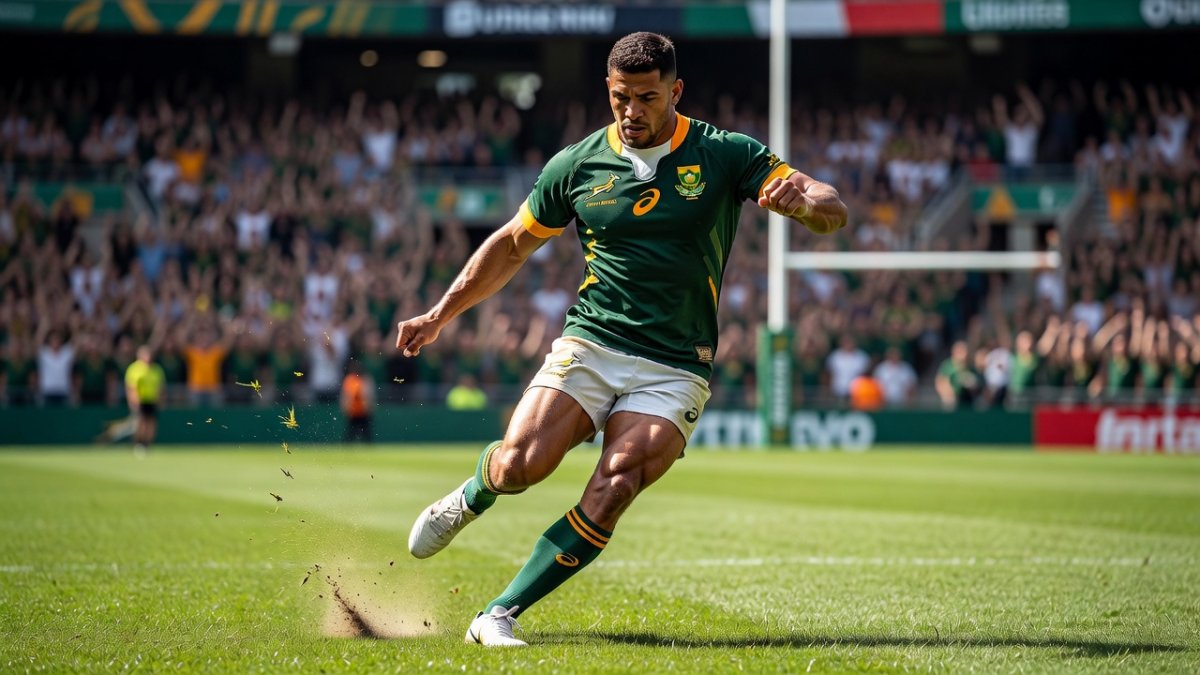
Second-Half Dominance — Williams, Kriel Tries, Kolbe's All-Round Masterclass
The Springboks emerged after half-time with renewed purpose and quickly extended their lead through Grant Williams’ try in the forty-fifth minute. Jesse Kriel added another in the fifty-seventh minute as the Boks began to pull away once more. Cheslin Kolbe delivered an all-round masterclass that included his earlier try, five conversions, and several match-turning defensive hits that halted English momentum.
This period showcased the depth and conditioning of the South African squad. Malcolm Marx played the full eighty minutes and contributed nineteen tackles alongside his seventy-third-minute try, while the team capitalised on two yellow cards to England’s Tommy Freeman and Guy Pepper that left the visitors down to thirteen men late on. The numerical advantage allowed the Boks to stretch the lead further with tries from Ben-Jason Dixon and Malcolm Marx.
Kolbe’s defensive interventions proved decisive in turning potential English attacks into turnover ball. His work rate across both ends of the field earned widespread praise from the Ellis Park faithful and underlined why he remains a cornerstone of the Springbok backline. The 45-21 final score reflected the Boks’ ability to respond to adversity with clinical finishing.
From a tactical viewpoint, the second half demonstrated improved discipline and territorial control. Manie Libbok orchestrated play superbly at flyhalf without kicking duties, freeing the backline to focus on running rugby that thrilled the home crowd. The atmosphere built to a crescendo as each additional try was celebrated with songs and flag-waving that echoed across Johannesburg.
The dominance after the break highlighted how the Springboks use their bench and forward power to wear down opponents. Jasper Wiese’s gain-line presence and Cameron Hanekom’s eleven tackles from the flank provided the platform for the backs to flourish. England’s yellow cards in the seventy-first and seventy-third minutes accelerated the collapse as the Boks ran in further scores.
SA Rugby supporters at the ground understood the significance of this response. It reinforced the team’s reputation for second-half resilience, a trait that has carried the Springboks through many tight contests on home soil. The 45-21 result stood as a statement of intent in the opening round of the Nations Championship.
Kolbe’s performance encapsulated the all-round excellence required at this level. His boot kept the scoreboard ticking while his defensive reads prevented England from mounting another serious comeback. The crowd’s appreciation was audible every time he touched the ball.
Overall the second half belonged to South Africa as they turned a narrow lead into a comprehensive victory. The tries from Williams, Kriel, Marx and Dixon, combined with Kolbe’s influence, ensured the Ellis Park faithful left satisfied after a hard-fought but ultimately dominant display.
Player Performances — De Villiers Debut, Willemse 50th Cap, Marx 80-Minute Shift, Pieter-Steph du Toit's 21 Tackles
Paul de Villiers marked his Test debut with a composed display at flanker that belied his late call-up for the injured Siya Kolisi. The young player fitted seamlessly into the back row alongside Cameron Hanekom and contributed to the defensive effort that limited England’s opportunities after the break. His performance suggested a bright future in the green and gold.
Damian Willemse reached his fiftieth Test cap with a superb display from fullback that provided stability and attacking spark throughout the eighty minutes. His distribution and counter-attacking threat complemented the forward platform, earning him quiet respect from teammates and fans alike at Ellis Park.
Malcolm Marx delivered an extraordinary eighty-minute shift that included nineteen tackles and a late try. The hooker’s work rate set a standard for endurance that inspired the rest of the pack, particularly as the game opened up following the English yellow cards. His contribution was central to maintaining pressure on the visitors.
Captain Pieter-Steph du Toit led by example with twenty-one tackles and a strong carrying game that kept the Boks on the front foot. His leadership in the absence of Kolisi and Etzebeth proved vital in organising the defence and ensuring the team stayed structured during England’s fightback period.
Damian de Allende was named Player of the Match for his powerful midfield presence that created space for the outside backs. His physicality in contact and ability to offload under pressure epitomised the Springbok style that thrilled the Johannesburg crowd. The centre’s display provided the link between the forwards and the finishing threats out wide.
Jasper Wiese earned an 8.5 out of ten rating for his dominant gain-line work, while the entire forward unit showed the benefits of consistent URC exposure. The combination of experience and emerging talent gave the Springboks the edge in a physically demanding contest against a determined England side.
From the South African fan perspective, these individual performances reinforced faith in the squad’s depth. Supporters at Ellis Park celebrated each player’s contribution with chants that reflected the collective pride in the Springbok jersey. The 45-21 victory was built on these collective efforts rather than any single standout moment.
The milestone of Willemse’s fiftieth cap added emotional weight to an already memorable afternoon. Combined with de Villiers’ debut, the match showcased the transition and continuity that define modern Springbok rugby at home venues like Ellis Park.
Nations Championship Implications — What This Means for the Campaign, Next up Scotland at Loftus
The 45-21 victory over England gives the Springboks a strong platform in the opening round of the Nations Championship. The bonus-point win, achieved despite the absence of two key leaders, signals that the squad is ready to compete for the title from the first match onward. Points secured at Ellis Park will prove valuable as the campaign unfolds.
Attention now turns to the next fixture against Scotland at Loftus Versfeld, where the Boks will look to build further momentum. The Pretoria venue has its own rich history of passionate support, and fans are already anticipating another high-tempo performance against the Scots. The result against England provides confidence that the team can handle the physical demands of back-to-back Tests.
The Nations Championship represents a new chapter for South African rugby, and this opening statement victory sets a positive tone. The ability to overcome a half-time challenge and finish strongly with fourteen points in the final quarter demonstrates the squad’s championship mentality. SASCOC and SA Rugby will view this as an ideal start to the international window.
Local context at Ellis Park reminded everyone of the unique atmosphere that home matches create for the Springboks. The 52,790 supporters witnessed a performance that blended attacking flair with defensive grit, qualities that will be essential as the team travels to face Scotland. The win keeps South Africa in pole position for early leadership in the standings.
England’s yellow cards late in the game highlighted how discipline can shift the balance in tight contests, a lesson the Boks will carry forward. The comprehensive margin also offers selection flexibility for the Scotland match, allowing coaches to manage player welfare while maintaining high standards.
From a broader perspective, the victory strengthens South Africa’s standing in world rugby and boosts domestic interest in the Nations Championship. SuperSport’s coverage reached millions across the continent, showcasing the Springboks’ continued ability to deliver exciting rugby at iconic venues like Ellis Park.
The campaign implications extend beyond the result itself. This win validates the preparation and squad rotation that allowed de Villiers and others to step up seamlessly. The focus now shifts to Loftus, where another strong performance could cement an early advantage in the Nations Championship table.
Overall the 45-21 triumph provides the perfect springboard for the remainder of the competition. South African supporters leave Ellis Park optimistic about the team’s prospects, knowing that the blend of experience and emerging talent is well equipped for the challenges ahead, starting with Scotland in Pretoria.
Tags: springboks, england, nations championship, ellis park, thomas du toit, cheslin kolbe, damian de allende, pieter-steph du toit
By Dante Williams, Staff Writer
This article was produced with AI-assisted research and editorial support. Reporting is based on sources cited in the article.
What's Your Reaction?
 Like
0
Like
0
 Dislike
0
Dislike
0
 Love
0
Love
0
 Funny
0
Funny
0
 Wow
0
Wow
0
 Sad
0
Sad
0
 Angry
0
Angry
0

West Africa/Sahel Correspondent at Global1.News. Dakar-based journalist covering politics, security, climate, and development across Francophone and Anglophone West Africa. Tells the stories of a region undergoing profound transformation.















Comments (0)