
Trump's Iran Diplomacy Reshapes Middle East as Israel Faces Regional Isolation
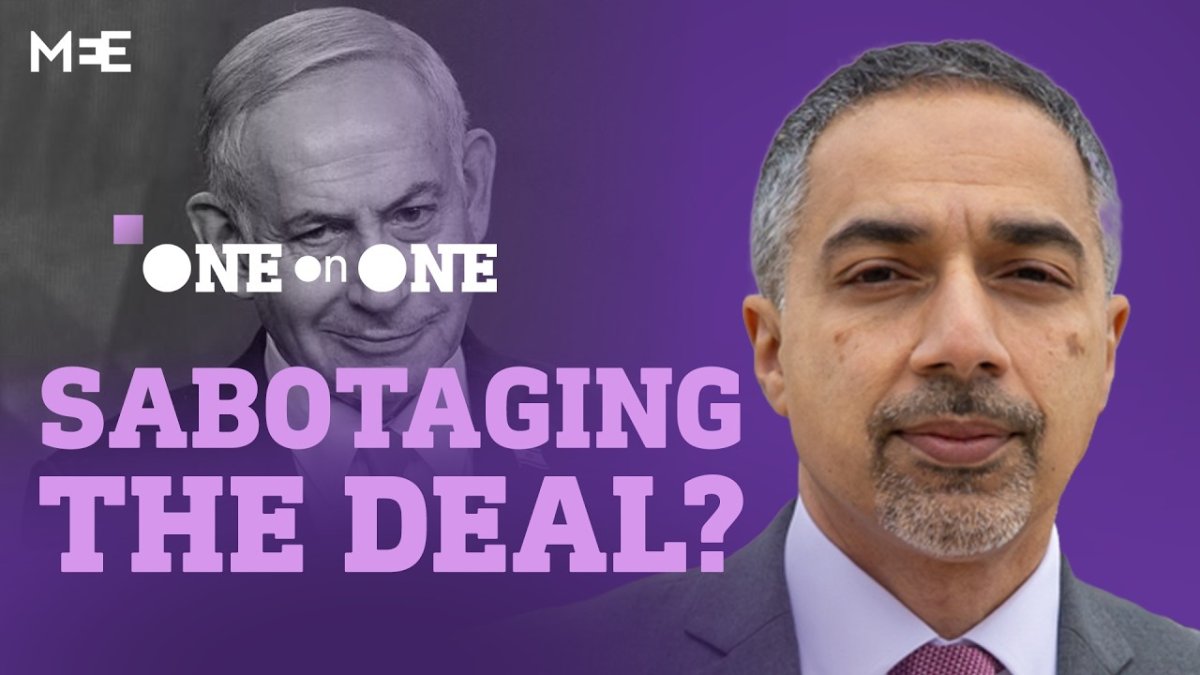
In a recent Middle East Eye YouTube video interview titled "Trump's Diplomatic Strategy with Iran | One on One," Trita Parsi, Executive Vice President at the Quincy Institute, examined the shifting contours of U.S. engagement with Tehran under the current administration. Parsi highlighted how indirect channels could alter longstanding patterns of confrontation, particularly as
A Diplomatic Shift in the Gulf
The indirect talks between the United States and Iran took place in Doha on July 1 and 2, 2026, with Qatar and Pakistan serving as mediators. Qatar's Emir Sheikh Tamim bin Hamad Al Thani hosted the delegations and reaffirmed his country's role in facilitating dialogue. Iran's technical team was led by Deputy Foreign Minister Kazem Gharibabadi, while the U.S. side included special envoy Steve Witkoff and Jared Kushner. These meetings occurred against a backdrop of heightened tensions following prior escalations, and participants focused on practical issues rather than comprehensive agreements.
Parsi's assessment in the Middle East Eye interview underscores how such mediated formats allow both sides to test intentions without immediate public commitments. The involvement of Qatar and Pakistan reflects a broader trend where Gulf states seek to manage disputes through established diplomatic networks. Historical patterns show that Qatari mediation has previously eased strains in other regional disputes, providing a template for these sessions. The presence of high-level U.S. figures signals sustained interest in stabilizing energy routes and financial channels.
Local observers in the Gulf note that these talks coincide with increased commercial activity, as ship traffic through the Strait of Hormuz rose by 50 percent during the week of June 22 to 28. This uptick suggests early confidence in de-escalation measures. Palestinian analysts connect these developments to wider questions of regional power balances, where reduced friction between major powers might influence support for causes in the occupied territories. The format of indirect talks also allows Iran to address perceived U.S. violations of prior obligations while establishing basic communication protocols.
Further context from the video interview reveals Parsi's view that sustained channels could prevent miscalculations, especially after Iran's six-day period of national mourning for Supreme Leader Khamenei paused further diplomacy. The pause underscores how internal Iranian processes shape external engagement timelines. Gulf economies reliant on stable shipping lanes stand to benefit from any continuity in these discussions, while communities across the region monitor whether progress translates into tangible relief from sanctions pressures.
What the Doha Talks Achieved
The Doha sessions produced several concrete steps, including agreement on a communication channel and discussion of shipping through the Strait of Hormuz along with the $6 billion in frozen Iranian funds. An Islamabad memorandum of understanding also featured in the agenda. Qatar described the outcome as positive progress, with further meetings planned after the conclusion of Khamenei's funeral observances. Iran's Speaker Ghalibaf later denied IAEA inspectors access to sites at Fordow, Natanz, and Isfahan that had been subject to prior strikes, prompting IAEA chief Grossi to insist on access under existing memoranda.
One notable omission was any restriction on Iran's ballistic missile program, despite longstanding Israeli insistence on this point. Parsi observed in the Middle East Eye interview that this absence reflects a narrower U.S. focus on immediate maritime and financial issues rather than maximalist demands. The U.S. subsequently suspended certain sanctions following what officials termed good progress. These measures aim to facilitate limited economic movement while testing Iranian compliance on shipping lanes.
Reports indicate that Iran and Oman may jointly charge fees along the Strait of Hormuz, a development that could generate revenue and formalize traffic management. Such arrangements carry implications for energy markets that indirectly affect Palestinian households through fluctuating import costs for essential goods. The establishment of a communication channel provides a mechanism to address future incidents without escalation, though its durability remains to be seen after the mourning period ends.
Gharibabadi's statements emphasized Iran's priority on rectifying past U.S. non-compliance, framing the talks as an opportunity to restore balance. This perspective aligns with Parsi's analysis that incremental steps can build momentum where comprehensive deals have previously stalled. Regional actors, including those in Lebanon where a separate framework agreement with Israel is under negotiation, watch these outcomes closely for signs of shifting leverage.
Israel's Strategic Isolation
A poll indicated that 92 percent of Israelis believe Iran emerged stronger from recent confrontations, a sentiment that has unsettled Israel's military establishment. Former officials such as Eisenkot have gained ground in public surveys as questions mount over strategic direction. Arab Gulf states appear to be coordinating more closely with Tehran on energy and security matters, diminishing Israel's traditional role as a counterweight in those capitals. This realignment reduces Israel's ability to shape regional responses to shared challenges.
Parsi's commentary in the Middle East Eye video connects these trends to a broader erosion of Israeli influence, noting that diplomatic openings between Washington and Tehran accelerate existing shifts. The absence of ballistic missile constraints in the Doha talks further signals that Israeli priorities did not dominate the agenda. Military planners in Israel now confront a landscape where longstanding assumptions about deterrence require reevaluation.
Mer on Rapoport's analysis for Middle East Eye argues that any U.S.-Iran understanding weakens Israel's regional position and hastens internal political strains. Gulf capitals that once viewed Israel as a security partner now prioritize direct economic ties with Iran, particularly around Hormuz shipping fees. This pivot affects Palestinian communities by altering the diplomatic space available for advocacy on occupation-related issues, as attention turns toward new bilateral arrangements.
The shock within Israel's security apparatus stems from the realization that external alliances are fluid. Historical reliance on U.S. backing faces tests when Washington pursues parallel tracks with Tehran. Palestinian voices emphasize that such isolation could either constrain or redirect Israeli policies, though immediate effects on daily conditions in the West Bank and Gaza remain limited by the deal's narrow scope.
Netanyahu's Political Reckoning
Netanyahu's governing coalition currently polls between 50 and 53 seats, well short of the 61 needed for a majority in the Knesset. Rapoport's Middle East Eye assessment links this weakness to the diplomatic momentum in Doha, which sidelines Israeli concerns and exposes coalition fractures. Eisenkot's rising poll numbers reflect voter interest in alternative leadership amid perceptions of strategic setbacks. These domestic pressures compound as regional actors pursue independent channels with Iran.
Parsi noted in the video interview that U.S. diplomatic initiatives can accelerate internal Israeli debates by demonstrating that Washington can act without full alignment to Israeli positions. The coalition's narrow margin leaves little room for dissent, yet public confidence appears shaken by the 92 percent poll finding on Iran's perceived gains. Political analysts anticipate further turbulence once talks resume after Iran's mourning period.
The political consequences extend to policy continuity on issues such as settlement expansion and security coordination. A weakened Netanyahu may face constraints in pursuing hardline approaches if coalition partners prioritize survival over ideology. Palestinian residents in areas under Israeli control observe these developments with caution, recognizing that leadership changes in Israel have historically produced mixed results for negotiations and daily governance.
Broader regional realignment, including closer Gulf-Iran ties, further isolates Netanyahu's approach. The separate Lebanon-Israel framework talks add another layer of complexity, as they proceed without direct linkage to the Doha process. This fragmentation challenges the prime minister's ability to present a unified front on multiple fronts simultaneously.
What Gaza's Absence from the Deal Means for Palestinians
Gaza received no mention in the Doha outcomes, leaving the blockade, reconstruction needs, and civilian casualty counts unaddressed. Palestinian families continue to navigate restricted access to goods and medical supplies while awaiting any framework that might ease these conditions. The omission means that core humanitarian concerns remain outside the scope of U.S.-Iran channels, despite their potential to influence wider regional stability.
Human rights documentation shows persistent challenges in Gaza, where infrastructure damage from prior conflicts compounds daily hardships. Without provisions for reconstruction funding or eased movement, residents face prolonged uncertainty. Parsi's analysis in the Middle East Eye interview suggests that narrow diplomatic agendas often sideline Palestinian files, allowing other priorities such as shipping lanes and frozen assets to dominate.
Local economies in Gaza rely heavily on external aid and limited trade, both of which suffer when regional diplomacy bypasses these realities. The absence of Gaza from the talks reinforces patterns where Palestinian issues receive secondary attention amid great-power maneuvering. Community leaders stress that sustainable calm requires explicit attention to blockade relief and recovery programs, elements missing from current agreements.
Palestinian civil society organizations document how such exclusions affect mental health and economic prospects across generations. The focus on Hormuz traffic and sanctions relief, while significant for energy markets, does not translate into immediate improvements for families awaiting rebuilding support. This disconnect highlights the need for parallel tracks that incorporate Palestinian perspectives into future rounds of dialogue.
Analysis and Implications
Trita Parsi's assessment in the Middle East Eye interview frames the Doha process as a test of whether limited engagement can produce durable mechanisms amid competing regional interests. The establishment of communication channels offers a foundation, yet the pause for Khamenei's funeral introduces uncertainty about timelines. Broader implications include potential shifts in how Arab states balance relations with both Iran and Israel, affecting leverage on multiple files.
After the mourning period concludes, the next round of talks will reveal whether momentum on Hormuz shipping and frozen funds can extend to other areas. IAEA access disputes at Iranian nuclear sites add another variable that could influence U.S. sanction decisions. Palestinian communities watch these developments for any spillover effects on advocacy efforts, though the current framework offers little direct linkage.
The realignment of Gulf positions toward Tehran suggests a multipolar environment where no single actor dictates outcomes. This evolution challenges traditional assumptions about alliances and may create openings for new mediation roles by states such as Qatar and Oman. Parsi emphasizes that sustained dialogue reduces risks of unintended escalation, a consideration relevant to all parties navigating post-conflict recovery.
Ultimately, the test for Palestinian communities lies in whether regional de-escalation creates space for renewed attention to occupation and displacement issues. The narrow scope of the Doha talks leaves this question open, underscoring the importance of inclusive approaches in subsequent phases. Observers anticipate that economic incentives around shipping fees and asset releases will shape the immediate agenda more than wider political files. By Fatima Al-Rashid, Staff Writer
This article was produced with AI-assisted research and editorial support. Reporting is based on sources cited in the article.
What's Your Reaction?
 Like
0
Like
0
 Dislike
0
Dislike
0
 Love
0
Love
0
 Funny
0
Funny
0
 Wow
0
Wow
0
 Sad
0
Sad
0
 Angry
0
Angry
0
Gulf/MENA Correspondent at Global1.News. Based in Doha, covering Gulf politics, energy markets, diplomacy, and development across the Middle East and North Africa. Tracks the economic transformation of the Gulf states.










Comments (0)