
Springboks Beat England 45-21 in Nations Championship Opener
**Keywords:** Springboks vs England 2026, Nations Championship, Ellis Park match report, Rassie Erasmus tactics The Roar of Ellis Park Ignites a Nations Championship Classic Ellis Park pulsed with that unmistakable Johannesburg energy on a crisp July afternoon, the kind of atmosphere that reminds you why South African rugby remains the heartbeat of our nation. Fans draped in gr
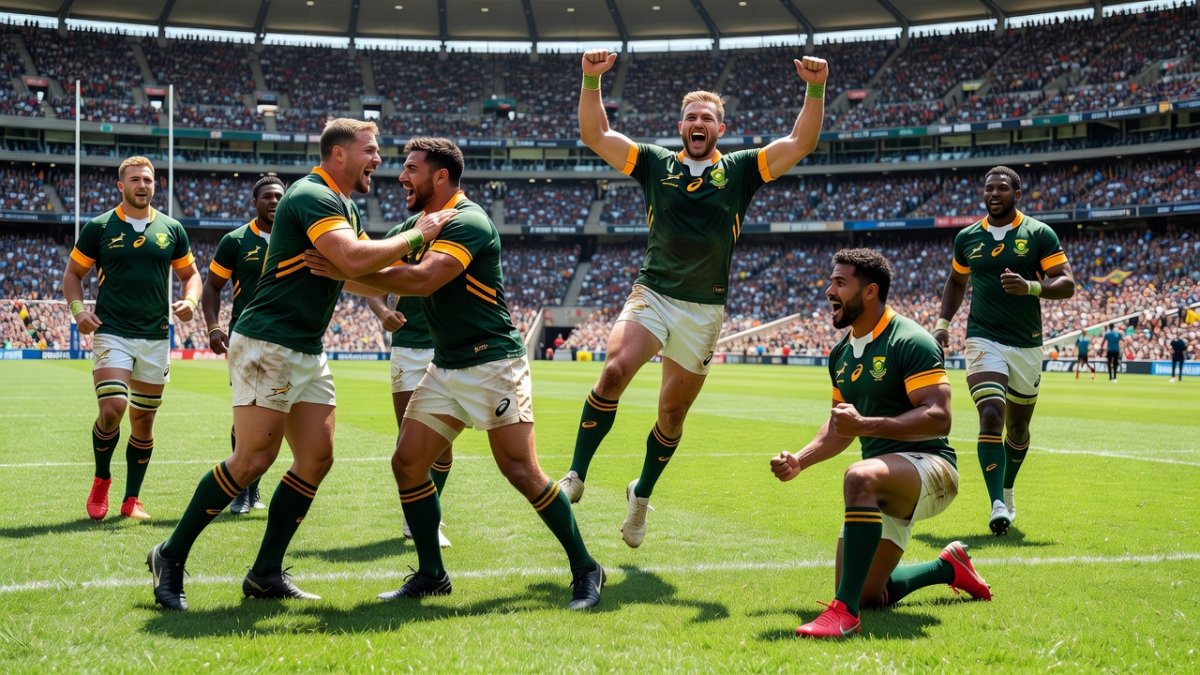
The Roar of Ellis Park Ignites a Nations Championship Classic
Ellis Park pulsed with that unmistakable Johannesburg energy on a crisp July afternoon, the kind of atmosphere that reminds you why South African rugby remains the heartbeat of our nation. Fans draped in green and gold filled the stands, their voices carrying the weight of back-to-back Rugby World Cup triumphs from 2019 and 2023. This was no ordinary Test; it marked the opening round of the new Nations Championship, a competition designed to replace the old July and November windows with something more meaningful and globally competitive.
The pre-match buzz carried extra weight because captain Siya Kolisi and lock Eben Etzebeth had been ruled out through injury just hours before kick-off. Yet the crowd refused to let that dampen spirits. Chants of “Bokke, Bokke” rolled across the pitch, connecting the professional game to the countless township fields and school grounds where transformation continues to shape our rugby identity. This match felt like a celebration of depth, not just a single result.
From the first whistle, the sense of occasion was impossible to ignore. Ellis Park has hosted so many defining Springbok moments, and on 4 July 2026 it added another chapter. The Nations Championship represents a fresh chapter for SARU, one that promises regular high-stakes rugby against the world’s best. Supporters knew they were witnessing history in the making, and they responded with full-throated passion.
Springboks Storm to a 17-0 Lead Inside Twelve Minutes
The Springboks announced their intent immediately, crossing for two tries in the opening twelve minutes to establish a 17-0 advantage. Thomas du Toit powered over from close range for the first, showcasing the forward dominance that has become a hallmark of Rassie Erasmus’ sides. Cheslin Kolbe followed soon after with a clinical finish, underlining the attacking threat that stretches across the entire 23-man squad.
England, under Steve Borthwick, looked shell-shocked as the Springboks played with tempo and precision. The early tries came from structured phases that exposed gaps in the visitors’ defensive line speed. By the time the scoreboard ticked over to 17-0, Ellis Park was already in full voice, sensing a statement performance on home soil.
Halftime arrived with the Springboks leading 17-14 after England fought back with tries from Ellis Genge and George Martin. The visitors had narrowed the gap, but the damage from that blistering start lingered. The first quarter had demonstrated exactly why South Africa remains the benchmark in world rugby, blending power with moments of individual brilliance.
Yellow Cards and Character Define a Turbulent First Half
Kurt-Lee Arendse’s yellow card in the first half tested the Springboks’ discipline at a critical moment. Reduced to fourteen men, the team had to absorb pressure from an England side desperate to build momentum. Yet the defensive structure held firm, a testament to the coaching staff’s emphasis on collective responsibility even when key attackers are sidelined.
The incident highlighted the fine margins in Test rugby, where one lapse can shift momentum. Arendse’s return after ten minutes allowed the Springboks to regain control, and the crowd responded with renewed energy. These moments often reveal the true character of a squad, and the 2026 group showed they possess the maturity to manage adversity without panic.
England’s inability to capitalise fully on the numerical advantage spoke volumes about their current struggles. This result marked their fifth successive Test defeat, a run that has tested Borthwick’s leadership. The Springboks, by contrast, used the setback as fuel, emerging from the period with their lead intact and confidence soaring.
Seven-Try Masterclass Showcases Springbok Depth
By full time the Springboks had registered seven tries through Thomas du Toit, Cheslin Kolbe, Kurt-Lee Arendse, Grant Williams, Jesse Kriel, Malcolm Marx and Ben-Jason Dixon. Cheslin Kolbe converted five of the seven attempts, adding crucial points that kept the scoreboard ticking over. Each score carried its own story of individual excellence within a cohesive team plan.
Grant Williams’ try exemplified the speed and opportunism that South African rugby has long celebrated. Malcolm Marx and Ben-Jason Dixon added forward power that wore England down in the tight exchanges. Jesse Kriel’s contribution in the outside channels reminded everyone of the experience running through this squad.
The variety of try scorers illustrated the depth that transformation and grassroots investment have delivered. Players from different backgrounds and provinces combined seamlessly, reflecting the inclusive vision that has sustained Springbok success across generations. This performance was not about one or two stars but about a system that elevates everyone.
Tactical Discipline Under Rassie Erasmus Secures Control
Rassie Erasmus once again demonstrated why he remains one of the sharpest tactical minds in the game. The Springboks mixed powerful forward carries with quick ball movement that stretched England across the width of Ellis Park. Set-piece accuracy provided a reliable platform, while the kicking game pinned the visitors deep in their own territory for long periods.
England managed a third try in the second half, yet two late sin-binnings undermined any hope of a genuine comeback. The Springboks capitalised on the extra space, maintaining composure to close out a comprehensive victory. Erasmus’ substitutions kept the intensity high, a clear sign of squad depth that few nations can match.
These tactical choices reflect years of planning that began after the 2019 World Cup triumph and continued through 2023. The class of 2026 is building its own legacy while honouring the foundations laid by previous generations. Every decision on the day reinforced the message that South African rugby evolves without losing its core identity.

England’s Fifth Straight Defeat Exposes Ongoing Challenges
Steve Borthwick’s England side left Ellis Park with plenty to ponder after another heavy defeat. The three tries they scored showed attacking intent, but defensive lapses and disciplinary issues proved costly. The two late sin-binnings allowed the Springboks to pull away decisively in the closing stages.
This result continues a difficult run for the Red Rose, who have now lost five Tests in succession. Questions around selection, game management and physical conditioning will dominate discussions back in England. For the Springboks, the victory served as validation that their methods remain effective against quality opposition.
The contrast between the two teams was stark. While England searched for answers, South Africa executed with clarity and purpose. The Nations Championship will provide further opportunities for both sides, but the Springboks have set an early benchmark that others must now chase.
Implications for SARU, the Nations Championship and Grassroots Rugby
This opening-round win carries significant weight for SARU as it navigates the new Nations Championship format. Consistent success at this level strengthens the case for increased investment in domestic structures and player pathways. The result sends a clear signal that South African rugby is ready to compete year-round, not just during traditional windows.
At grassroots level, the performance resonates deeply. Young players in townships and rural areas see role models who have risen through the same system. Transformation remains central to the story, and matches like this one reinforce the belief that opportunity and excellence can coexist when structures support both.
The broader South African sporting landscape benefits too. Rugby continues to unite communities across language and cultural lines, much like it did during the 1995 World Cup era. The 2026 Springboks are writing their own chapter while staying connected to that unifying spirit.
The Class of 2026 Carries the Springbok Legacy Forward
With Kolisi and Etzebeth absent, the squad demonstrated that leadership and quality extend well beyond any two individuals. The seven-try haul and controlled performance under pressure point to a group maturing at the right time. History shows that Springbok teams thrive when they blend experience with emerging talent, and this side appears well positioned to continue that tradition.
The Nations Championship now stretches ahead, offering regular tests against the world’s strongest nations. Early momentum from the Ellis Park victory will be invaluable. Supporters across the country will watch with pride, knowing their team represents not only sporting excellence but also the resilience and unity that define South Africa.
As the final whistle sounded and the crowd erupted once more, it was clear that 4 July 2026 had delivered more than just a scoreline. It had reaffirmed the Springboks’ place at the pinnacle of the game while inspiring the next generation to dream bigger. The journey continues, and the nation walks it together.
By Dante Williams, Staff WriterThis article was produced with AI-assisted research and editorial support. Reporting is based on sources cited in the article.
What's Your Reaction?
 Like
0
Like
0
 Dislike
0
Dislike
0
 Love
0
Love
0
 Funny
0
Funny
0
 Wow
0
Wow
0
 Sad
0
Sad
0
 Angry
0
Angry
0

Breaking News and Investigations Correspondent at Global1.News. Based in London, covering global breaking news, security, and investigative stories. Known for digging deeper and connecting the dots across continents.














Comments (0)