
Australia Tightens Under-16 Social Media Ban as Compliance Slips
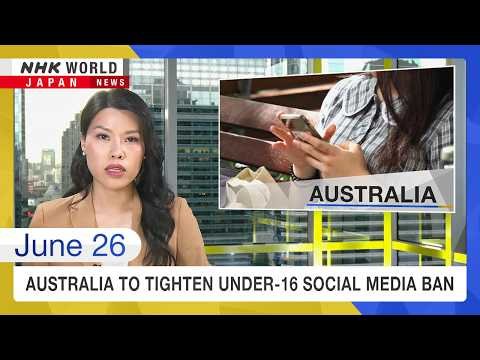
Australia is preparing to reinforce its pioneering restrictions on social media access for children under 16 following evidence that the original measures have not achieved their intended reach. Prime Minister Anthony Albanese stated that the government intends to make the existing legislation as robust as possible while ensuring it can survive potential constitutional challeng
Australia is preparing to reinforce its pioneering restrictions on social media access for children under 16 following evidence that the original measures have not achieved their intended reach. Prime Minister Anthony Albanese stated that the government intends to make the existing legislation as robust as possible while ensuring it can survive potential constitutional challenges.
The announcement arrives six months after the law first took effect in December 2025, marking Australia as the initial nation to enact such a broad prohibition targeting major platforms.
Australia's Legislative Strengthening Process
The proposed amendments include doubling the maximum financial penalties for non-compliant platforms from 49.5 million to 99 million Australian dollars. Communications Minister Anika Wells indicated that several platforms have performed only the minimum required actions since the ban began.
eSafety Commissioner Julie Inman Grant is set to receive expanded enforcement authority under the revised framework. Five platforms are currently under investigation for possible violations of the existing rules.
These changes respond directly to data showing that circumvention remains widespread. A University of Queensland study of 408 adolescents found that more than 85 percent of children aged 12 to 15 continued using restricted platforms three months after the law entered into force.
Platform Compliance and Removal Statistics
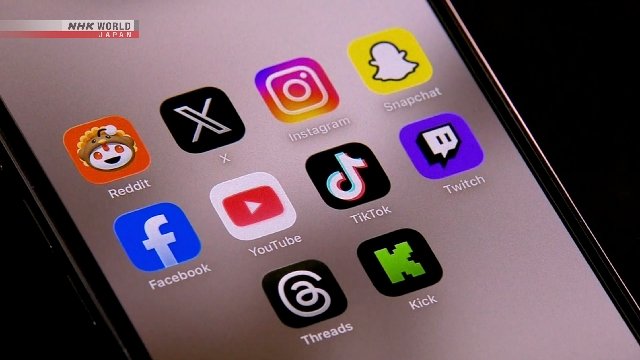
More than five million under-16 accounts have been removed, deactivated, or restricted since December 2025. The legislation applies to ten specified services: Facebook, Instagram, TikTok, YouTube, Snapchat, Threads, X, Reddit, Kick, and Twitch.
Reddit has already filed a challenge before Australia's High Court, arguing that the measure raises constitutional concerns. This litigation underscores the legal uncertainties that the government now seeks to address through stronger drafting.
Research Findings on Youth Access Patterns
Independent monitoring reveals that the initial enforcement has produced uneven results across different age groups and platforms. The 85 percent continuation rate among 12-to-15-year-olds suggests that technical workarounds and inconsistent age-assurance mechanisms have limited the ban's practical impact.
Government officials have acknowledged that simply requiring platforms to act is insufficient without corresponding verification standards and ongoing oversight.
Japan's Alternative Policy Direction
Japan's expert panel on children's social media use submitted its draft report to the Internal Affairs and Communications Ministry on June 2, 2026. The panel explicitly described a blanket age-based prohibition as undesirable, citing the varying risk profiles of individual platforms.
Instead, the panel recommended enhanced age-verification requirements tailored to specific services. Communications Minister Hayashi Yoshimasa has indicated that concrete measures will be finalized by the end of 2026 in coordination with the Children and Families Agency.
Japan's approach aligns with the common principles for safer digital environments for minors that G7 digital and technology ministers endorsed earlier in 2026. These principles emphasize proportionate, risk-based interventions rather than uniform bans.
Potential Influence on Japanese Regulatory Choices
Australia's experience with enforcement difficulties and legal pushback provides Japanese policymakers with concrete reference points. The Internal Affairs and Communications Ministry is expected to examine whether stricter verification technologies can achieve comparable safety outcomes without the implementation hurdles observed overseas.
Corporate Japan, particularly firms involved in digital identity solutions, may see increased demand if verification standards become more rigorous. The Bank of Japan and Ministry of Economy, Trade and Industry have already highlighted digital infrastructure as central to the Society 5.0 vision, creating a natural linkage between youth protection measures and broader technology policy.
Green Transformation objectives are less directly connected, yet any new regulatory framework must remain consistent with Japan's overall digital economy strategy to avoid conflicting compliance burdens on domestic platforms and international service providers operating in the Japanese market.
By Kenji Tanaka, Staff Writer
This article was produced with AI-assisted research and editorial support. Reporting is based on sources cited in the article.
What's Your Reaction?
 Like
0
Like
0
 Dislike
0
Dislike
0
 Love
0
Love
0
 Funny
0
Funny
0
 Wow
0
Wow
0
 Sad
0
Sad
0
 Angry
0
Angry
0

Japan Correspondent at Global1.News. Tokyo-based voice covering Japanese politics, technology, economy, and culture. Tracks the intersection of tradition and innovation in one of the world's most dynamic societies.















Comments (0)