
Yang Youlin Sentenced to Death: Inside China's $325 Million Nanjing Corruption Case
The Details of the Changzhou Court Verdict The court in Changzhou city delivered its ruling on Monday, imposing the death penalty on Yang Youlin for accepting more than 2.2 billion yuan in bribes across three decades of service in Nanjing. The 69-year-old former official was additionally convicted of embezzlement, abuse of power, and money laundering. These combined offenses pr
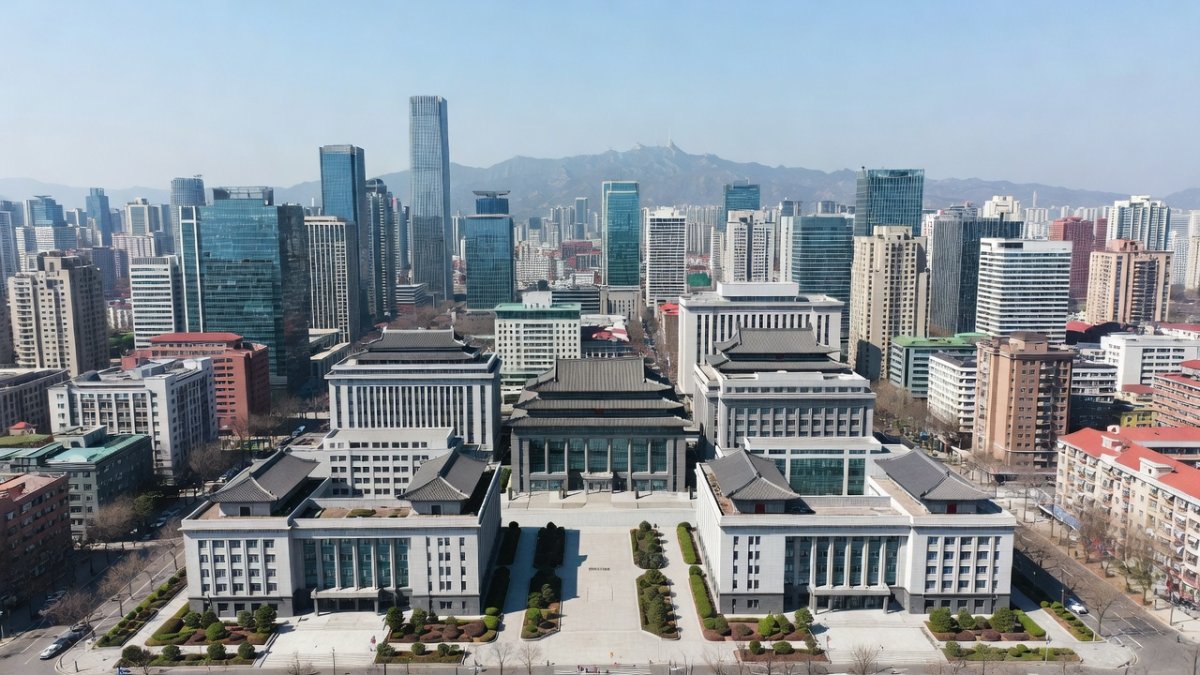
The Details of the Changzhou Court Verdict
The court in Changzhou city delivered its ruling on Monday, imposing the death penalty on Yang Youlin for accepting more than 2.2 billion yuan in bribes across three decades of service in Nanjing. The 69-year-old former official was additionally convicted of embezzlement, abuse of power, and money laundering. These combined offenses produced one of the largest sums of ill-gotten gains recorded in recent Chinese judicial proceedings, with the court emphasizing that the scale inflicted exceptionally heavy losses on state and public interests.
Yang exploited successive positions held between 1993 and 2023 to facilitate engineering contracts, land transfers, and financing arrangements for third parties. In return he received money and valuables. The Changzhou court characterized the offenses as extremely serious in nature, noting that the cumulative damage extended far beyond individual transactions into broader erosion of institutional integrity within economic and technological development sectors.
State media reported that Yang pleaded guilty during proceedings and expressed remorse in his final statement. Despite this acknowledgment, the court determined that the gravity of the crimes outweighed any procedural cooperation, resulting in the capital sentence rather than a suspended or commuted outcome.
Yang Youlin's Professional Trajectory in Nanjing
Yang Youlin spent the majority of his career focused on economic and technological development initiatives within Nanjing municipality. His roles spanned multiple administrative levels from 1993 until his retirement in 2023, granting him influence over project approvals and resource allocations critical to urban expansion and industrial growth. This prolonged tenure created repeated opportunities for the exchange of official discretion for personal enrichment.
The pattern of misconduct involved systematic assistance to external parties seeking favorable treatment in contract awards and land reallocations. Such practices directly intersected with Nanjing's push for technological advancement, where financing decisions carried significant weight in determining which enterprises secured state-backed support. The resulting corruption therefore compromised both immediate fiscal resources and longer-term developmental priorities.
Investigators uncovered that the bribes accumulated steadily over thirty years, reflecting sustained exploitation rather than isolated incidents. This continuity underscores how entrenched access within municipal economic planning enabled the extraction of funds on a scale rarely documented in single-official cases.
Placement within Xi Jinping's Anti-Corruption Framework
Yang's investigation formed part of the sustained anti-corruption campaign initiated after President Xi Jinping assumed power. The drive has extended across military structures, high-level banking institutions, and various other sectors, demonstrating consistent application of disciplinary mechanisms at senior administrative levels. Yang's case illustrates the campaign's reach into municipal economic governance, where development responsibilities intersect with substantial financial flows.
Official statements framed the prosecution as necessary to safeguard state interests against internal predation. The campaign's emphasis on high-value cases signals an intent to deter similar conduct among officials managing large-scale projects. By targeting figures whose actions produced measurable losses exceeding billions of yuan, authorities aim to reinforce accountability within the administrative apparatus responsible for implementing national development strategies.
The proceedings also highlight procedural elements of the campaign, including the role of investigations that uncover layered offenses such as money laundering alongside core bribery charges. This comprehensive approach ensures that ancillary mechanisms used to conceal gains receive equal judicial scrutiny.
Precedents for Capital Punishment in Large-Scale Economic Offenses
Death sentences for white-collar crimes remain infrequent in China, yet they occur when bribe totals surpass one billion yuan and demonstrate exceptional harm. The Changzhou ruling aligns with this threshold, as Yang's receipts exceeded 2.2 billion yuan. Such outcomes serve to delineate boundaries of acceptable conduct within officialdom, particularly where public resources allocated for infrastructure and technological programs are diverted.
Earlier instances include the 2021 execution of former finance chief Lai Xiaomin, convicted of accepting 1.8 billion yuan over ten years, and the 2024 execution of Li Jianping, an Inner Mongolia official whose embezzlement and bribes totaled more than 3 billion yuan. These cases establish a narrow but consistent category in which courts apply the ultimate penalty when sums and consequences reach extreme proportions.
In contrast, many comparable prosecutions conclude with fixed-term imprisonment or suspended death sentences that convert to life imprisonment after a defined period. Reductions have also been granted when defendants provide substantial assistance by reporting additional offenders. The Yang decision therefore reflects a deliberate judicial calibration based on the specific magnitude and persistence of the misconduct.
Assessment of Mitigating Circumstances and Final Determination
Yang provided information to authorities comparable to assistance offered in other cases that yielded sentence reductions. The Changzhou court explicitly acknowledged this contribution yet concluded that the offenses remained too grave for leniency. This determination rested on the cumulative scale of losses to state and public interests, which the court deemed insufficiently offset by the cooperation rendered.
The ruling underscores that judicial discretion in corruption matters weighs the quality of assistance against the objective harm inflicted. When the latter predominates, as in this instance, courts maintain the capital sentence to preserve the deterrent function of the law. Yang's guilty plea and expression of remorse were noted but did not alter the outcome under this balancing test.
Such reasoning illustrates the campaign's commitment to proportionality calibrated to case severity. Officials who facilitate large-scale diversion of development funds face heightened exposure to maximum penalties, even when they later assist investigations, thereby reinforcing expectations of sustained integrity throughout administrative careers.
Implications for Domestic Governance and Institutional Integrity
The sentencing reinforces the linkage between anti-corruption enforcement and the protection of resources earmarked for economic and technological advancement. Nanjing's development trajectory, shaped in part by Yang's former responsibilities, suffered direct setbacks through the diversion of funds that could have supported legitimate projects. Restoring confidence in such processes requires visible accountability at the highest municipal levels.
By publicizing the details of contract manipulation and land-transfer irregularities, the case supplies concrete illustration of how individual misconduct can undermine broader state objectives. The court's emphasis on exceptionally heavy losses signals that governance reforms must address vulnerabilities in financing mechanisms tied to technological development zones and urban planning authorities.
Over the longer term, consistent application of severe penalties in comparable cases may contribute to behavioral shifts among officials managing similar portfolios. The Yang outcome supplies a reference point for evaluating the effectiveness of ongoing disciplinary efforts in preserving the integrity of China's administrative framework for economic governance.
By Prof. Marcus Chen, Staff WriterThis article was produced with AI-assisted research and editorial support. Reporting is based on sources cited in the article.
What's Your Reaction?
 Like
0
Like
0
 Dislike
0
Dislike
0
 Love
0
Love
0
 Funny
0
Funny
0
 Wow
0
Wow
0
 Sad
0
Sad
0
 Angry
0
Angry
0

World Politics Analyst at Global1.News. Based in Beijing, covering US-China relations, global trade, and geopolitical strategy. Brings deep analytical perspective to the power dynamics shaping international affairs.













Comments (0)