
Japan Oil Convoy Exits Hormuz Strait on July 6 2026
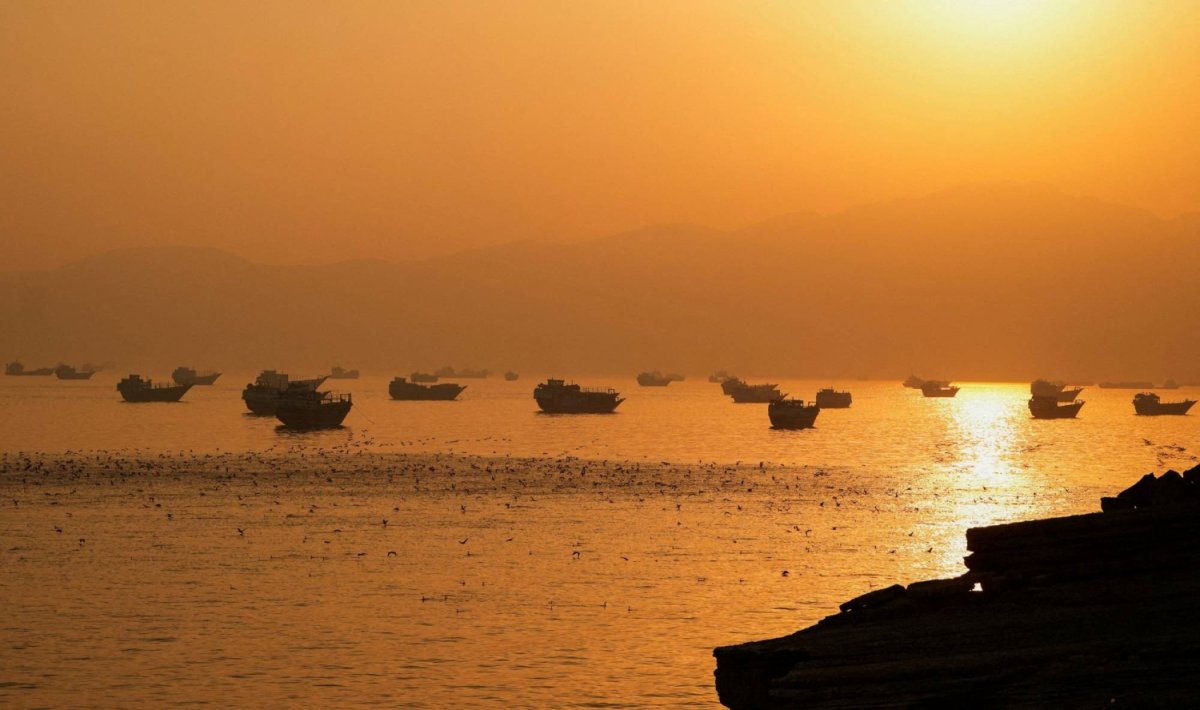
Strait of Hormuz Crisis: Japan's Exposure Since February 2026 The Iran war that began on February 28 2026 led to the effective closure of the Strait of Hormuz, stranding multiple Japan-linked vessels for over four months. Japan relies heavily on Middle Eastern crude supplies, making any prolonged blockage a direct threat to its energy supply chain. The strait accounts for appro
Strait of Hormuz Crisis: Japan's Exposure Since February 2026
The Iran war that began on February 28 2026 led to the effective closure of the Strait of Hormuz, stranding multiple Japan-linked vessels for over four months. Japan relies heavily on Middle Eastern crude supplies, making any prolonged blockage a direct threat to its energy supply chain. The strait accounts for approximately 20 percent of global oil trade, amplifying the stakes for the world's third-largest oil importer after China and India.
Corporate Japan faced immediate operational disruptions as tankers could not complete their voyages. Mitsui OSK Lines Ltd. and other operators had to manage extended idling costs while awaiting diplomatic progress. The Bank of Japan monitored potential inflationary pressures from any sustained supply shortfall, though global prices later eased following later developments.
Prime Minister Sanae Takaichi issued a public statement on April 30 2026 committing Tokyo to exhaustive diplomatic channels to restore safe passage. This pledge reflected Japan's traditional reliance on multilateral engagement rather than unilateral action in energy security matters. METI officials coordinated quietly with industry to assess inventory levels and alternative sourcing options during the impasse.
Convoy Details: Mitsui OSK Lines and the July 6 Exit
On July 6 2026, a convoy of 10 Japan-linked vessels completed its transit out of the Strait of Hormuz, hugging a route close to the Iranian coastline. Eight of these vessels fell under the operational control of Mitsui OSK Lines Ltd., with two additional ships completing the formation. The timing followed the June 2026 US-Iran interim accord that facilitated gradual reopening of the waterway.
Mitsui OSK Lines had indirectly requested Tokyo's assistance in expediting the release of its stranded assets. The company's fleet management teams coordinated with relevant authorities to ensure the convoy could move once conditions permitted. This approach aligned with established patterns in which Japanese shipping firms seek governmental facilitation without direct operational involvement.
The Ministry of Foreign Affairs confirmed that at least one Japan-owned vessel had successfully transited the strait as early as June 2026. That earlier passage served as a practical test of the interim accord's effectiveness. Observers noted that the July 6 convoy represented a larger-scale movement, signaling incremental normalization of traffic flows.
Fleet Composition and Cargo: 12 Million Barrels in Transit
The convoy included six Very Large Crude Carriers loaded with roughly 12 million barrels of Middle Eastern crude oil. These VLCCs formed the core of the cargo capacity, underscoring the scale of pent-up supply now entering global markets. Two chemical tankers, one vehicle carrier, and one container ship rounded out the ten-vessel group, diversifying the types of Japan-linked tonnage involved.
Each VLCC typically carries between 1.8 and 2.2 million barrels, so the six vessels together represented a significant release of previously immobilized crude. The chemical tankers added specialized product movements that support downstream industries in Japan. The presence of a vehicle carrier and container ship illustrated that non-energy cargoes had also been affected by the closure.
Market analysts viewed the 12 million barrels now in transit as a modest but meaningful contribution to easing regional supply tightness. Because Japan maintains strategic reserves managed under METI guidelines, the immediate domestic impact remained contained. Still, the arrival of these cargoes at Japanese ports would allow refiners to replenish inventories drawn down during the four-month blockage.
Diplomatic Efforts: Tokyo's Role in Securing Passage
Tokyo's diplomatic engagement intensified after the April 30 2026 statement by Prime Minister Sanae Takaichi. The Ministry of Foreign Affairs maintained continuous contact with regional stakeholders to monitor compliance with the US-Iran interim accord signed in June 2026. These efforts complemented parallel discussions at the International Energy Agency and through bilateral channels with Gulf states.
Mitsui OSK Lines' indirect request for governmental support reflected standard procedure for Japanese firms facing geopolitical constraints. MOFA provided consular and coordination assistance without assuming direct command of commercial operations. This measured involvement helped preserve corporate autonomy while leveraging state-to-state relationships.
The June 2026 passage of a single Japan-owned vessel offered early validation that the interim accord could support larger movements. Subsequent planning for the July 6 convoy built on that precedent. Analysts expect further transits to occur on a case-by-case basis rather than through a sudden full reopening.
Broader Regional Context: South Korea and Northeast Asian Energy
A separate supertanker carrying 2 million barrels of Saudi crude destined for South Korean refiner S-Oil departed the region over the preceding weekend. That cargo is scheduled to reach the Onsan terminal on July 26 2026, illustrating parallel relief for another major Northeast Asian importer. South Korea shares Japan's structural dependence on Middle Eastern oil supplies.
Japan's position as the third-largest global oil importer places it alongside China and India in terms of volume vulnerability. Any disruption in Hormuz traffic therefore affects the entire Northeast Asian energy complex. The staggered timing of the Japanese convoy and the S-Oil shipment suggests coordinated but independent commercial responses to the same geopolitical opening.
Regional cooperation remains limited by differing national energy policies. Nevertheless, both Tokyo and Seoul have historically aligned their diplomatic messaging when Hormuz access is threatened. The current movements may encourage informal information sharing between METI and South Korea's Ministry of Trade, Industry and Energy on inventory management.
Economic Implications for Japan's Import-Dependent Economy
Global oil prices have declined noticeably since the June 2026 US-Iran interim accord, reducing immediate cost pressures on Japanese refiners and downstream manufacturers. The arrival of 12 million barrels from the July 6 convoy should further support inventory rebuilding. However, the four-month blockage already contributed to higher freight rates and insurance premiums that corporate Japan absorbed.
The Bank of Japan continues to assess second-round effects on consumer prices and industrial output. Although headline energy costs have eased, logistics expenses for Mitsui OSK Lines and peer operators remain elevated. METI has signaled that it will review strategic reserve drawdown policies once more vessels complete their voyages.
Japan's heavy reliance on Middle Eastern crude creates persistent structural exposure. The July 6 transit demonstrates that commercial shipping can resume under the interim framework, yet full normalization of the 20 percent global trade volume passing through Hormuz will require sustained diplomatic momentum. Corporate planning now incorporates wider safety margins for future contingencies.
Outlook: Energy Security and the Road Ahead for Corporate Japan
Further vessel movements are anticipated on a gradual basis as the US-Iran interim accord continues to be implemented. Mitsui OSK Lines and other operators will likely prioritize VLCC scheduling to replenish Japanese refineries first. METI is expected to publish updated import statistics in the coming weeks that will quantify the impact of the four-month closure.
Longer-term energy security discussions within corporate Japan now emphasize diversification of supply sources and accelerated investment in alternative carriers. The experience since February 28 2026 has reinforced the value of maintaining close coordination between shipping firms and government agencies such as MOFA and METI.
While the July 6 convoy marks a concrete step toward restored access, analysts caution that geopolitical conditions in the region remain fluid. Japanese importers will continue to monitor compliance with the interim accord and maintain contingency plans. The episode underscores the enduring linkage between maritime security in the Strait of Hormuz and the stability of Japan's industrial economy.
Tags: Strait of Hormuz, Mitsui OSK Lines, Japan oil imports, VLCC convoy, energy security, US-Iran accord, Sanae Takaichi, MOFA, S-Oil tanker
By Kenji Tanaka, Staff Writer
This article was produced with AI-assisted research and editorial support. Reporting is based on sources cited in the article.
What's Your Reaction?
 Like
0
Like
0
 Dislike
0
Dislike
0
 Love
0
Love
0
 Funny
0
Funny
0
 Wow
0
Wow
0
 Sad
0
Sad
0
 Angry
0
Angry
0

Japan Correspondent at Global1.News. Tokyo-based voice covering Japanese politics, technology, economy, and culture. Tracks the intersection of tradition and innovation in one of the world's most dynamic societies.














Comments (0)