
Japan Launches AI Council to Overhaul Legal Frameworks
**Keywords:** Japan AI council, AI legal frameworks, digital reform 2026, population decline Japan, AI transformation, Gennai platform, Hiroshima AI Process, Sanae Takaichi, Cabinet Office, METI Decision Announced on July 7, 2026 The Japanese government decided on Tuesday, July 7, 2026, to establish a new council tasked with overhauling legal frameworks for the development and
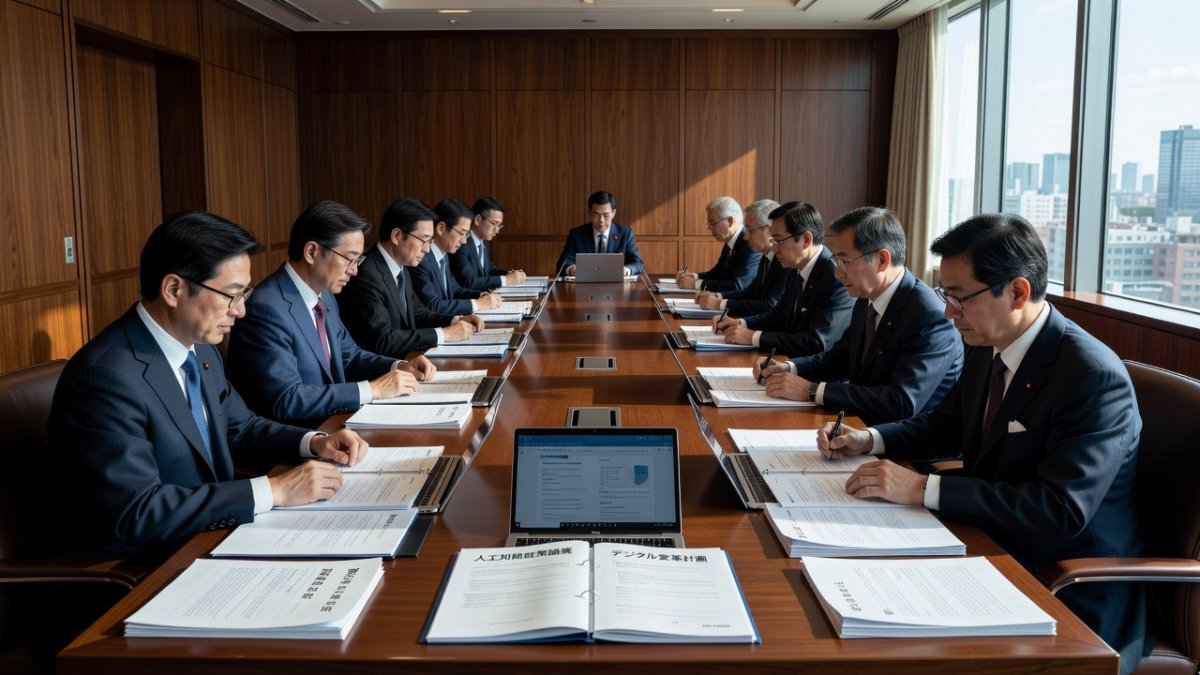
Decision Announced on July 7, 2026
The Japanese government decided on Tuesday, July 7, 2026, to establish a new council tasked with overhauling legal frameworks for the development and use of artificial intelligence. This step forms part of the 2026 basic policy guidelines adopted during a meeting of the digital administrative and fiscal reform council at the Prime Minister’s Office in Tokyo.
Reorganization of Existing Council Structure
The digital administrative and fiscal reform council, originally launched under the administration of former Prime Minister Fumio Kishida, will be reorganized into the new body. This reorganization reflects the current administration’s focus on accelerating AI-related policy under Prime Minister Sanae Takaichi, who took office in October 2025.
Link to Japan’s Demographic Pressures
Japan’s population stood at an estimated 122.4 million in 2026 and continues to decline by approximately 1,886 people per day. The guidelines explicitly tie the need for AI transformation to this demographic reality, emphasizing a fundamental review of work processes to maintain economic output and public services amid shrinking workforce numbers.
Priority Areas Identified for Digital Reform
Four priority areas receive explicit mention in the guidelines: medical and elderly care, transportation and infrastructure, working environments, and administrative services and procedures. These sectors are viewed as immediate candidates for AI-driven efficiency gains that could offset labor shortages without requiring large-scale increases in human resources.
Role of the AI Strategy Council and Gennai Platform
The new council will operate alongside the AI Strategy Council, which has met under the Cabinet Office since 2025. Earlier in 2026, the government launched the Gennai secure generative AI platform for official use, providing a controlled environment that the new legal review is expected to reference when drafting updated rules.
Statement by Chief Cabinet Secretary Minoru Kihara
At the July 7 meeting, Chief Cabinet Secretary Minoru Kihara stated: “It’s important to make maximum use of AI and digital technologies to free up time for people and businesses, and, from the perspective of consumers, to support those driving this forward.” The remark underscores the government’s consumer-oriented framing of AI adoption.
Connection to the Hiroshima AI Process
Japan’s international AI engagement through the Hiroshima AI Process, initiated during the G7 presidency, supplies additional context. The domestic legal overhaul is positioned to align with the process’s emphasis on trustworthy AI while addressing Japan-specific regulatory gaps in areas such as data use in medical care and infrastructure management.
Implications for Corporate Japan and METI Coordination
Corporate Japan, including firms under the oversight of the Ministry of Economy, Trade and Industry (METI), will face new compliance requirements once the council completes its review. METI’s existing industrial policy channels are likely to serve as the primary interface between the new council’s recommendations and private-sector implementation.
Next Steps and Timeline Considerations
The guidelines do not specify an exact completion date for the council’s work. Instead, they stress urgency driven by ongoing population decline and the need to integrate AI into daily operations across the four priority sectors. Further details on membership and meeting schedule are expected in subsequent Cabinet Office announcements.
By Kenji Tanaka, Staff Writer
This article was produced with AI-assisted research and editorial support. Reporting is based on sources cited in the article.
What's Your Reaction?
 Like
0
Like
0
 Dislike
0
Dislike
0
 Love
0
Love
0
 Funny
0
Funny
0
 Wow
0
Wow
0
 Sad
0
Sad
0
 Angry
0
Angry
0

Japan Correspondent at Global1.News. Tokyo-based voice covering Japanese politics, technology, economy, and culture. Tracks the intersection of tradition and innovation in one of the world's most dynamic societies.














Comments (0)