
South Korea Commands RIMPAC 2026 Maritime Forces as First Asian Command Lead
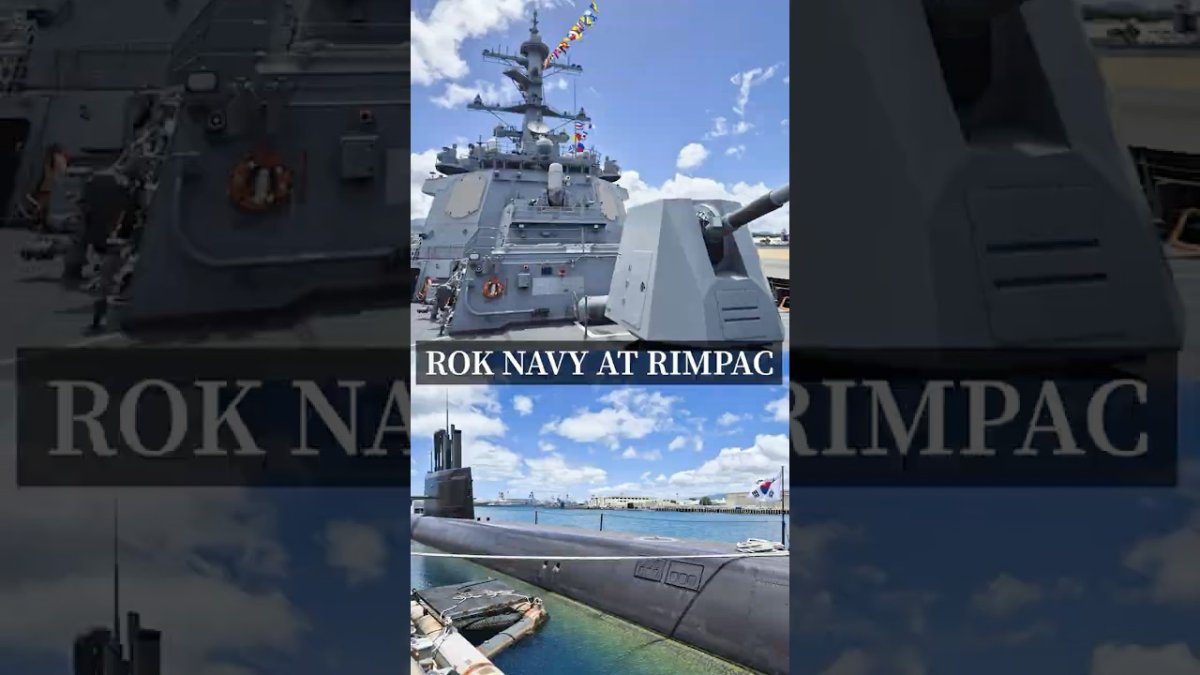
ROK Navy Demonstrates Advanced Platforms at RIMPAC 2026 The Republic of Korea Navy has presented its newest Aegis destroyer, ROKS Jeongjo the Great, and the indigenous Dosan Ahn Chang-ho submarine during the Rim of the Pacific exercise in Hawaii. These platforms form part of a broader deployment that includes P-9 maritime patrol aircraft, AW-159 helicopters, and the landing shi
ROK Navy Demonstrates Advanced Platforms at RIMPAC 2026
The Republic of Korea Navy has presented its newest Aegis destroyer, ROKS Jeongjo the Great, and the indigenous Dosan Ahn Chang-ho submarine during the Rim of the Pacific exercise in Hawaii. These platforms form part of a broader deployment that includes P-9 maritime patrol aircraft, AW-159 helicopters, and the landing ship ROKS Cheon Ja Bong. The exercise, which began on June 24 and continues through July 31, involves 31 nations, over 25,000 personnel, approximately 40 surface ships, five submarines, and 140 aircraft.
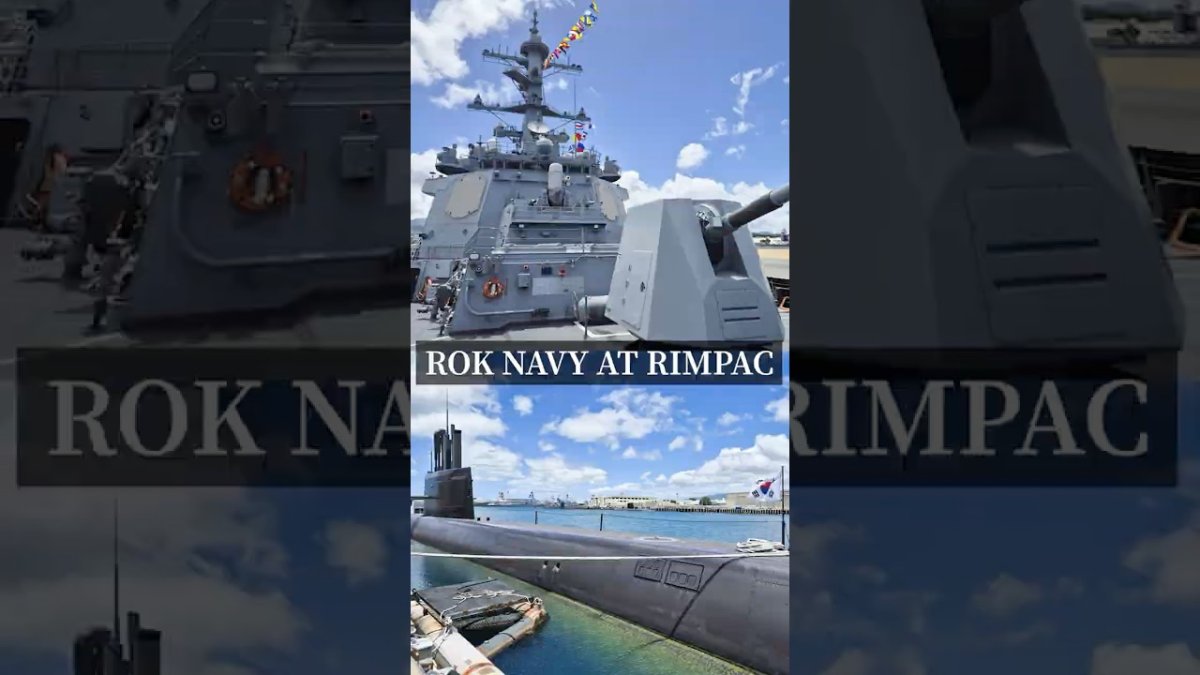
ROKS Jeongjo the Great, an 8,200-ton vessel commissioned in December 2024, marks its first participation in RIMPAC. The Dosan Ahn Chang-ho submarine represents domestically developed technology at the 3,000-ton class. Roughly 700 Korean personnel are taking part, supported by KAAVs and additional rotary-wing assets. These assets operate under the direction of ROK Navy Adm. Kim In-ho, who serves as maritime component commander.
First Asian Nation to Lead Maritime Component Operations
South Korea's appointment as maritime component commander constitutes the first time an Asian country has held this position at RIMPAC. Rear Adm. Suzanne Bailey, deputy commander of the U.S. Third Fleet and commander of the RIMPAC Combined Exercise Control Group, described the development as a "significant milestone" for both the exercise and the ROK-U.S. partnership. She emphasized that Adm. Kim's leadership provides "a powerful testament to the strength and the maturity of our alliance."
Bailey boarded the Cheon Ja Bong during the exercise and characterized the ship's capabilities as "phenomenal." Her remarks underscore the operational integration now achieved between U.S. and Korean naval forces. South Korea first joined RIMPAC in 1990; the progression from participant to command role reflects incremental growth in interoperability and capacity over more than three decades.
Defense Modernization and Indigenous Capabilities
The deployment illustrates South Korea's sustained investment in naval modernization. Jeongjo the Great incorporates Aegis combat system technology, while the Dosan Ahn Chang-ho class demonstrates progress in submarine design and construction without reliance on foreign hulls. These programs align with broader efforts to strengthen the ROK Navy's blue-water reach and undersea deterrence.
ROKS Jeongjo the Great departed Jeju Naval Base on June 1 en route to Hawaii. The movement of such a large formation across the Pacific tests logistics, sustainment, and command-and-control procedures under realistic conditions. Participation also provides Korean crews with direct exposure to multinational coordination standards practiced by the world's largest international maritime exercise, first held in 1971.
Alliance Implications in Northeast Asian Security
The command role carries direct relevance for the U.S.-ROK alliance amid persistent tensions on the Korean Peninsula and China's expanding maritime activities. South Korea's leadership position signals Washington's willingness to delegate operational authority to a capable partner. This arrangement can reduce the day-to-day burden on U.S. commanders while reinforcing deterrence credibility through demonstrated allied unity.
Inter-Korean dynamics remain a central consideration. Enhanced ROK naval presence in multinational settings contributes to signaling resolve without immediate escalation on the peninsula itself. At the same time, the exercise occurs against the backdrop of North Korea's continued missile development and China's growing fleet, both of which affect Korean strategic calculations regarding sea lines of communication and undersea domains.
Strategic Significance for Indo-Pacific Stability
By assuming the maritime component commander position, South Korea contributes to the collective maintenance of a free and open Pacific, as noted by Rear Adm. Bailey. The participation of Korean forces alongside those of 30 other nations reinforces norms of maritime cooperation that extend beyond bilateral alliance frameworks. This development also positions the ROK Navy to influence exercise planning and rules of engagement in future iterations.
Historical precedent shows that RIMPAC has served as a venue for capability validation and relationship building. Korea's expanded role builds on that foundation while reflecting changes in relative naval power within the region. The combination of advanced surface combatants, indigenous submarines, and integrated aviation assets provides a tangible demonstration of how Seoul intends to contribute to regional maritime security over the coming decade.
Future RIMPAC cycles will likely test whether this command precedent becomes institutionalized. Continued Korean leadership would require sustained investment in personnel training, joint doctrine development, and platform modernization. The current exercise therefore functions both as an operational event and as a benchmark for assessing the trajectory of South Korea's naval diplomacy.
By Prof. David Park, Staff Writer
This article was produced with AI-assisted research and editorial support. Reporting is based on sources cited in the article.
What's Your Reaction?
 Like
0
Like
0
 Dislike
0
Dislike
0
 Love
0
Love
0
 Funny
0
Funny
0
 Wow
0
Wow
0
 Sad
0
Sad
0
 Angry
0
Angry
0

East Asia/Technology Correspondent at Global1.News. Seoul-based voice covering Korean politics, technology, business, and culture. Analyzes how technology and geopolitics intersect across East Asia.















Comments (0)