
Mexican Scientist Nora Vázquez Laslop Co-Discovers...
**Keywords:** manikomycin, Nora Vázquez Laslop, antibiotic resistance, bacterial ribosome, Nature journal, Streptomyces rimosus, Mexican scientist, new antibiotic target, superbugs, pharmaceutical research A Mexican Researcher’s Role in a Global Scientific Advance The discovery of manikomycin brings fresh hope in the long fight against bacterial resistance to medicines. An inte

A Mexican Researcher’s Role in a Global Scientific Advance
The discovery of manikomycin brings fresh hope in the long fight against bacterial resistance to medicines. An international team that includes Mexican scientist Nora Vázquez Laslop identified the compound, and their findings appear in the journal Nature. Vázquez Laslop, acting professor in the Department of Pharmaceutical Sciences at the University of Illinois at Chicago, helped locate this new molecule produced by soil bacteria already known for generating other antibiotics.
Families across Mexico understand the worry that comes when common infections no longer respond to standard treatments. The work of Vázquez Laslop and her colleagues offers a new direction that could eventually reach clinics serving ordinary people in colonias and rural communities. Her presence on the team reminds readers that Mexican talent contributes directly to solutions that may one day protect children in public schools or elders in family homes from prolonged illness.
Many households in places like Oaxaca or the outskirts of Mexico City have experienced the frustration of repeated visits to IMSS or ISSSTE clinics only to find prescribed antibiotics losing their power. Vázquez Laslop’s contribution connects laboratory precision with these everyday realities, showing how one researcher’s insight can ripple outward to benefit entire neighborhoods. The story resonates because it highlights persistence in science that mirrors the resilience of Mexican families facing health challenges together.
How Manikomycin Works on the Bacterial Ribosome
Classic antibiotics often act on the ribosome, the cellular structure that manufactures proteins bacteria need to survive. Manikomycin attaches to a previously unidentified area of that same ribosome. By binding there, it blocks normal ribosome movement and stops the bacterial cell from producing essential proteins.
Lead author Dmitrii Travin noted that this new antibiotic targets a site never before hit by any other molecule. Vázquez Laslop told the Mexican newspaper La Jornada that no antibiotics now used in clinical practice bind to that site, so pathogenic bacteria have no existing defense against it. This precise mechanism opens a fresh chapter in how researchers approach stubborn infections that affect daily life in Mexican communities.
Understanding this binding process helps explain why the discovery matters beyond academic circles. When bacteria cannot make the proteins they need, they lose the ability to multiply and cause harm. For families relying on COFEPRIS-approved medicines through local pharmacies, such advances represent hope that future treatments could restore confidence in standard care.
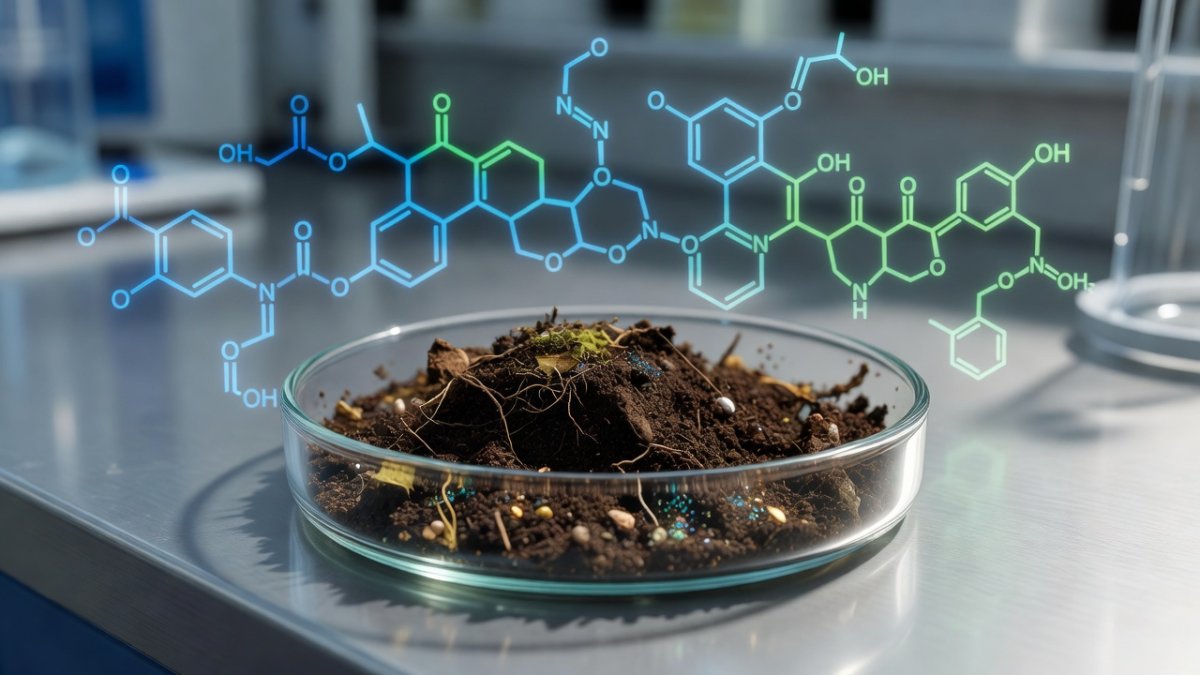
The Soil Bacterium Behind the Discovery
Manikomycin comes from Streptomyces rimosus, a bacterium studied for more than seventy years because it produces terramycin and oxytetracycline. Researchers found that this well-known microbe still contained undescribed compounds with antimicrobial activity. The name manikomycin draws from the word “manik,” used in Hindi and Punjabi for a precious stone, reflecting the compound’s small quantities yet high scientific value.
Streptomyces rimosus also produces geosmin, the compound that gives damp earth its familiar smell. The bacterium occurs around the world and supports soil health, a fact that resonates with Mexican farmers who rely on healthy land for their livelihoods. In rural areas where agriculture and family health remain closely linked, this connection between soil microbes and medicine feels especially meaningful.
The long history of studying Streptomyces rimosus shows how patient observation can still yield surprises after decades. Mexican pharmaceutical researchers often draw on similar traditions of examining natural sources, whether through university labs or industry partnerships. This bacterium’s dual role in producing both familiar antibiotics and the newly identified manikomycin underscores the hidden richness still present in well-known organisms.
Why a New Target Matters for Antibiotic Resistance
Antibiotic resistance already challenges healthcare systems everywhere. When bacteria develop ways to survive existing medicines, doctors must search for alternatives. Because manikomycin acts on an untouched ribosomal site, bacteria have not yet evolved mechanisms to resist it.
Vázquez Laslop described the finding as opening possibilities that had gone unnoticed even in microorganisms studied for decades. She compared the discovery to finding caviar on a plate where only meat had been visible before, illustrating how new methods can reveal hidden value in familiar sources. This fresh perspective encourages continued exploration that could one day support treatment options in community clinics across Mexico.
The absence of pre-existing resistance mechanisms gives manikomycin a potential advantage over many current drugs. Families in vulnerable colonias often bear the brunt when infections require longer hospital stays or more expensive alternatives. A new ribosomal target therefore represents more than scientific novelty; it points toward practical relief for those who need reliable medicines close to home.
Antibiotic Resistance Challenges Facing Mexican Families
Antibiotic resistance affects daily life in Mexico through common infections such as respiratory illnesses, urinary tract conditions, and skin infections that frequently appear in crowded urban neighborhoods or isolated rural settings. Public institutions like IMSS and ISSSTE regularly manage cases where standard treatments lose effectiveness, forcing doctors and families to navigate longer recovery periods. These situations place extra strain on household budgets and emotional well-being, especially when parents must miss work or children miss school.
CONAHCYT supports research efforts aimed at understanding resistance patterns, while COFEPRIS oversees the approval and monitoring of antimicrobial medicines used nationwide. In many colonias, access to newer or alternative therapies remains limited, leaving ordinary families to rely on older antibiotics that bacteria have already learned to withstand. The impact falls heaviest on children, older adults, and those with chronic conditions who depend on consistent public health services.
Under the Sheinbaum administration, continued emphasis on strengthening primary care networks offers a framework where future discoveries could integrate more readily into community-level treatment. Mexican families often share stories of infections that linger despite multiple courses of medicine, highlighting the need for mechanisms like the one manikomycin represents. Such challenges remind us that scientific advances must ultimately reach the clinics where people seek care for their loved ones.
Scientific Pride and Everyday Mexican Families
Mexican communities take pride when one of their own contributes to knowledge that could ease suffering. Vázquez Laslop’s participation in this international effort highlights the talent of Mexican researchers working on the global stage. Her comments in La Jornada bring the story directly to readers in Mexico, connecting laboratory work to the lived experience of families who have watched infections linger longer than expected.
While manikomycin itself is not yet ready for clinical use, the researchers hope chemists can develop stable versions. Such progress would eventually matter in hospitals and clinics where doctors treat resistant infections, offering new options grounded in a mechanism bacteria have never encountered. The pride felt in homes across Mexico stems from seeing a familiar name attached to work that addresses shared concerns about health security.
Stories like this one travel through family conversations and community gatherings, reinforcing the idea that Mexican contributions shape worldwide progress. They also encourage younger generations to pursue scientific paths, knowing their efforts can connect back to protecting neighbors and relatives. The human element remains central, as each advance carries the potential to reduce worry in households facing uncertain diagnoses.
Looking Ahead from a Mexican Perspective
The finding reminds us that widely studied organisms can still hold valuable surprises. For Mexican scientific communities, it underscores the importance of continued support for basic research that may take years to reach practical application. The cautious path from discovery to medicine respects the reality that new compounds require extensive testing before they can help patients.
Ordinary people in Mexico, whether in urban neighborhoods or countryside settings, stand to benefit if this line of research succeeds. The story of manikomycin shows how one Mexican scientist’s contribution adds to a worldwide effort that ultimately aims to protect community health. Institutions such as UNAM and partnerships with the national pharmaceutical sector play important roles in translating such findings into locally relevant solutions over time.
Strengthening Research Networks for Future Health Solutions
Mexican institutions including CONAHCYT and university programs continue to foster collaborations that link national expertise with international teams. These networks help ensure that discoveries like manikomycin receive attention from researchers familiar with local health needs in diverse regions. When findings move from journal pages toward development, the involvement of Mexican voices helps shape priorities that reflect community realities.
Building capacity in pharmaceutical sciences within Mexico supports the longer journey from laboratory identification to eventual clinical options. Families in both colonias and rural areas benefit when research pathways remain open and inclusive. The example set by Vázquez Laslop illustrates how individual contributions strengthen collective capacity to address persistent health concerns.
Sustained investment in such networks allows Mexico to participate actively in the global response to antibiotic resistance. This participation carries forward the tradition of Mexican scientists contributing meaningfully to solutions that reach beyond borders while remaining grounded in the needs of everyday people.
Tags: manikomycin, Nora Vázquez Laslop, antibiotic resistance, Nature journal, Streptomyces rimosus, new ribosomal target, Mexican researcher, bacterial infections
By Rosa Martinez, Staff Writer
This article was produced with AI-assisted research and editorial support. Reporting is based on sources cited in the article.
What's Your Reaction?
 Like
0
Like
0
 Dislike
0
Dislike
0
 Love
0
Love
0
 Funny
0
Funny
0
 Wow
0
Wow
0
 Sad
0
Sad
0
 Angry
0
Angry
0

Latin America/Andes Correspondent at Global1.News. Based in Bogota, covering politics, environment, energy, and social movements across the Andean region. Passionate about environmental journalism and communities protecting their land.














Comments (0)