
Africa's First Video Mapping Festival Lights Up Bujumbura
In early June 2026, the streets of Bujumbura, Burundi, became an open-air digital gallery as the continent held its first-ever festival dedicated entirely to video mapping. The Africa On the Mapping festival transformed the city's historic landmarks into glowing canvases of light, movement, and storytelling, marking a milestone for digital artistry in Africa. Africa's First Vid
In early June 2026, the streets of Bujumbura, Burundi, became an open-air digital gallery as the continent held its first-ever festival dedicated entirely to video mapping. The Africa On the Mapping festival transformed the city's historic landmarks into glowing canvases of light, movement, and storytelling, marking a milestone for digital artistry in Africa.
Africa's First Video Mapping Festival Lights Up Bujumbura: A New Chapter for Digital Art on the Continent
Bujumbura, Burundi — The historic buildings of Burundi's largest city became immersive digital canvases in early June, as the Institut Français du Burundi launched the Africa On the Mapping festival, the first event of its kind dedicated to video mapping on the African continent. Over four nights, artists from across Africa, the Caribbean, and beyond transformed the Greek Orthodox Church, the Old East Building, and the IFB itself into spectacular projection surfaces, blending technology with dance, music, and storytelling.
A Festival Born from Creative Vision
The Institut Français du Burundi served as the primary organizer for Africa On the Mapping, drawing on its established presence in Bujumbura to coordinate every element from workshops to final projections. This marked the first video mapping festival in Africa, held in Bujumbura, Burundi in early June 2026, and it immediately positioned the city as a pioneer in digital arts across the continent.
The multi-day format ran from Thursday through Saturday, allowing time for both preparation and public celebration. Training workshops and roundtables preceded the main projections, giving local and visiting artists space to exchange techniques before the lights came on each evening.
Venues included the IFB itself, the Greek Orthodox Church facing the Arena, and the Old East Building at Place de l'Indépendance. These sites offered varied architectural surfaces that challenged the mappers while highlighting Bujumbura's layered history along the northeastern shore of Lake Tanganyika.
The international lineup featured artists from Guatemala, Nigeria, France, Tunisia, Cameroon, Burundi, DRC, and Haiti. Friday's projections at the Greek Orthodox Church highlighted the international dimension with artists from four continents, while Saturday's projections at the Old East Building emphasized African and Caribbean connections with artists from Burundi, DRC, Cameroon, and Haiti.
Photographers Keingna and Pascale Mahe documented the entire event, capturing how the festival turned ordinary evenings into collective experiences of light and narrative. The coverage by Rédaction Africanews and Francine Sinarinzi further spread word of this milestone throughout the region.
Bujumbura is Burundi's largest city, located on the northeastern shore of Lake Tanganyika, and the choice of these central locations ensured that residents could encounter the projections during their regular evening routines.
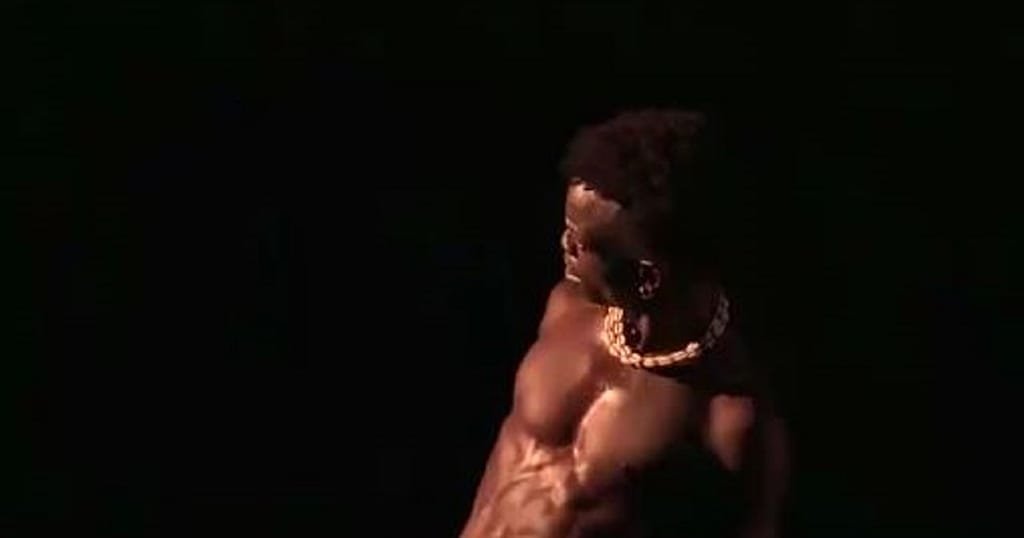
Noyau de Mangue: Where Dance Meets Digital Light
The opening performance "Noyau de Mangue" (Mango Kernel) by the Burundian collective Lumartis combined dance and video mapping in ways that immediately surprised and moved spectators. The young artists wove traditional movement with projected imagery, creating a living dialogue between body and light on the walls of the Institut Français du Burundi.
Babou, a festival attendee, said he was moved by how the performance conveyed emotion through dance, images, and text. He described feeling the performers share their inner worlds directly with the audience, an experience made possible only through the seamless integration of physical and digital elements.
The technical and artistic achievement of the young Burundian collective stood out even among more experienced international participants. Lumartis had prepared intensively during the preceding workshops, mastering projection alignment on irregular surfaces while preserving the emotional core of their choreography.
The Burundian collective Lumartis created "Noyau de Mangue" which impressed established international video mappers. Several visiting artists remarked that the piece demonstrated how African collectives could lead rather than follow in this emerging medium.
Video mapping blends technology with dance, poetry, drumming, and writing as expressive mediums, and Lumartis used every one of these layers during the opening night. The result felt rooted in Burundian storytelling traditions yet fully contemporary in its execution.
Audience members lingered long after the performance, discussing how the mango kernel metaphor spoke to themes of growth and resilience familiar across many African communities. The piece set a tone of cultural confidence that carried through the rest of the festival.
Voices from the Festival: Artists Reflect on a Historic Moment
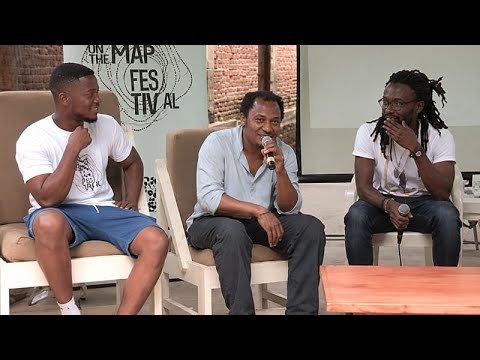
Albert Morisseau Leroy, a Cameroonian-Haitian video mapper, called the show "stunning" and said it reminded people of the "justness of life" and "humanity." He noted that the room was full and diverse, with spectators from many backgrounds united by the shared experience of the projections.
Fred Ebami, a French-Cameroonian visual digital artist and video mapper, urged young African artists to "be curious, believe in your dreams, try." He spoke directly to the next generation, encouraging them to step into unfamiliar creative territory without waiting for permission from outside institutions.
Fred Ebami told young Africans: "If it scares you, maybe that's where you need to be. If it's uncomfortable, maybe that's where you need to be." His words resonated with many attendees who had never before considered video mapping as a viable path for African expression.
Fred Ebami said video mapping today is uncomfortable but "tomorrow, it will be something logical, something habitual" for African artists. He framed the medium as a natural extension of oral and visual traditions already strong across the continent.
The broader significance of having African and diaspora video mapping artists at the center of the program cannot be overstated. Their presence ensured that the stories told on the walls reflected lived realities rather than external interpretations.
Conversations continued late into each night, with artists exchanging contacts and planning future collaborations. The festival created a living network that will extend well beyond Bujumbura.
Video Mapping: A New Frontier for African Storytelling
Video mapping (projection mapping) involves projecting video and animations onto irregular surfaces like buildings and monuments. In Bujumbura, this technique turned centuries-old architecture into dynamic screens that carried both abstract patterns and narrative sequences.
The 30-minute projection loops running from 19:00 to 21:30 each evening gave audiences time to absorb the work while allowing multiple viewings. Families returned night after night, bringing different generations to witness the same surfaces transformed anew.
Friday's projections at the Greek Orthodox Church featured artists from Guatemala, Nigeria, France, Tunisia, and Cameroon. Each brought distinct visual languages that nevertheless found common ground with Burundian audiences through universal themes of memory and movement.
Saturday's projections at the Old East Building featured artists from Burundi, DRC, Cameroon, and Haiti. These shows emphasized shared histories across the African continent and its diaspora, using light to trace connections that predate colonial borders.
The festival included a closing DJ-VJing party at the IFB patio, where the same technologies used for architectural projections moved onto smaller surfaces and bodies in motion. The party extended the spirit of experimentation into the early morning hours.
This art form allows Africans to tell their stories on their own terms, free from the filters of external media. The projections in Bujumbura demonstrated how technology can amplify rather than erase cultural specificity.
Connecting to Africa's Digital Arts Ecosystem
The Africa On the Mapping festival fits into the broader growth of digital arts across the continent, where creators increasingly combine new tools with longstanding expressive forms. Similar experiments are already visible in cities from Dakar to Nairobi.
Connections to other African digital art initiatives became clear during the roundtables, as participants referenced festivals in Morocco and South Africa that have begun incorporating projection elements. The Bujumbura event added an East African node to this emerging map.
The role of Institut Français cultural networks in supporting digital arts across Africa proved essential. These networks provided both funding and logistical expertise while leaving artistic direction firmly in the hands of African and diaspora creators.
The potential for video mapping to boost cultural tourism in Burundi and beyond is significant. Visitors drawn to the projections also explored local markets, music venues, and Lake Tanganyika shores, creating new economic pathways for residents.
Parallels with other African innovation in combining technology with traditional art forms emerged repeatedly. Just as Senegalese musicians blend sabar drumming with electronic production, video mappers here fused ancestral narratives with digital projection.
The growth of projection mapping at festivals across Africa from Morocco to South Africa signals a continental shift. Africa On the Mapping in Bujumbura now stands as the first dedicated entirely to the form, setting a precedent others will follow.
What This Means for African Creativity and the Future
The festival serves as a model for other African nations to adopt video mapping as both an artistic practice and a community event. Cities with historic architecture can replicate the approach with modest investment and strong local partnerships.
The message to young African creatives about embracing discomfort and innovation came through clearly in every artist talk. Participants left Bujumbura ready to experiment rather than imitate established European or North American approaches.
The democratizing potential of video mapping as a medium lies in its accessibility once basic equipment is secured. Unlike traditional gallery systems, projections can reach audiences who never enter formal art spaces.
Africa On the Mapping positions Bujumbura as an emerging hub for digital arts in East Africa. The city's location on Lake Tanganyika and its existing cultural infrastructure make it a natural gathering point for regional creators.
The call for more investment in digital art infrastructure across the continent was voiced by both organizers and artists. Sustainable funding for equipment, training spaces, and touring programs will determine how widely this medium spreads.
The importance of festivals like this for changing global perceptions of African creativity cannot be measured only in attendance numbers. They demonstrate that African artists are not waiting for permission to lead in new technological forms.
By Amara Diop, Staff Writer
This article was produced with AI-assisted research and editorial support. Reporting is based on sources cited in the article.
What's Your Reaction?
 Like
0
Like
0
 Dislike
0
Dislike
0
 Love
0
Love
0
 Funny
0
Funny
0
 Wow
0
Wow
0
 Sad
0
Sad
0
 Angry
0
Angry
0
West Africa/Sahel Correspondent at Global1.News. Dakar-based journalist covering politics, security, climate, and development across Francophone and Anglophone West Africa. Tells the stories of a region undergoing profound transformation.











Comments (0)