
Gulf of Paria widens as Trinidad pours oil on troubled Venezuelan waters
Gulf of Paria widens as Trinidad pours oil on troubled Venezuelan waters The Spill Unfolds in Our Shared Waters Heritage Petroleum Company Limited first detected the oil spill at its offshore Main Field operation in the Gulf of Paria at approximately 7:25 a.m. on May 1. Company crews estimated that around 10 barrels had escaped before the leak was stopped the same day and fully
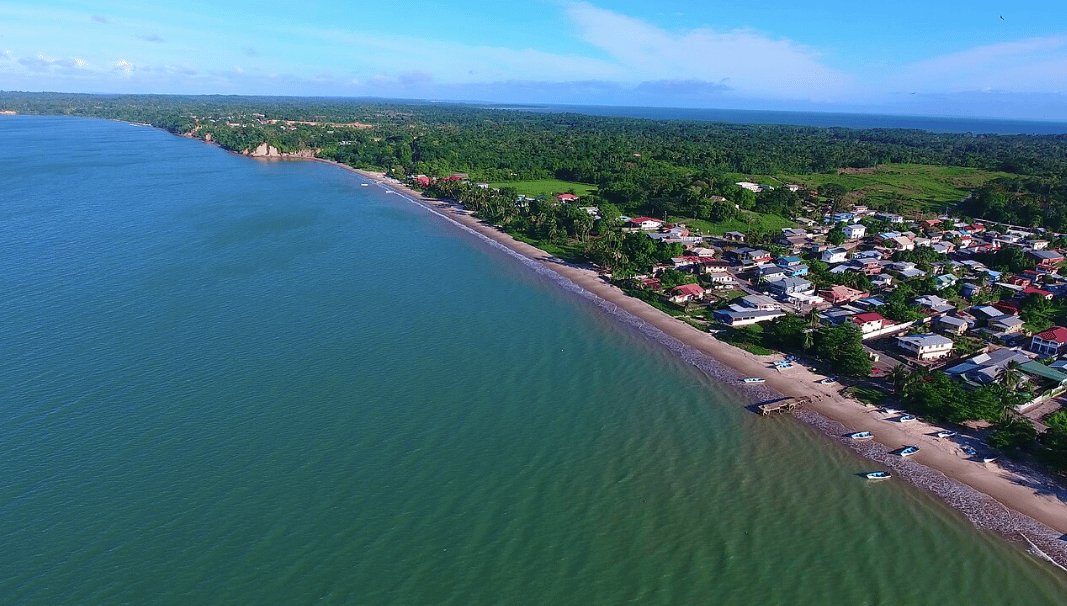
The Spill Unfolds in Our Shared Waters
Heritage Petroleum Company Limited first detected the oil spill at its offshore Main Field operation in the Gulf of Paria at approximately 7:25 a.m. on May 1. Company crews estimated that around 10 barrels had escaped before the leak was stopped the same day and fully repaired by May 2. Trinidad and Tobago’s own spill trajectory modelling quickly showed that, if left untreated, the hydrocarbons could have crossed the maritime border with Venezuela. Chemical dispersants were therefore deployed some 6-8 nautical miles from that line to keep the slick contained.
For fishing communities on both sides of the Gulf, these waters are more than a map boundary. They represent daily bread, family tradition and the quiet rhythm of life that has sustained villages for generations. When even a modest spill occurs, the worry travels fast through the markets of Icacos and Cedros here in Trinidad, just as it does through the coastal settlements of Sucre and Delta Amacuro in Venezuela. The Gulf of Paria has always been a shared living space, not merely an energy asset.
Trinidad and Tobago’s energy sector has long depended on offshore operations in these same waters. Heritage Petroleum, operating under the Ministry of Energy and Energy Industries, maintains platforms that sit close to the invisible line drawn on nautical charts. The incident therefore touches not only environmental questions but also the livelihoods of workers who keep those platforms running and the households that rely on steady energy-sector wages. In a small island developing state already feeling the pinch of global price swings, any disruption in the Gulf ripples straight into household budgets and community confidence.
Venezuela's Demands and Trinidad's Defence
Venezuela’s Foreign Minister Yván Gil went public on May 12, calling for full information and compensation. Acting President Delcy Rodríguez dispatched a multidisciplinary team of environmental specialists, biologists and naval personnel to assess damage across 1,625 square kilometres that includes 12 wetland systems, four national parks and the fishing grounds of more than 500 families. Caracas argues that Trinidad and Tobago failed to notify its neighbour promptly, breaching obligations under international conventions that govern shared maritime spaces.
Port of Spain’s position remains that the spill was minor, contained within 48 hours and produced no measurable cross-border harm. The Ministry of Energy and Energy Industries has stated that trajectory modelling guided the decision to use dispersants at a safe distance from the border, precisely to prevent any transboundary movement. Officials emphasise that the volume involved—roughly 10 barrels—does not compare with larger historical incidents that have affected the region.
Yet the absence of an agreed cross-border notification protocol leaves both nations exposed. Fisherfolk in Trinidad and Tobago understand that oil does not respect lines on a chart; currents and winds can carry traces far beyond the point of release. The same holds true for communities on the Venezuelan side. Without a standing agreement on how quickly information must travel, every incident risks turning technical into diplomatic, and local concerns into regional tension. CARICOM has watched such episodes before and knows that early, transparent communication protects the most vulnerable first.
The Satellite Imagery That Changed the Story
Satellite images obtained by Venezuelan authorities showed a slick already visible on April 28, several days before Trinidad and Tobago’s official detection date of May 1. These images placed the origin firmly at the Heritage Petroleum Main Field site. The earlier date raised immediate questions about monitoring frequency and the sensitivity of detection systems used by both the company and the Environmental Management Authority.
For residents along Trinidad’s south-western coast, the revelation felt familiar. Many remember past incidents where official timelines and community observations did not quite match. The Gulf of Paria’s murky waters and frequent cloud cover can hide small releases until they grow or drift. Satellite technology now offers an independent eye, yet access to such imagery remains uneven across the region. Small island developing states often lack the resources to maintain continuous monitoring, leaving gaps that neighbours may fill first.
The episode also highlights how environmental governance in shared zones still lags behind the technology available to detect problems. While Heritage Petroleum acted once the spill was confirmed, the earlier satellite record suggests that routine surveillance could have caught the release sooner. Strengthening cooperation with regional bodies such as CARICOM on shared satellite data could reduce future surprises and give fishing communities greater reassurance that their waters are watched with equal care from both shores.
Who Knew What, and When? The Questions Mount
Former Energy Minister Stuart Young called for an immediate investigation into why details of the May 1 spill were not released until Venezuela raised the matter internationally. He questioned whether information had been deliberately held back by Heritage Petroleum or within government circles. Such questions matter deeply in a country where public trust in energy oversight has been tested repeatedly over the years.
Local fishermen and coastal residents often learn of incidents through informal networks long before formal statements appear. When official silence persists, rumours fill the space and anxiety spreads through markets and jetties. The cost-of-living pressures already felt across Trinidad and Tobago make any threat to marine resources especially sensitive. Families who depend on the Gulf for protein and income cannot afford delays in information that might affect their next catch or the safety of their children playing near the shore.
Transparency mechanisms within the Ministry of Energy and Energy Industries and the Environmental Management Authority exist on paper, yet the speed of public communication remains a recurring concern. A standing commitment to notify both domestic communities and neighbouring states within hours, rather than days, would align practice with the spirit of regional cooperation that CARICOM has long promoted. Until that culture takes root, every spill carries the extra burden of eroded confidence at home and abroad.
A Troubled Diplomatic History
Relations between Trinidad and Tobago and Venezuela have always carried the weight of geography and history. The two countries share the Gulf of Paria as a single ecological and economic system, yet formal mechanisms for managing environmental incidents across that system remain underdeveloped. Venezuela’s recent territorial claims, including assertions regarding Trinidad and Tobago similar to those made against Guyana, have added layers of mistrust to what should be routine technical cooperation.
The current diplomatic climate, with Caracas operating under the leadership of Acting President Delcy Rodríguez and Foreign Minister Yván Gil, shows little appetite for measured exchanges. The absence of a pre-agreed notification and response framework therefore stands out as more than an administrative gap; it is a structural vulnerability that both nations have allowed to persist. Past energy cooperation, including joint exploration talks, never matured into binding environmental protocols that would govern spills or other accidents.
Trinidad and Tobago’s fishing communities and energy workers have the most to lose when diplomacy falters. They live daily with the reality that the Gulf connects rather than divides. A practical, neighbourly agreement on rapid information sharing and joint assessment teams would serve both populations far better than repeated cycles of accusation and defence. CARICOM’s experience in facilitating such arrangements elsewhere in the Caribbean offers a ready model that both capitals could adapt without loss of face.
What This Means for the Wider Caribbean
Small island developing states across the Caribbean face similar challenges of limited monitoring capacity and shared marine resources. An incident in the Gulf of Paria therefore serves as a regional warning. Climate change is already altering currents, increasing storm intensity and stressing coral and wetland systems that protect coastlines. Adding unmanaged pollution risks compounds the pressure on communities already adapting to shifting livelihoods.
CARICOM has long advocated coordinated approaches to environmental disasters precisely because no single member state possesses all the resources needed for effective response. Joint satellite monitoring, harmonised notification timelines and pooled technical teams could reduce the likelihood that a 10-barrel spill escalates into a diplomatic incident. The economic implications are equally clear: tourism, fisheries and energy investment all suffer when regional waters gain a reputation for poor governance.
Trinidad and Tobago’s position as an energy producer gives it both responsibility and opportunity. By championing a modern cross-border protocol with Venezuela, Port of Spain could set a practical example for other neighbours. Such leadership would resonate in fishing villages from Barbados to Jamaica, where communities watch the Gulf of Paria episode and wonder whether their own shared waters are any better protected.
The Bottom Line
The May 1 spill may have involved only 10 barrels, yet the manner in which it was handled has widened the Gulf of Paria in ways that volume alone cannot measure. Venezuela’s demand for information and compensation, supported by satellite evidence from April 28, has exposed gaps in notification, monitoring and trust that both nations must now address. Fishing families on both sides, already navigating cost-of-living pressures and climate uncertainty, deserve clearer safeguards.
Trinidad and Tobago’s energy sector, centred on Heritage Petroleum’s operations, remains vital to national revenue, but its social licence depends on transparent stewardship of the marine environment. A standing agreement with Venezuela on rapid cross-border communication would protect livelihoods, reduce diplomatic friction and strengthen CARICOM’s collective voice on shared waters. The Gulf has connected these two peoples for centuries; it is time the institutions that govern it caught up with that simple reality.
By Sharon Sahatoo, Staff WriterThis article was produced with AI-assisted research and editorial support. Reporting is based on sources cited in the article.
What's Your Reaction?
 Like
0
Like
0
 Dislike
0
Dislike
0
 Love
0
Love
0
 Funny
0
Funny
0
 Wow
0
Wow
0
 Sad
0
Sad
0
 Angry
0
Angry
0

Caribbean Correspondent at Global1.News. Based in Port of Spain, Trinidad, covering Caribbean politics, economy, energy, climate, and culture. Amplifying the voices and stories of the Caribbean region.











Comments (0)