
NHK Documentary Reveals Data Centers as Major Driver of CO2 Emissions Surge
The NHK WORLD-JAPAN documentary series IMPACTS: Climates Change the World has released a new episode examining data centers as a rapidly growing source of global CO2 emissions. The program, which aired on July 2, 2026, analyzes how facilities powering artificial intelligence and cloud computing are driving a surge in electricity consumption that now rivals the energy use of ent
The NHK WORLD-JAPAN documentary series IMPACTS: Climates Change the World has released a new episode examining data centers as a rapidly growing source of global CO2 emissions. The program, which aired on July 2, 2026, analyzes how facilities powering artificial intelligence and cloud computing are driving a surge in electricity consumption that now rivals the energy use of entire nations.
Global Surge in Data Center Energy Consumption
The NHK WORLD-JAPAN documentary "Data Centers: The New Surge in CO2 Emissions," released on July 2, 2026, as part of the IMPACTS series, examines the rapid growth of electricity demand from facilities supporting AI and cloud services. According to the International Energy Agency, global data centers consumed an estimated 460 TWh in 2022, with projections indicating demand could exceed 1,000 TWh by 2026, roughly matching Japan's annual electricity use.
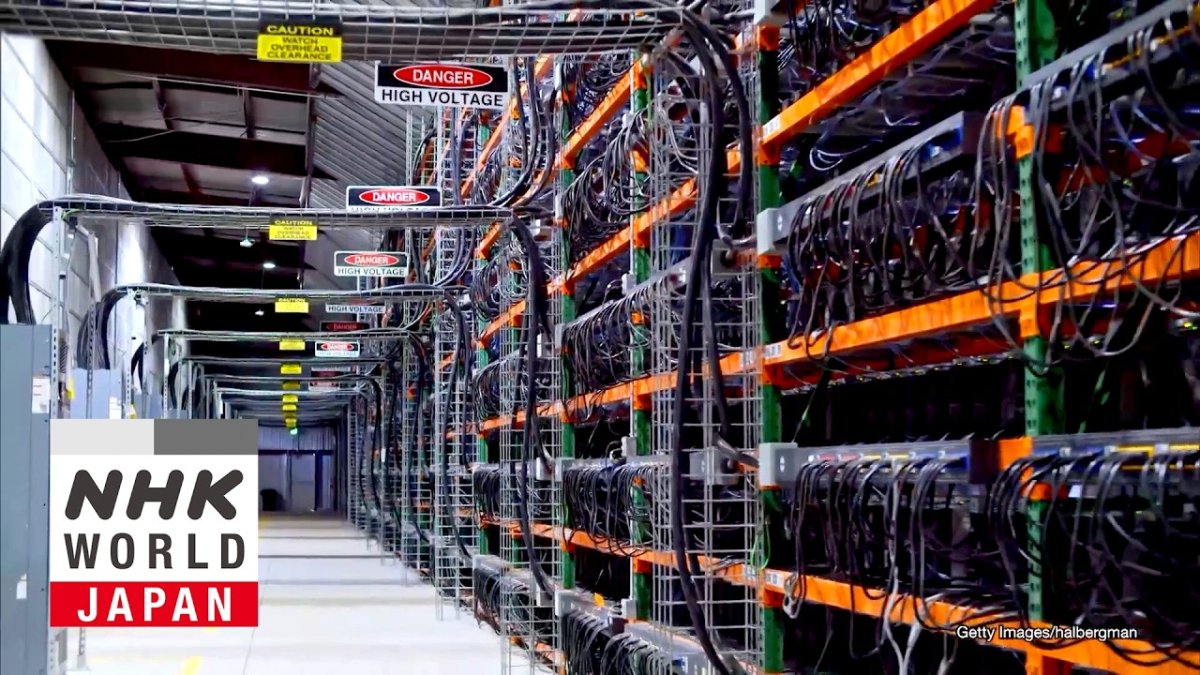
Electricity demand from data centers rose 17 percent in 2025, outpacing the 3 percent growth in overall global electricity consumption. AI-focused facilities are expanding at an even faster rate. An Allianz Trade study from June 2026 estimates that AI already accounts for 15-20 percent of data center electricity consumption and could reach 40 percent by 2030. The same study projects data center CO2 emissions at 286 Mt in 2025, 57 percent above earlier IEA estimates.
Japan's Data Center Expansion and Power Challenges
Japan's data center power demand is projected to triple to 66 TWh by 2034, according to Wood Mackenzie. Major technology companies including AWS, Microsoft, and Oracle committed approximately $26-28 billion to Japanese AI infrastructure between late 2024 and early 2025. These investments align with national goals under the Green Transformation (GX) strategy and Society 5.0 initiatives, yet they create immediate infrastructure pressures.
Tokyo power grid connections currently face wait times of 5-10 years, according to Introl data from January 2026. This bottleneck limits the pace at which new facilities can come online despite strong corporate interest. The documentary highlights how such constraints intersect with Japan's semiconductor strategy and Digital Agency efforts to expand digital capacity.
Regulatory Measures from METI and Environment Ministry
Japan's Ministry of Economy, Trade and Industry (METI) has established a national average Power Usage Effectiveness (PUE) target of 1.4 by 2030, as noted by the Uptime Institute in December 2025. Beginning in FY2026, data center operators exceeding specified energy-use thresholds will be required to submit reports covering electricity consumption, PUE values, and future efficiency targets. These reporting obligations are being phased in to support broader carbon neutrality objectives.
The Environment Ministry launched a dedicated program in May 2026 aimed at reducing data center emissions. The initiative supports interim targets for fiscal 2030, 2035, and 2040 while advancing the 2050 carbon neutrality goal. The "Watt-Bit Collaboration" coordinates data center siting with renewable energy development, providing a framework for balancing growth and decarbonization.
Local Opposition and Environmental Concerns
Data center construction is expanding across Japan, including sites near residential areas. An accompanying NHK article, "Coming Soon to Your Neighborhood? The Pros and Cons of Data Centers," documents community opposition related to noise and emissions. New research published in March 2026 indicates that data centers can contribute to localized warming, known as the heat island effect.
These community-level impacts add complexity to Japan's efforts to scale AI infrastructure while maintaining public support. The documentary connects these local concerns to national policy discussions on sustainable digital growth.
Renewable Energy Initiatives and the Ishikari Project
The Ishikari Renewable Energy Data Center in Hokkaido operates at 15 MW and runs entirely on renewable power with government subsidies. This facility serves as a concrete example of integrating data centers with clean energy sources under the Watt-Bit Collaboration framework.
Despite such projects, the market faces a clear paradox: record investment levels coincide with infrastructure bottlenecks and power constraints, as reported by Data Center Knowledge. The NHK documentary analyzes how these tensions may shape the trajectory of Japan's data center sector through the remainder of the decade.
Insights from the NHK WORLD-JAPAN Documentary
The July 2, 2026, documentary presents data center expansion as a significant driver of future CO2 emissions while documenting Japan's policy responses. It references IEA and Allianz Trade figures to illustrate the scale of global demand growth and places Japanese developments within that context.
By examining both technological opportunities and infrastructure limitations, the program provides a measured assessment of how METI targets, Environment Ministry programs, and renewable integration efforts may influence emissions outcomes. The analysis underscores the need for coordinated planning between energy supply and digital infrastructure expansion.
By Kenji Tanaka, Staff Writer
This article was produced with AI-assisted research and editorial support. Reporting is based on sources cited in the article.
What's Your Reaction?
 Like
0
Like
0
 Dislike
0
Dislike
0
 Love
0
Love
0
 Funny
0
Funny
0
 Wow
0
Wow
0
 Sad
0
Sad
0
 Angry
0
Angry
0

Japan Correspondent at Global1.News. Tokyo-based voice covering Japanese politics, technology, economy, and culture. Tracks the intersection of tradition and innovation in one of the world's most dynamic societies.













Comments (0)