
Trump NATO Ultimatum: Ankara Summit Tests Alliance Spending
Trump's Midnight Truth Bomb — NATO's Reckoning Has Arrived Folks, let me tell you something straight up. On July 2, 2026, at 11:02 PM EDT, President Donald Trump didn't send a diplomatic cable. He didn't schedule a press conference. He didn't work through back channels. He fired off a Truth Social post that has rattled every chancellery in Europe — and honestly, it was about da
Trump's Midnight Truth Bomb — NATO's Reckoning Has Arrived
Folks, let me tell you something straight up. On July 2, 2026, at 11:02 PM EDT, President Donald Trump didn't send a diplomatic cable. He didn't schedule a press conference. He didn't work through back channels. He fired off a Truth Social post that has rattled every chancellery in Europe — and honestly, it was about damn time someone said it out loud. "Ridiculous for the U.S.A. to continue along this one sided path when the relationship is not reciprocal. They were not there for us!!! President DJT."
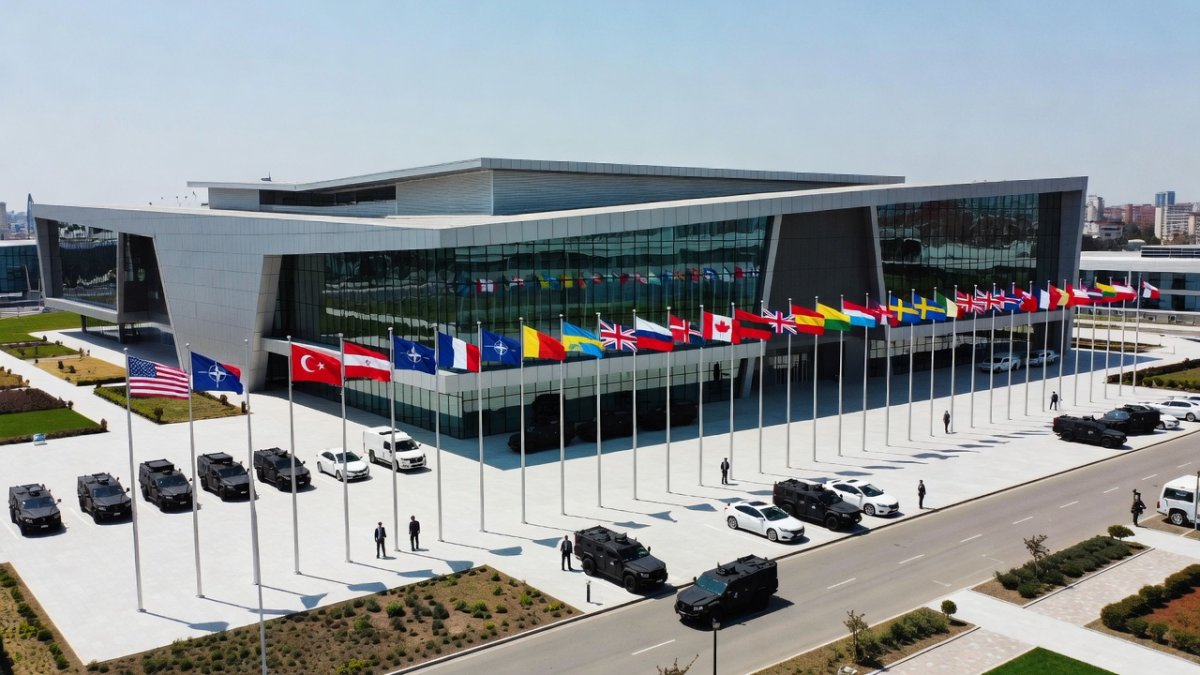
That's not a negotiating position. That's a warning shot across the bow. And it landed just five days before the single most consequential NATO summit in decades — July 7-8 in Ankara, Turkey.
Now, I've covered NATO summits before. I've watched the motorcades roll in, the leaders shake hands for the cameras, the pre-written communiqués get distributed to reporters who barely skim them. They're usually choreographed affairs where everyone nods along and goes home feeling like they saved the alliance for another year. But this one? This one is different, and anyone telling you otherwise is selling something.
Secretary of State Marco Rubio isn't known for hyperbole. The man is measured, deliberate, careful with his words. And even he called this gathering "probably the most important summit in its history." When the top American diplomat says that before the doors even open, you better believe something fundamental is shifting beneath the surface.
The Numbers That Expose the BS
Let's cut through the spin right now. The United States spends $999 billion a year on defense. That's according to NATO's own 2025 estimates — not some partisan think tank, not a Trump campaign document. Almost a trillion dollars. Every single year. The United Kingdom, America's closest military partner and historically the second-largest spender in the alliance? About $90 billion. Germany is in the same ballpark. France too. Italy below that. Turkey spent $30 billion, up 7 percent from the previous year, which is a respectable increase — but let's be honest, that's pocket change next to Washington's tab.
The new NATO framework the alliance is pushing demands 3.5 percent of GDP on core defense plus another 1.5 percent for related security expenditures, totaling a 5 percent commitment over the next decade. Sounds ambitious, right? Sounds like everyone's finally stepping up? Here's the thing — the United States is already there. We have been. For years. The question isn't whether America will meet the target. The question is whether the other 31 members will finally stop treating American taxpayers like an unlimited credit card with no payment due date.
And don't let anyone sell you the line that this is just Trump being Trump. Yes, he's blunt. Yes, his style is confrontational. But the frustration he's channeling? That's real, and it's bipartisan. I've sat in enough Washington briefing rooms to know that presidents of both parties have quietly seethed for decades while watching allies underinvest and then turn around and lecture the United States about "shared values" and "multilateralism." Trump is just saying out loud what too many in D.C. have whispered behind closed doors after one too many glasses of wine at embassy receptions.
Ankara Under the Spotlight — The Summit Nobody Can Afford to Skip
The summit itself is shaping up to be a pressure cooker unlike anything NATO has seen in years. Turkey is hosting for the first time in over a decade, and President Erdogan is clearly looking to flex. Ankara sits at the crossroads of Europe, the Middle East, and the Black Sea — and Erdogan knows it. He's leveraging that geographic position to demand a bigger voice in alliance strategy, and honestly, he's got a case. Turkey demonstrated real operational capability during the U.S.-Iran confrontation, reportedly intercepting four Iranian ballistic missiles. That's not nothing. That's a tangible contribution that most European members couldn't replicate.
According to Euronews, a pre-negotiated statement already promises an "iron-clad 32-member family committed to collective protection." That's diplomatic-speak for "we've written the press release already, now we just need to actually agree." But the real negotiations behind closed doors? Those will be anything but cozy. The agenda is jam-packed: hitting those aggressive new spending targets, sustaining Ukraine aid through what looks like another grinding year of war, ramping up transatlantic defense production lines that have atrophied since the Cold War, and rolling out the so-called "NATO 3.0" modernization framework that's supposed to prepare the alliance for threats nobody even imagined a decade ago.
Here's what's really fascinating. Euractiv reported that European leaders are bracing for a "Trump wildcard" — that unpredictable element that could upend carefully worded communiqués at the last minute. The Boston Globe put it even more bluntly, observing that Europe is "boosting spending, but still counts on the US." That's the uncomfortable truth that no amount of diplomatic language can paper over. Europe can increase its budgets by 10, 20, even 50 percent — and they'll still need American intelligence, American logistics, American nuclear deterrence, and American power projection to make it all work.
Europe's Sprint to Catch Up — And Who's Actually Moving
To their credit, European leaders aren't sitting on their hands waiting for the summit to start. Germany's Chancellor Friedrich Merz fired back at Trump's criticism with action — not just words. Merz pledged to double Berlin's defense budget within four years and hit the 3.5 percent benchmark by 2029. That's six years ahead of the NATO timeline, and for a country that has historically been constitutionally and culturally cautious about military spending, that's a seismic shift. The Eastern Herald reported that Merz is pushing back hard against Trump's "ridiculous" characterization, pointing to Germany's actual trajectory rather than its current position.
In the UK, Defence Secretary Dan Jarvis is pushing his own government to hit 3.5 percent. The Guardian reported that Jarvis called on Prime Minister Andy Burnham to "evidence the trajectory" toward a NATO target that would mean £25 billion more per year for the military by the middle of the next decade. That's real money. That's the kind of commitment that signals London is taking the threat of U.S. disengagement seriously — possibly for the first time since the Cold War ended.
But here's the thing — and this is where I need you to pay attention. Poland, the Baltic states — Estonia, Latvia, Lithuania — and the Nordic countries including Sweden, which only recently joined the alliance after decades of neutrality, are already moving the fastest. These are the nations that share a border or a coastline with Russia. They don't need a Truth Social post to convince them the threat is real. They hear the Russian jets buzzing their airspace. They see the hybrid warfare attacks on their infrastructure. They live it every single day. The challenge is with the larger Western European economies — Germany, France, Italy, Spain — that have more fiscal constraints, more domestic political pressure to prioritize social spending, and frankly, more distance from the immediate threat.
The Arms Sales Strategy and the Real Motive Behind It
Here's where the story gets really interesting, and where I think most mainstream coverage is missing the plot. Trump isn't just threatening and walking away. According to multiple reports, he's planning to announce billions of dollars in new U.S. arms sales at the summit itself. Advanced air defense systems. Precision munitions. Next-generation fighter aircraft. This is classic Trump — apply maximum pressure, then offer the solution that happens to benefit American industry and strengthen allies at the same time.
Some critics will call this transactional diplomacy. And you know what? They're not wrong. But maybe — just maybe — a transactional approach is exactly what an alliance built on collective security needs when the imbalances have been allowed to fester for thirty years. The U.S. defense industrial base gets a boost, NATO allies get modernized equipment they desperately need, and Washington can point to concrete burden-sharing progress instead of vague promises and aspirational timelines. It's not romantic. It's not Wilsonian idealism. But it might actually work.
The "NATO 3.0" agenda fits into this picture perfectly. It's designed to modernize command structures for an era where the threats aren't tank divisions rolling through the Fulda Gap — they're drone swarms over Black Sea ports, cyber attacks on electrical grids, space-based weapons systems, and hypersonic missiles that can reach any European capital in minutes. The old Cold War playbook simply doesn't work when an adversary can disrupt your GPS, hack your supply chains, and field loitering munitions that cost a fraction of what a single Patriot missile costs. If NATO can't adapt to that reality, all the spending increases in the world won't save it.
What This Means for American Families
Let me bring this home, because I know how easy it is to tune out when the conversation shifts to NATO spending benchmarks and summit agendas. Here's what I want every American watching or reading this to understand. This isn't some abstract foreign policy debate happening in a vacuum. It's about your tax dollars — the money that comes out of your paycheck every single week. It's about whether your children and grandchildren will be asked to put on a uniform and deploy to defend countries that refuse to invest in their own defense. It's about whether the most powerful military alliance in human history is a genuine partnership of sovereign nations or a subsidy program disguised as diplomacy.
The $999 billion the United States spends on defense every year isn't monopoly money. It's resources that could be funding infrastructure projects, healthcare research, education, or tax relief. Every dollar spent defending Europe is a dollar that can't be spent on an American bridge that needs repair, an American school that needs teachers, or an American family that needs affordable healthcare. That's not an argument for isolationism. It's an argument for fairness. For reciprocity. For the simple proposition that if 31 other nations benefit from American military power, they should be willing to pay their fair share of the bill.
The Ankara summit starting July 7 will answer some of these questions — or at least tell us which direction the answers are heading. Will European allies make binding, enforceable commitments this time, or will we get the same old promises with a fresh coat of paint? Will Trump follow through on his withdrawal threats if the numbers don't add up after the summit? And most fundamentally — can an alliance designed in 1949 for a bipolar world survive a crisis of confidence that's been building for years, not weeks?
The Bottom Line
The era of blank-check American global leadership is over. Whether you voted for Trump, voted against him, or checked out of politics entirely, that's the reality we're living in. He's forcing a conversation that was long overdue — the kind of conversation that diplomats and politicians have spent thirty years politely avoiding because it's uncomfortable and complicated. But uncomfortable conversations are exactly the ones we need to have if we're going to build something that actually works for the next generation.
NATO needs to evolve. It needs to become a genuine partnership of equals, with burden-sharing that reflects economic reality, not Cold War inertia. Or it risks becoming a relic of a unipolar moment that has passed us by. The decisions made in Ankara over the next 48 hours won't just determine the future of the alliance — they'll tell us whether the United States is going to lead differently in the years ahead, or whether we're going to keep pretending the old model still works while the bills pile up.
Your Turn — Stay Informed, Stay Vigilant
This story isn't going to fade away after the summit ends. The spending commitments, the Ukraine aid packages, the structural reforms — these will play out over months and years. Global 1 News will be tracking every development, cutting through the diplomatic jargon, and telling you what it actually means for your life.
Here's what I need you to do: share this article with someone who thinks NATO politics don't affect their daily life. Call your representatives in Congress and ask them where they stand on burden-sharing — you might be surprised by the answer. And most importantly, stay curious. Stay informed. The world is changing fast, and the people who pay attention are the ones who won't get caught off guard when the next big shift hits.
Drop your thoughts in the comments. Do you think European allies will actually hit the 3.5 percent target? Is Trump's confrontational approach strategically smart or dangerously destabilizing? I genuinely want to hear what you think — because this conversation is bigger than one president, one summit, or one alliance. It's about what kind of world we're building for the people coming after us.
By Jessica Ali, Lead Anchor — Global 1 News
This article was produced with AI-assisted research and editorial support. Reporting is based on sources cited in the article.
What's Your Reaction?
 Like
0
Like
0
 Dislike
0
Dislike
0
 Love
0
Love
0
 Funny
0
Funny
0
 Wow
0
Wow
0
 Sad
0
Sad
0
 Angry
0
Angry
0

Editor-in-Chief at Global1.News. Atlanta-based journalist who cuts through the BS and tells it like it is. Lead anchor, host, and the voice you hear when the spin stops and the truth starts.














Comments (0)