
Japanese E-Jeepney Startup Gains Ground as Fuel Costs Soar
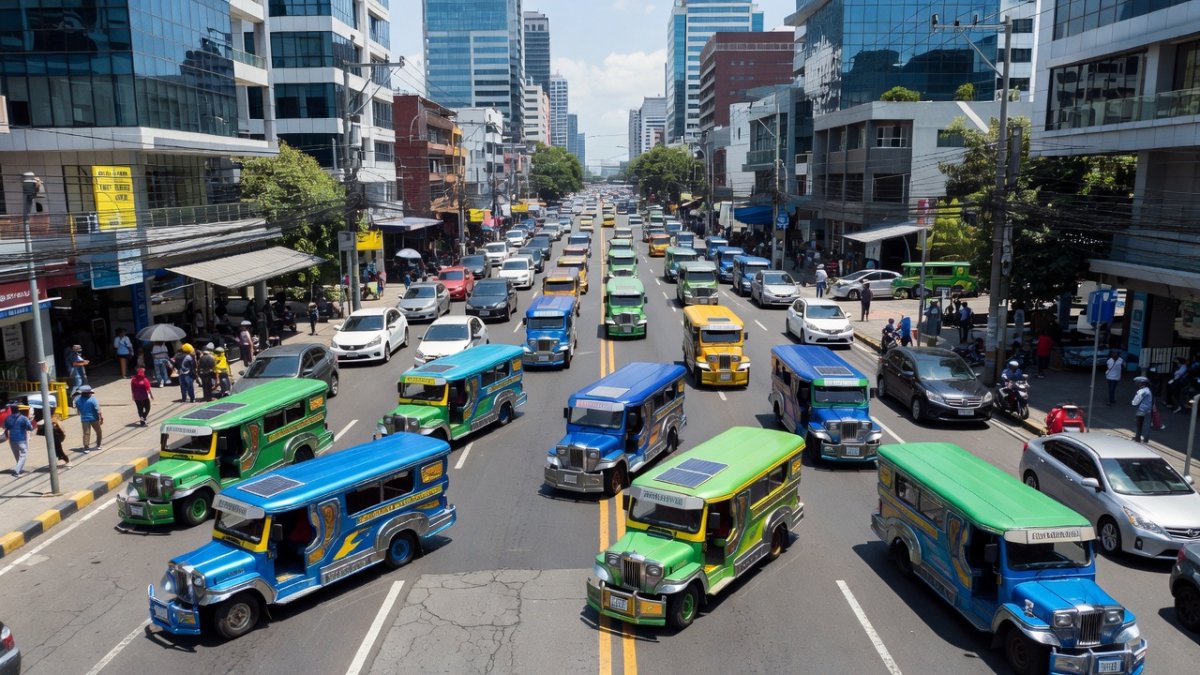
Rising Diesel Prices Open Doors for Electric Alternatives The Middle East crisis has pushed diesel prices higher across Southeast Asia, directly affecting the daily operations of traditional jeepneys in the Philippines. With approximately 240,000 jeepneys running daily nationwide and 55,000 concentrated in Metro Manila, operators face mounting fuel expenses that erode already t
Rising Diesel Prices Open Doors for Electric Alternatives
The Middle East crisis has pushed diesel prices higher across Southeast Asia, directly affecting the daily operations of traditional jeepneys in the Philippines. With approximately 240,000 jeepneys running daily nationwide and 55,000 concentrated in Metro Manila, operators face mounting fuel expenses that erode already thin margins. This economic pressure has accelerated interest in electric alternatives produced by a Japanese startup specializing in electric buses.
Traditional jeepneys account for 94 percent of urban soot emissions in Metro Manila while handling roughly 40 million person-trips each day. As fuel costs climb, the Public Utility Vehicle Modernization Program (PUVMP), launched in 2017 by the Land Transportation Franchising and Regulatory Board (LTFRB), gains renewed relevance. The program encourages a shift toward cleaner vehicles, and the Japanese electric bus startup has positioned its e-jeepney models as practical solutions within this framework.
Operators report that conventional jeepneys, priced between 200,000 and 400,000 PHP, become increasingly burdensome when diesel prices spike. In contrast, the higher upfront cost of e-jeepneys is offset by lower running expenses once subsidies are applied. The startup’s vehicles are therefore gaining traction precisely because they address both immediate cost pressures and long-term regulatory expectations.
Japanese Startup Technology Meets Philippine Demand
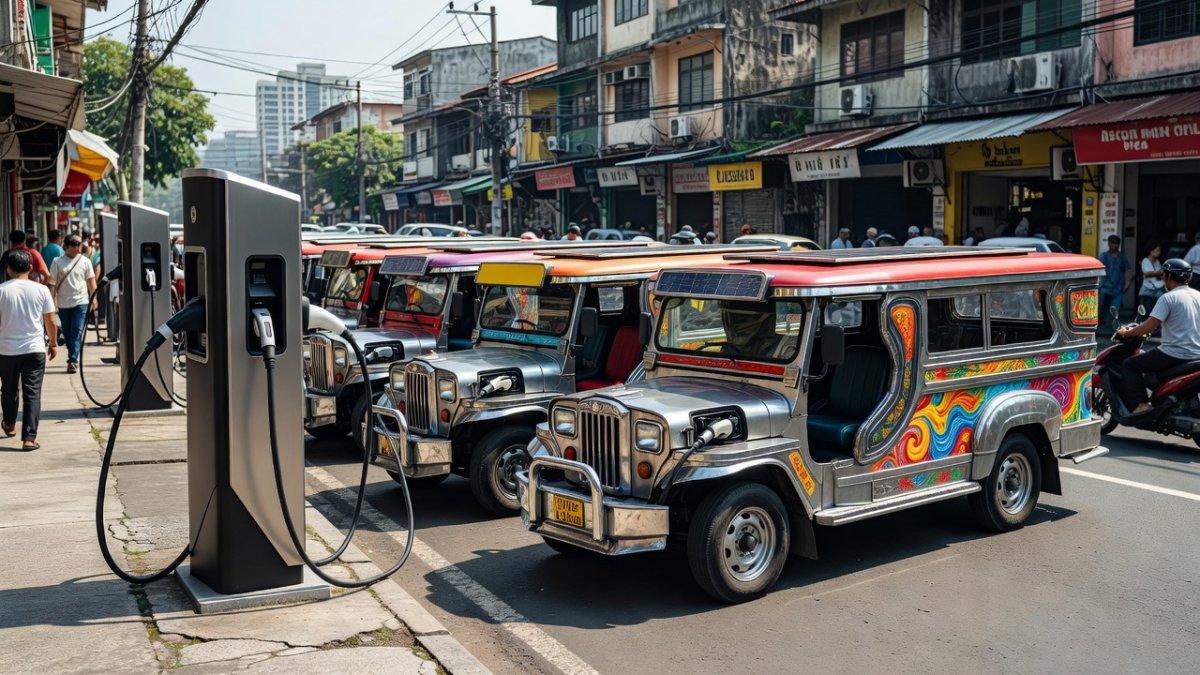
The Japanese startup has developed electric buses tailored for Southeast Asian markets, leveraging expertise refined under Japan’s GX policy. METI has actively promoted EV exports to the region, recognizing that compact, durable electric platforms can replace aging diesel fleets. In the Philippines, these vehicles are being deployed as e-jeepneys that maintain the cultural role of jeepneys while eliminating tailpipe emissions.
Early deployments show that the startup’s models integrate with existing routes without requiring major infrastructure changes beyond charging points. Fleet operators note reduced maintenance needs and predictable energy costs, advantages that become more pronounced as diesel prices remain elevated. The startup’s success stems from adapting Japanese engineering standards to local operating conditions, including frequent stops and high passenger loads.
Partnership discussions between the startup and Philippine transport groups have focused on phased rollouts. By aligning with PUVMP requirements, the company ensures its vehicles qualify for available support mechanisms. This strategic fit has allowed the startup to secure initial orders and establish a visible presence in Metro Manila corridors.
Cost Structures and Government Support Mechanisms
E-jeepneys carry a purchase price of 2 to 3 million PHP, significantly higher than the 200,000 to 400,000 PHP range for conventional units. To bridge this gap, the Philippine government introduced subsidies of 280,000 PHP per vehicle beginning December 2023. These incentives lower the effective entry cost and improve payback periods for operators transitioning under PUVMP.
Even with subsidies, financing remains a key consideration. Banks and leasing companies are evaluating credit products that account for lower daily fuel outlays. The Japanese startup has worked with local partners to provide data on energy consumption and maintenance intervals, helping financial institutions assess risk more accurately.
By 2025, more than 1,000 e-jeepneys are projected to be in service. This target reflects both subsidy availability and the sustained pressure from elevated diesel prices. The startup’s ability to meet delivery schedules and provide after-sales support has been central to achieving these numbers.
Grid Composition and Renewable Energy Trajectory
The Philippine grid currently relies on fossil fuels for approximately 80 percent of generation, with renewables at 22 percent as of 2024. The national target is to reach 35 percent renewables by 2030. While this mix limits the immediate carbon-reduction potential of e-jeepneys, the vehicles still eliminate local soot emissions that traditional jeepneys produce in dense urban areas.
Charging strategies that prioritize off-peak hours can reduce both costs and strain on the grid. The Japanese startup has shared technical recommendations on load management drawn from Japanese urban bus operations. These practices help operators minimize expenses while the renewable share gradually increases.
Long-term alignment between rising renewable capacity and growing e-jeepney fleets supports broader decarbonization goals. The Japan-Philippines clean energy economic partnership facilitates knowledge exchange on grid modernization and storage solutions that will further enhance the environmental profile of electric public transport.
Policy Alignment Between Japan and the Philippines
Japan’s GX policy, coordinated by METI, explicitly encourages EV exports to Southeast Asia as part of regional decarbonization efforts. The startup’s activities in the Philippines exemplify this approach, combining commercial expansion with policy objectives. The Japan-Philippines clean energy economic partnership provides an institutional framework for technology transfer and joint project development.
Both governments recognize that modernizing public transport yields immediate air-quality benefits in cities while preparing infrastructure for higher renewable penetration. METI-supported initiatives have included technical workshops and pilot programs that inform Philippine operators about Japanese electric bus performance under tropical conditions.
These bilateral efforts also address supply-chain resilience. By sourcing components and assembly know-how from Japan, Philippine fleets gain access to proven battery and motor technologies. The partnership therefore serves both immediate operational needs and longer-term industrial capacity building.
Outlook for Scaled Deployment
Continued success for the Japanese startup depends on steady subsidy disbursement, reliable charging infrastructure, and gradual improvement in the renewable share of the grid. The more than 1,000 e-jeepneys expected by 2025 represent an initial wave that can demonstrate viability to additional operators still reliant on diesel.
Expansion beyond Metro Manila into secondary cities will test the adaptability of the startup’s vehicles to varied route lengths and passenger volumes. Lessons from early deployments are already informing refinements in battery sizing and climate control systems suited to Philippine conditions.
Overall, the convergence of elevated diesel prices, PUVMP regulatory momentum, and Japanese GX-driven exports has created a favorable window for e-jeepney adoption. The startup’s measured progress illustrates how targeted technology transfer, supported by bilateral clean energy cooperation, can address both economic and environmental challenges in Philippine urban transport.
By Kenji Tanaka, Staff Writer
This article was produced with AI-assisted research and editorial support. Reporting is based on sources cited in the article.
What's Your Reaction?
 Like
0
Like
0
 Dislike
0
Dislike
0
 Love
0
Love
0
 Funny
0
Funny
0
 Wow
0
Wow
0
 Sad
0
Sad
0
 Angry
0
Angry
0

Japan Correspondent at Global1.News. Tokyo-based voice covering Japanese politics, technology, economy, and culture. Tracks the intersection of tradition and innovation in one of the world's most dynamic societies.













Comments (0)