
"Where Does This End?" - Tuchel Questions FIFA Integrity After Trump Intervention Lifts Balogun Red Card
The 2026 World Cup has delivered a moment that cuts straight to the heart of what South African football fans fear most: decisions made in distant offices that ignore the pitch and reward power instead of play. USA striker Folarin Balogun stepped on Bosnia defender Tarik Muharemovic's ankle during the 2-0 round-of-32 victory on July 1, received a straight red after VAR review,
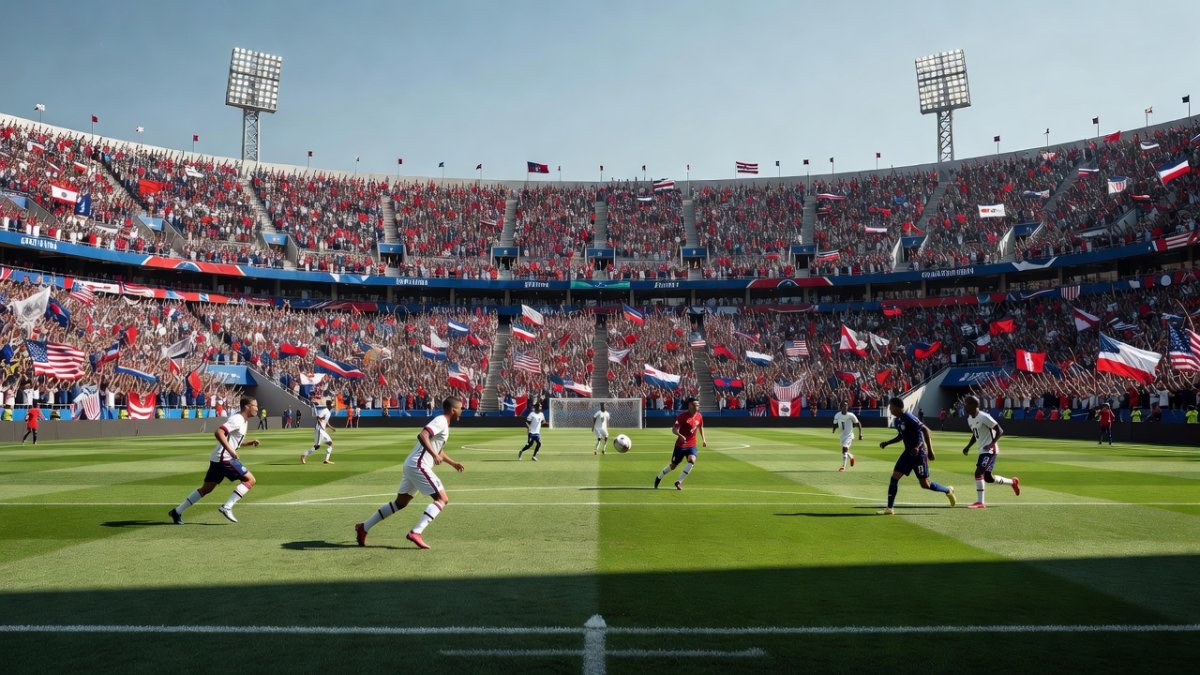
The Moment the Red Card Was Issued
Balogun, the Monaco forward who represents the United States, committed the offence in the second half at the 2026 tournament. Referee crews reviewed the footage and issued the red card on the field. USA coach Mauricio Pochettino immediately called it no red card at all. The decision stood until Thursday when a phone call from Donald Trump to FIFA president Gianni Infantino changed the outcome. Balogun will now feature in the last-16 clash, the first time since Garrincha's 1962 case that a World Cup red card produced no suspension.
FIFA's Article 27 Intervention
FIFA applied Article 27 to lift the automatic ban. The governing body offered no public explanation beyond the rule itself. Belgium's FA stated it was astonished and is now examining legal routes. Their coach Rudi Garcia compared the timing to an April Fools' joke, noting the fifth of July felt like the first of April inside FIFA headquarters. The Belgian federation added that repeated requests for information from FIFA received no reply. Court of Arbitration for Sport has already activated its ad hoc division to handle the matter.
European Football Bodies Respond
UEFA declared the move crossed a red line and placed the integrity of the game at stake. Former FIFA president Sepp Blatter stated plainly that red cards are not overturned by political phone calls. Norway coach Stale Solbakken called the ruling a bad, bad, bad, bad, bad decision. These reactions arrived while England defeated Mexico 3-2 in their own round-of-16 tie, with Jarell Quansah sent off. England coach Thomas Tuchel asked publicly where the interference would start and end, even joking that he might need to call Trump to clear Declan Rice and Michael Olise yellow cards ahead of the quarter-final against Norway.
Why This Matters for Bafana Bafana and SAFA
South African supporters know the sting of uneven officiating from years of watching Bafana Bafana fight for every break in Africa Cup of Nations qualifiers and World Cup preliminaries. SAFA has invested heavily in referee training and video technology through the Premier Soccer League's MultiChoice Diski Challenge pathway. When FIFA bends its own disciplinary code after a single phone call, it undermines every grassroots referee course run in townships from Soweto to Khayelitsha. Young players in the SAFA development structures learn the rules only to see those rules bent at the highest level. National pride suffers when African federations sense that political weight can erase sanctions that would otherwise sideline a key striker.
Governance Failures and African Football's Stake
African football depends on consistent application of FIFA statutes because smaller nations lack the leverage of major federations. SASCOC and SAFA have long pushed for transparent governance at continental level precisely to protect teams like Bafana Bafana from arbitrary rulings. The Balogun precedent raises the question of whether a similar intervention could occur in a future match involving South Africa or another African side. If Article 27 can be triggered by external pressure, then every CAF qualifier and every PSL title race that feeds into national team selection faces new uncertainty. Transformation targets set by the Department of Sport, Arts and Culture lose meaning when the global rulebook itself becomes negotiable.
CAS Ad Hoc Division and the Road Ahead
The Court of Arbitration for Sport has opened its expedited process. Belgium's federation is preparing formal submissions while England prepares for Norway without clarity on whether further political requests will follow. South African fans following the tournament on SuperSport will watch these developments closely because the outcome shapes the credibility of every future World Cup decision affecting African teams. When the integrity of red cards can be questioned by phone calls rather than evidence, the entire structure that supports Bafana Bafana's next qualification campaign comes under pressure. The precedent set in 2026 will echo through SAFA boardrooms and PSL clubhouses for years.
 By Dante Williams, Staff Writer
This article was produced with AI-assisted research and editorial support. Reporting is based on sources cited in the article.
What's Your Reaction?
 Like
0
Like
0
 Dislike
0
Dislike
0
 Love
0
Love
0
 Funny
0
Funny
0
 Wow
0
Wow
0
 Sad
0
Sad
0
 Angry
0
Angry
0

Breaking News and Investigations Correspondent at Global1.News. Based in London, covering global breaking news, security, and investigative stories. Known for digging deeper and connecting the dots across continents.











Comments (0)