
Dreams in Transit: Venice's Piazza San Marco Hosts 100 Refugee Portraits in Heartfelt Biennale Installation
In one of the world's most famous public squares, one hundred faces turned away from the crowds and looked inward — not in shame, but in quiet invitation. The Procuratie Vecchie, the historic arcade lining Venice's Piazza San Marco, became the canvas for a powerful statement on human displacement in September 2025, as the "Dreams in Transit" installation transformed its 16th-ce
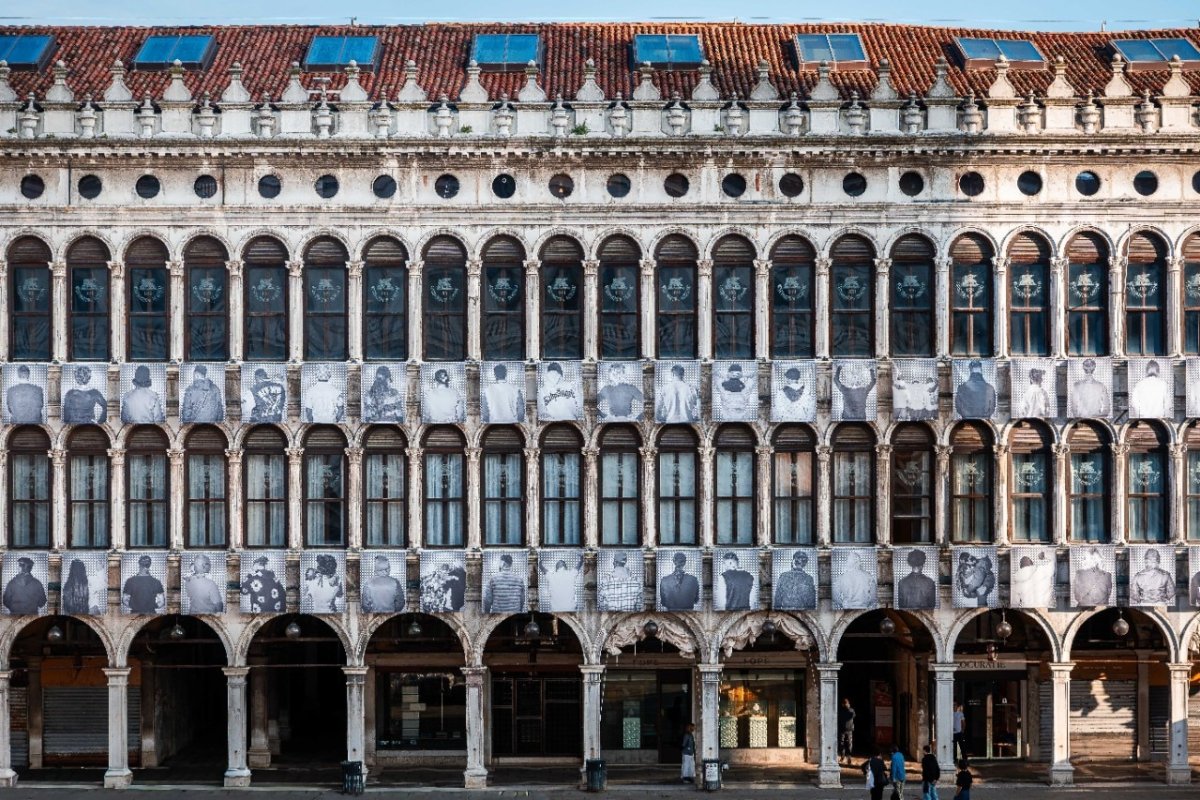
In one of the world's most famous public squares, one hundred faces turned away from the crowds and looked inward — not in shame, but in quiet invitation. The Procuratie Vecchie, the historic arcade lining Venice's Piazza San Marco, became the canvas for a powerful statement on human displacement in September 2025, as the "Dreams in Transit" installation transformed its 16th-century facade into a gallery of refugee and migrant portraits during the Venice Architecture Biennale.
Dreams in Transit: Venice's Piazza San Marco Hosts 100 Refugee Portraits in Heartfelt Biennale Installation
Venice, Italy — In a city built by migrants and traders, where marble came by sea from Greece and Egypt and where Venetian merchants once connected Africa, Asia, and Europe, a new installation reminds the world that the human movement has never stopped — it has only changed shape.
The Installation: A Hundred Portraits, One Collective Voice
The "Dreams in Transit" installation ran from September 3 to 7, 2025, placing 100 black-and-white photographic portraits directly onto the facade of the Procuratie Vecchie in Piazza San Marco, Venice. Each portrait was shot from behind, known as di spalle, so the subjects' backs faced viewers while their faces turned toward the building's windows.
This positioning framed every person within the 16th-century windows of the Procuratie Vecchie, turning the historic structure itself into part of the artwork. The approach reversed the usual frontal portrait style and made the invisible visible by inviting passersby to imagine the stories behind each turned back.
The project drew inspiration from French artist JR's celebrated Inside Out participatory project, which has placed large-scale portraits in public spaces worldwide. Here the same spirit created a choral tableau that formed new forms of community through art rather than isolation.
Art for Action Foundation curated the entire display. Amandine Lepoutre, Gabriele Galateri di Genola, and Emma Ursich presented the work, bringing together photographers, refugees, and local organizers to ensure every portrait carried authentic weight.
Viewers in the square saw the portraits change with the light throughout the day, the black-and-white images gaining depth against the warm Venetian stone. The installation asked people to pause in one of Europe's busiest tourist spots and consider movement as a shared human thread.
The reversal of traditional portraiture gave the work its quiet power. Instead of demanding eye contact, the portraits offered space for reflection, turning the Procuratie Vecchie into a temporary gallery that spoke directly to the theme of displacement.
The Human Safety Net: A Foundation's Mission in Focus
The Human Safety Net, founded by the Generali insurance group, supported the installation as part of its ongoing commitment to refugees. The foundation's "For Refugees" program, launched in 2017, has supported over 13,000 people across 6 countries through training and entrepreneurship initiatives.
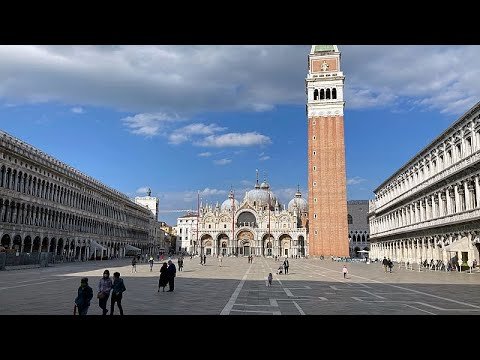
The Procuratie Vecchie itself was restored by David Chipperfield Architects and opened to the public in 2022, transforming former government offices into a space for cultural projects. This restoration allowed The Human Safety Net to host its permanent interactive exhibition "A World of Potential" on the ground floor.
Through the "For Refugees" program the foundation has helped create more than 650 start-ups and 1,500 jobs. It works with nonprofits and private-sector partners across Europe, Asia, and South America to focus on integration rather than temporary aid.
The same building that now displays the portraits also houses ongoing programs that connect refugees with language training and business support. The Human Safety Net brings together organizations that share practical resources instead of leaving people to navigate systems alone.
Staff at the foundation note that the portraits on the facade extend the work happening inside. Visitors who see the installation often step into the permanent exhibition to learn more about the concrete steps being taken in multiple countries.
The partnership between the restored Procuratie Vecchie and The Human Safety Net shows how historic spaces can serve contemporary needs. The foundation continues to expand its reach while keeping the focus on long-term integration for those who have crossed borders.
African Migration in the Global Narrative
Among the 100 portraits, several captured the African migrant experience, including journeys that began in Senegal. Many Senegalese make the perilous journey across the Mediterranean, one of the deadliest migration routes in the world, seeking safety and opportunity in Europe.
The Human Safety Net works directly with refugees from Africa, the Middle East, and Afghanistan. Its programs in Italy and elsewhere emphasize training that leads to employment, moving beyond statistics to individual stories of resilience.
The Mediterranean crossing remains central to African perspectives on displacement and belonging. Families in Dakar and Saint-Louis often wait for news from relatives who have taken the sea route, carrying both hope and the weight of uncertainty.
Organizations such as NaTakallam connect refugees as language tutors, allowing people to earn income while sharing their own languages and cultures. This model appears in the work supported by The Human Safety Net across several countries.
Telling African migrant stories beyond numbers matters because statistics alone cannot convey the courage or the losses involved. The portraits on the Procuratie Vecchie gave faces and posture to experiences that many Europeans encounter only through headlines.
For Senegalese readers, these images echo conversations heard in markets and family compounds about why young people leave and what they carry with them. The installation placed those realities in one of the world's most photographed squares.
Art as Bridge: The Indoor Exhibition and Conference
An accompanying group exhibition on the third floor of the Procuratie Vecchie runs until March 15, 2026. It features works by Ange Leccia, Lorraine de Sagazan, Anouk Maugein, Leila Alaoui, and Sarah Makharine, each exploring themes of movement and memory.
The "After Migration: Dreams in Transit" conference took place on September 4, 2025, inside the same building. A short film titled "Sweet Refuge" premiered at the event, offering intimate portraits of life after arrival in new countries.
The panel brought together migrants, researchers, operators, and artists to discuss life after migration and the social impact of art. Participants shared practical examples of how creative projects can reduce isolation in host communities.
Leila Alaoui's photographs in the indoor exhibition documented journeys across North Africa, while Sarah Makharine's pieces examined the quiet moments of rebuilding. These works complemented the outdoor portraits by adding layers of personal detail.
The conference highlighted how art can serve as a bridge rather than a barrier. Artists and migrants spoke about the need for spaces where stories are heard without judgment, a theme that resonated with many in the audience.
Visitors to the third-floor exhibition can move from the large-scale facade portraits to smaller, more intimate works that reveal what happens once the journey ends. The combination keeps the conversation alive well beyond the initial five days of the outdoor installation.
Africa at the Architecture Biennale: A Growing Presence
The 19th Venice Architecture Biennale, themed "Intelligens: Natural. Artificial. Collective." and curated by Carlo Ratti, ran from May 10 to November 23, 2025. Togo presented its first-ever national pavilion at this edition, marking a clear step forward for African representation.
Diébédo Francis Kéré of Burkina Faso, the Pritzker Prize winner, featured prominently with projects that highlighted sustainable building practices rooted in local materials and knowledge. His presence underscored the continent's growing influence on global architectural discourse.
The 2023 edition, curated by Ghanaian-Scottish architect Lesley Lokko, had already placed African voices at the center. That focus carried into 2025, even as some African artists faced visa difficulties that prevented full participation two years earlier.
The WAAU collective drew attention to the significant African presence across multiple pavilions and collateral events. Discussions often returned to how architecture can address migration, climate, and community in cities from Dakar to Lagos.
Senegal's Saint-Louis, with its rich architectural heritage shaped by centuries of trade and movement, appeared in several talks as an example of resilient coastal design. Architects from the region shared how historic structures can inform contemporary responses to displacement.
African architects at the Biennale demonstrated creativity that goes beyond Western expectations. Their projects showed how design can support integration, preserve memory, and create spaces where newcomers and long-term residents meet on equal terms.
The Message That Remains
The outdoor installation concluded on September 7, yet the indoor exhibition continues through March 2026, allowing more visitors to engage with the portraits and related works. The Procuratie Vecchie has shifted from government offices to a public cultural space that now hosts these conversations year-round.
Migration appears here as a universal human experience that connects Africa to the rest of the world. The portraits invited viewers to imagine the faces behind the turned backs, turning absence into presence on one of Venice's most visible walls.
For African readers, the project underscores the importance of telling our own stories rather than leaving them to others. When Senegalese and other African voices shape the narrative, the focus moves from crisis to dignity and agency.
Art serves as a tool for humanizing refugees by replacing numbers with posture, clothing, and quiet strength. The black-and-white images on the facade asked people to see individuals instead of headlines.
The global community carries a responsibility to look beyond statistics. Installations like this one in Piazza San Marco create moments where that responsibility becomes personal, even if only for the time it takes to cross the square.
The Human Safety Net's programs and the Biennale's growing African presence together suggest that lasting change comes from sustained attention, not single events. The portraits may come down, but the questions they raised about belonging and movement remain open for continued dialogue.
By Amara Diop, Staff Writer
This article was produced with AI-assisted research and editorial support. Reporting is based on sources cited in the article.
What's Your Reaction?
 Like
0
Like
0
 Dislike
0
Dislike
0
 Love
0
Love
0
 Funny
0
Funny
0
 Wow
0
Wow
0
 Sad
0
Sad
0
 Angry
0
Angry
0

West Africa/Sahel Correspondent at Global1.News. Dakar-based journalist covering politics, security, climate, and development across Francophone and Anglophone West Africa. Tells the stories of a region undergoing profound transformation.









Comments (0)