
China's Strategic Realignment and South Korea's Narrowing Room for Maneuver
The Emerging Vocabulary of Managed Competition China's recent articulation of "constructive strategic stability" with the United States and a "new type of international relations" with Russia signals Beijing's intent to carve out strategic space for an international order no longer centered on Washington. During U.S. President Donald Trump's mid-May 2026 visit to Beijing, Chine
The Emerging Vocabulary of Managed Competition
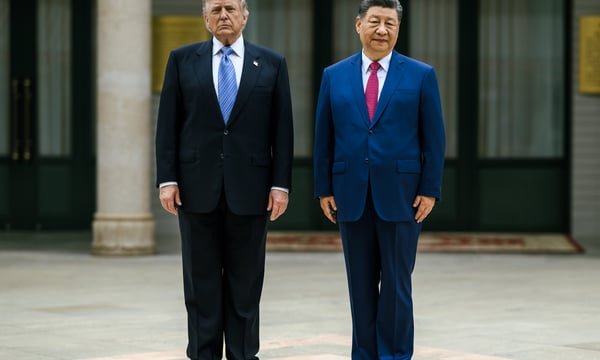
China's recent articulation of "constructive strategic stability" with the United States and a "new type of international relations" with Russia signals Beijing's intent to carve out strategic space for an international order no longer centered on Washington. During U.S. President Donald Trump's mid-May 2026 visit to Beijing, Chinese leaders demonstrated greater agency in defining the terms of bilateral engagement. Foreign Minister Wang Yi framed this stability as resilience built through exchange and cooperation, grounded in mutual respect for social systems, development paths, core interests, and major concerns. This approach avoids major concessions on trade or Taiwan while challenging the universalist assumptions of the liberal international order.
Only days later, President Xi Jinping hosted Russian President Vladimir Putin and advanced a joint declaration calling for an "equal and orderly multilateralism" amid a world undergoing profound changes. These moves illustrate Beijing's dual-track strategy: lowering tensions with Washington to manage competition and deepening coordination with Moscow to accelerate the transition away from U.S. leadership. The power to set the framework for these relationships has visibly shifted toward China, as evidenced by Washington's adoption of Beijing's phrasing on stability.
(The Diplomat / Global 1 News)
Implications for the US-ROK Alliance
South Korea's position within the US-ROK alliance faces direct pressure from this recalibration. The alliance, rooted in the 1953 Mutual Defense Treaty and reinforced through successive Status of Forces Agreements, has long anchored Seoul's security against North Korean threats. Yet China's reframing of U.S.-China ties around managed competition rather than outright confrontation reduces the automatic alignment that Washington once expected from allies. Trump's "America First" approach has already prompted European leaders to adjust their China policies, and similar dynamics are emerging in Northeast Asia.
Seoul must now navigate a U.S. partner less inclined to multilateral coordination and a Chinese neighbor explicitly seeking to limit American influence. Historical precedents, such as the 2016-2017 THAAD deployment crisis that triggered Chinese economic retaliation against Korean firms, underscore the risks of appearing too closely aligned with Washington. The Ministry of National Defense and the Blue House have historically balanced alliance commitments with economic interdependence, but the new Chinese vocabulary of "respect for core interests" places Taiwan and regional security arrangements under sharper scrutiny.
Inter-Korean Relations in a Triangular Context
The China-Russia-U.S. strategic triangle directly shapes prospects for inter-Korean dialogue. Beijing's emphasis on stability in the Taiwan Strait, described by Xi as the "most important issue in U.S.-China relations," extends to the Korean Peninsula, where China has long preferred managed tension over unification under Seoul's terms. Putin's need for Chinese economic support amid the Ukraine conflict further aligns Moscow with Beijing's preference for a divided peninsula that limits U.S. forward presence.
South Korean administrations from Kim Dae-jung's Sunshine Policy onward have sought greater autonomy in engaging Pyongyang, yet these efforts have repeatedly encountered Chinese veto power through the UN Security Council and bilateral economic leverage. The 2026 summits reinforce perceptions that any major inter-Korean initiative requires at least tacit Chinese acquiescence. This dynamic constrains Seoul's ability to pursue independent confidence-building measures without risking friction in the US-ROK alliance or economic disruption from Beijing.
Economic Centrality and Chaebol Vulnerabilities
China's demonstrated economic centrality amplifies these security dilemmas for South Korean conglomerates. The source text notes Beijing's role in supplying rare earth elements and absorbing U.S. agricultural exports, illustrating the leverage available to Chinese policymakers. Korean chaebols such as Samsung Electronics and Hyundai Motor maintain extensive supply chains and market exposure in China, a pattern that intensified after the 1997 Asian financial crisis and continued through China's WTO accession.
Trump's unilateralism has reinforced regional perceptions of China's indispensability, as seen in the 2025 SCO summit attendance by Indian Prime Minister Modi and the ASEAN-China FTA 3.0 upgrade protocol. For Seoul, any escalation in U.S.-China friction risks secondary sanctions or market access restrictions that could disproportionately affect export-oriented industries. The Korea Development Institute and other policy bodies have long documented this exposure, yet diversification efforts remain gradual and incomplete.
Seoul's Delicate Balancing Act
South Korea's foreign policy establishment confronts a narrowing set of options. The Ministry of Foreign Affairs must maintain alliance interoperability with U.S. forces while preserving access to Chinese markets and avoiding entanglement in great-power disputes over Taiwan or the South China Sea. Xi's red line on Taiwan, coupled with Trump's post-Beijing remark that he was "not looking to have somebody go independent," signals that Washington may accept tighter constraints on alliance activities near the strait.
Regional security implications extend beyond the peninsula. Improved Chinese relations with ASEAN and India suggest a broader diplomatic offensive that could isolate Seoul if it appears overly tethered to U.S. positions. Historical patterns, including the 2008-2012 period when Lee Myung-bak's administration tilted toward Washington and faced Chinese economic pressure, indicate that overt alignment carries measurable costs. Conversely, excessive accommodation of Beijing risks alliance erosion at a time when North Korean capabilities continue to advance.
Academic analysis of middle-power diplomacy highlights that states like South Korea succeed when they retain agenda-setting capacity rather than merely reacting to great-power frameworks. The current shift in vocabulary toward "constructive strategic stability" tests whether Seoul can articulate its own terms for stability on the peninsula or will instead operate within parameters defined in Beijing and Washington.
Future Uncertainties and Institutional Responses
Details on how these diplomatic shifts will translate into concrete policy changes remain limited at present. South Korean institutions, including the National Security Council and the Korea Institute for International Economic Policy, are monitoring developments without clear operational roadmaps. The absence of explicit U.S. endorsement for China's preferred terminology does not eliminate the structural pressure on alliance cohesion.
Over time, Seoul may need to reassess force posture, economic diversification timelines, and multilateral engagement strategies. The interplay between China's outreach to Russia, its management of U.S. competition, and its regional economic magnetism will continue to define the boundaries within which South Korea pursues both security and prosperity.
By Prof. David Park, Staff WriterThis article was produced with AI-assisted research and editorial support. Reporting is based on sources cited in the article.
What's Your Reaction?
 Like
0
Like
0
 Dislike
0
Dislike
0
 Love
0
Love
0
 Funny
0
Funny
0
 Wow
0
Wow
0
 Sad
0
Sad
0
 Angry
0
Angry
0

East Asia/Technology Correspondent at Global1.News. Seoul-based voice covering Korean politics, technology, business, and culture. Analyzes how technology and geopolitics intersect across East Asia.













Comments (0)