
Iran Bids Farewell to Khamenei: Millions March in Historic Six-Day State Funeral
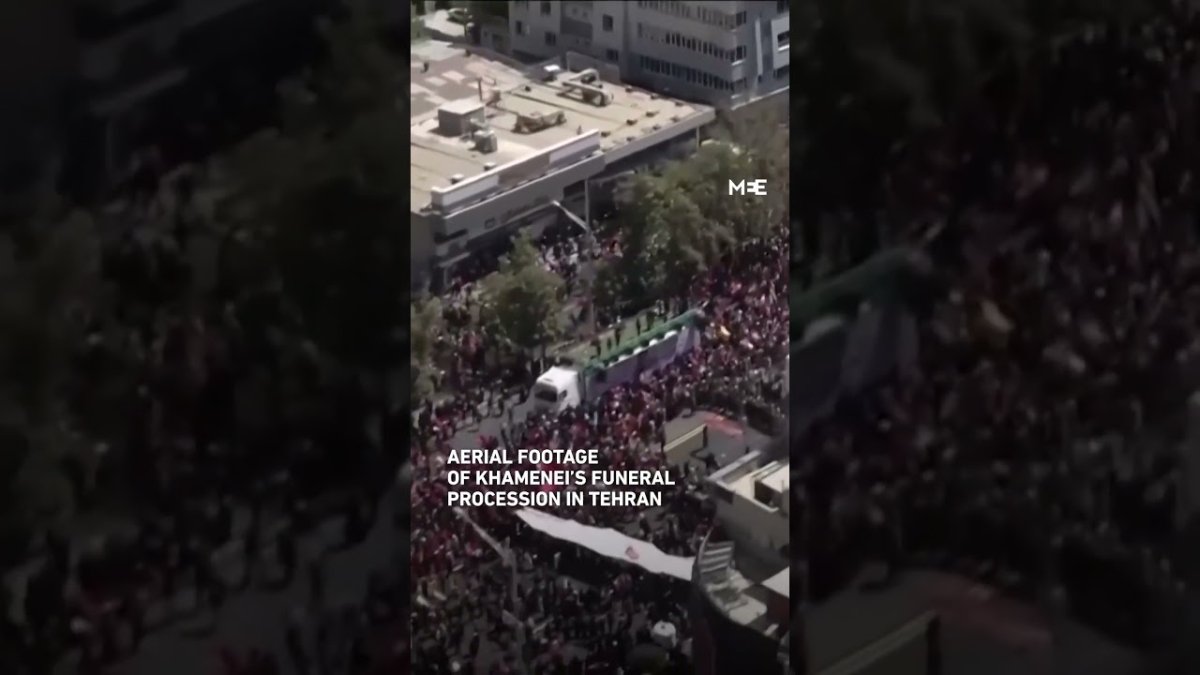
In a recent Middle East Eye report, aerial footage from the funeral procession of Iran's late Supreme Leader, Ayatollah Ali Khamenei, showed hundreds of thousands of people marching through the streets of Tehran. The images reveal the scale of an event that Iranian officials have described as the largest public gathering in the country's modern history. Iran Bids Farewell to Kh
In a recent Middle East Eye report, aerial footage from the funeral procession of Iran's late Supreme Leader, Ayatollah Ali Khamenei, showed hundreds of thousands of people marching through the streets of Tehran. The images reveal the scale of an event that Iranian officials have described as the largest public gathering in the country's modern history.
Iran Bids Farewell to Khamenei: Millions March in Historic Six-Day State Funeral
Tehran, Iran – July 7, 2026 —
Aerial Views Capture Unprecedented Crowds in Tehran
The Middle East Eye YouTube video opens with sweeping aerial footage captured by drones hovering over central Tehran on July 6 2026. Hundreds of thousands of mourners fill every visible street as the funeral procession for Ayatollah Ali Khamenei moves slowly through the capital. The camera pans across Enghelab Square and Valiasr Street where black-clad crowds stretch for kilometers in every direction creating a sea of flags and banners. The footage reveals the scale of the gathering with people packed shoulder to shoulder on rooftops and overpasses.
Khamenei was assassinated on February 28 2026 in a joint US-Israeli strike that marked the opening day of open conflict between Iran and the two allies. His body was preserved for more than four months using advanced techniques coordinated by Iranian medical teams and Russian specialists. The extended timeline allowed authorities to organize a 3000 kilometer route spanning five cities while ensuring security amid ongoing hostilities. Financial Times correspondents on the ground estimated that between 12 and 15 million people converged on Tehran alone making it the largest public gathering in Iran's modern history.
Analysts note that the sheer numbers reflect both genuine grief and organized mobilization by state institutions. The aerial shots show orderly lines of mourners moving in designated corridors while security forces maintain perimeters around sensitive sites. International observers embedded with the procession described the event as a demonstration of national cohesion at a time when Iran faces sustained military pressure. The video concludes with wide shots of the Grand Mosalla prayer hall where the coffin lay in state before the main march.
The Assassination That Shook the Region
On February 28 2026 a precision strike carried out by US and Israeli forces killed Supreme Leader Ayatollah Ali Khamenei at a secure compound outside Tehran. The operation came after months of escalating tensions during the second Trump administration when Israeli officials pressed Washington for decisive action against Iran's nuclear program and regional proxies. Intelligence reports later confirmed that Khamenei was the primary target with the strike timed to coincide with the first wave of coordinated attacks on Iranian military infrastructure.
Iran responded within hours by launching ballistic missiles at Israeli cities and US military installations in the Gulf. The barrage caused limited damage but signaled Tehran's willingness to escalate. Over the following weeks both sides exchanged further strikes while diplomatic channels remained closed. The four-month delay before Khamenei's funeral was attributed to the need for body preservation negotiations among political factions and extensive security planning for the multi-city procession.
Regional governments watched the developments with alarm. Saudi Arabia and the United Arab Emirates quietly reinforced their air defenses while Iraq and Turkey attempted to mediate. The assassination removed the central figure of Iran's theocratic system and left the Islamic Republic facing its most severe external challenge since the 1980s war with Iraq. Iranian officials described the killing as an act of state terrorism that would reshape the Middle East for years to come.
Foreign Delegations and Diplomatic Signals
Foreign delegations began arriving in Tehran on July 3 2026 for the state funeral. Saudi Arabia dispatched a senior diplomat from the Royal Court a move widely interpreted as a significant signal of thawing relations despite the ongoing regional conflict. The choice of envoy and the timing of the visit suggested Riyadh's interest in maintaining back-channel communications with Iranian authorities even as the war continued.
Quran verses recited during the ceremonies were carefully selected according to the nationality of each delegation. Passages emphasizing justice and resistance were read when Pakistani and Lebanese representatives were present while more conciliatory verses were chosen for Gulf Arab visitors. This practice known locally as funeral diplomacy allowed Iranian protocol officers to convey subtle political messages without formal statements.
Notable absences included representatives from several European countries that cited US pressure as the reason for their non-attendance. Turkey sent a high-level delegation led by the foreign minister while China and Russia dispatched special envoys. The presence or absence of each country was closely analyzed by Iranian media as an indicator of shifting alliances. Officials in Tehran described the event as an opportunity to gauge international support at a critical moment.
Tehran's Unprecedented Outpouring
Between July 4 and July 5 the coffin lay in state at the Grand Mosalla prayer hall where hundreds of thousands filed past each day. Security personnel organized the crowds into orderly queues that stretched for several kilometers. On July 6 the main procession moved through central Tehran with mourners chanting slogans calling for vengeance against President Trump and the United States. The chants echoed between high-rise buildings as participants waved portraits of Khamenei and Palestinian flags.
City authorities ordered the closure of all markets and adjusted public transport schedules to accommodate the crowds. Metro lines ran at reduced capacity while major roads were reserved exclusively for the procession. Hospitals remained on high alert and emergency services were deployed along the route. Residents reported that even normally bustling commercial districts remained shuttered for the entire day.
Personal accounts from mourners revealed a mixture of grief and political expression. One university student described traveling from Isfahan to join the procession while an elderly woman recounted how her family had preserved Khamenei's speeches on cassette tapes for decades. Foreign journalists noted that many participants framed their attendance as both a religious duty and a statement of defiance against external aggression. The atmosphere combined solemn remembrance with visible anger at the circumstances of Khamenei's death.
From Qom to Iraq — A Journey Through Holy Cities
On July 7 ceremonies were held in Qom the center of Shia religious scholarship. Senior clerics at the Fatima Masumeh shrine led prayers attended by thousands of seminary students and religious scholars. The city known for its theological seminaries became a focal point for discussions about the future of Iran's leadership structure. Local officials coordinated with national security forces to manage the influx of visitors from across the country.
The procession crossed into Iraq on July 8 stopping first at the Imam Ali shrine in Najaf and then at the Imam Hussein shrine in Karbala. These sites hold profound significance for Shia Muslims worldwide and the decision to include them in the route underscored the transnational character of the mourning. Iraqi authorities worked closely with Iranian counterparts to secure the border crossings and manage the movement of large crowds.
Families living along the route in southern Iraq reported heightened security measures including checkpoints and temporary road closures. Religious leaders in Najaf emphasized themes of unity and resilience during sermons delivered in the presence of Iranian officials. The cross-border coordination highlighted the deep historical and religious ties between the two nations even as both governments navigated the pressures of the ongoing conflict with the United States and Israel.
Burial in Mashhad and the Succession Question
The final stage of the funeral took place on July 9 when Khamenei's body was buried at the Imam Reza shrine in Mashhad his birthplace. The ceremony was attended by senior government figures and military commanders. Notably Mojtaba Khamenei the late leader's son was reportedly absent from all public ceremonies fueling speculation about his future role in Iranian politics.
The Assembly of Experts has not yet named a new Supreme Leader leaving a critical leadership vacuum at the height of the conflict. This delay has prompted intense behind-the-scenes negotiations among Iran's political and religious elites. Some analysts suggest that the absence of a swift appointment reflects deep divisions over the direction the country should take in the coming years.
The implications for Iran's political future remain uncertain. Without a designated successor questions persist about decision-making authority during the war and the potential for internal power struggles. Observers in Mashhad noted that the burial site itself carries symbolic weight as the resting place of the eighth Shia Imam reinforcing the religious legitimacy of the theocratic system even as its leadership structure faces unprecedented challenges.
Analysis — A Funeral at War
The six-day state funeral unfolded against the backdrop of active military conflict with the United States and Israel. Iranian authorities balanced the need to honor Khamenei with the practical requirements of wartime security. Economic pressures including sanctions and disrupted trade routes added to the difficulties of organizing such a massive event. Humanitarian concerns have grown as civilian casualties mount and essential services face strain from prolonged hostilities.
Regional reverberations were evident in the diplomatic signals sent through delegation choices and the cross-border segments of the procession. Public sentiment inside Iran appeared unified in grief yet divided on how to respond to the assassination. The funeral served as both a religious observance and a political demonstration of resilience.
For ordinary Iranians the human costs of the continuing war remain the most immediate reality. Families who traveled long distances to participate in the ceremonies spoke of lost relatives and economic hardship. The event highlighted the tension between national mourning and the urgent need to address the conflict's broader consequences for the region and its people.
By Fatima Al-Rashid, Staff WriterThis article was produced with AI-assisted research and editorial support. Reporting is based on sources cited in the article.
What's Your Reaction?
 Like
0
Like
0
 Dislike
0
Dislike
0
 Love
0
Love
0
 Funny
0
Funny
0
 Wow
0
Wow
0
 Sad
0
Sad
0
 Angry
0
Angry
0
Gulf/MENA Correspondent at Global1.News. Based in Doha, covering Gulf politics, energy markets, diplomacy, and development across the Middle East and North Africa. Tracks the economic transformation of the Gulf states.












Comments (0)