
Where Is Mojtaba Khamenei? Iran's Invisible Supreme Leader Tests Regional Stability
The sudden death of Iran's Supreme Leader Ali Khamenei in US-Israeli airstrikes has left the Islamic Republic without a visible guiding hand at a moment of acute regional tension. His son Mojtaba Khamenei, elected successor in March 2026, has not appeared publicly in over four months, fueling speculation that directly affects fragile ceasefire negotiations and the calculations
The sudden death of Iran's Supreme Leader Ali Khamenei in US-Israeli airstrikes has left the Islamic Republic without a visible guiding hand at a moment of acute regional tension. His son Mojtaba Khamenei, elected successor in March 2026, has not appeared publicly in over four months, fueling speculation that directly affects fragile ceasefire negotiations and the calculations of Gulf Arab states. This leadership vacuum tests the stability of proxy networks and energy routes across the Middle East.
Where Is Mojtaba Khamenei? Iran's Invisible Supreme Leader Tests Regional Stability
Tehran, Iran – July 6, 2026 — Four months after the Assembly of Experts elevated Mojtaba Khamenei to the position of Supreme Leader, the 56-year-old cleric remains absent from public view. His prolonged disappearance coincides with a delicate US-Iran ceasefire and ongoing questions about Iran's ability to project power through its regional proxies. The situation has drawn quiet concern from Gulf capitals and direct commentary from Israeli and American officials.
The Missing Successor: Four Months Without a Public Appearance
Mojtaba Khamenei was elected Supreme Leader on March 8-9, 2026, days after his father Ali Khamenei was killed in Operation Lion's Roar airstrikes. Since that vote, he has not been seen at any official event or religious gathering. Iranian state media have offered no recent footage or photographs to counter the growing narrative of absence.
Reports circulating in regional outlets suggest Mojtaba may be located in Qom, possibly unconscious following injuries sustained in the same February 28 strikes that killed his father. The Iran Health Ministry has described his condition as involving only "a few stitches," yet no independent verification has emerged. Three of his brothers—Mostafa, Meysam, and Masoud—attended the July 5-6 state funeral in his place.
Security Threats or Incapacitation? The Debate Over Mojtaba's Condition
Israeli Defense Minister Israel Katz stated publicly that Mojtaba remains "marked for death," citing ongoing security concerns. This declaration has been interpreted by some analysts as both a threat and an explanation for the new leader's seclusion. Iranian Foreign Minister Abbas Araghchi warned the United States and Israel against any attempt to target the funeral proceedings, underscoring Tehran's sensitivity to further strikes.
President Masoud Pezeshkian claimed to have met Mojtaba in recent weeks, but no photographic or video evidence has been released to support the assertion. The combination of official reassurances and visible non-appearance has deepened uncertainty inside and outside Iran about whether the Supreme Leader is physically capable of exercising authority.
Funeral Without the Successor: Tehran's Week of Mourning
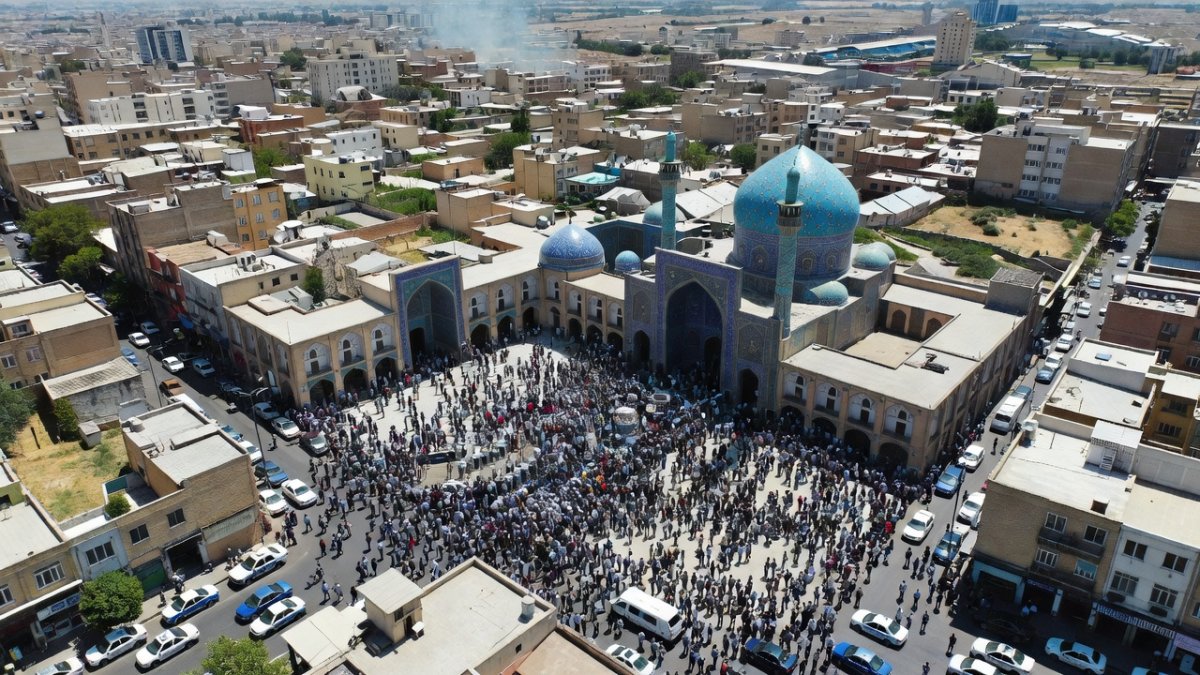
Hundreds of thousands of mourners filled Tehran's streets during the July 5-6 funeral for Ali Khamenei, chanting slogans of revenge against the United States and Israel. The absence of Mojtaba from these events was conspicuous, with his brothers representing the family at the main ceremonies. State television avoided any direct reference to the new Supreme Leader's whereabouts.
The scale of public participation demonstrated continued popular attachment to the Khamenei name, yet the lack of a visible successor left many questions unanswered about continuity of leadership. Iranian officials focused on themes of resilience while sidestepping inquiries about Mojtaba's condition.
Regional Analysts Weigh In: Credibility at Risk
Geopolitical analyst Riad Kahwaji, speaking on Al Arabiya English, noted that Mojtaba's prolonged absence undermines the credibility of Iran's claim to stable succession. He emphasized that regional actors require clear lines of authority when assessing the durability of any ceasefire agreement.
Adi Schwartz of the Misgav Institute observed that the situation creates exploitable ambiguity for Israel and the United States. Both analysts highlighted how the lack of visible leadership complicates efforts by Turkey and other mediators to identify reliable interlocutors for ongoing talks.
Geopolitical Fallout: Ceasefire Talks, Israeli Deterrence, and Gulf Concerns
Turkey has been attempting to mediate a broader ceasefire without clarity on who ultimately holds decision-making power in Tehran. The fragile US-Iran truce reached after Operation Lion's Roar now faces additional strain as questions mount over whether Mojtaba can enforce any commitments made by Iranian negotiators.
Gulf Arab states have expressed private concern that a leaderless Iran could either lash out through proxies or descend into internal power struggles. Israeli deterrence calculations have been adjusted to account for the possibility that Mojtaba may never fully assume operational control.
Strategic Calculus: What Each Side Wants from Iran's Paralysis
Washington and Jerusalem appear content to maintain pressure while the Iranian leadership remains in limbo, calculating that time works against Tehran's ability to reconstitute its nuclear and proxy infrastructure. President Trump's June 3 remark that he "would like to meet" Mojtaba signaled openness to direct engagement if the new leader emerges.
Iranian hardliners, meanwhile, seek to project strength through public displays of mourning and revenge rhetoric, hoping to deter further external intervention. Gulf states prioritize avoiding any escalation that could disrupt energy markets or draw them into direct conflict.
Regional Implications: Stability, Energy Markets, and Alliance Dynamics
The uncertainty surrounding Mojtaba Khamenei affects more than Iran's internal politics. Proxy groups across Iraq, Syria, Lebanon, and Yemen are watching for signals of continued funding and strategic direction. Any prolonged vacuum risks fragmentation within these networks.
Energy markets remain sensitive to even minor indications of instability in the Strait of Hormuz. Gulf Cooperation Council members have quietly accelerated coordination with the United States on maritime security arrangements while the Iranian leadership question persists.
The absence of Iran's Supreme Leader four months into his tenure has introduced a new layer of unpredictability into Middle East diplomacy. Until Mojtaba Khamenei reappears or a clear alternative authority structure emerges, regional actors will continue to hedge their bets on the durability of current ceasefires and the direction of Iranian foreign policy.
By Malik Hassan, Staff WriterThis article was produced with AI-assisted research and editorial support. Reporting is based on sources cited in the article.
What's Your Reaction?
 Like
0
Like
0
 Dislike
0
Dislike
0
 Love
0
Love
0
 Funny
0
Funny
0
 Wow
0
Wow
0
 Sad
0
Sad
0
 Angry
0
Angry
0

Middle East Correspondent at Global1.News. Based in Beirut, covering politics, conflict, energy, and society across the Middle East. Brings context and depth to a region often reduced to headlines.











Comments (0)