
Tamil Nadu Government Hospitals to Become Like Private Hospitals? Big Health Reform Announced!
**Keywords:** Tamil Nadu healthcare reform, Dr. K.G. Arunraj, TVK government, Rajiv Gandhi Government General Hospital, Aadhaar appointment app, NEET opposition, Ayushman Bharat, public private healthcare India, Madras Medical College, rural health vehicles Chennai Chennai is witnessing a transformative push in public healthcare as Tamil Nadu's new Health Minister Dr. K.G. Arun
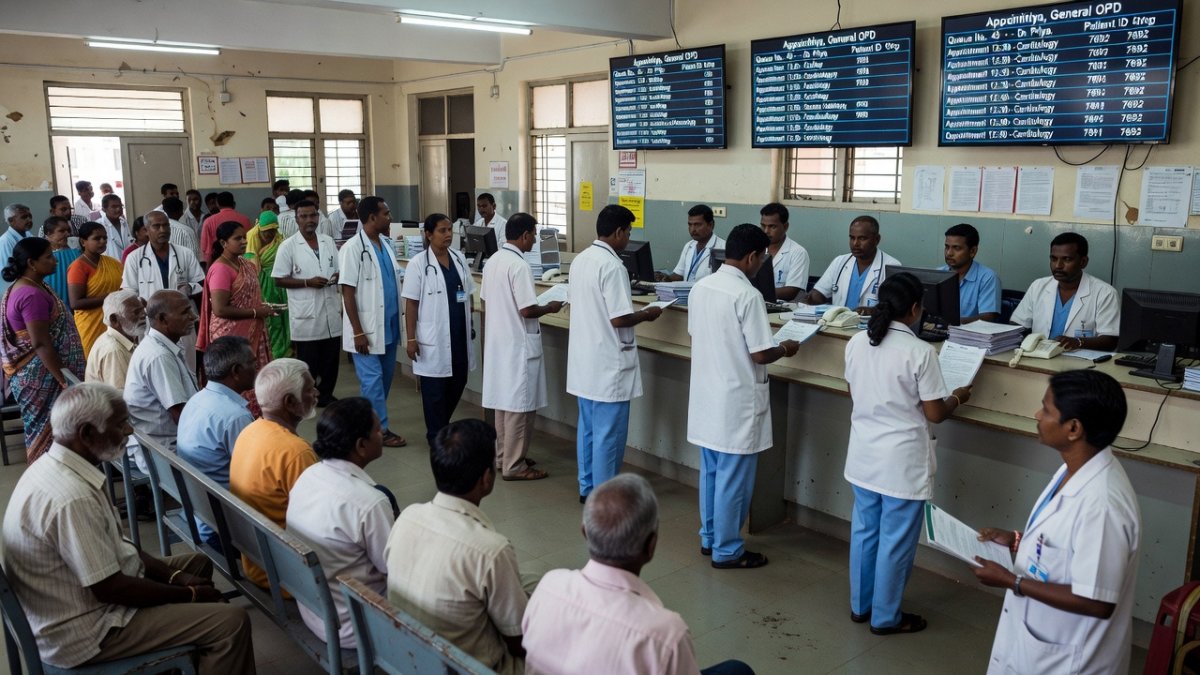
Chennai is witnessing a transformative push in public healthcare as Tamil Nadu's new Health Minister Dr. K.G. Arunraj rolls out a series of reforms aimed at making government hospital facilities comparable to private institutions. At Rajiv Gandhi Government General Hospital, which handles 3,000 out-patients daily, patients currently wait two to three hours for registration — a bottleneck the state now intends to eliminate through a digital-first overhaul.
Tamil Nadu Launches Major Government Hospital Overhaul: App-Based Bookings, Weekly Patient Committees, and a Push for Private-Sector Standards
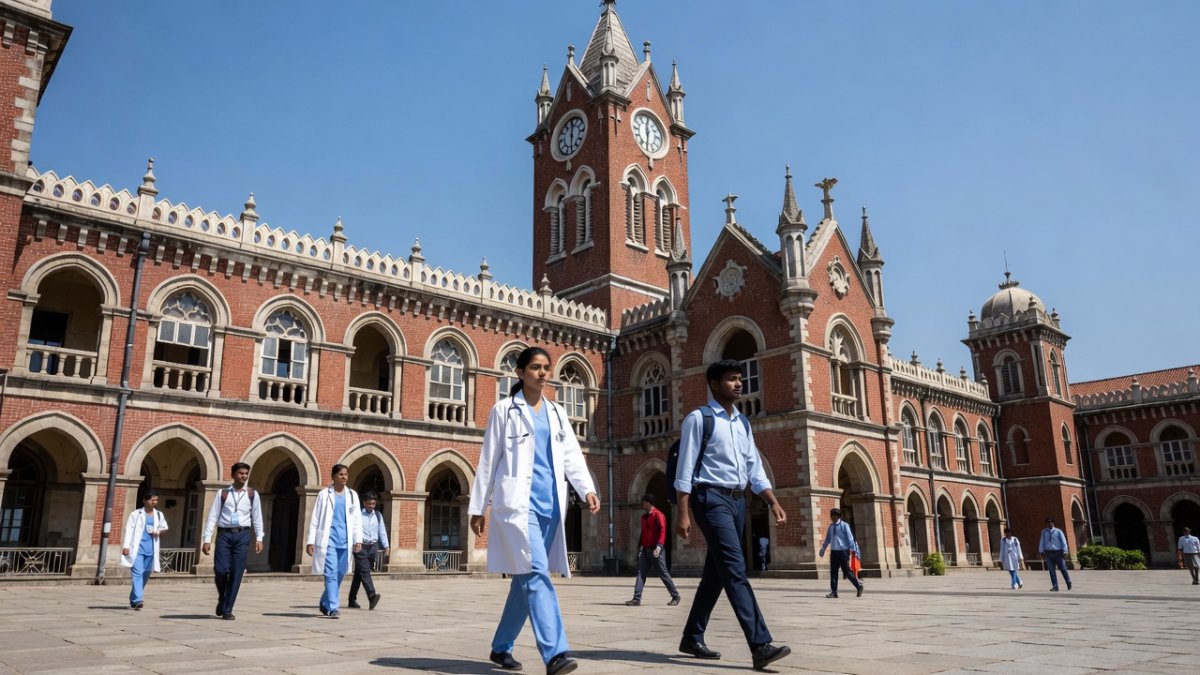
Chennai, Tamil Nadu – June 19, 2026 — The TVK government, which assumed office in May 2026 under Chief Minister C. Joseph Vijay, has placed healthcare reform at the centre of its agenda. Health Minister Dr. K.G. Arunraj, an alumnus of Madras Medical College, outlined concrete steps to raise standards in state-run facilities during his first official review meeting at the college on 20 May 2026.
App-Based Aadhaar Booking to Cut Registration Delays
An app-based doctor appointment system will allow patients to book slots using Aadhaar before arriving at hospitals. At Rajiv Gandhi Government General Hospital in Chennai, which handles 3,000 out-patients daily, current registration waits stretch two to three hours. The digital system directly targets this bottleneck and aligns with Tamil Nadu's existing digital health infrastructure. Minister Arunraj stated that the project will be launched on a pilot basis and expanded based on feedback, as reported by The New Indian Express on 12 June 2026.
Patient Experience Committee to Meet Weekly
A dedicated patient experience committee will convene every week to review lapses and hospital needs. This mechanism introduces continuous monitoring rather than periodic inspections, a shift from earlier practices in many Indian states where feedback loops remain weak. The committee's mandate includes analysing infrastructure gaps, staff shortages, and patient grievance patterns across Tamil Nadu's government healthcare network.
Target: Government Hospitals Comparable to Private Facilities
Dr. Arunraj stated that Tamil Nadu must benchmark its healthcare against developed countries and ensure government hospitals deliver experiences on par with private institutions. "Healthcare and a positive hospital experience are basic human rights," the minister said, moving beyond the traditional focus on treatment alone. This framing signals a significant policy shift: the government is no longer content with simply providing free care — it wants that care to be competitive with paid alternatives.
Forty New Health Vehicles Flagged Off for Rural Chennai
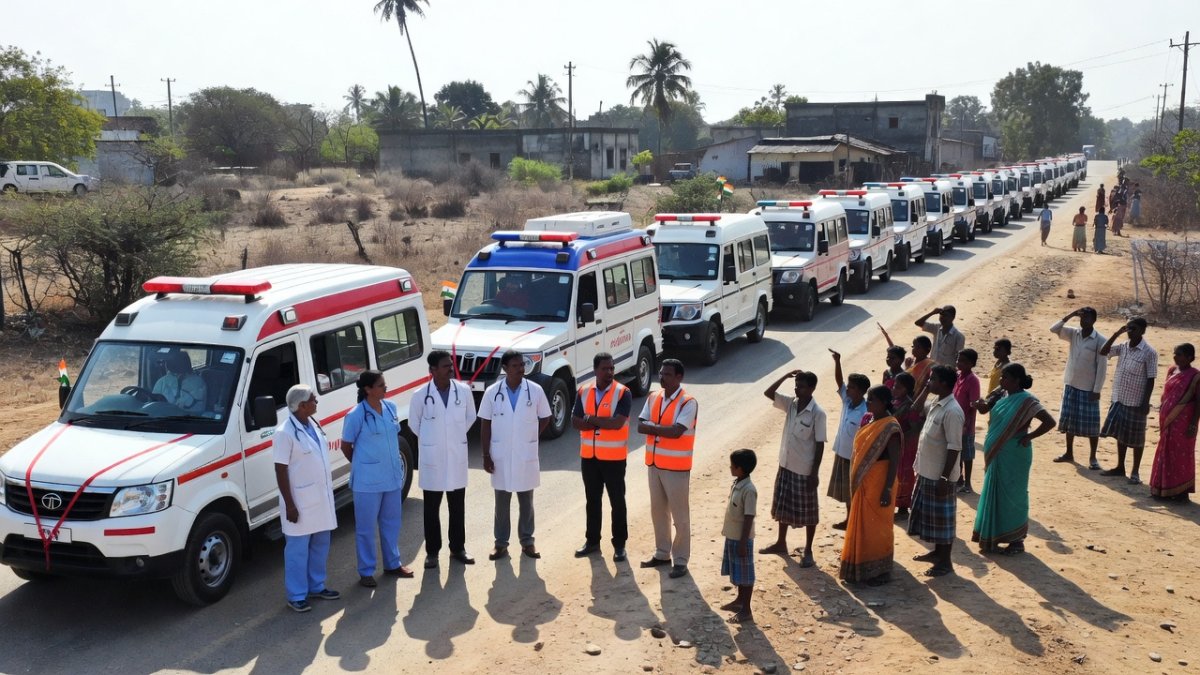
The government has deployed 40 health vehicles valued at ₹2.90 crore to strengthen rural outreach in Chennai's peripheral areas. These mobile units address last-mile access gaps that persist despite Tamil Nadu's relatively strong primary-care network compared with many other states. The vehicles, flagged off by Chief Minister Vijay in late May 2026, are equipped for basic diagnostics, maternal health check-ups, and vaccine delivery.
Restating Opposition to NEET at Alma Mater
During the Madras Medical College review, Dr. Arunraj reiterated the state's long-standing opposition to NEET. Tamil Nadu continues to argue that the centralised test disadvantages students from government schools and rural backgrounds, a position that intersects with ongoing national debates on medical education equity. The minister's first official review — held at his own alma mater — was a deliberate signal of continuity in the state's stance against the examination, which the Tamil Nadu assembly has repeatedly sought exemption from through legislative bills that have not received Presidential assent.
Connecting Reforms to National Schemes like Ayushman Bharat
Tamil Nadu's initiatives complement Ayushman Bharat's hospital-empanelment model while addressing its documented shortcomings in patient navigation and wait-time management. The state's emphasis on digital booking and weekly oversight could serve as a template for other states implementing the national health protection scheme, where public facilities often struggle with high footfall. India's healthcare split remains stark, with private providers handling over 70 percent of outpatient care in many states, creating a dual-track system that disadvantages lower-income households.
Implications for Patients, Taxpayers and Policy
For the 3,000 daily out-patients at Rajiv Gandhi Hospital alone, reduced registration time translates into lower wage loss and faster diagnosis. Taxpayers funding both state facilities and Ayushman Bharat will see improved utilisation rates if similar reforms scale across Tamil Nadu's 2,000-plus government hospitals. The approach also pressures private hospitals to maintain competitive standards rather than relying solely on perceived quality gaps. Industry observers note that Tamil Nadu has historically maintained one of India's strongest public health systems — the state's infant mortality rate of 16 per 1,000 live births and maternal mortality ratio of 60 per 100,000 births are among the best in the country — yet rising expectations and medical inflation have widened perceived quality gaps.
Broader Context: Public-Private Dynamics in Indian Healthcare
The reforms arrive against a backdrop where out-of-pocket healthcare expenditure still pushes millions of Indian households into financial distress annually. By upgrading government facilities to private standards, Tamil Nadu aims to reduce this burden directly. The state's public health expenditure as a share of its budget has historically been above the national average, and the current reform push builds on that foundation. If successful, the model could influence healthcare policy discussions in other states and at the central level, where the balance between public provision and private participation remains a contentious issue.
Outlook for Implementation and Accountability
Success hinges on timely rollout of the Aadhaar-linked app, consistent committee functioning, and integration with existing health-management information systems. Minister Arunraj has set an ambitious timeline, with the pilot expected within weeks. If executed well, Tamil Nadu could demonstrate how state-level innovation strengthens India's mixed healthcare model while upholding the principle that quality care in government hospitals is a right, not a privilege. The coming months will test whether the TVK government can translate its policy declarations into measurable improvements at the bedside — and whether other states will follow its lead.
— By Dr. Raj Patel, Staff Writer
This article was produced with AI-assisted research and editorial support. Reporting is based on sources cited in the article.
What's Your Reaction?
 Like
0
Like
0
 Dislike
0
Dislike
0
 Love
0
Love
0
 Funny
0
Funny
0
 Wow
0
Wow
0
 Sad
0
Sad
0
 Angry
0
Angry
0

India/South Asia Correspondent at Global1.News. Analytical voice with a background in science and health journalism. Based in New Delhi, covering Indian politics, education, healthcare, technology, and policy. Breaks down complex data into clear, actionable reporting.














Comments (0)