
Chile Floods: 13 Dead, 100,000 Isolated in Climate Crisis
They came without mercy — walls of muddy water, crashing through the arid valleys of Chile's Norte Chico where rain is supposed to be a blessing, not a death sentence. By the time the floodwaters began to recede across the Coquimbo and Atacama regions, at least 13 people were dead, 18 were missing, and more than 100,000 residents had been cut off from the outside world. The July 2026 floods have carved a path of destruction across a swath of Chile that rarely sees this muc...
They came without mercy — walls of muddy water, crashing through the arid valleys of Chile's Norte Chico where rain is supposed to be a blessing, not a death sentence. By the time the floodwaters began to recede across the Coquimbo and Atacama regions, at least 13 people were dead, 18 were missing, and more than 100,000 residents had been cut off from the outside world. The July 2026 floods have carved a path of destruction across a swath of Chile that rarely sees this much rainfall in an entire year, let alone in a matter of days — and the health emergency is just beginning.
Latin America Floods: 13 Dead, Over 100,000 Isolated as Catastrophe Engulfs Chile and Beyond
Santiago, Chile — The numbers alone tell a harrowing story: 13 dead, 18 missing, 2,661 homes with major damage, and 99,000 to 104,000 people isolated across 10 of Chile's 16 regions. But behind every statistic is a family swept away, a community underwater, a hospital flooded, and a health system scrambling to contain what comes next. The floods that struck Chile in July 2026 are part of a broader pattern of extreme rainfall battering Latin America — from the Arequipa region of Peru to the northeastern coast of Brazil — driven by an El Niño pattern supercharged by climate change.
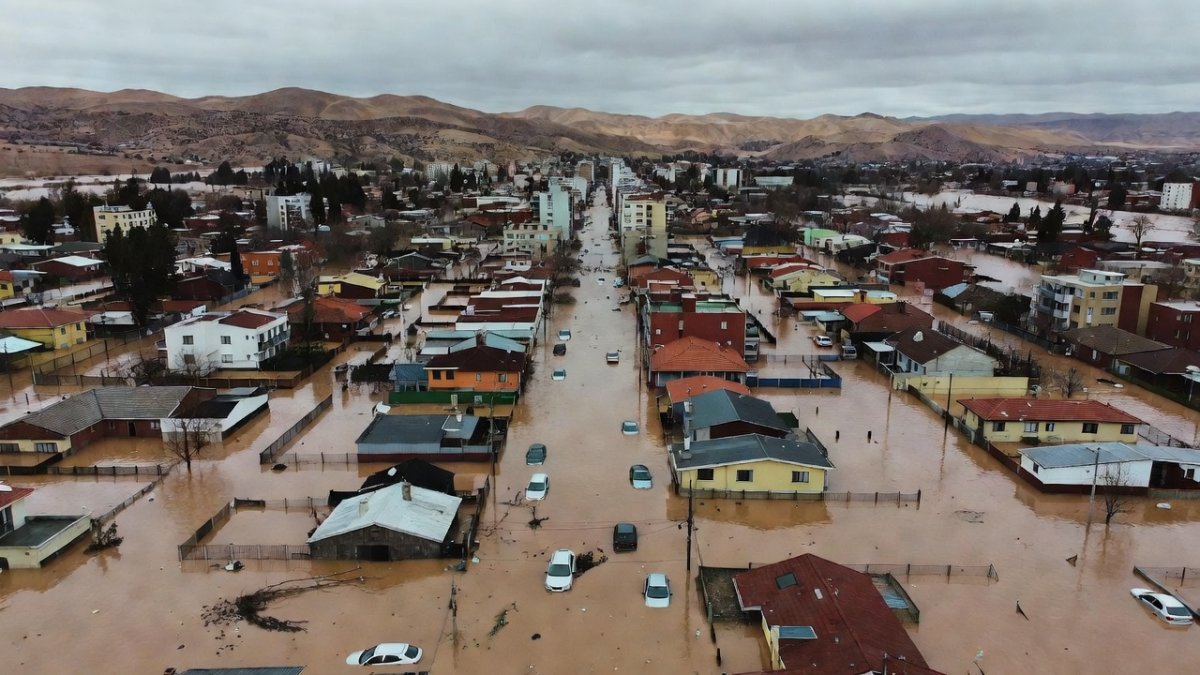
More Than a Dozen Dead as Floods Ravage Chile's Norte Chico
What began as a series of frontal systems arriving over the Andes quickly escalated into a full-scale meteorological catastrophe. Multiple waves of storms, including an atmospheric river that funneled tropical moisture directly into the arid Norte Chico region, dumped between 100 and 350 millimeters of rain in just days — in some areas, a month's worth of precipitation fell in hours. The Coquimbo and Atacama regions, accustomed to some of the driest conditions on Earth, were completely unprepared for the deluge.
The floodwaters did not come gently. Rivers and canals overflowed their banks, mudslides known locally as aluviones tore through hillside communities, and entire neighborhoods were submerged under meters of muddy, debris-filled water. In Coquimbo, the historic port city of La Serena saw its streets turned into rivers, with cars, furniture, and livestock swept toward the Pacific. President Jose Antonio Kast declared a constitutional State of Catastrophe in the hardest-hit regions, authorizing the military to conduct helicopter rescues, deliver emergency supplies, and evacuate stranded residents from rooftops and high ground.
SENAPRED, Chile's national disaster prevention and response agency under Director Alicia Cebrian, had issued warnings days in advance. But the scale of the flooding overwhelmed even the most prepared communities. By the time the first storm wave passed, at least 1,100 homes had been destroyed or rendered uninhabitable. An additional 19,000 homes suffered minor damage across regions stretching from Atacama in the north to La Araucania in the south. Power outages cut electricity to 87,000 households, and Ruta 5 Norte — the country's principal highway — was severed in multiple places by washed-out bridges and landslides.
Among the casualties were families caught in their homes as the waters rose, drivers swept off roads by flash floods, and residents of informal settlements built on vulnerable terrain. Search and rescue teams continued to find bodies days after the initial flooding, with the official death toll climbing from 5 to 10 to 13 as recovery efforts expanded into isolated rural areas. As of late July, 18 people remained missing, presumed trapped in debris fields or swept out to sea.
Health Emergency: Water Contamination and Disease Prevention
With the floodwaters came a silent, invisible threat. As the streets of La Serena, Coquimbo, and Vallenar drained, they left behind a cocktail of raw sewage, industrial runoff, and chemical waste. The same water that had destroyed homes had also overwhelmed sanitation systems, mixing human waste with drinking water supplies. The result was a public health crisis unfolding in slow motion.
Chile's Ministry of Health, MINSAL, under Minister Ximena Chomali, declared a sanitary alert for the Atacama and Coquimbo regions, activating emergency epidemiological surveillance and deploying technical teams to shelters and affected communities. Tens of thousands of vaccine doses were rushed to the disaster zone, targeting Hepatitis A — a highly contagious liver infection transmitted through contaminated water and food that thrives in exactly the conditions the floods had created. Tetanus vaccines for wounds exposed to contaminated water and influenza vaccines for crowded shelter conditions were also distributed.
For days after the flooding, residents of the hardest-hit communities had no access to clean drinking water. Bottled water deliveries were sporadic, and many resorted to collecting rainwater or drinking from untreated sources — a decision that public health officials warned could trigger waves of gastrointestinal illness. "Hepatitis A symptoms include fatigue, nausea, jaundice, and abdominal pain," MINSAL warned in public health messaging broadcast across the affected regions. "Anyone experiencing these symptoms should seek medical attention immediately." The La Serena Hospital, a major regional medical facility, suffered severe flooding itself, impairing its ability to treat the growing number of patients with waterborne illnesses and injuries.
The vaccination campaign, one of the largest emergency public health operations in Chile in recent years, targeted displaced residents in shelters, first responders, and firefighters exposed to sewage and toxic floodwaters. The effort was further complicated by the isolation of tens of thousands of people in communities accessible only by helicopter or boat.
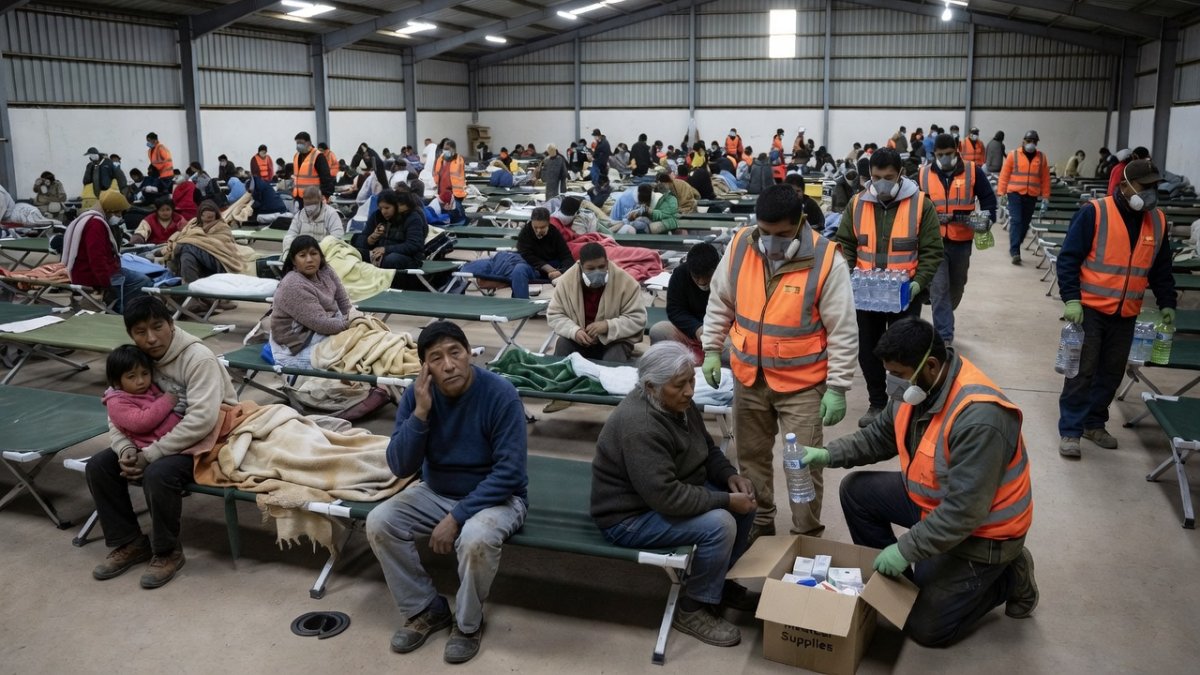
Infrastructure Devastation Across Ten Regions
The geographic scope of the disaster is staggering. Unlike a localized flood event confined to a single valley or river basin, the July 2026 storms affected 10 of Chile's 16 administrative regions — stretching from the mineral-rich Atacama Desert in the north to the agricultural heartlands of La Araucania in the south. The economic toll is still being calculated, but early estimates suggest billions of dollars in damage to roads, bridges, homes, water treatment plants, and agricultural land.
Chile's copper mining industry, the backbone of the national economy, did not escape unscathed. Several major mines in the Coquimbo and Atacama regions temporarily suspended operations as flash floods and heavy snowfall blocked access roads and threatened open-pit operations. Chile produces roughly 25 percent of the world's copper, and any prolonged disruption to its mining sector has ripple effects across global supply chains — from electrical wiring to renewable energy infrastructure. Mining companies reported that access roads had been washed out and that some processing facilities had suffered water damage, though most were expected to resume operations within days or weeks.
For the tens of thousands of people still isolated as of late July, the immediate challenge remains access to food, clean water, and medical care. The military has established air bridges to the most remote communities, delivering emergency supplies by helicopter where ground access is impossible. But with the monsoon-like conditions expected to persist and additional storms forecast through early August, the relief operation is facing a logistical challenge of immense proportions.
Peru and Brazil Also Reel from Extreme Rainfall
Chile's catastrophe did not occur in isolation. Across the Andes, Peru has spent much of 2026 battling its own flood crisis. In February and March, the Arequipa region was devastated by mudslides — huaicos — triggered by El Nino-driven torrential rains that killed at least 17 people and destroyed hundreds of homes. The scale of the disaster was so severe that the Peruvian government declared a state of emergency across 796 districts — nearly 40 percent of the country — to mobilize resources ahead of what scientists warned would be a prolonged El Nino season.
In northeastern Brazil, the story was tragically similar. Torrential rainfall in May 2026 triggered devastating flooding and landslides across Pernambuco and Paraiba states, killing at least six to eight people and forcing 27 municipalities to declare states of emergency. The Recife metropolitan area, built on low-lying floodplains just meters above sea level, was particularly hard hit. Urbanists and disaster management experts pointed to chronic infrastructure failures — inadequate drainage systems, unchecked construction on vulnerable slopes, and decades of underinvestment in climate resilience — as compounding factors that turned heavy rain into deadly disaster.
Together, Chile, Peru, and Brazil form a sobering portrait of a region confronting the limits of its disaster preparedness. Each country has its own disaster management agency — SENAPRED in Chile, INDECI in Peru, and the National Civil Defense in Brazil — but all three are being tested by a scale and frequency of extreme weather events that their systems were not designed to handle.
El Nino and Climate Change: The Perfect Storm
Behind each flood event lies a common driver: a powerful El Nino pattern developing through 2026 that is being amplified by rising global temperatures. The current El Nino, which scientists warn could become one of the strongest on record, has shifted weather patterns across the entire Pacific basin, funneling unprecedented moisture toward the western coast of South America. Warmer ocean temperatures mean more evaporation, which means more water vapor in the atmosphere — and when that vapor encounters the coastal mountain ranges of Chile and Peru, it falls as extreme rainfall.
Climate scientists describe the phenomenon as a "loading of the dice." Natural climate variability, like El Nino, has always produced periods of heavy rainfall in western South America. But a warmer atmosphere can hold approximately seven percent more moisture for every degree Celsius of warming, meaning that when the rains do come, they come harder and faster than they ever have before. The Clausius-Clapeyron relationship — the physical law that governs how much water vapor air can hold — is not a theory; it is physics. And the physics is producing storms that overwhelm infrastructure designed for a climate that no longer exists.
The World Meteorological Organization has documented accelerating warming across Latin America and the Caribbean, with record temperatures, intensifying floods, prolonged droughts, and cascading threats to food security, water availability, and public health. For Chile specifically, the 2026 floods are the latest in a series of extreme weather events that have pushed the country's disaster response system to its breaking point — from devastating wildfires in the south to the historic megadrought that has gripped central Chile for over a decade.
Voices from the Ground: Survivors and First Responders
In the hills above La Serena, residents of the El Milagro settlement watched their homes disappear under a wall of mud and water in less than 20 minutes. "There was no warning loud enough," one survivor told local media, standing in what remained of her kitchen. "The water came up to my chest in seconds. I grabbed my children and climbed onto the roof. We were there for eight hours before the helicopter came." Stories like hers are being repeated across the disaster zone — families who lost everything but their lives, communities that were cut off for days without food or clean water, and first responders working around the clock in conditions of extreme danger.
SENAPRED teams, working alongside Chile's national police and military, conducted hundreds of rescues by helicopter, boat, and on foot. Firefighters exposed to contaminated floodwaters were among the first to receive Hepatitis A vaccinations as MINSAL's sanitary alert took effect. "Our teams are exhausted," one SENAPRED coordinator admitted. "But there are still people waiting to be rescued, still communities we haven't reached. We don't stop until everyone is accounted for."
For the displaced, shelter life is a daily struggle against disease, trauma, and uncertainty. In Coquimbo's emergency shelters, families sleep on cots in gymnasiums, sharing whatever supplies the military can airlift in. Children play among the cots, oblivious to the danger their parents know all too well. The psychological toll, aid workers warn, will last long after the floodwaters recede.
The Bottom Line: What Comes Next for Latin America's Disaster Resilience
The July 2026 floods are a grim preview of what Latin America can expect as the climate continues to warm. Chile, despite being one of the region's wealthiest and most institutionally capable countries, has seen its disaster response infrastructure overwhelmed by the scale and frequency of extreme weather events. If Chile is struggling, the outlook for less-resourced neighbors is dire. Peru's declaration of emergency across 796 districts and Brazil's recurrent flood crises in Pernambuco are signs of a region confronting a future for which it is dangerously underprepared.
SENAPRED and MINSAL have mounted what aid agencies describe as a competent and rapid emergency response, but the fundamental question remains: how many more flood seasons, how many more dead, and how many more billions in damage will it take before the region's governments invest in the kind of long-term climate adaptation that can actually protect their populations? Better early warning systems, stricter land-use regulation, massive investment in drainage and flood-defense infrastructure, and a genuine commitment to reducing the carbon emissions that are driving the crisis — these are not optional. They are the only path forward.
For now, the people of Chile's Norte Chico are counting their dead, searching for the missing, and beginning the long, painful work of rebuilding. The rest of Latin America watches and waits — because the next storm is already forming over the Pacific.
By Elena Vasquez, Staff Writer
This article was produced with AI-assisted research and editorial support. Reporting is based on sources cited in the article.
What's Your Reaction?
 Like
0
Like
0
 Dislike
0
Dislike
0
 Love
0
Love
0
 Funny
0
Funny
0
 Wow
0
Wow
0
 Sad
0
Sad
0
 Angry
0
Angry
0

Latin America Correspondent at Global1.News. Based in Mexico City, covering politics, economics, energy, and culture across the region. Brings an on-the-ground perspective to stories spanning from the Rio Grande to Patagonia.












Comments (0)