
Takaichi Vows Persistent Diplomatic Efforts to Help Secure Strait of Hormuz
Japan's Leadership Transition and Energy Security Priorities Prime Minister Sanae Takaichi assumed office following a landslide election victory in February 2026, in which the LDP-led coalition secured approximately 300 of the 465 seats. This strong mandate has allowed her administration to prioritize energy security amid the ongoing disruption in the Strait of Hormuz. In an op
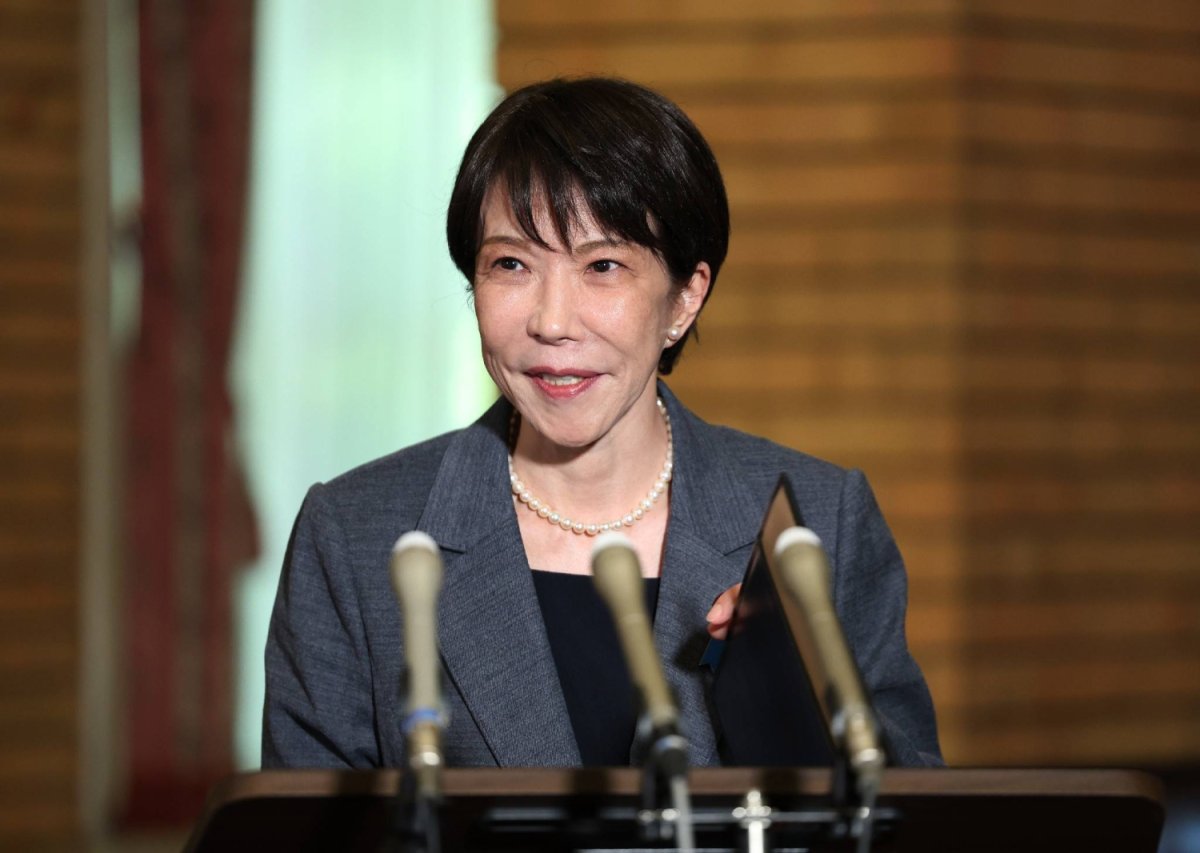
Japan's Leadership Transition and Energy Security Priorities
Prime Minister Sanae Takaichi assumed office following a landslide election victory in February 2026, in which the LDP-led coalition secured approximately 300 of the 465 seats. This strong mandate has allowed her administration to prioritize energy security amid the ongoing disruption in the Strait of Hormuz. In an op-ed published in the Financial Times, Takaichi positioned herself as "Japan's Iron Lady," emphasizing the need to tackle emerging challenges through steady leadership.
Her approach centers on protecting the maritime routes that deliver the majority of Japan's crude oil and LNG supplies. The February 2026 election outcome provided the political stability required to sustain long-term diplomatic engagement rather than short-term reactive measures. Analysts note that this electoral result aligns with Japan's historical emphasis on resource security, given the country's limited domestic energy production.
Takaichi's earlier meetings with President Trump in October 2025 in Tokyo and March 2026 in Washington established personal channels that complement her current focus on the Hormuz situation. These encounters underscored the importance of coordinated responses between Tokyo and Washington while preserving Japan's independent diplomatic space with Tehran. The combination of domestic political strength and established international contacts forms the foundation for the persistent diplomatic efforts she has pledged.
The Blockade of the Strait of Hormuz and Its Immediate Effects
The Strait of Hormuz has been blocked since 28 February 2026 following the launch of an air war by the United States and Israel against Iran. Iran's Islamic Revolutionary Guard Corps immediately forbade passage, conducted attacks on merchant ships, and laid sea mines. Prior to the crisis, the strait handled 25 percent of world seaborne oil trade and 20 percent of global LNG shipments. The Center for Strategic and International Studies later assessed that shipping through the strait has almost entirely halted.
Japan's economy, heavily dependent on these sea lanes, faced sudden pressure on supply chains. The blockade coincided with a U.S. naval blockade of Iranian ports that lasted from 13 April to 29 May 2026, further tightening available capacity. These developments transformed a previously reliable transit corridor into a high-risk zone, prompting Tokyo to accelerate diplomatic outreach rather than rely solely on alternative sourcing.
The scale of the disruption is evident in regional trade patterns. Nearly 70 percent of oil passing through the strait previously reached China, India, Japan, and South Korea. With 84 percent of crude oil and 83 percent of LNG transiting the strait destined for Asia in 2024, any prolonged closure directly affects multiple economies simultaneously. Japan's response has therefore combined immediate contingency planning with sustained engagement aimed at restoring safe passage.
Impact on Japan's Crude Oil and LNG Imports
Japan imports the majority of its crude oil and LNG via the Strait of Hormuz, making the current blockage a direct threat to national energy stability. In May 2026, Prime Minister Takaichi publicly warned that the resulting oil squeeze carries an "enormous impact" across the Asia Pacific region. This assessment reflects both the volume of Japanese imports and the interconnected nature of regional energy markets.
Before the crisis, the strait served as the primary artery for Asian energy supplies. The concentration of 84 percent of crude oil and 83 percent of LNG shipments heading to Asian destinations in 2024 illustrates how a single chokepoint affects multiple economies at once. Japan's position as one of the four largest recipients underscores the strategic necessity of restoring reliable transit.
Policy discussions within the Japanese government have focused on diversifying sources while maintaining pressure for diplomatic resolution. The economic stakes extend beyond immediate price spikes to long-term industrial competitiveness and household energy costs. Takaichi's administration has therefore framed the Hormuz issue as a core national security concern requiring consistent diplomatic attention rather than episodic crisis management.
Takaichi's Direct Engagements with Iranian Leadership
On 1 June 2026, Prime Minister Takaichi held her third phone conversation with Iranian President Masoud Pezeshkian. During these talks, Pezeshkian stated that Iran would "strive to ensure the transit of Japanese ships occurs smoothly and with greater ease." Takaichi responded by expressing her "strong hope" that Iran would demonstrate "the greatest possible flexibility" toward reaching an agreement.
These repeated direct contacts build on Japan's longstanding practice of maintaining amicable ties with Iran even while remaining a close ally of the United States. The approach allows Tokyo to serve as a potential intermediary while protecting its own energy interests. Pezeshkian also requested Tokyo's assistance in securing essential goods and medical equipment through Iran's frozen financial assets held in Japan.
Japan's diplomatic posture combines firm advocacy for safe passage with recognition of Iran's stated concerns. This balanced stance has enabled continued communication despite the broader regional tensions. The three phone calls within a short period demonstrate the priority the Takaichi administration places on keeping channels open rather than allowing the situation to drift toward further escalation.
Corporate Resilience: Idemitsu Kosan's Tanker Milestone
On 25 May 2026, a Japanese tanker operated by Idemitsu Kosan became the first Japan-connected vessel to arrive since the crisis began. This development provided a modest but concrete sign that limited commercial movement remains possible under carefully negotiated conditions. The arrival occurred against the backdrop of near-total cessation of traffic documented by independent assessments.
Idemitsu Kosan's successful transit highlights the practical challenges Japanese energy companies face in maintaining supply continuity. The company's experience offers a case study in risk management during periods of heightened maritime insecurity. Government officials have monitored such corporate efforts closely while pursuing parallel diplomatic tracks.
The milestone also illustrates the gap between official statements and operational realities. While the overall volume of shipping remains severely constrained, individual successes demonstrate that targeted arrangements can occasionally overcome restrictions. These limited movements reinforce the value of sustained diplomatic engagement aimed at expanding safe passage for additional vessels.
Prospects at the Upcoming G7 Summit in Evian
The G7 summit scheduled for 15-17 June 2026 in Evian, France, offers Prime Minister Takaichi an opportunity to coordinate with fellow leaders on the Hormuz situation. Japan's energy vulnerability gives Tokyo a distinct perspective within the group, particularly regarding the effects on Asian economies that rely heavily on the strait.
Discussions are expected to address both immediate humanitarian and commercial concerns as well as longer-term mechanisms for protecting critical sea lanes. Takaichi's prior bilateral contacts with Washington and Tehran position Japan to contribute practical insights rather than abstract proposals. The summit timing, coming shortly after her latest conversation with President Pezeshkian, allows for updated reporting on diplomatic progress.
Japan's traditional role as a bridge between Western and Iranian positions may prove useful in identifying areas of flexibility. The combination of domestic political strength, established corporate presence in the region, and repeated high-level engagement suggests that Tokyo will continue advocating for incremental improvements in transit conditions. Observers will watch closely for any coordinated statements emerging from Evian that reflect these Japanese priorities.
Tags: Sanae Takaichi, Strait of Hormuz, Japan energy security, Iran diplomacy, crude oil imports, LNG shipments, G7 summit 2026, Idemitsu Kosan
By Kenji Tanaka, Staff Writer
This article was produced with AI-assisted research and editorial support. Reporting is based on sources cited in the article.
What's Your Reaction?
 Like
0
Like
0
 Dislike
0
Dislike
0
 Love
0
Love
0
 Funny
0
Funny
0
 Wow
0
Wow
0
 Sad
0
Sad
0
 Angry
0
Angry
0

Japan Correspondent at Global1.News. Tokyo-based voice covering Japanese politics, technology, economy, and culture. Tracks the intersection of tradition and innovation in one of the world's most dynamic societies.











Comments (0)